
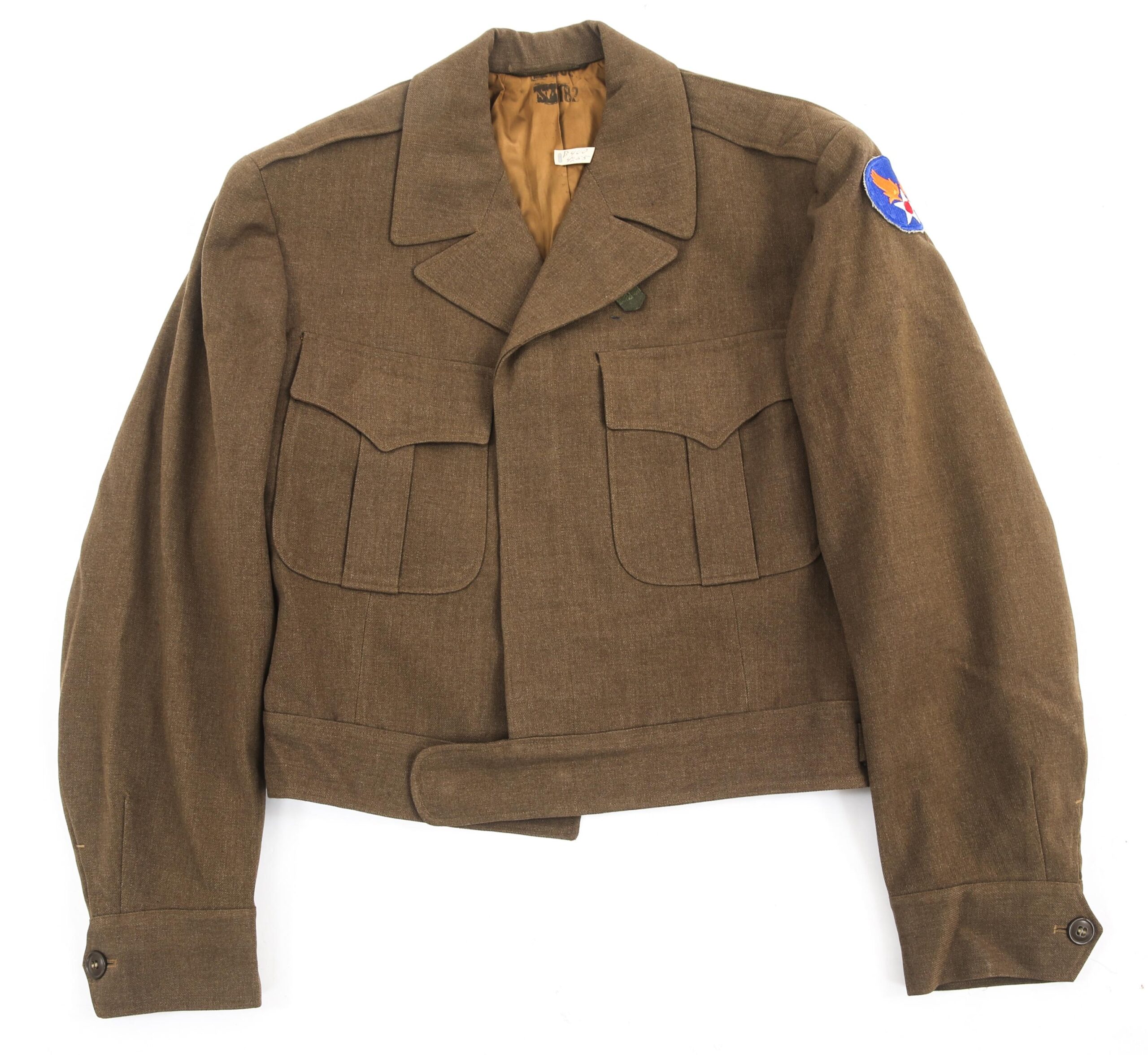
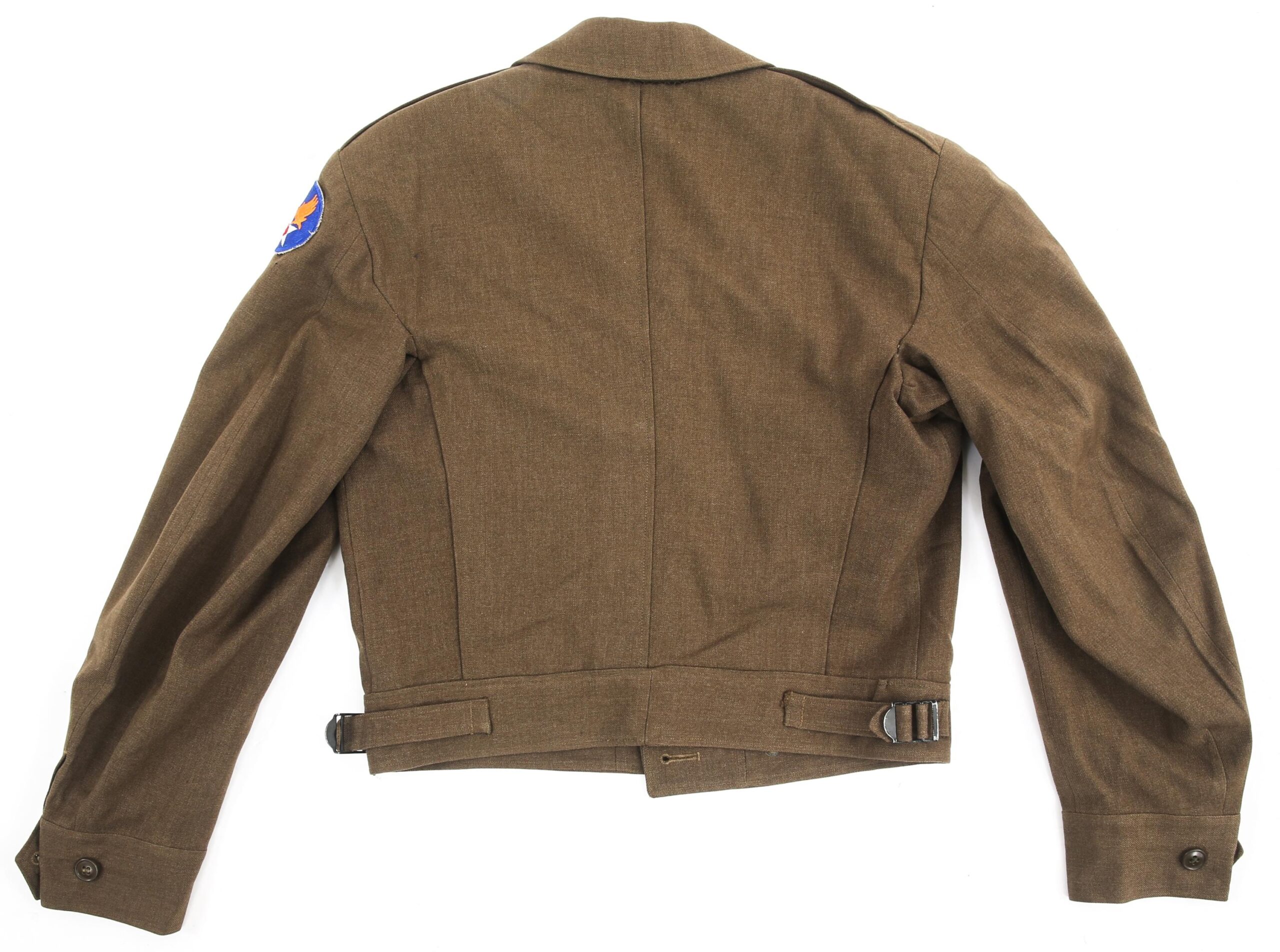

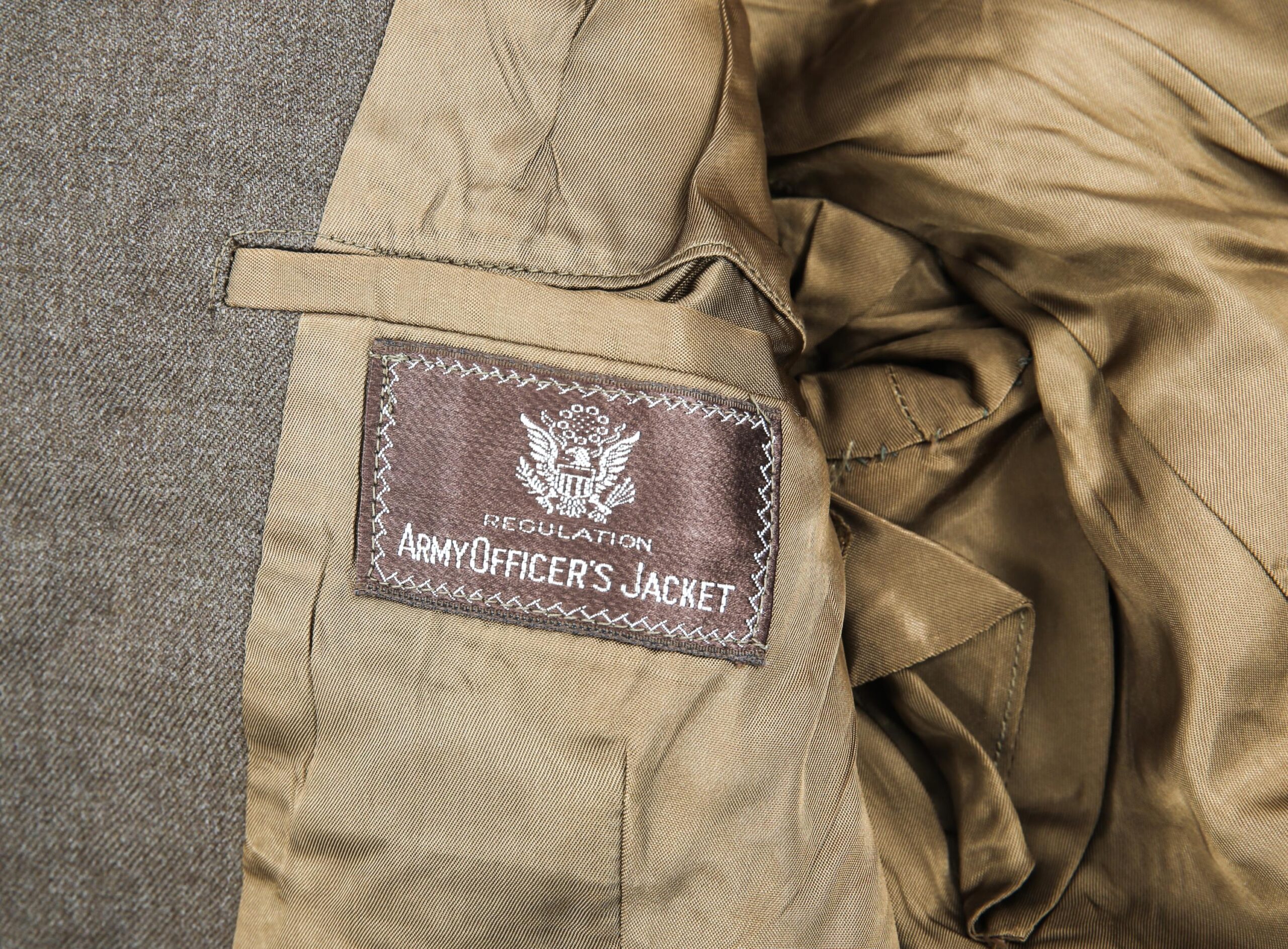

WWII US ARMY AIR FORCE IKE JACKET USAAF -SHOULDER PATCH – Size 42s
$100.00 CAD
WWII US ARMY AIR FORCE IKE JACKET -SHOULDER PATCH – Size 42s.
The United States Army Air Forces (USAAF) was the aviation component of the United States Army during World War II. It existed from 1941 to 1947 and played a crucial role in the conflict, contributing significantly to the Allied victory. Here is some information about the USAAF during World War II:
- Formation and Structure: The USAAF was officially established on June 20, 1941, as part of a reorganization of the U.S. Army. It was created by merging the existing Army Air Corps and the GHQ Air Force. The USAAF was responsible for both strategic bombing campaigns and tactical air support.
- Strategic Bombing: One of the primary roles of the USAAF was to conduct strategic bombing campaigns against Axis targets. The USAAF’s Eighth Air Force, stationed in England, and the Fifteenth Air Force, stationed in Italy, played significant roles in bombing targets in Nazi-occupied Europe. The B-17 Flying Fortress and the B-24 Liberator were iconic bombers used in these missions.
- Tactical Air Support: The USAAF also provided crucial support to ground forces by conducting tactical air missions, including close air support, interdiction, and reconnaissance. This support was essential during major campaigns such as the D-Day landings in Normandy and the Battle of the Bulge.
- Aircraft Development: World War II saw the development and deployment of several iconic aircraft used by the USAAF. Besides bombers like the B-17 and B-24, other notable aircraft included the P-51 Mustang (a long-range fighter escort), the P-47 Thunderbolt (used for ground attack and bomber escort), and the B-29 Superfortress (which carried out the bombing raids on Japan).
- Women Airforce Service Pilots (WASP): The USAAF employed civilian female pilots known as Women Airforce Service Pilots (WASP) to ferry aircraft, test planes, and perform various non-combat flight duties, freeing up male pilots for combat missions.
- Medal of Honor Recipients: Many USAAF personnel received the Medal of Honor for their exceptional bravery and valor during World War II, including pilots who demonstrated extraordinary courage in combat situations.
- The Tuskegee Airmen: An important chapter in the history of the USAAF during World War II is the story of the Tuskegee Airmen, the first African American military aviators in the U.S. Armed Forces. They overcame racial prejudice and discrimination to become highly respected fighter pilots and played a significant role in the war effort.
- End of USAAF: The USAAF was reorganized as a separate service branch, the United States Air Force (USAF), on September 18, 1947, following the passage of the National Security Act of 1947. This marked the beginning of the USAF as an independent branch of the U.S. military.
The USAAF’s contributions during World War II were diverse and impactful, ranging from strategic bombing to tactical support and technological advancements. The men and women of the USAAF played a vital role in achieving victory over the Axis powers.
IKE JACKET INFO:
The “Ike jacket” is a colloquial term used to refer to the World War II-era jacket that was part of the uniform worn by officers and enlisted personnel in the United States Army. It was named after General Dwight D. Eisenhower, who later became the 34th President of the United States and played a prominent role in World War II as the Supreme Allied Commander in Europe.
Here are some key features and information about the WW2 USAAF Ike jacket:
- Design: The Ike jacket is a waist-length, waist-belted jacket that was designed to be a more practical and comfortable alternative to the standard service coat. It features a simple and functional design with a button-up front, a convertible collar, and a waist belt that could be fastened for a more tailored fit.
- Variations: The Ike jacket was used by various branches of the U.S. military during World War II, including the United States Army Air Forces (USAAF). While the basic design was similar, there were variations in terms of color, insignia, and patches to indicate rank, branch, and unit affiliations.
- Materials: The Ike jacket was typically made of wool or a wool blend, providing warmth and durability. It was available in different colors, with olive drab being a common option.
- Rank Insignia: Like other military uniforms, the Ike jacket displayed rank insignia on the shoulders or collar. Shoulder straps or shoulder loops were often used to indicate an individual’s rank. Enlisted personnel and non-commissioned officers (NCOs) wore different styles of rank insignia.
- Patches and Insignia: The jacket could also feature patches and insignia indicating unit affiliations, campaigns, or specific qualifications. USAAF personnel might have worn patches related to their aviation or air force roles.
- Popularity: The Ike jacket gained popularity among soldiers due to its more comfortable and versatile design compared to the traditional service coat. It was often favored for its practicality, especially in the field or combat situations.
- Legacy: The Ike jacket remains an iconic symbol of World War II military fashion. Its association with General Eisenhower and its distinctive design have made it a recognizable piece of history.
The Ike jacket is a notable representation of the uniforms worn by USAAF personnel and other soldiers during World War II. It reflects the practical considerations and adaptations made to military uniforms during that era, while also carrying historical significance.