






WWII GERMAN THIRD REICH RED CROSS ENLISTED MAN HEWER DAGGER
$1,100.00 CAD
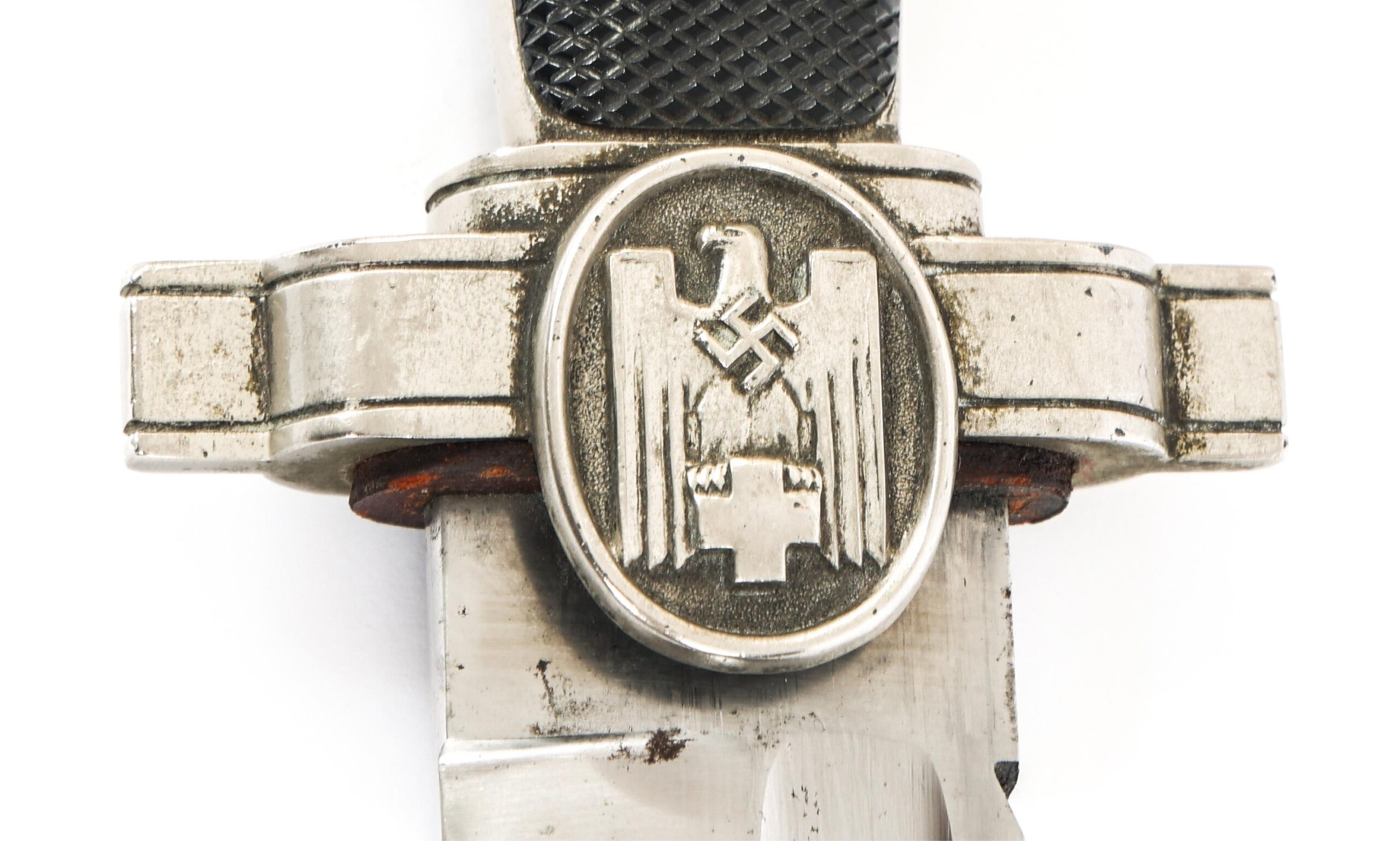
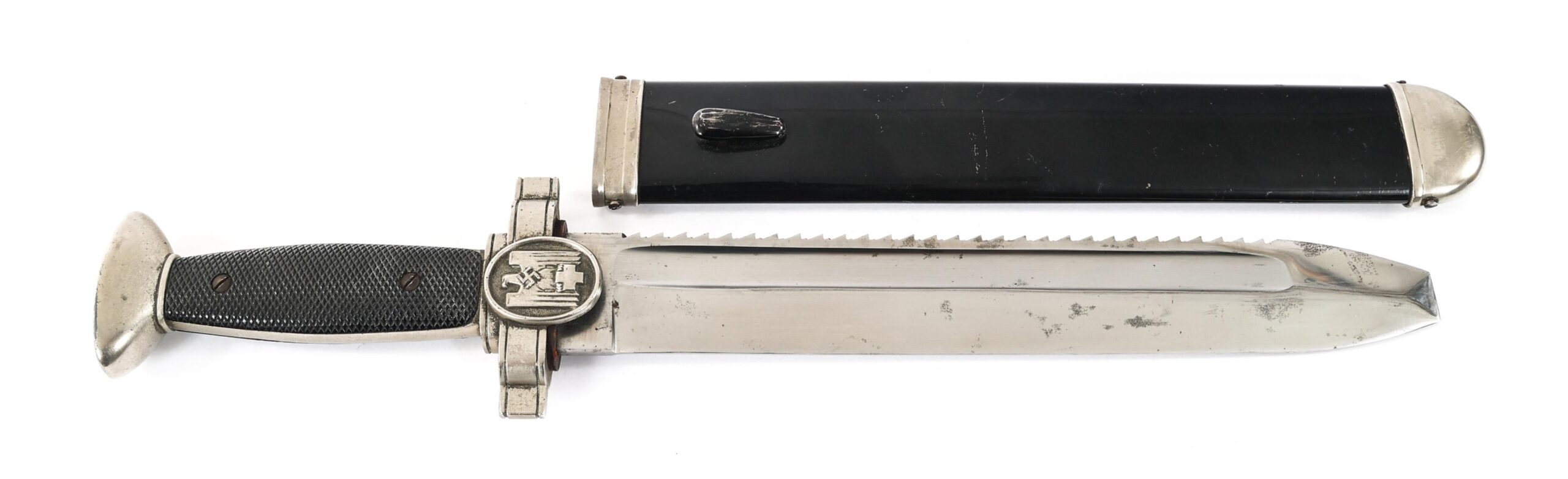
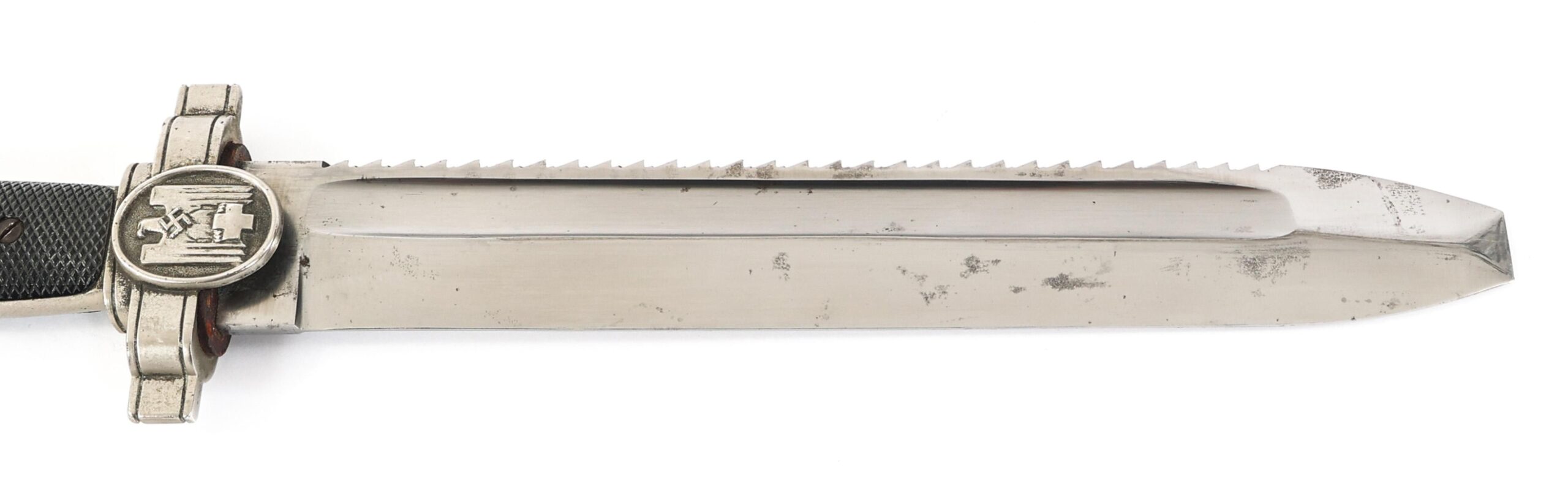
WWII GERMAN RED CROSS ENLISTED MAN HEWER DAGGER WWII German Red Cross Enlisted Man’s Hewer Dagger. Sawback, bright, straight blade with visible crossgrain. Marked “Ges. Geschutz” on the ricasso. Leather buffer pad present. Nickel-silver plated alloy hilt with checkered and smooth black bakelite grips. Black painted steel scabbard with nickel-silver fittings and leather frog. Blade Length: 10 1/2″ | Total Length: 15 5/8″
Condition Report Very good. Blade has light oxidation hilt has light finish wear.
HISTORY: The German Red Cross (Deutsches Rotes Kreuz or DRK) played a complex role during World War II. Its history during this period is intertwined with the broader context of Nazi Germany and the humanitarian challenges faced during the war.
Pre-WWII Era:
Establishment: The German Red Cross was founded in 1864 and became a part of the International Red Cross and Red Crescent Movement. Its mission was to provide humanitarian assistance and medical care during times of war and peace.
National Socialist Control: As Adolf Hitler rose to power in the 1930s, the Nazis sought to gain control over various organizations, including the Red Cross, to align them with their ideology. In 1933, the NS took control of the German Red Cross, placing it under the influence of the their regime.
During World War II:
Military Medical Support: The German Red Cross played a significant role in supporting the German military by providing medical aid on the Eastern and Western fronts. Mobile and stationary medical units, staffed by Red Cross personnel, treated wounded soldiers.
Civilians and Displaced Persons: The DRK was also involved in providing humanitarian assistance to civilians affected by the war, including refugees and displaced persons. They operated hospitals, provided relief supplies, and assisted with the evacuation of civilians from war zones.
Propaganda and Exploitation: The NS regime used the Red Cross as a tool for propaganda, portraying an image of care and compassion while concealing the atrocities committed by the regime. The organization was also involved in visits to concentration camps, where conditions were often misrepresented to the international community.
Complicity in War Crimes: Some members of the German Red Cross were complicit in the Nazis’ war crimes, particularly in concentration camps. They were accused of failing to report abuses and crimes against humanity, and in some instances, actively participating in unethical medical experiments.
Post-WWII Era:
Denazification: After the war, the German Red Cross, like many other organizations in Germany, underwent a process of denazification. Some members were prosecuted for their role in war crimes and collaboration with the Nazi regime.
Rebuilding and Restructuring: In the post-war period, efforts were made to rebuild and reorganize the German Red Cross. The organization was re-established with a renewed commitment to humanitarian principles and neutrality.
International Red Cross Movement: The German Red Cross was readmitted to the International Red Cross Movement, which includes the International Committee of the Red Cross (ICRC) and the International Federation of Red Cross and Red Crescent Societies (IFRC).
The history of the German Red Cross during World War II is a complex and controversial one, reflecting the broader challenges faced by humanitarian organizations operating in the context of a “total war”
GES. GESCHUTZ MEANING: “Ges. Gesch.” is an abbreviation for “Gesetzlich Geschützt,” which translates from German to “Legally Protected” or “Legally Registered.” This marking indicates that the design or the item itself is protected by law, and it was commonly used in Germany to signify that a particular design, logo, or trademark had legal protection.
In the context of Red Cross daggers or other items associated with the German Red Cross during the Nazi era, the “Ges. Gesch.” marking was often applied to indicate that the design or the item was officially registered and protected by law. This was a way to prevent unauthorized use or reproduction of the specific design associated with the Red Cross.
It’s important to note that during World War II, the German Red Cross was under the influence of the Nazi regime, and various symbols and items associated with the organization were subject to the same legal protections and regulations as other Nazi-related emblems. These markings were part of the broader legal and regulatory framework established by the Nazi government during that time.
In summary, if you see “Ges. Gesch.” on Red Cross daggers or related items from the Third Reich era, it indicates that the design or emblem is legally protected under German law during that time.