
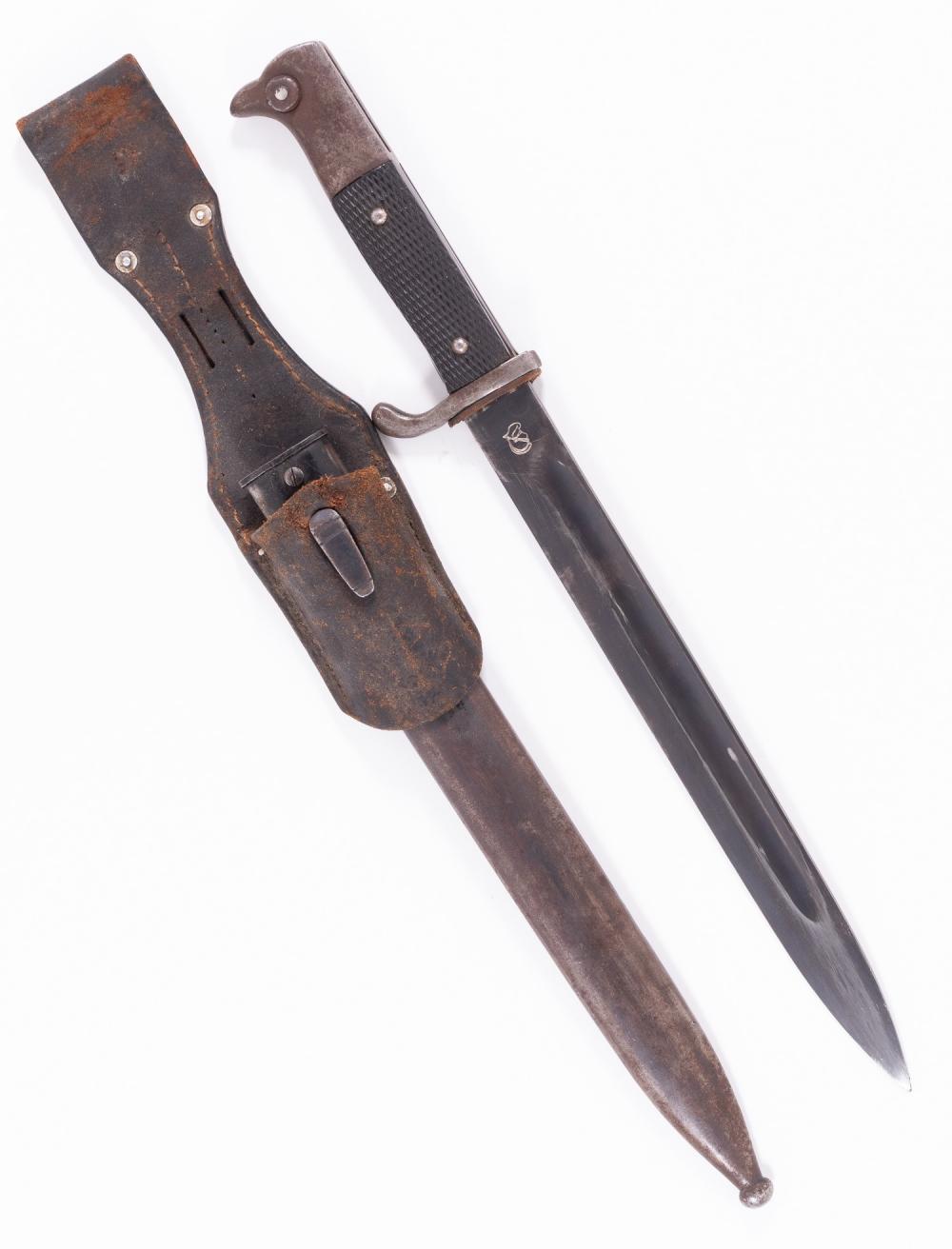
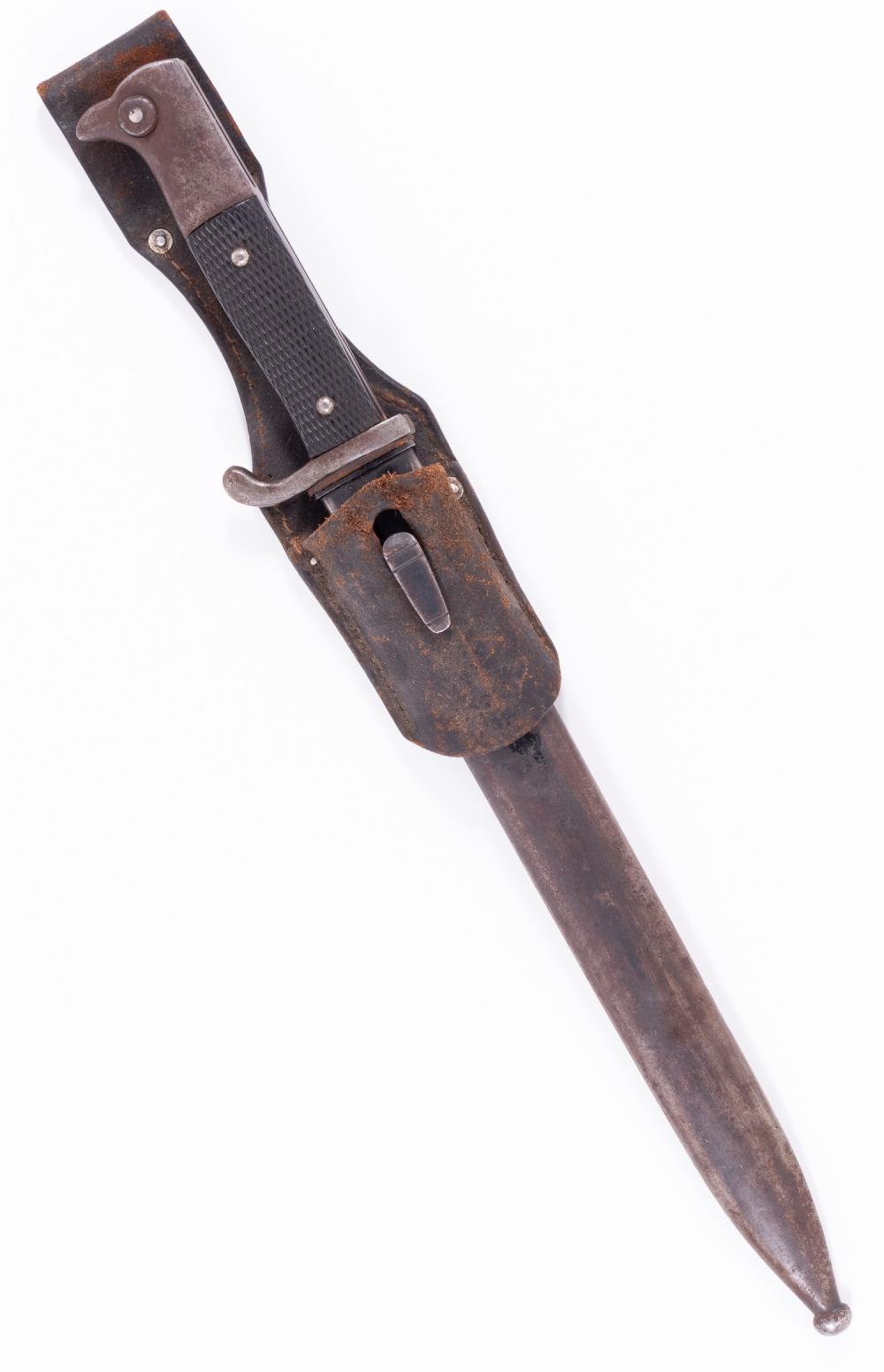
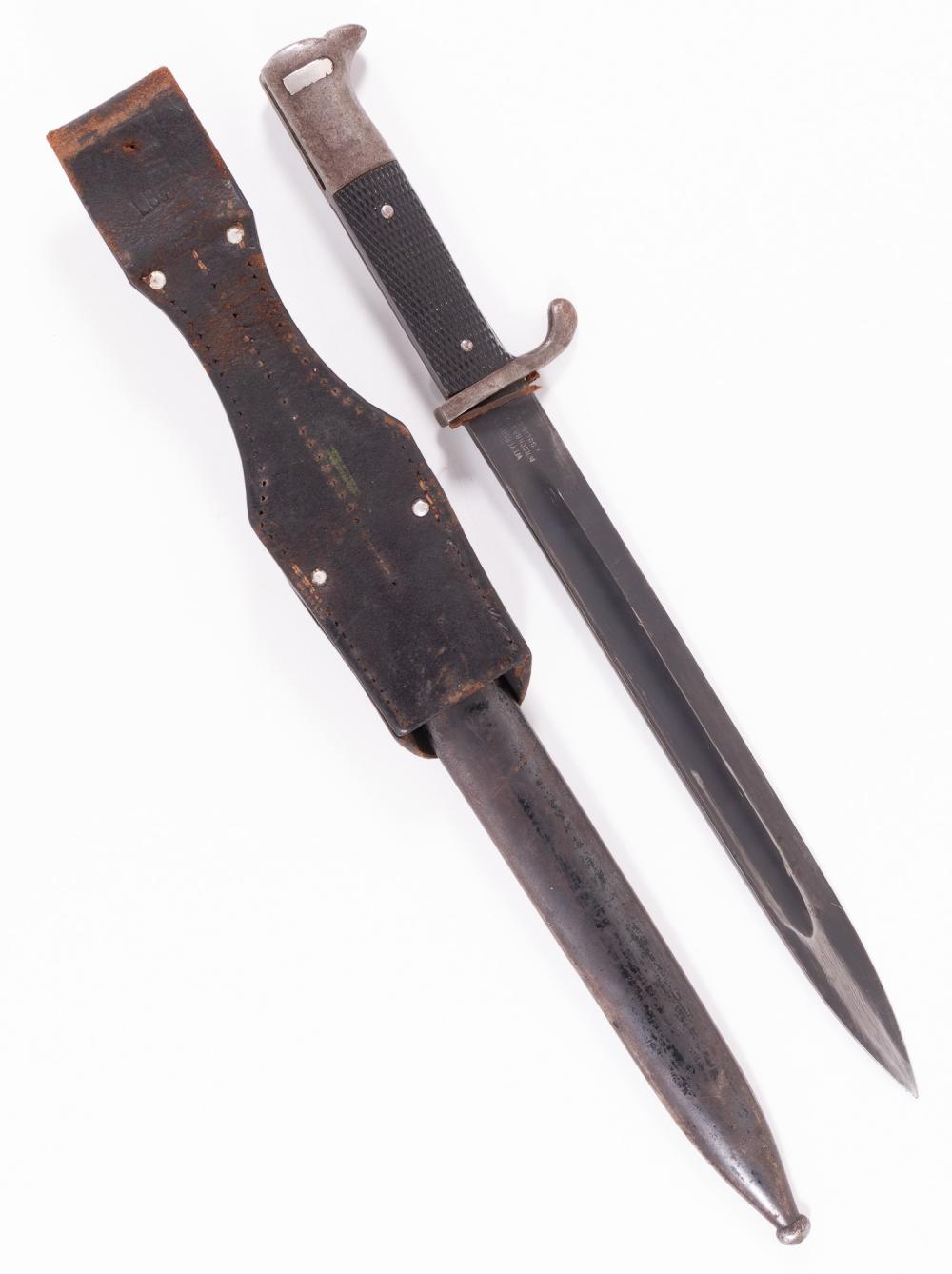
WWII GERMAN MAUSER K98 BAYONET WEYERSBERG W SCABBARD AND FROG
$300.00 CAD
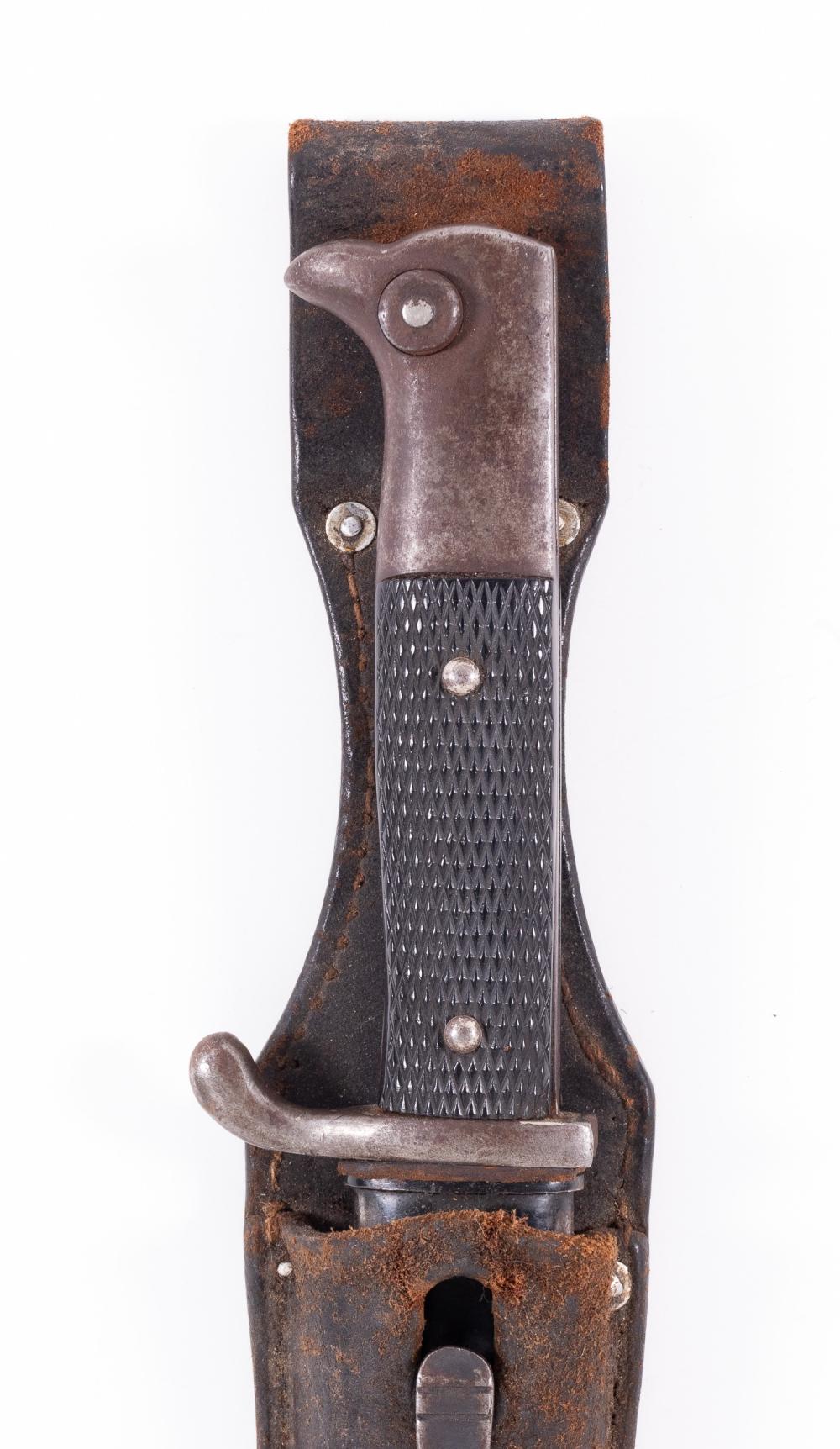
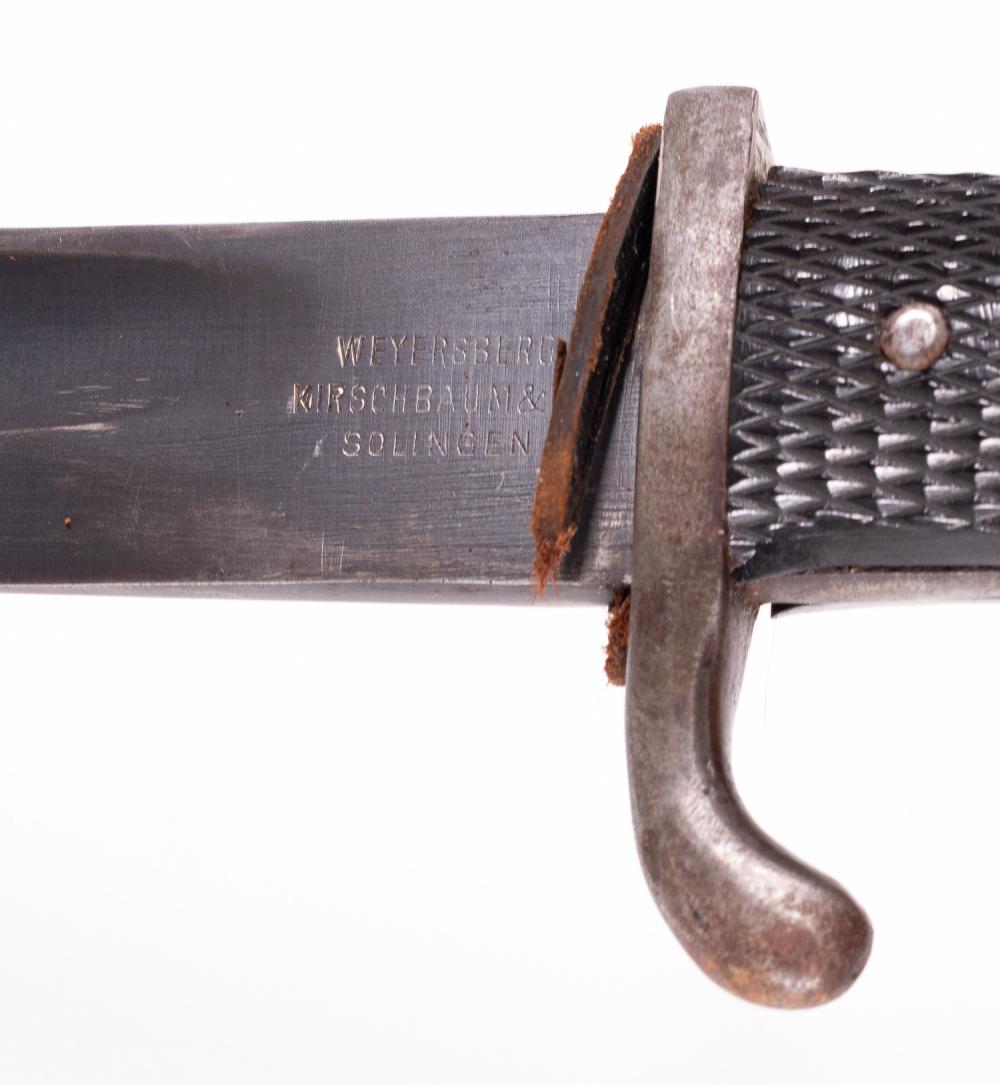
German WWII bayonet for the Mauser K98. Black grips, blade is marked and double trademarked ‘Weyersberg Kirschbaum & Co Solingen. With metal scabbard and brown frog. Minor scratches on blade. Blade 10 inches. Total length 15 inches.
The WW2 K98 bayonet manufactured by Weyserberg exemplifies the craftsmanship and functionality that characterized German weaponry during World War II. Weyserberg, a renowned German arms manufacturer based in Solingen, played a significant role in producing bayonets for the German military. Here is a detailed description of the K98 bayonet made by Weyserberg:
Blade:
Length and Design: The bayonet boasts a blade measuring approximately 10 inches (25 centimeters) in length. It features a single-edged, full-tang design, which means the blade extends the entire length of the handle. This construction ensures optimal strength and durability. Material: The blade is typically forged from high-quality carbon steel, renowned for its hardness and resistance to wear. Profile: The blade possesses a spear-point profile, sharpened on one side to create a formidable cutting edge. The opposite side often contains a false edge, enhancing the bayonet’s balance and aesthetic appeal. Fuller: A central groove, known as a fuller or blood groove, may run along the length of the blade. The fuller reduces weight while maintaining blade strength. Handle:
Material and Construction: The handle of the K98 bayonet is typically crafted from wood, providing a secure and comfortable grip for the user. The wood may be treated or textured to enhance its durability and prevent slippage. Fittings: The handle is fastened to the blade with metallic fittings, including a crossguard and pommel. These fittings not only secure the handle but also contribute to the bayonet’s overall stability and balance. Crossguard:
Design: The bayonet features a metal crossguard, which extends perpendicularly to the blade, safeguarding the user’s hand during combat. It serves as a protective barrier, preventing the hand from slipping onto the blade during thrusts or strikes. Markings: The crossguard might bear markings, such as the manufacturer’s stamp, inspection symbols, or acceptance marks, representing quality control during production. Pommel:
Function and Design: Situated at the end of the handle, the pommel serves to secure the bayonet to the rifle’s lug, ensuring a stable attachment. It is typically made of metal and provides balance to the overall weapon. Markings: Similar to the crossguard, the pommel might display markings or stamps, denoting the manufacturer, production year, or other relevant information. Weyserberg’s K98 bayonet is an emblem of German military ingenuity during World War II. The attention to detail, quality materials, and precise construction exemplify the rigorous standards set by German arms manufacturers of the era. These bayonets played a vital role in augmenting the effectiveness of the Mauser K98 rifle, the standard issue rifle of the German military, by providing soldiers with a versatile and reliable close-combat weapon.
SHORT HISTORY:
The K98 bayonet held significant importance to the soldiers of the German Wehrmacht during World War II. Here are the key aspects of its significance:
Versatility and Utility: The K98 bayonet was a multipurpose tool for the Wehrmacht soldier. It served as a bayonet when fixed to the rifle, allowing for close-quarters combat and the ability to transform the rifle into a formidable melee weapon. Additionally, the bayonet could be used as a utility knife for various tasks such as cutting ropes, opening packages, or fieldcraft.
Enhanced Combat Effectiveness: The bayonet provided Wehrmacht soldiers with an extended reach in combat. By fixing the bayonet to the rifle, the soldier could engage in melee combat without needing to switch to a separate weapon. This versatility increased the soldier’s combat effectiveness and provided a psychological advantage, instilling fear in the enemy.
Symbol of Preparedness and Readiness: Carrying the K98 bayonet symbolized the preparedness and readiness of the Wehrmacht soldier. It demonstrated their commitment to close combat and their willingness to engage in hand-to-hand fighting if necessary. The sight of fixed bayonets during a charge or assault highlighted the soldier’s determination and resolve.
Identity and Pride: The K98 bayonet became an integral part of a Wehrmacht soldier’s equipment, forging a sense of identity and pride. It signified membership in the German military and the soldier’s role as a defender of the nation. The bayonet’s presence represented the soldier’s commitment to duty and the sacrifices they were prepared to make.
Symbolic Connection to German Military Tradition: The K98 bayonet had historical ties to the German military tradition, as bayonets had been utilized by previous generations of soldiers. Its design and use served as a link to the past and reinforced the soldier’s connection to the military legacy of their country.
Practicality in Non-Combat Situations: The bayonet was not solely limited to combat scenarios. In non-combat situations, such as field exercises or during occupation duties, the bayonet could serve as a tool for various tasks. It represented a versatile implement that soldiers could rely on in multiple contexts.
Overall, the K98 bayonet held great significance to Wehrmacht soldiers. It served as a symbol of combat readiness, a versatile tool, and a connection to military tradition. Its presence bolstered the soldier’s confidence, combat effectiveness, and sense of identity as a member of the German armed forces.