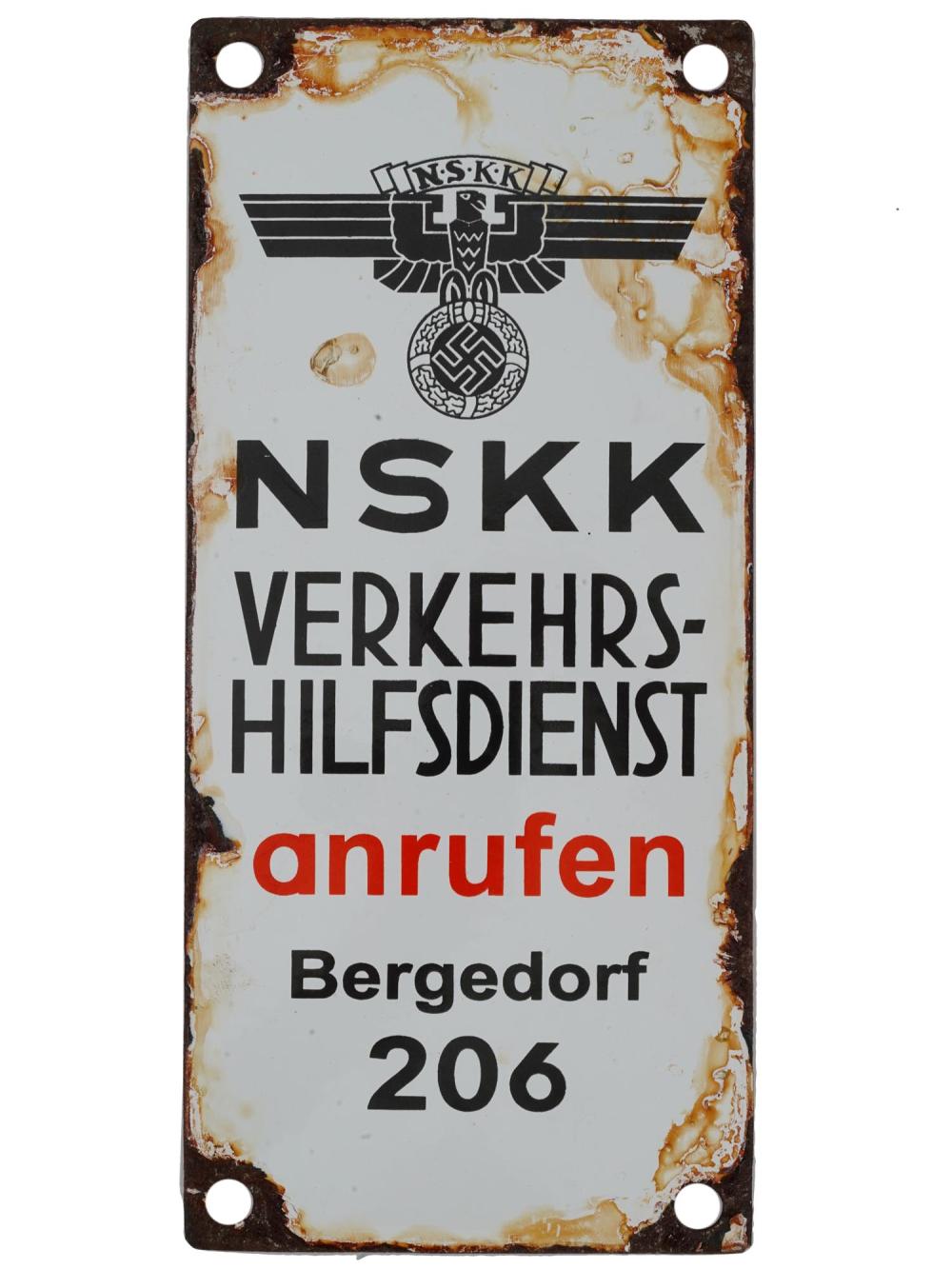
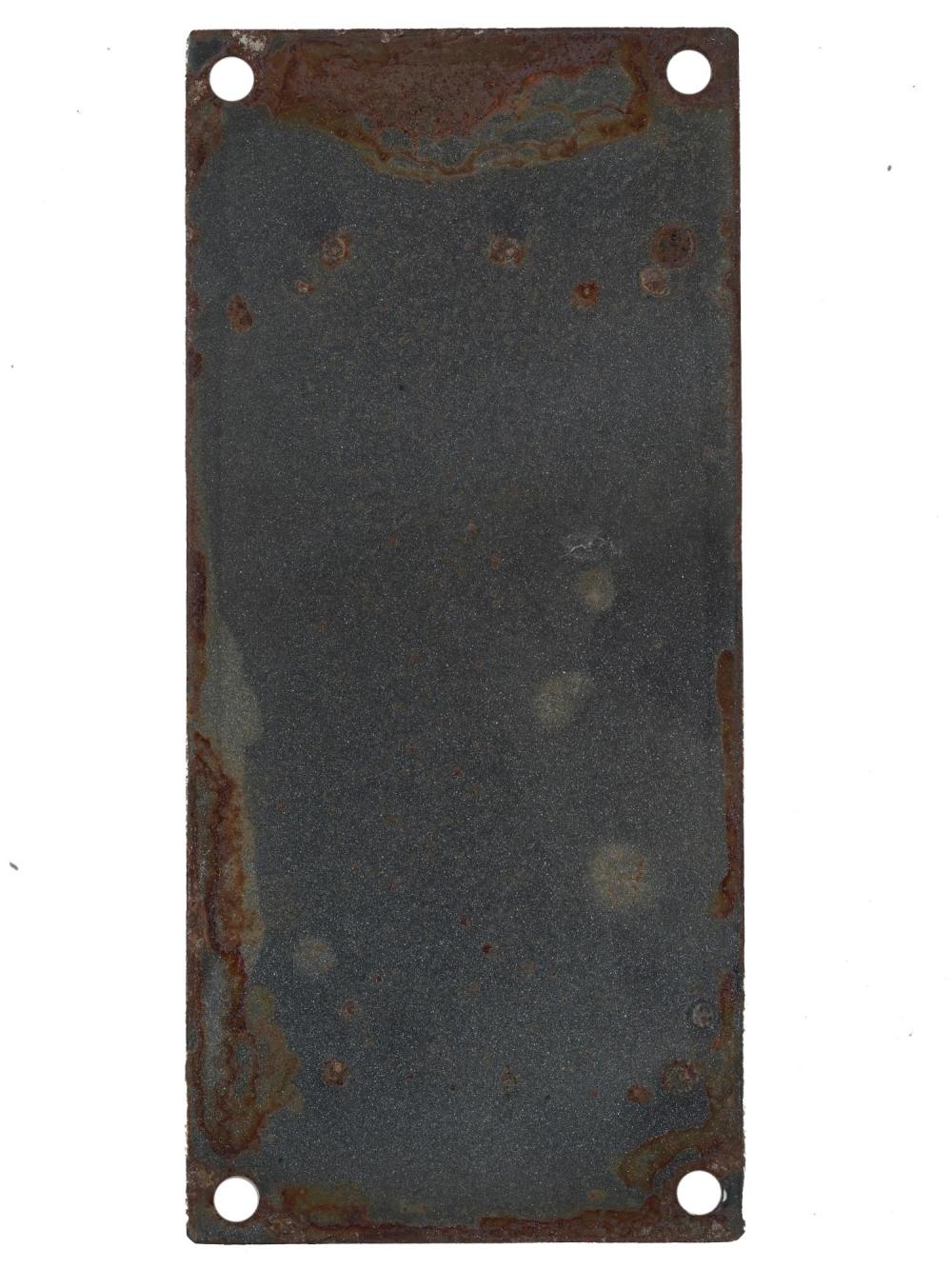
WW2 NAZI GERMAN NSKK PROPAGANDA STREET SIGN – NSKK-Straßenhilfe ROAD SIDE ASSISTANCE PROGRAM
$250.00 CAD
Description
The National Socialist Motor Corps (Nationalsozialistisches Kraftfahrkorps, or NSKK) was a paramilitary organization of the Nazi Party, established in 1931. It initially focused on motor transport and training drivers, motorcyclists, and mechanics for both civilian and military purposes. The NSKK emerged as a successor to the National Socialist Automobile Corps (NSAK) and played a significant role in promoting and fostering motorization in Nazi Germany.
Origins and Purpose:
The NSKK was formed under Adolf Hühnlein, its first leader, with the aim of educating the German population in motor vehicle operation and maintenance, reflecting Nazi ideals of physical fitness and technical competence. The organization was also part of the Nazi regime’s broader aim to expand the mobility of the military and civilian sectors. It became the primary motorized unit for training Nazi Party members in transportation and vehicular operations.
Structure and Functions:
The NSKK had both military and civilian functions. During peacetime, its main task was to instruct party members and young Germans in motorized transportation, instilling mechanical and driving skills that would later benefit the Wehrmacht (German Armed Forces). Many of its members were also part of the Reichsarbeitsdienst (RAD), another paramilitary organization, as part of their obligatory service. As World War II progressed, the NSKK provided logistics, transportation, and support to various branches of the German military.
Roadside Assistance Program:
One of the notable programs developed by the NSKK was its roadside assistance service, known as the NSKK-Straßenhilfe. This program aimed to assist drivers on the increasingly motorized roads of Germany during the 1930s. It can be compared to modern-day automotive clubs or roadside assistance organizations, like the German ADAC or AAA in the United States.
The NSKK-Straßenhilfe program was part of the Nazi regime’s effort to promote automobile usage and ensure the safety and efficiency of German roads. Uniformed NSKK members patrolled highways and major roads, offering mechanical assistance, first aid, and other services to stranded motorists. They were also trained to ensure the smooth operation of road networks and keep traffic flowing, especially as automobile ownership grew among the German population.
The roadside assistance program was designed to align with Nazi ideology by emphasizing efficiency, discipline, and the technical mastery of machinery. In addition to aiding drivers, it helped present the NSKK as a helpful, civilian-friendly organization, strengthening the Nazi Party’s public image.
Role in World War II:
With the outbreak of World War II, the NSKK shifted from its civilian training and assistance roles to more direct military involvement. It became integral to logistics operations, transporting troops, supplies, and military vehicles across Europe. The NSKK units played an important part in supporting the German war effort, especially in the Eastern Front, where motorized transport was crucial for supplying the rapidly advancing German forces.
The NSKK was a crucial Nazi organization focused on motor transport and driving skills, with its roadside assistance program reflecting the regime’s focus on motorization, efficiency, and public service. It later became a vital logistical support unit for the German military during World War II.