
WW2 German Third Reich Army Officers Sword By Puma Solingen
$950.00 CAD
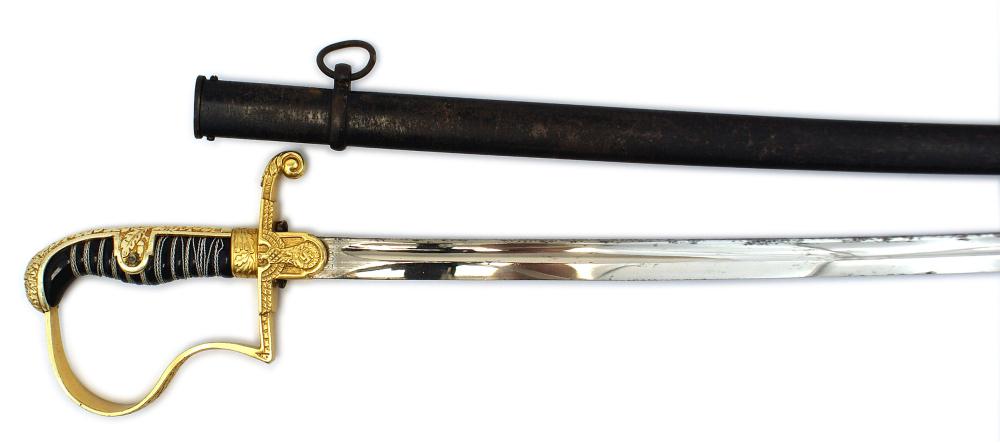
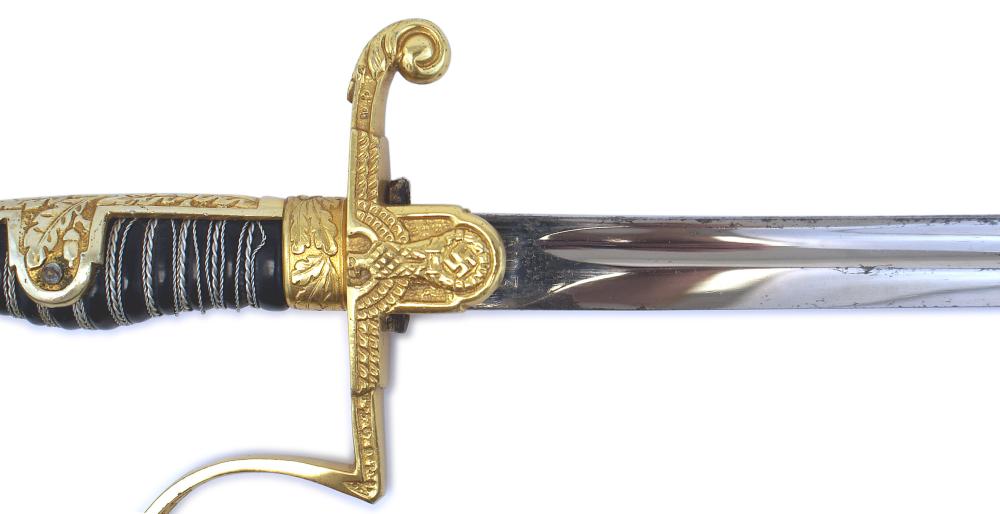
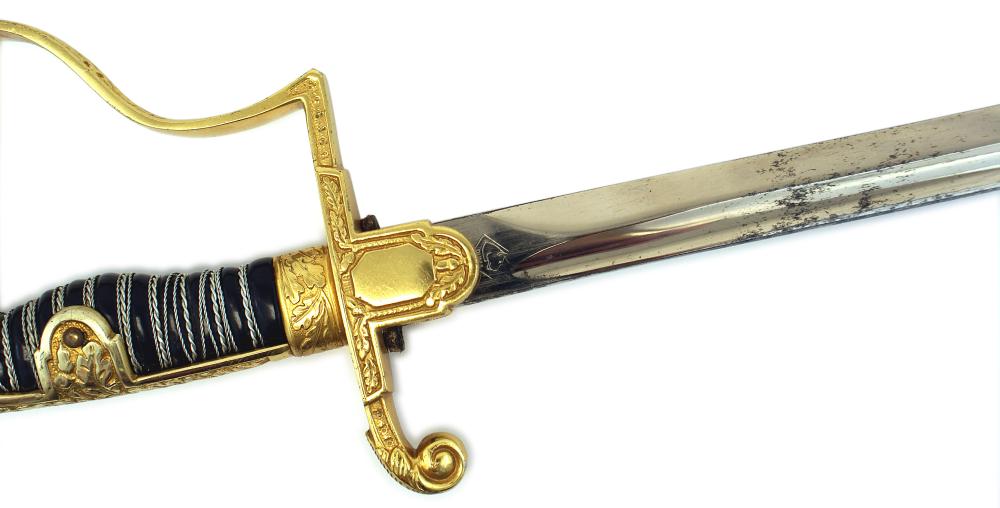
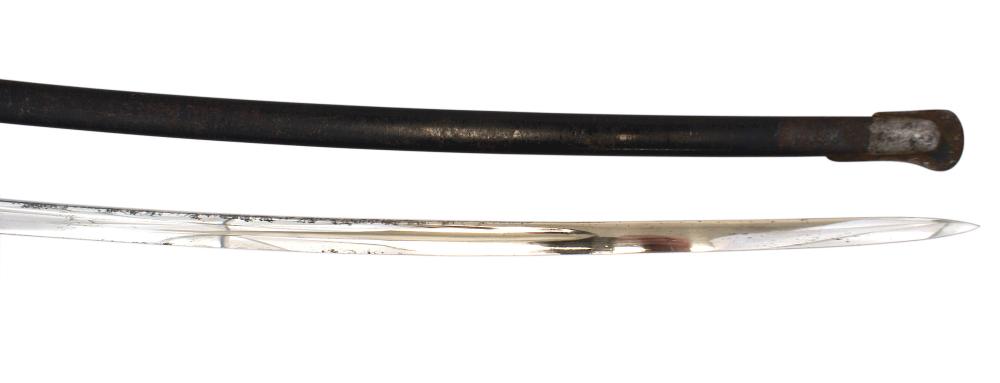
German Third-Reich Army officer’s dress sword. 100% gilt finish on the aluminum relief oak-leaf decorated pommel/backstrap, reverse “P” knuckle bow and ferrule. 100% gilt on the relief eagle/swastika crossguard (Nice elongated, art-deco style eagle wings) and reverse langet. The gold gilt is MINT. Fairly clean 29″ slightly curved blade. Maker marked with a crisp cougar profile and “PUMA” above “SOLINGEN”. The reverse is marked “No. 3”. One ring steel scabbard. Black finish has “dimples” and paint is worn on the drag.
Puma Solingen – History as an Edged Weapon Maker PUMA-WERK Lauterjung und Sohn, commonly referred to as Puma Solingen, is a German company with a long and respected tradition in blade manufacturing, rooted in the famous blade-making city of Solingen, Germany. The company’s history dates back to 1769, making it one of the older continuously operating knife makers in the world.
Founding and Early History 1769:
The company was founded by Johann Wilhelm Lauterjung in Solingen, a region with centuries-old sword and knife-making traditions. The Lauterjung family had already been involved in Solingen’s cutlery trade, and the family name appears in the Solingen guild records going back to the 17th century.
19th and Early 20th Century
Throughout the 19th century, Puma produced a wide variety of tools, knives, and household cutlery. By the early 20th century, PUMA had developed a reputation for producing high-quality hunting knives and tools. The company registered the PUMA trademark in 1920 and began marking its products with the now-recognizable puma logo.
World War II Period
During World War II, like many Solingen manufacturers, PUMA was involved in the wartime economy, likely producing military utility knives and possibly bayonets or combat knives under contract. Specific documentation on military contracts is limited, but knives from this period exist with wartime-style markings. However, the company was not a primary military arms contractor like Eickhorn or Hörster, and edged weapons with Puma markings from the WWII era are rarer.
Post-War Innovation and Global Expansion
After WWII, PUMA focused heavily on producing hunting, fishing, and sporting knives, and its reputation for craftsmanship soared in the 1950s and 1960s. The company began serial number dating in 1964, which has helped collectors date Puma knives precisely. Some of their most famous models include: Puma White Hunter – developed in 1956 for the East African hunting market. Puma Bowie Puma Trail Guide These knives were often hand-finished and featured Solingen steel, stag horn grips, and robust construction.
Modern Era and Legacy Today, PUMA continues production in Solingen, with a focus on premium knives for hunting, outdoor use, and collectors. The company is split into: PUMA GmbH IP Solingen (original Solingen-based knife production), and PUMA TEC, which markets more affordable knives made abroad under the same brand.