



WW2 German 1st Model Luftwaffe Dagger by Eickhorn – With Hangers and Portepee
$2,000.00 CAD
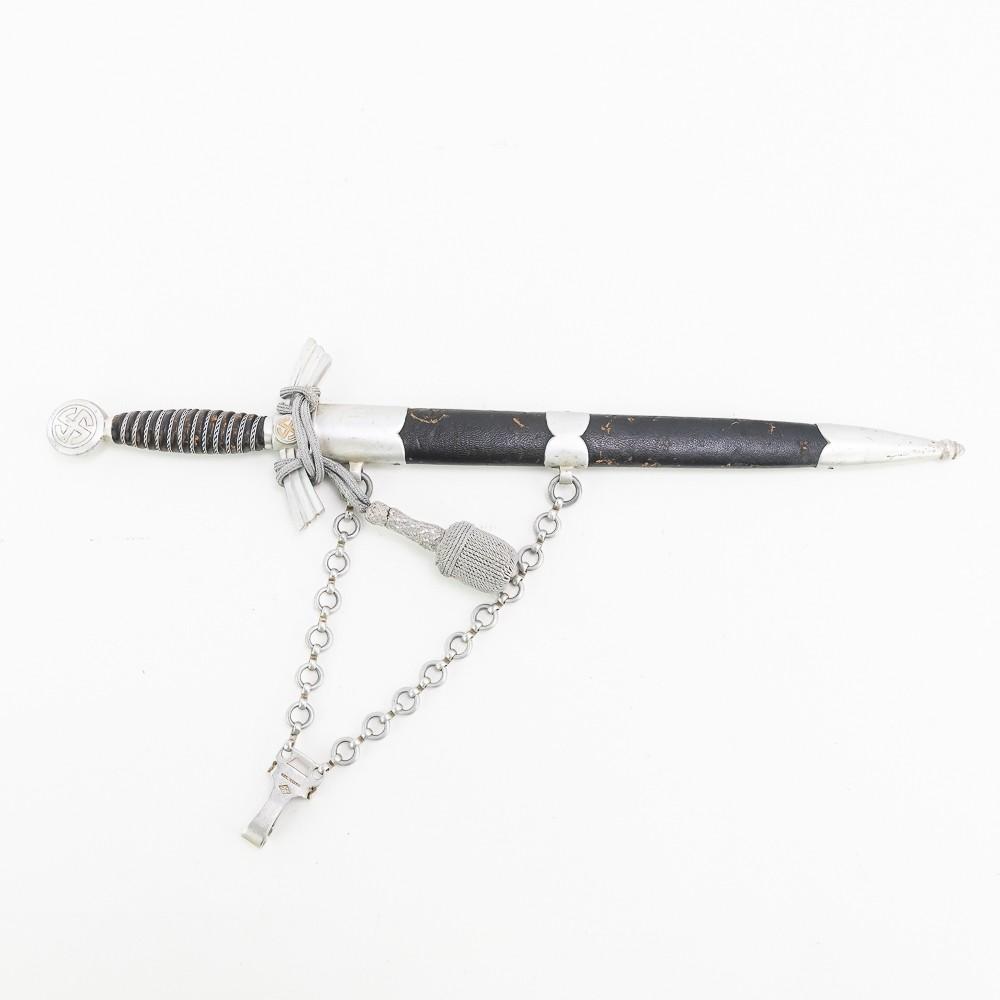
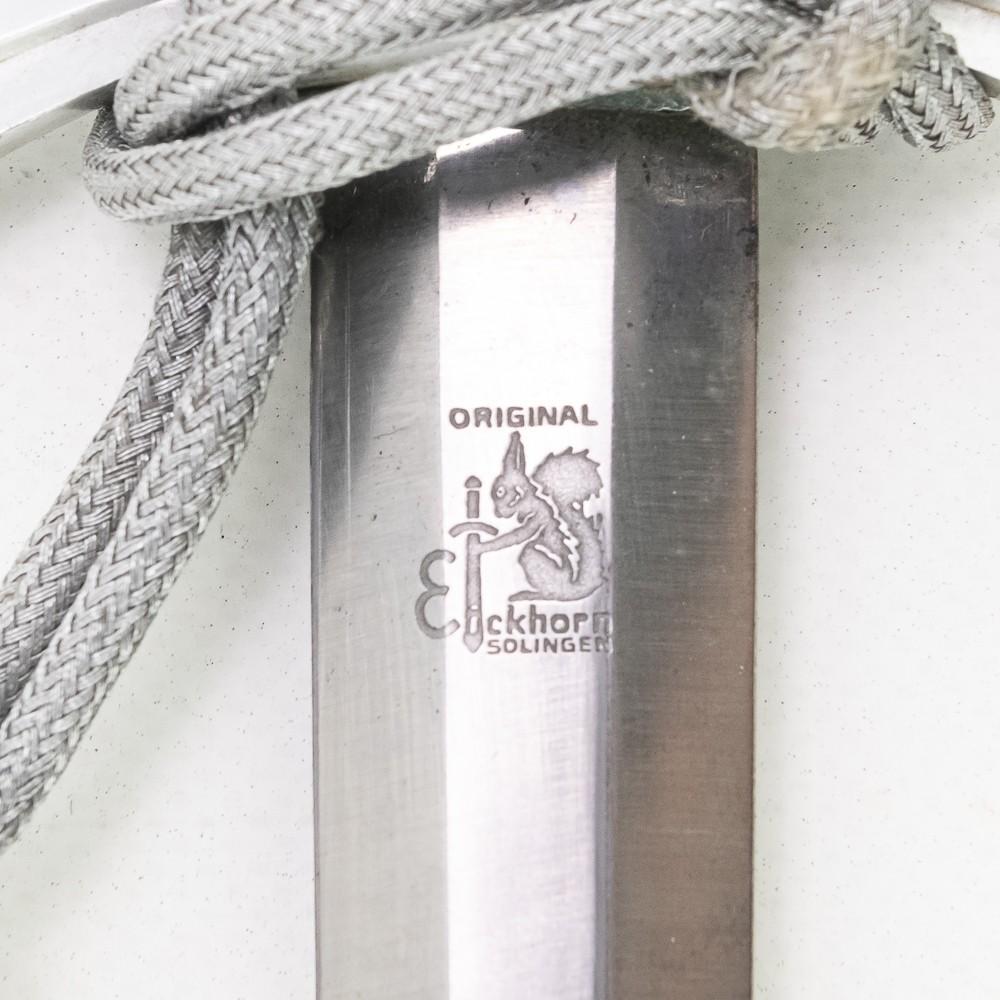
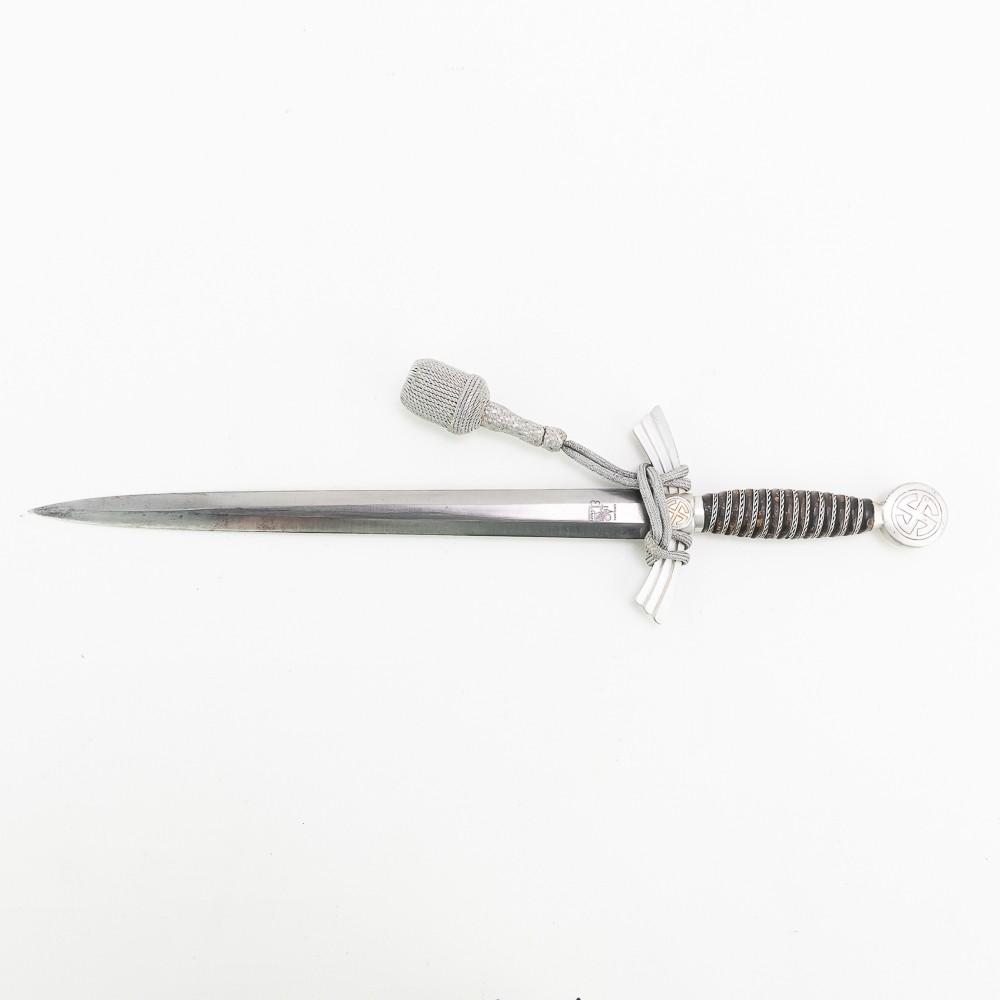
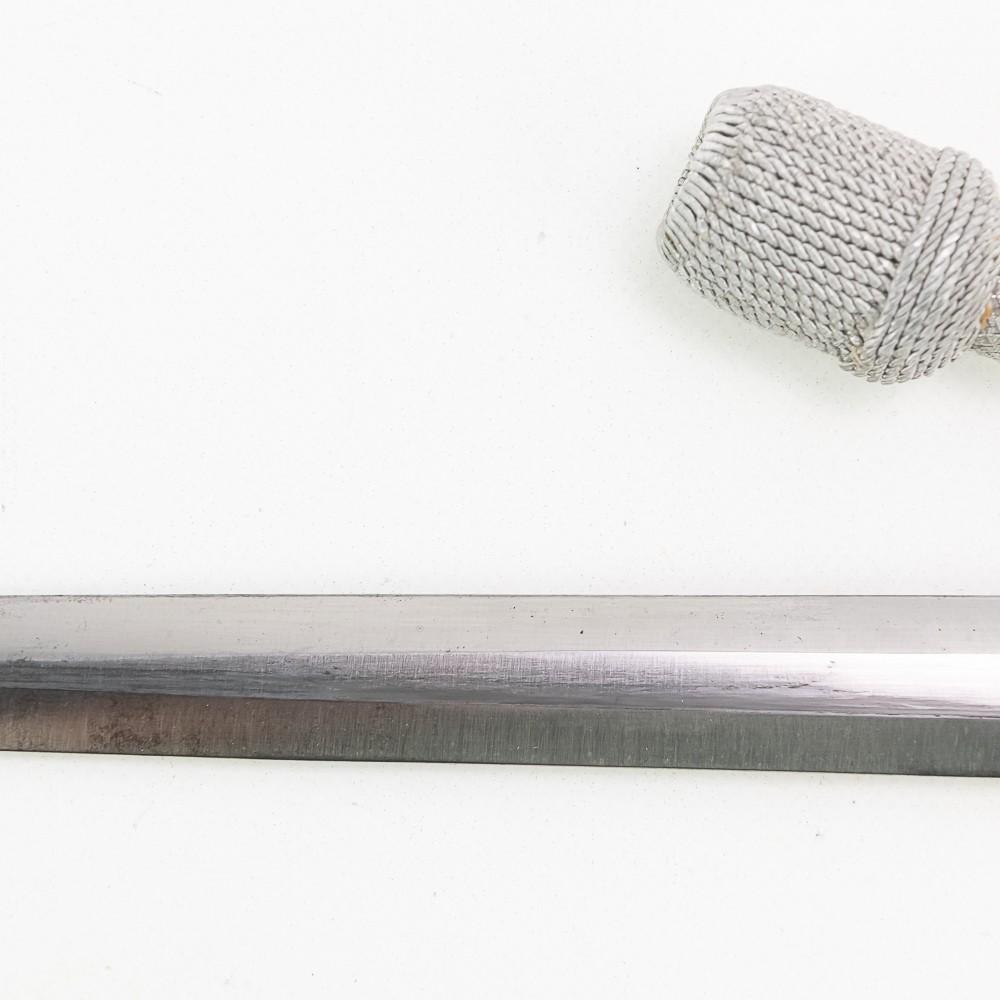
This dagger has aluminum fittings and a hanger. The Hanger clip is well-marked. The blade has the early Eickhorn Squirrel logo. Blue leather-covered grip with wire binding. Housed in an original scabbard with aluminum fittings. The scabbard retains blue leather covering, with small scratches into the top section of one side, other side free from scratches. Original hanging chains attached to the scabbard. Very nice double-edged blade with Eickhorn makers trademark to the base of the blade. Cross graining still visible.
Generally very good example of a complete “second type” 1st model Luftwaffe dagger.
LUFTWAFFE DAGGERS: Post World War I, Germany faced restrictions on maintaining an Air Force. In 1933, the Nazis established the Deutscher Luftsport-Verband (DLV), a paramilitary aviation organization whose officers carried a shorter dagger. In 1935, Adolf Hitler, defying the Treaty of Versailles, introduced the Wehrmacht as the new German armed forces, with the Luftwaffe as one of its branches. Luftwaffe officers then adopted the first model Luftwaffe dagger, a longer and more slender version of the earlier DLV dagger. It featured a blue leather-covered scabbard, a blue, wire-wrapped grip, a crossguard with a round “sunwheel” swastika flanked by stylized “wings,” and a pommel in the form of a vertical disc with a larger “sun wheel” swastika.
By 1937, the Luftwaffe introduced the second model dagger, resembling those worn by German Army officers. This version had a metal scabbard with impressed decoration and lacked leather covering. The crossguard bore a Luftwaffe eagle gripping a swastika. The grip color transitioned from blue to orange, white, or yellow, with the choice being a matter of personal preference rather than indicating branch or rank. The pommel of the new dagger featured a swastika within an oak leaves motif. The steel blades of these daggers were manufacturer-marked in many cases, although not always.
DRGM: DRGM stands for “Deutsches Reichsgebrauchsmuster,” which translates to “German Reich Registered Design” in English. It was a type of design protection used in Germany during the time of the German Empire (1871–1918) and later during the early years of the Weimar Republic.
DRGM numbers were assigned to products that were registered with the German Patent Office as a way to protect the design of the item. These registrations were not as comprehensive as patents but provided a level of protection for the design elements of a product. DRGM markings are often found on various German-made items, including militaria, such as uniforms, equipment, and other military-related objects.
CARL EICKHORN: Carl Eickhorn GmbH is a renowned German company that was historically known for producing edged weapons, including swords, bayonets, and knives. The company was founded in Solingen, Germany, in 1865. Solingen has long been associated with the production of high-quality blades and cutting tools, and it has earned the nickname “City of Blades.”
During its history, Carl Eickhorn GmbH became one of the leading manufacturers of edged weapons in Germany. The company supplied the German military with a variety of edged weapons, including the famous “dress” or ceremonial bayonets and daggers during World War I and World War II.
One of the well-known trademarks associated with Carl Eickhorn is the squirrel (Eichhörnchen in German), which was often used as a logo on the blades. This squirrel logo was registered as a trademark in 1884 and became an iconic symbol for the company.