
WW1 German Sawback Sword M1842/52 Pioneer Fascine Knife Regiment Marked
$1,000.00 CAD
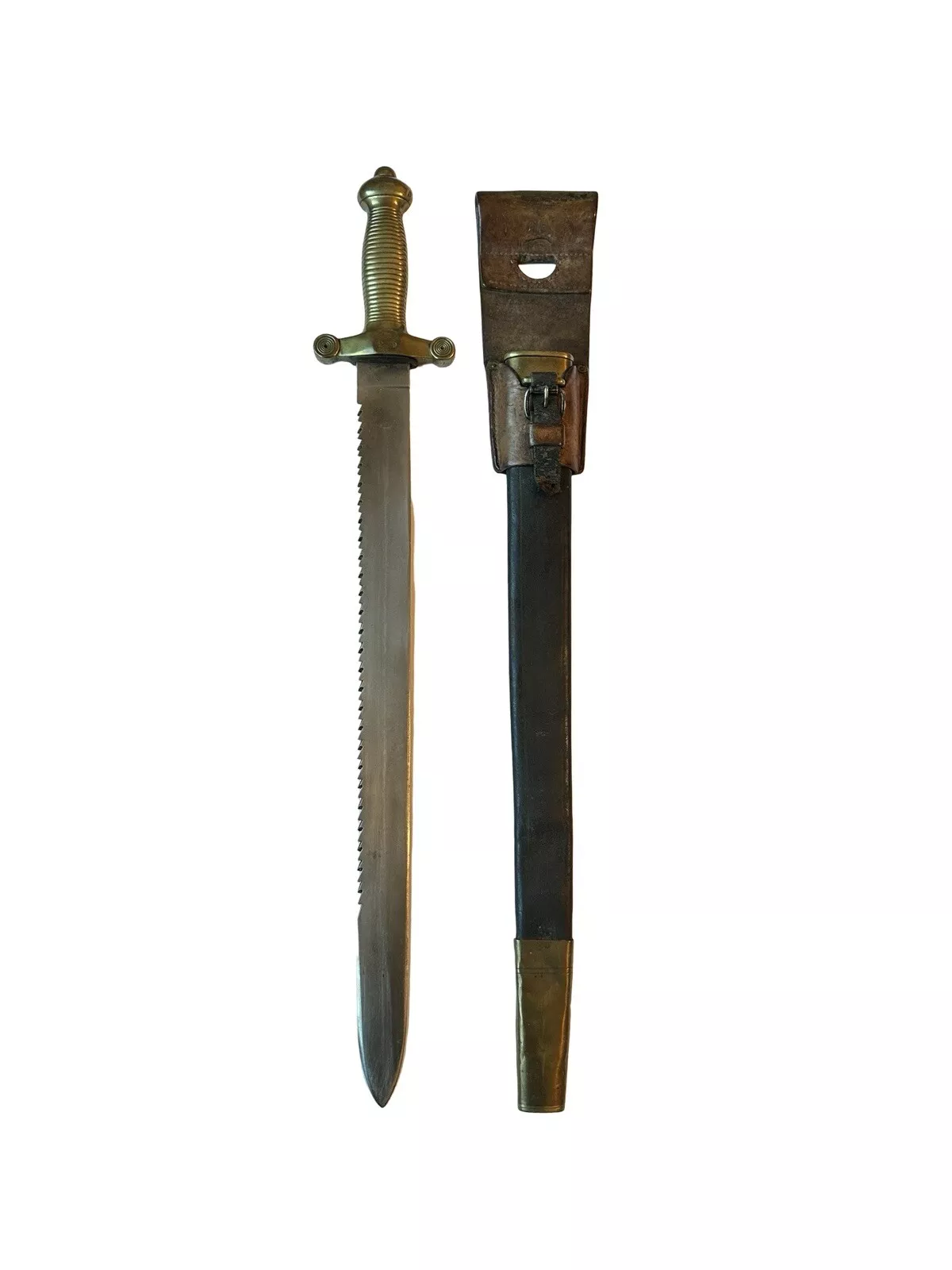
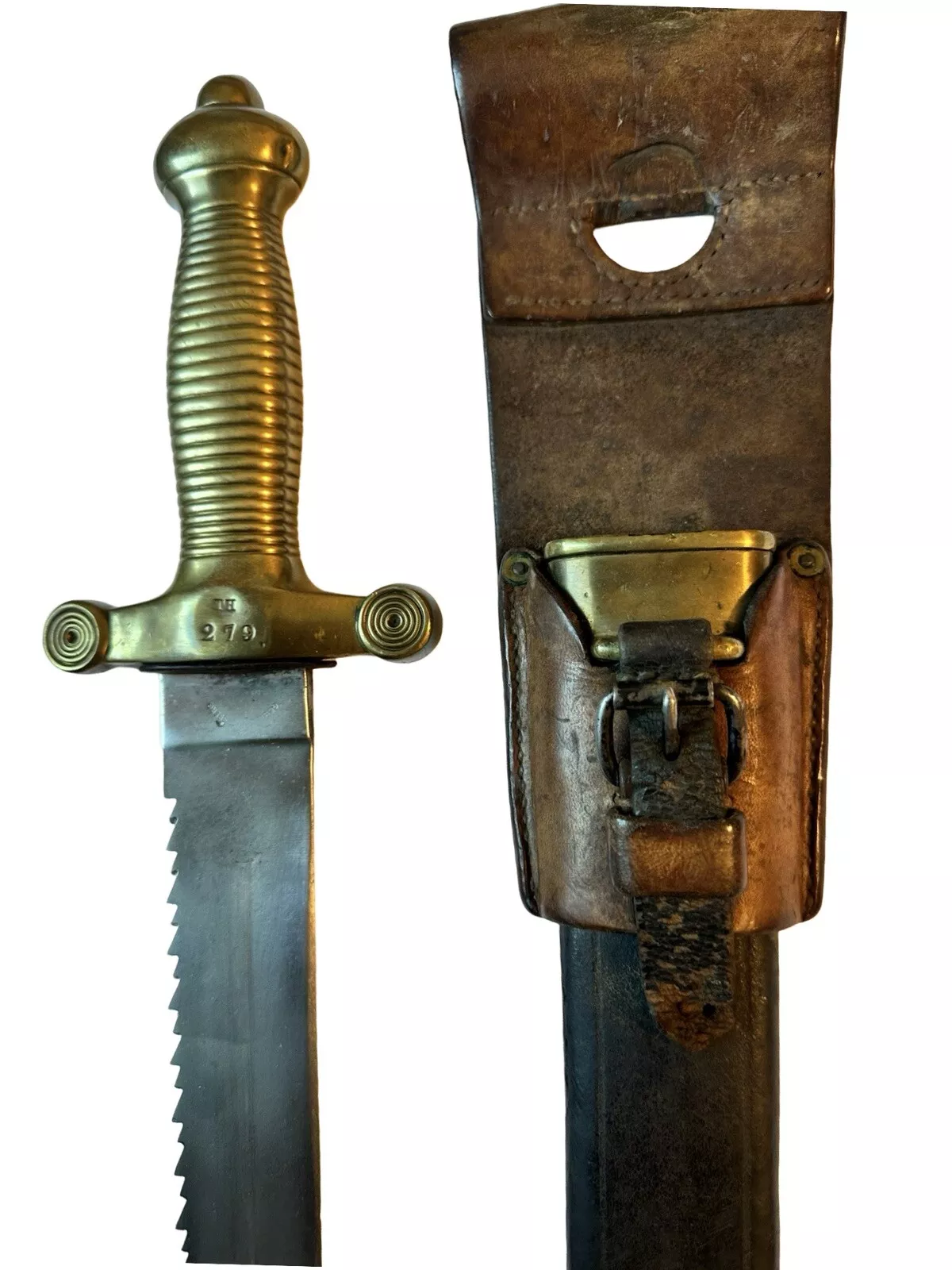
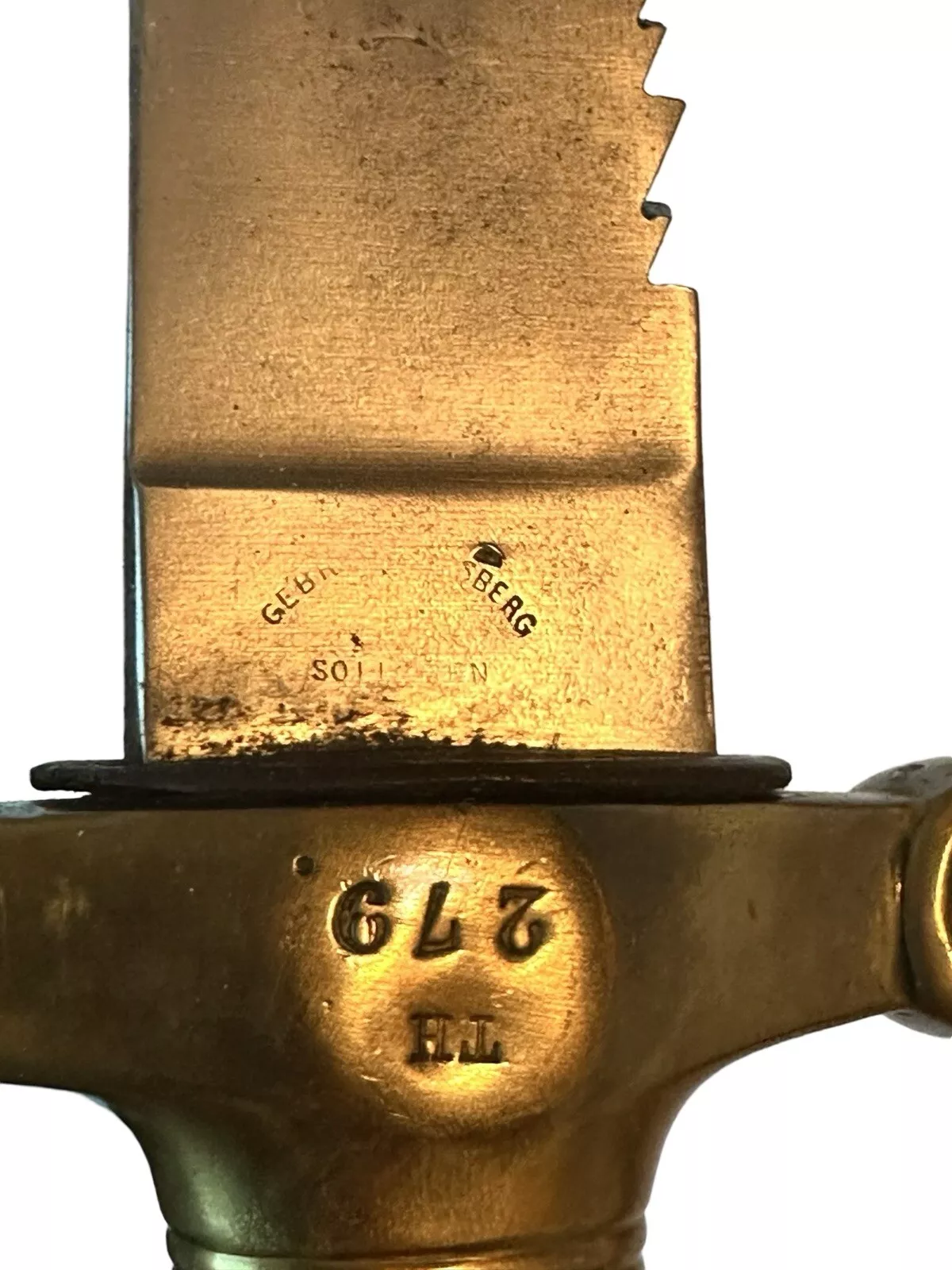
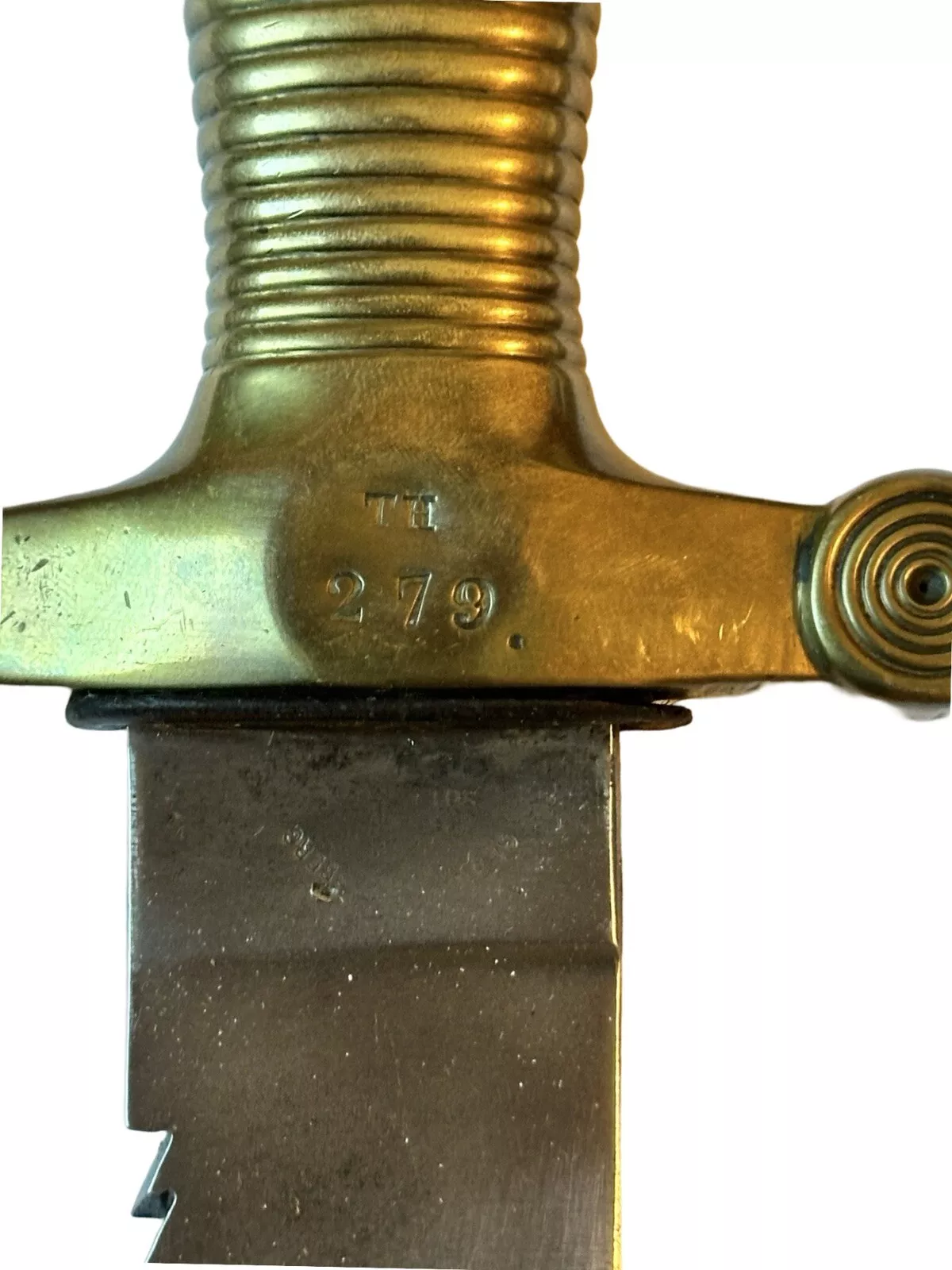
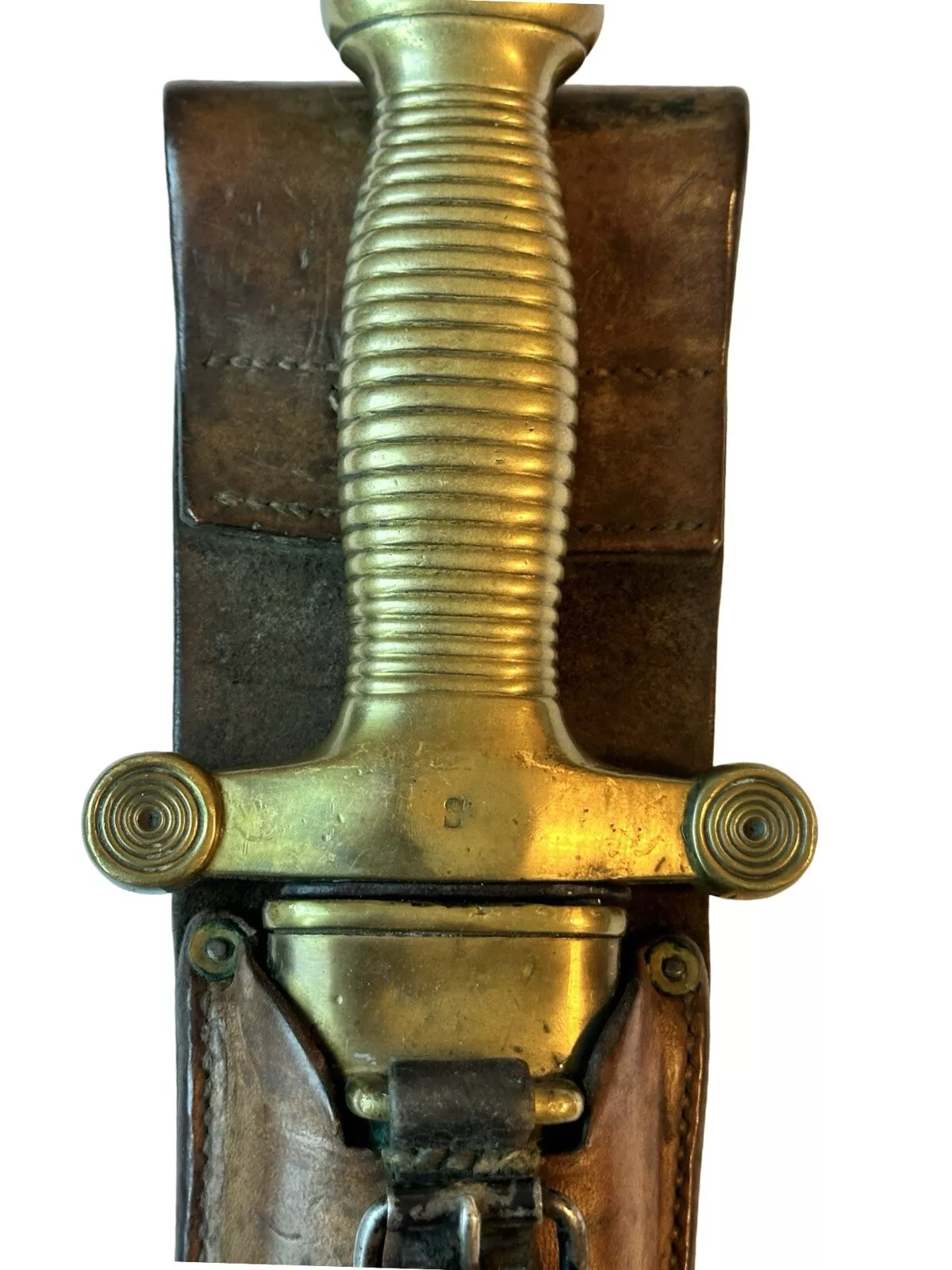
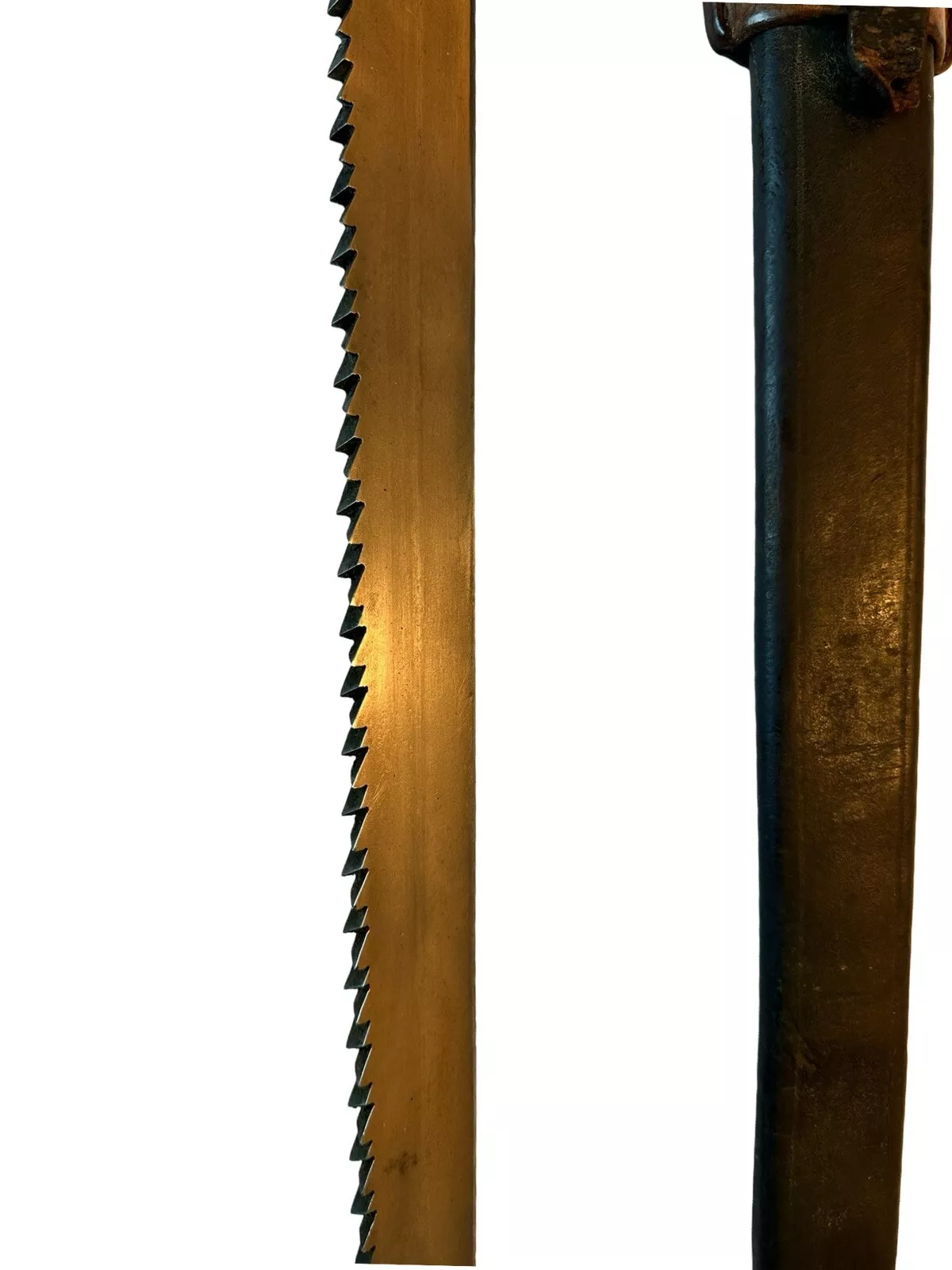
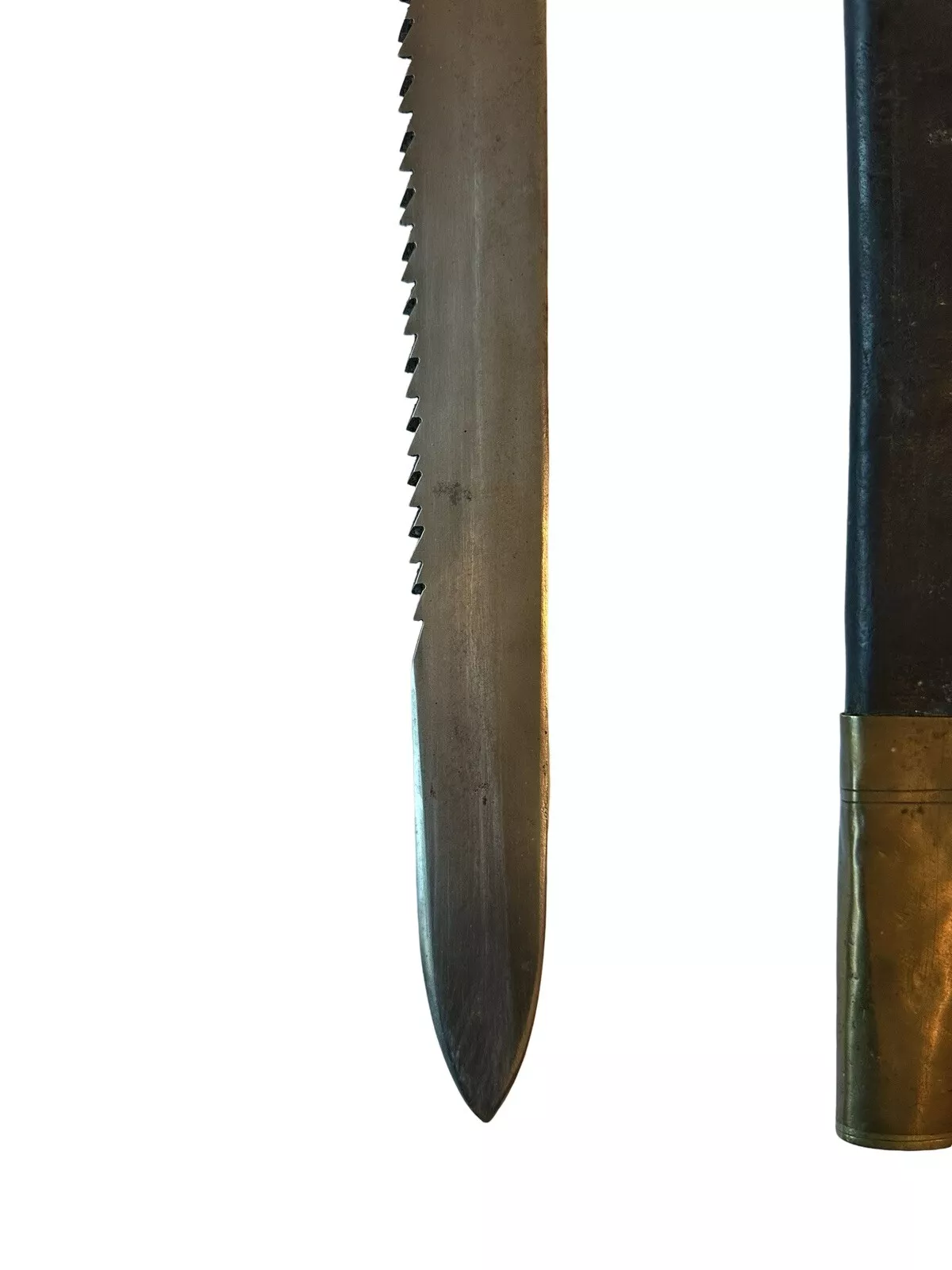
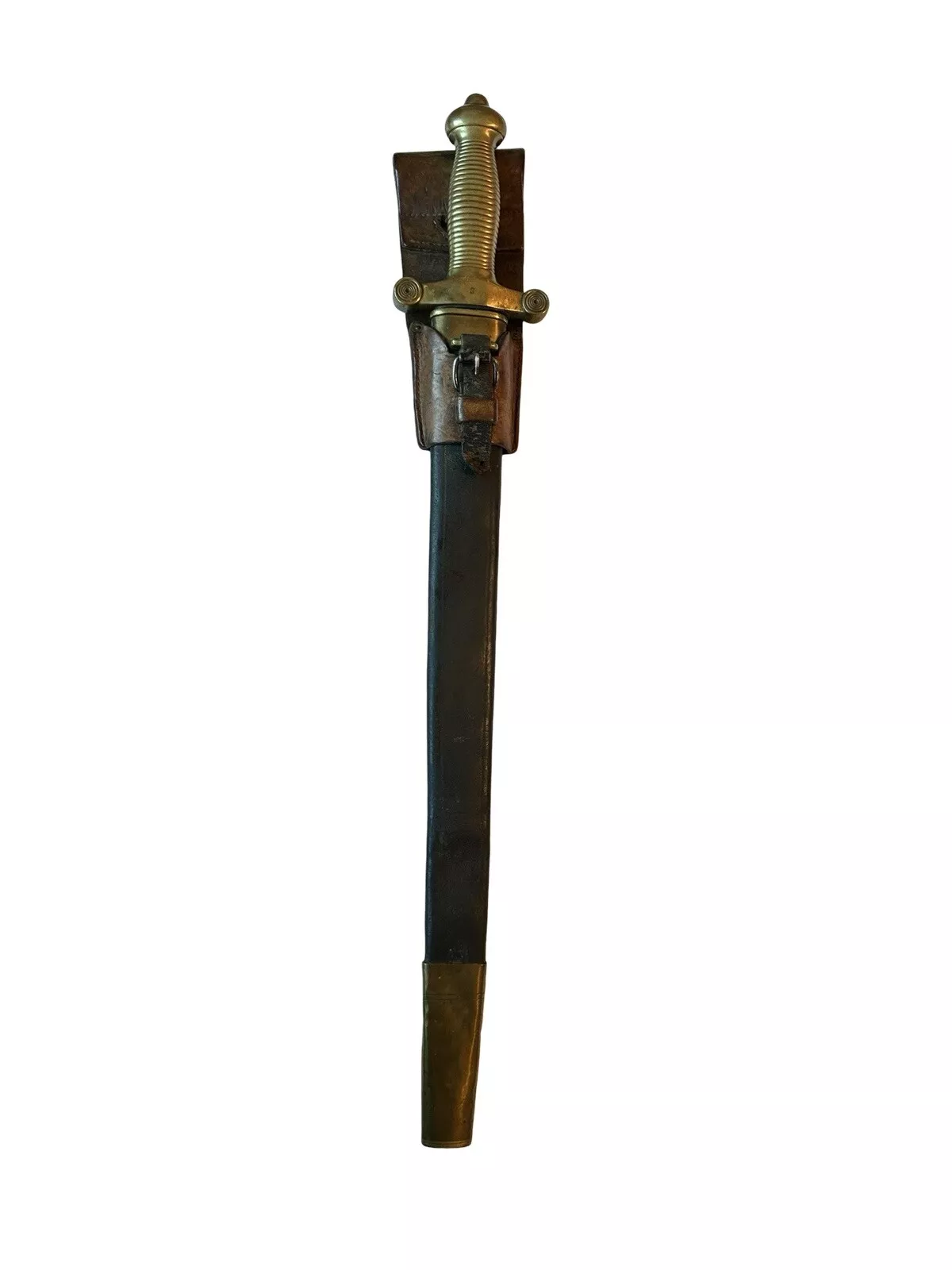
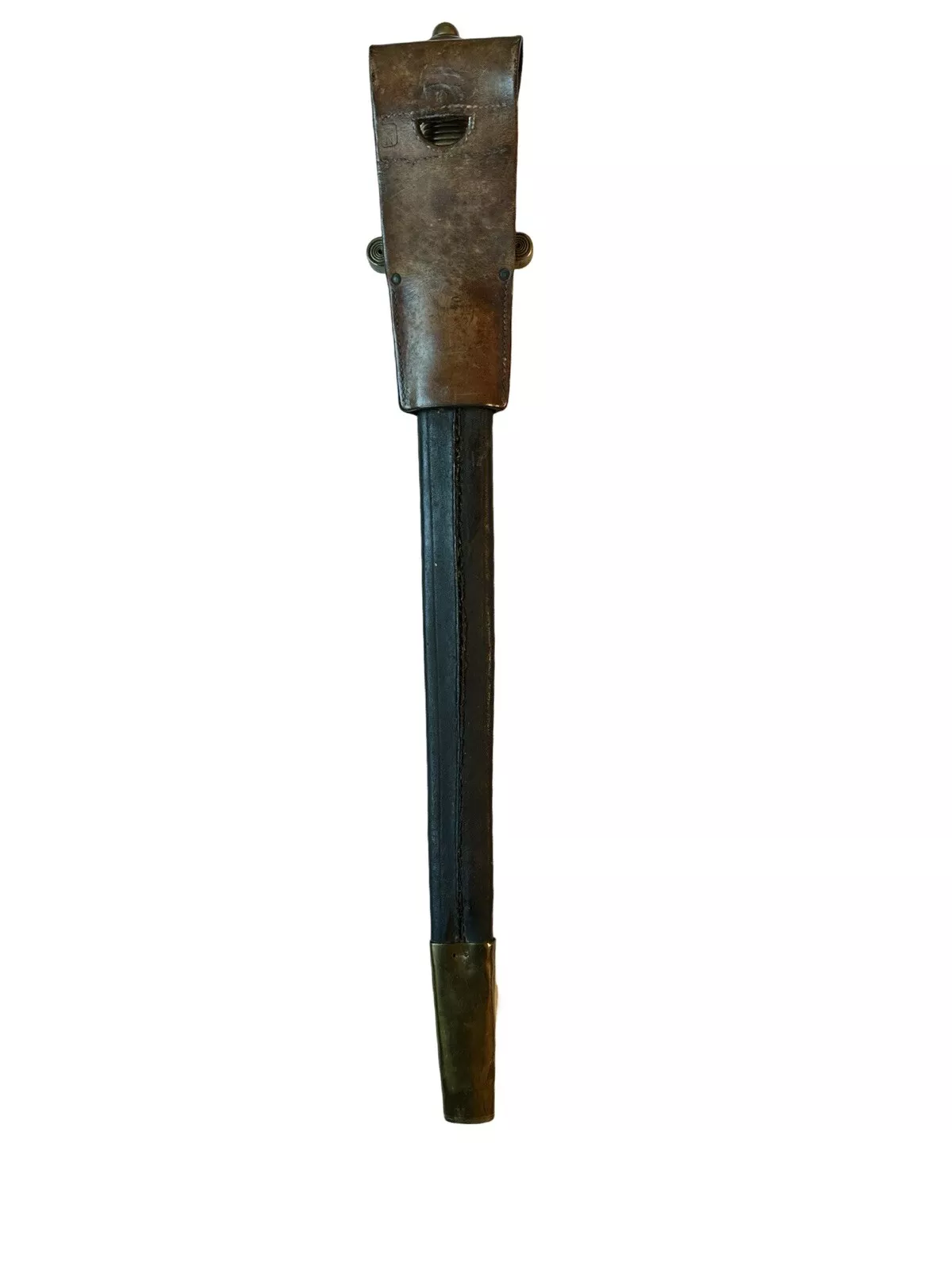
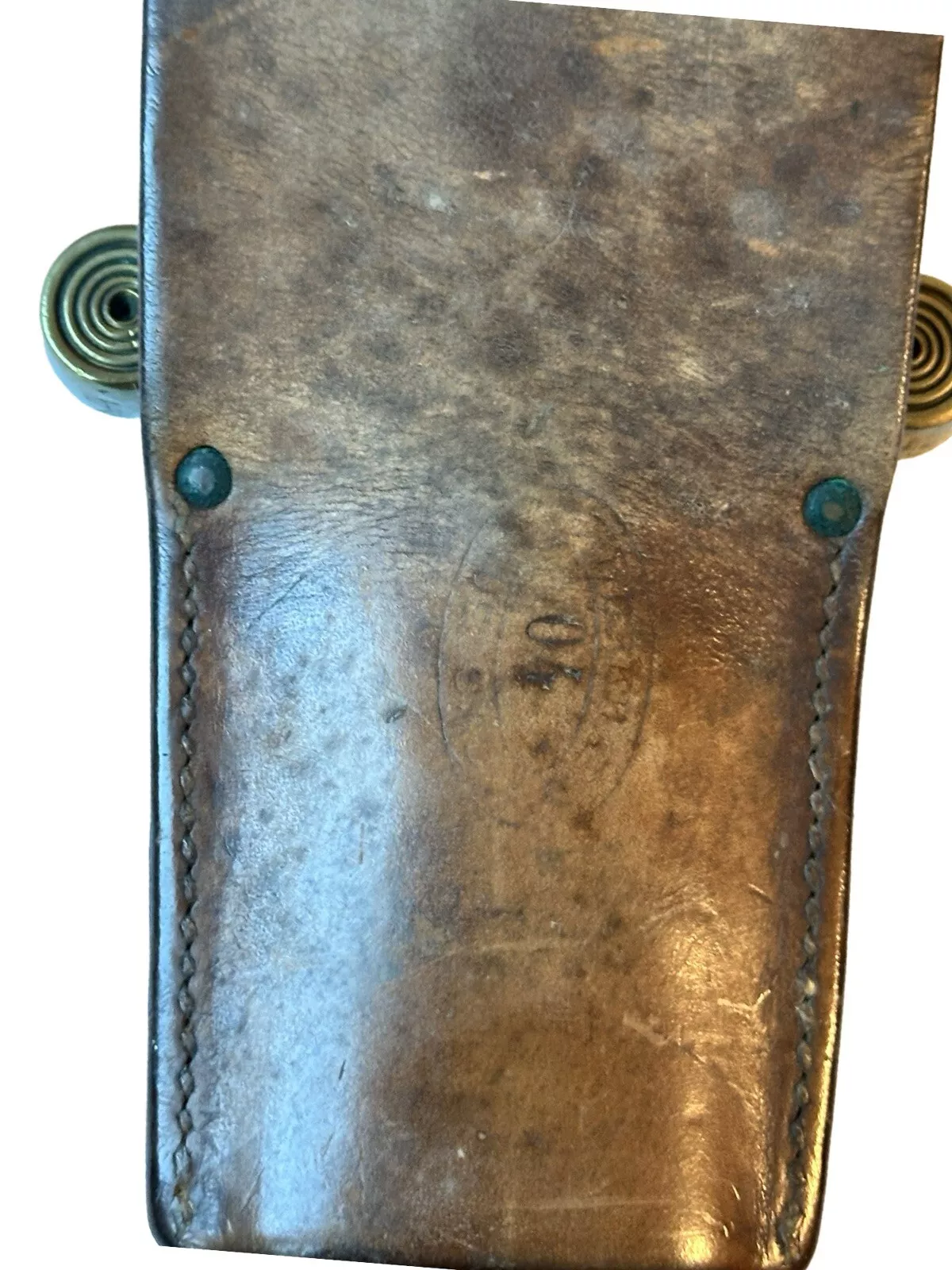
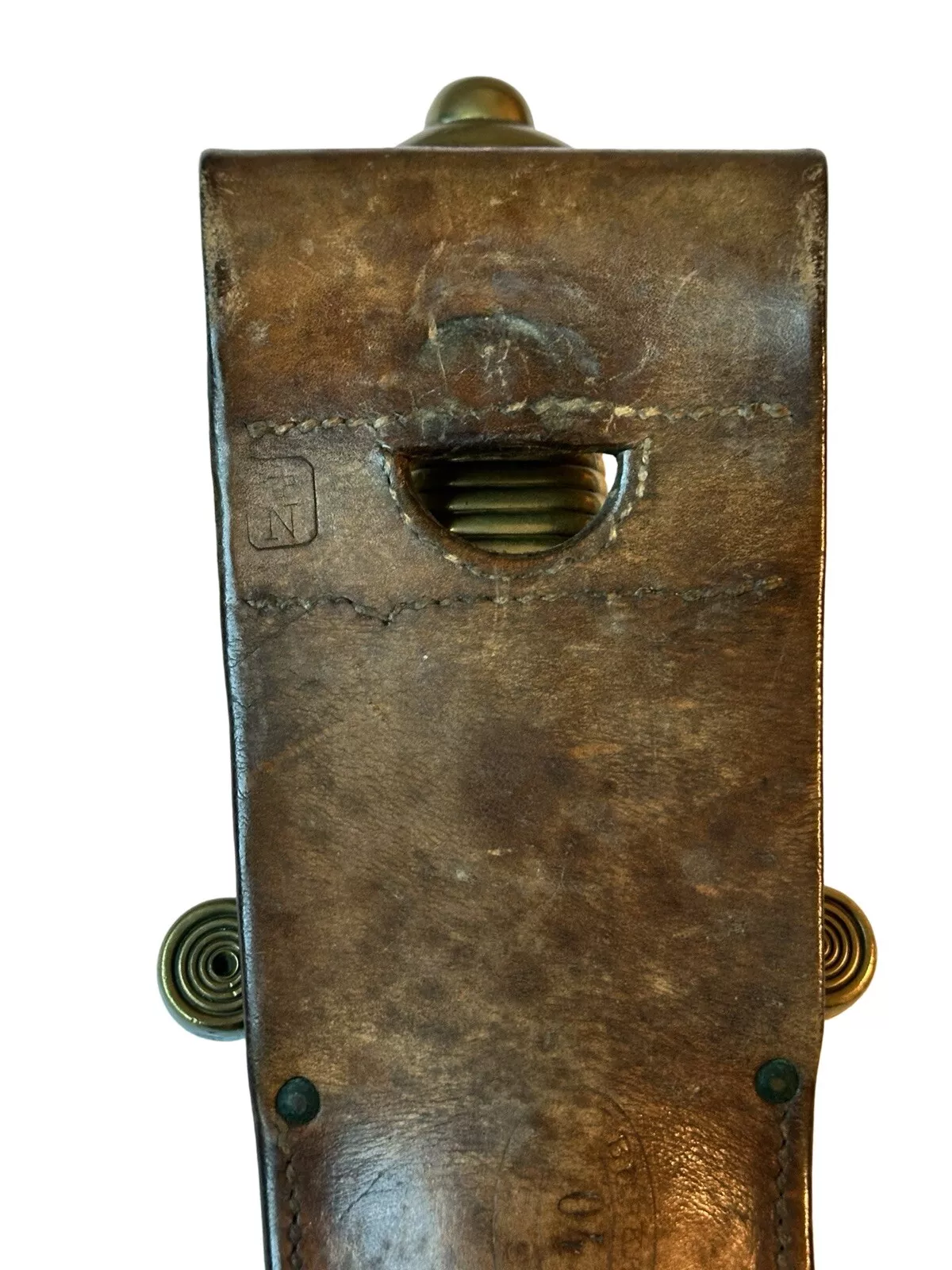
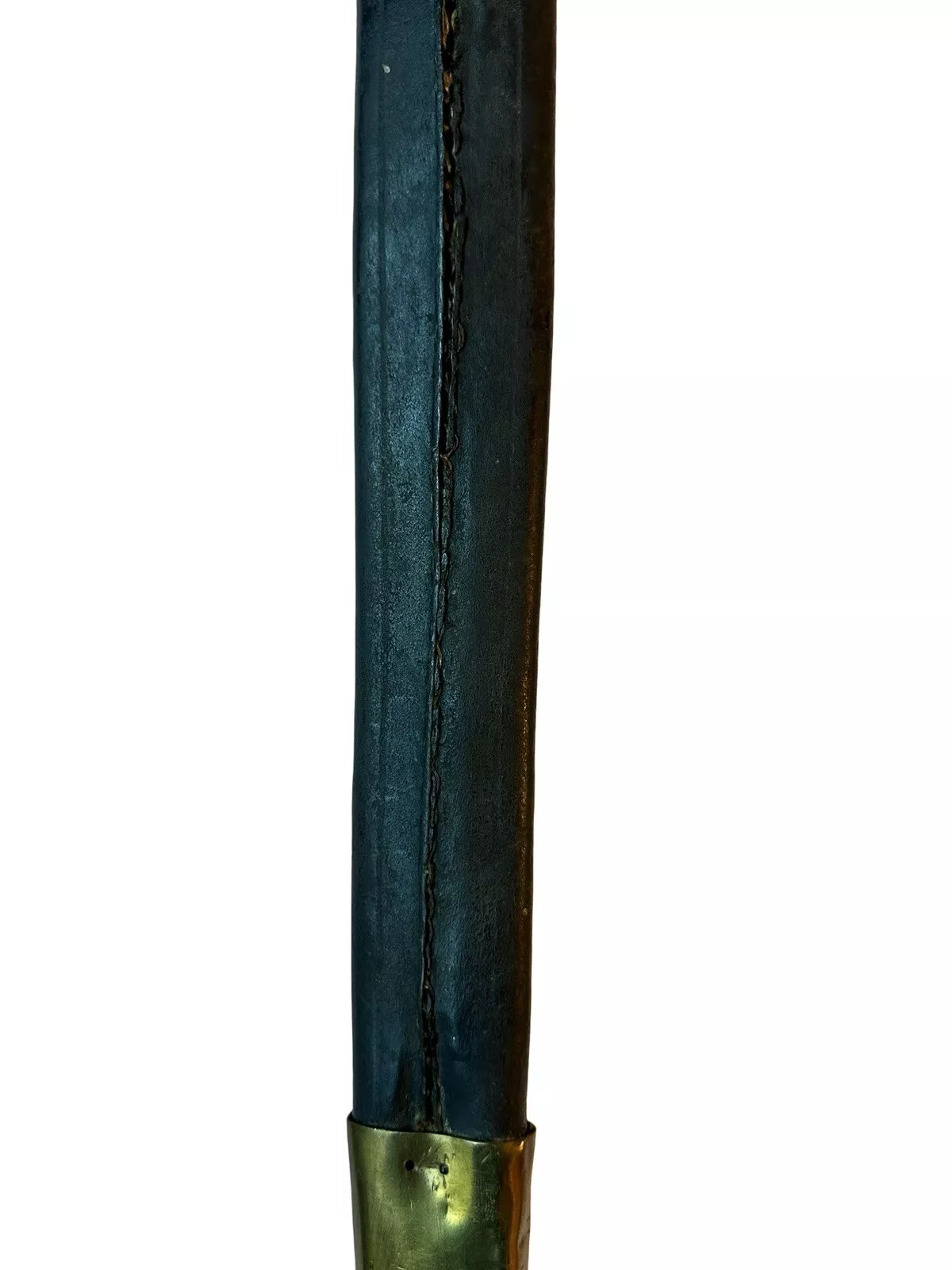
German Regiment marked Pioneers Sawtooth Sword, M1842 So-called ‘Glaive’. Stamped with Regiment: “TH 279” Thuringia, which is a region in Germany. And an S regiment mark for the Sanitatregiment and marked on the Ricasso: ‘Gebruder Weyersberg Solingen’. The sword in neoclassical ‘Gladius’ style with a heavy gilt bronze ribbed hilt, smooth pommel and a small horizontal guard in one piece, the guard-ends decorated with classic concentric circles on either side. Sharp sawtooth edge. The sword has a bronze mounted black leather scabbard and the original frog. Original buffer pad present.
Condition:
Excellent overall. Scabbard leather commensurate with age.
A nice, heavy, and early example. Regiment marks to boot, make this a desirable sawback sword.
Weapon History:
A specialized weapon that was designed for pioneers (and exported by Germany to many other countries leading up to and during WW1), who were responsible for clearing paths and obstacles and building bridges, trenches and roads for military units during the mid-19th century. The sword features a distinctive sawtooth edge, which allowed the pioneers to cut through wood and other materials with ease. It was also reportedly a very effective self defense weapon.
The blade is made of high-carbon steel, which gives it excellent durability and strength. The sawtooth edge runs along the top of the blade, allowing the pioneers to cut through wood and other materials quickly and efficiently.
The hilt of the sword features a large neoclassical, Roman gladius guard that provides minimal protection for the hand The pommel is made of brass or steel, depending on the version of the sword, and is designed to be both functional and aesthetically pleasing.
The German Sanitätsregiment (Sanitary Regiment or Medical Regiment) is a military unit responsible for medical support, healthcare, and casualty evacuation within the German armed forces. These units play a crucial role in ensuring the health and recovery of soldiers, particularly during military operations. While the concept of military medical services has long existed, the modern Sanitätsregiment evolved significantly, especially in the 19th century and into the 20th century.
Key Responsibilities and Functions of a German Sanitätsregiment:
- Medical Care:
- The primary mission of a Sanitätsregiment is to provide medical care to wounded or sick soldiers in the field. This includes first aid, emergency trauma care, and stabilization of casualties before they are evacuated to field hospitals or other medical facilities.
- These units often include medical professionals such as doctors, nurses, paramedics, and combat medics (known as Sanitäter).
- Casualty Evacuation:
- A significant function of the Sanitätsregiment is casualty evacuation (or CASEVAC) from the front lines. They operate ambulances, helicopters, and field transport systems designed to move injured personnel from combat zones to more secure locations for treatment.
- This evacuation is typically done in stages, from battlefield care to field hospitals, and eventually to full medical facilities or civilian hospitals if necessary.
- Field Hospitals:
- The Sanitätsregiment is responsible for setting up and operating field hospitals near the front lines. These mobile medical units provide advanced care for wounded soldiers, performing surgeries, trauma care, and rehabilitation services in forward areas before sending more serious cases to rear-echelon hospitals.
- These units are equipped to handle high volumes of casualties in the event of large-scale combat or disaster scenarios.
- Prevention of Disease and Health Maintenance:
- Medical personnel within the regiment also focus on the prevention of disease and health maintenance within the armed forces. This includes sanitation practices, vaccinations, and health inspections to ensure that troops remain fit for duty and that outbreaks of diseases (e.g., cholera, dysentery, etc.) are minimized, particularly in deployed environments.
- Training and Medical Readiness:
- The regiment also plays a role in training combat medics and other medical personnel. They are responsible for ensuring that all soldiers, especially medics, are trained in basic and advanced life-saving techniques such as CPR, tourniquet application, and other trauma care skills.
- Medical readiness is also part of their job, ensuring that all equipment and supplies are up to date and that medical personnel are prepared to respond to crises at a moment’s notice.
- Specialized Units:
- A Sanitätsregiment might also include specialized units, such as intensive care teams, surgical teams, or mental health professionals, depending on the needs of the military unit they are attached to.
- These specialized units provide more advanced care and recovery services, dealing with severe trauma, mental health issues like PTSD, and the overall well-being of soldiers during and after combat.
Historical Evolution:
- 19th Century:
- The German military’s medical services began formalizing in the 19th century, particularly in response to the Napoleonic Wars and later, the Franco-Prussian War (1870-71). As warfare became more industrialized, the need for organized, efficient medical services grew.
- Early Sanitätsregiments provided first aid and organized field hospitals, but their effectiveness was limited by the primitive medical technology and knowledge of the time.
- World War I:
- During World War I, the German medical corps evolved significantly, dealing with mass casualties from trench warfare, chemical weapons, and new forms of traumatic injuries. Sanitätsregiments were responsible for treating soldiers near the front lines, often under extreme conditions.
- The scale of the war required innovations in trauma surgery, blood transfusions, and the development of better methods for evacuating wounded soldiers from the battlefield.
- World War II:
- In World War II, the role of the Sanitätsregiment expanded even further. The German military faced challenges in treating mass casualties, both on the Eastern and Western Fronts. Advanced medical units were stationed close to the front lines, and specialized trains were used to transport the wounded to field hospitals.
- The Wehrmacht Sanitätsdienst (Medical Service) faced logistical challenges, particularly in the harsh climates of Russia and North Africa. Despite these obstacles, they made significant advances in battlefield medicine, including the use of antibiotics and improved surgical techniques.
Key Information about Gebr. Weyersberg:
- Origins:
- The Weyersberg family had a long tradition of blade-making in Solingen, with records of the family’s involvement in swordsmithing going back to the 16th century.
- Gebr. Weyersberg as a formal entity refers to the sword-making enterprise run by multiple members (brothers) of the Weyersberg family.
- The company gained a strong reputation for producing high-quality military swords, bayonets, and other edged weapons.
- Products:
- Military Weapons: Gebr. Weyersberg was particularly well-known for supplying blades to the German military, including swords, sabers, and bayonets.
- Export: In addition to supplying the German armed forces, Gebr. Weyersberg also exported their high-quality swords and bayonets to various countries.
- The craftsmanship was highly respected, and their weapons were known for durability and design.
- Merger with Kirschbaum:
- In 1883, Gebr. Weyersberg merged with another prominent Solingen sword-making firm, Kirschbaum, which was also known for producing high-quality edged weapons. The combined company became Weyersberg, Kirschbaum & Cie (WKC).
- After the merger, WKC continued to thrive and became one of the world’s leading manufacturers of ceremonial swords, bayonets, and other military weapons.