
WW1 German Sawback Sword Fascine Knife – Swiss Made Waffenfabrik Pioneers M1842
$1,100.00 CAD
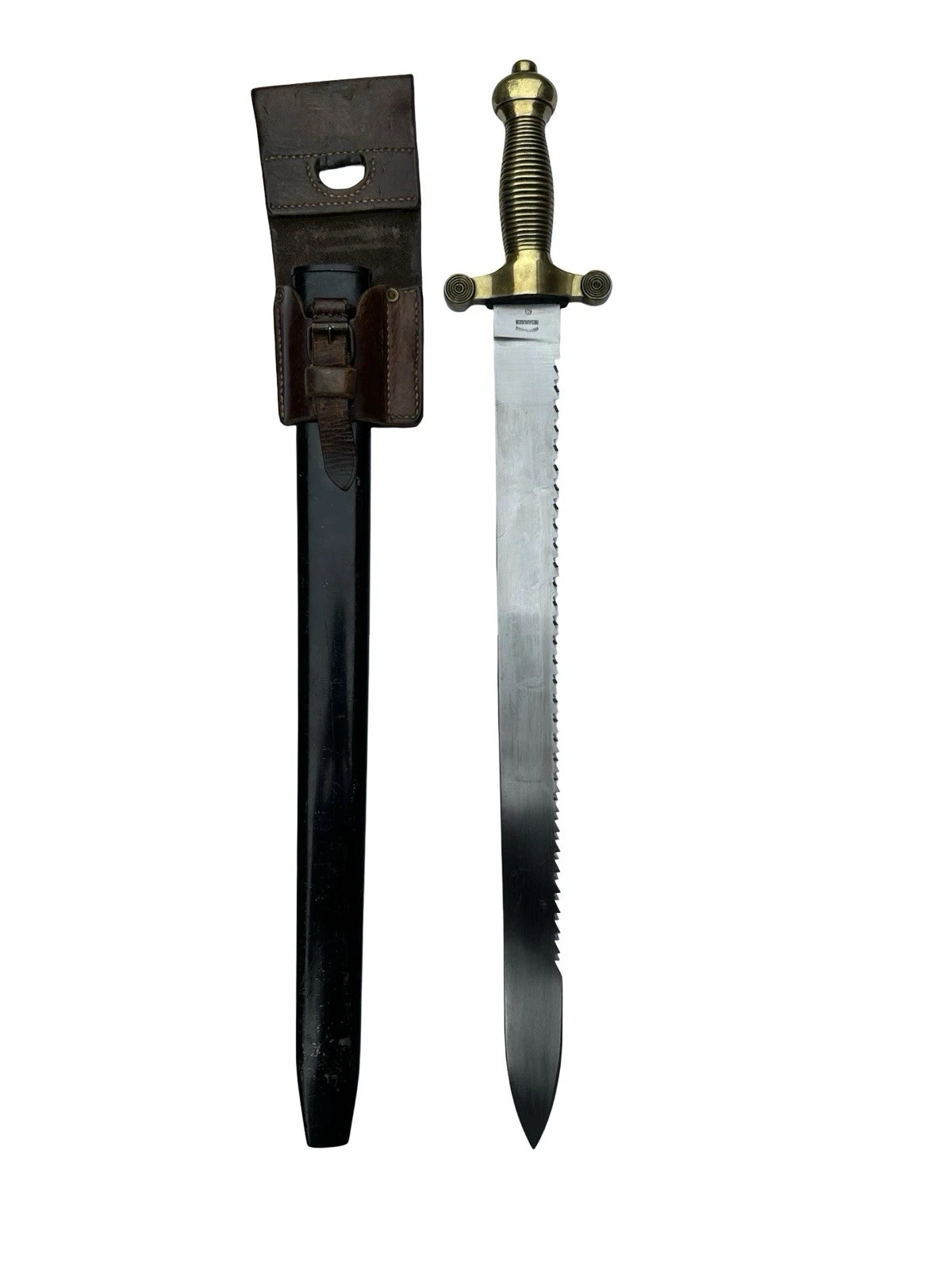
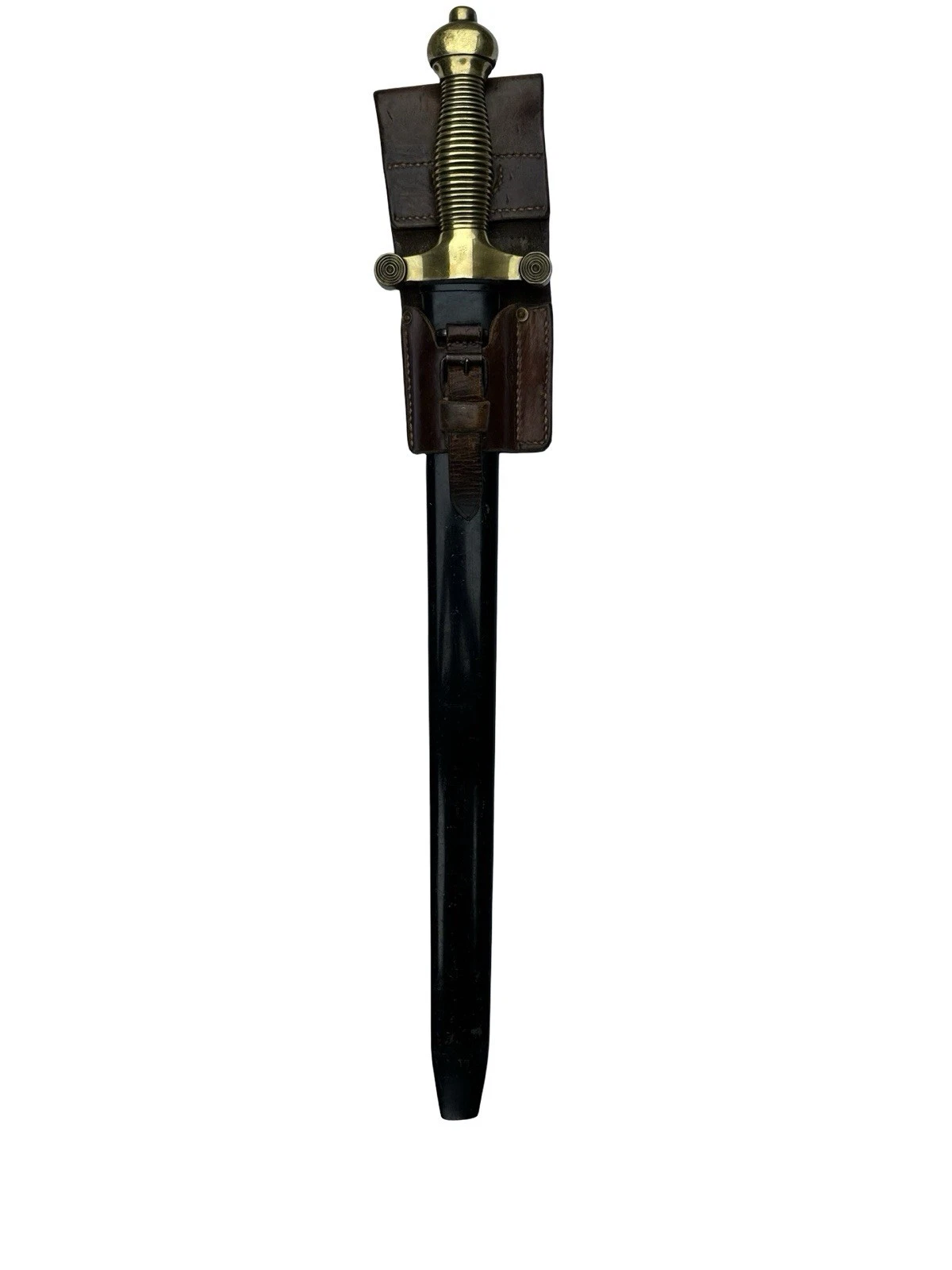
Beautiful Swiss made sawback pioneers sword.
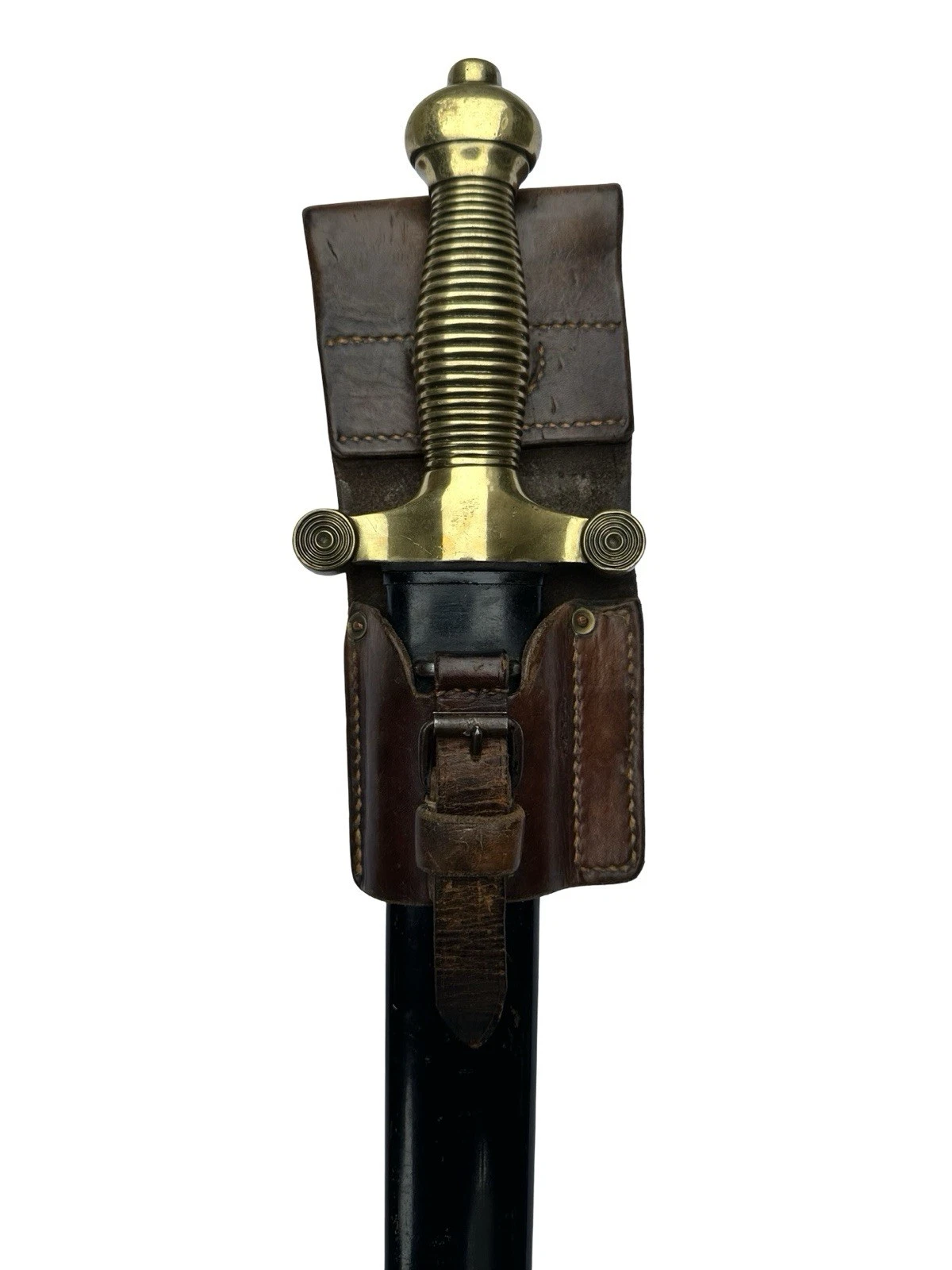
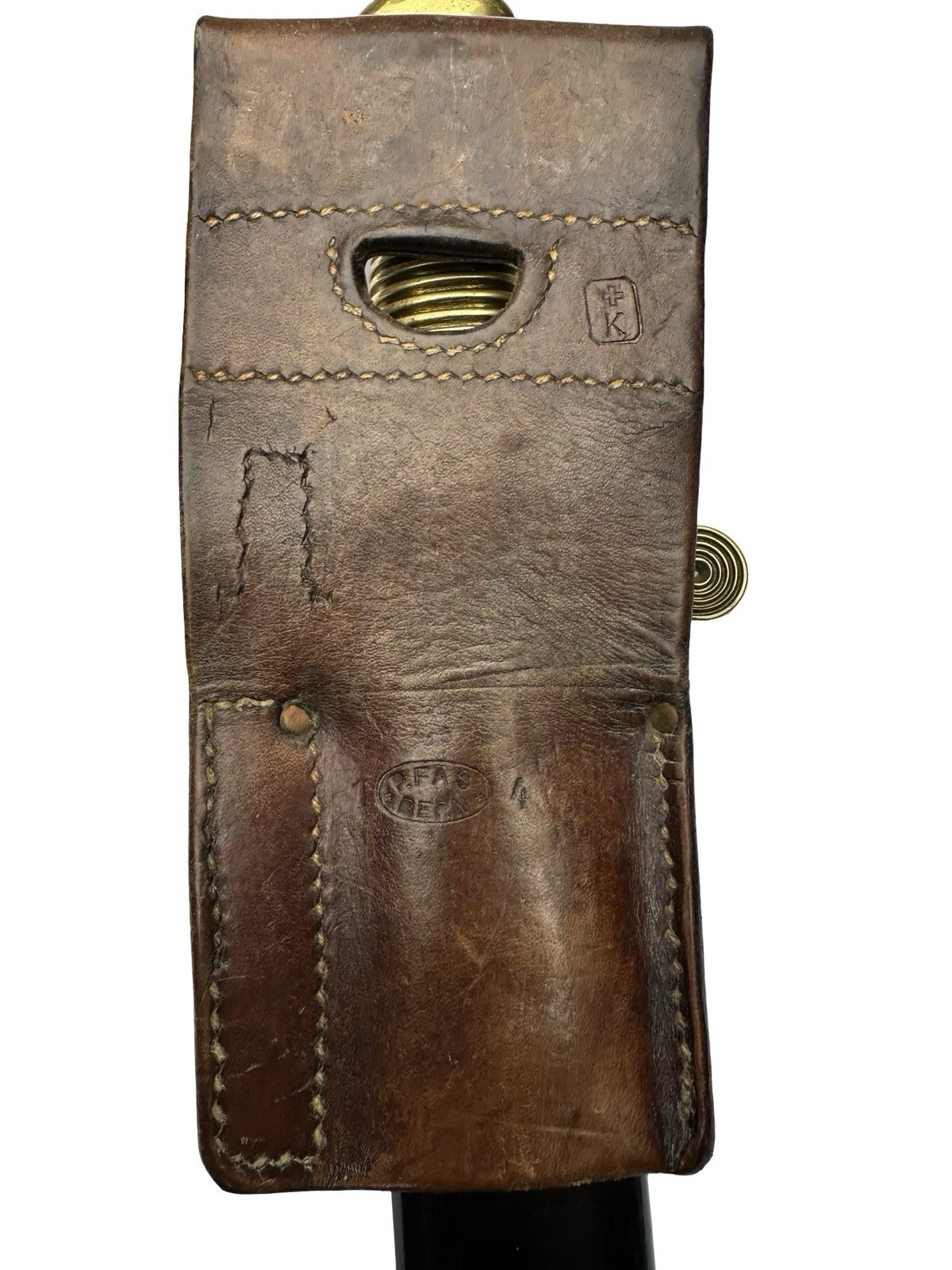
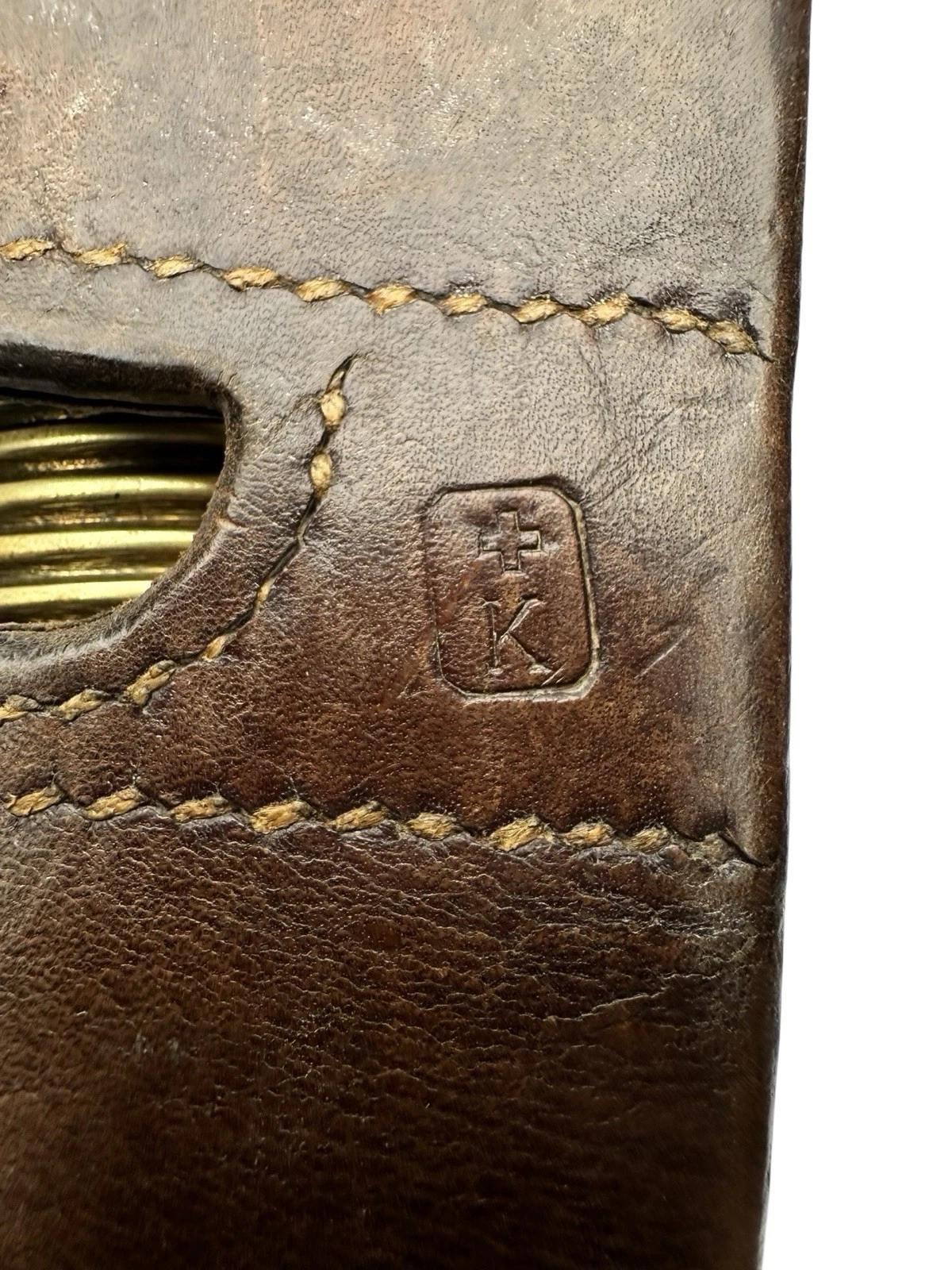
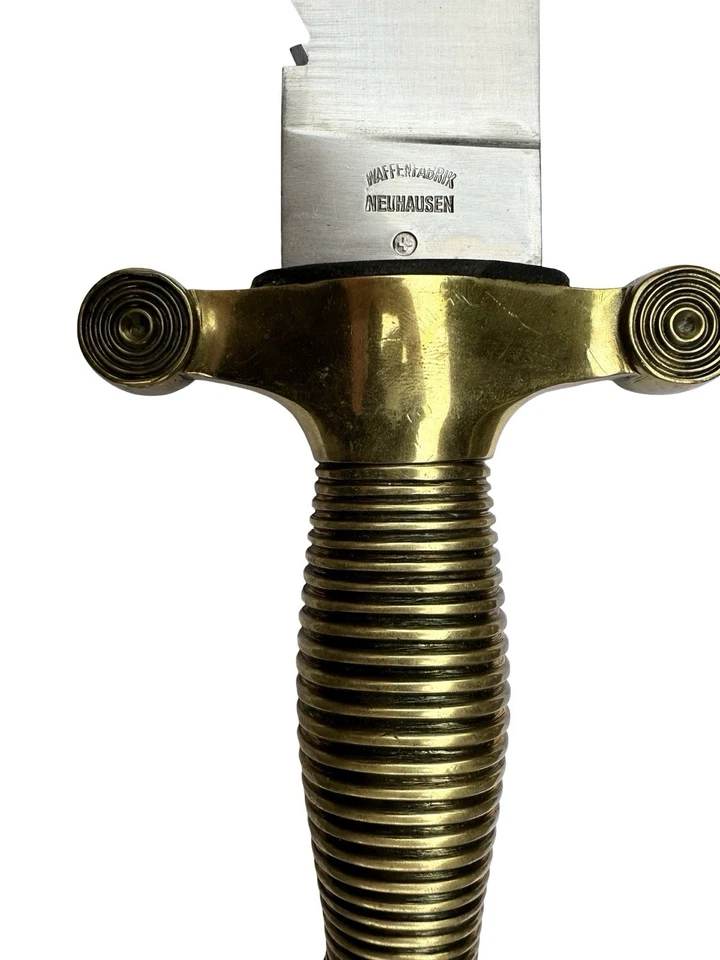
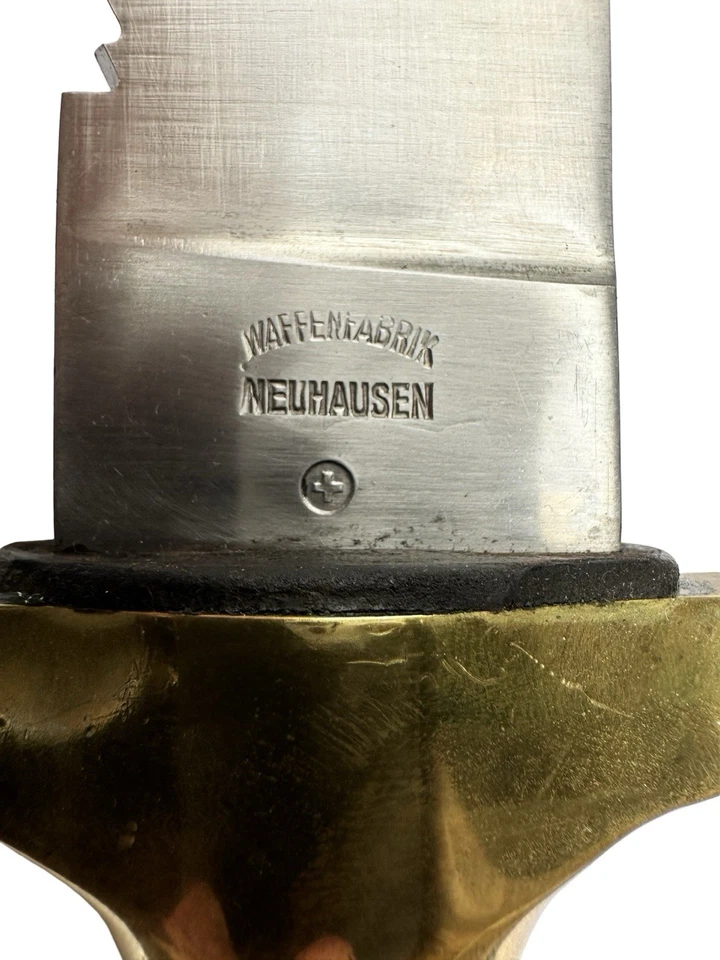
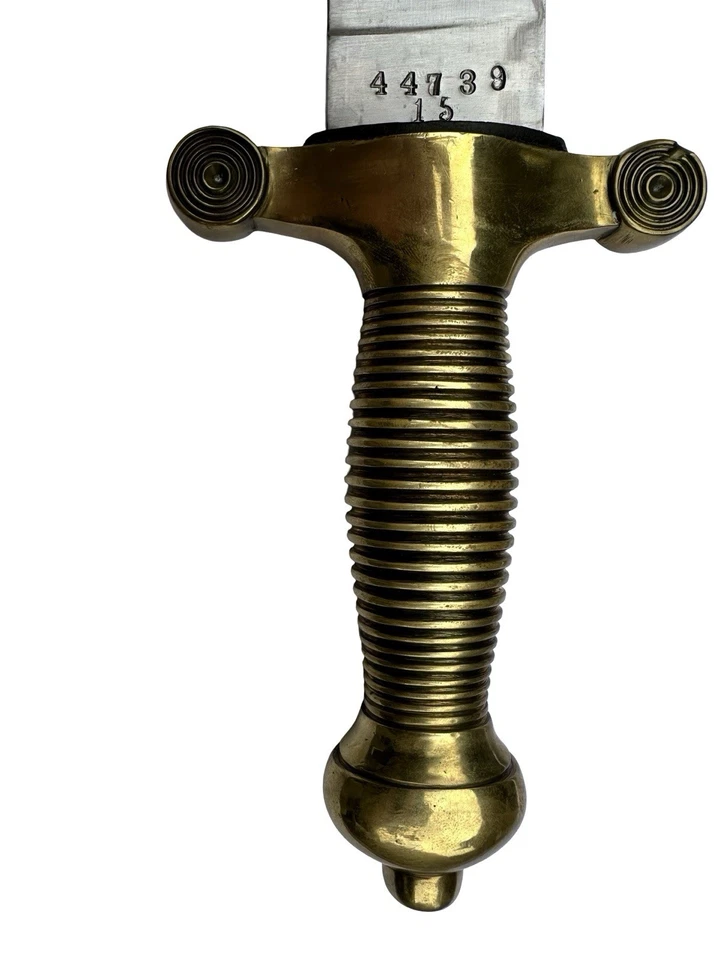
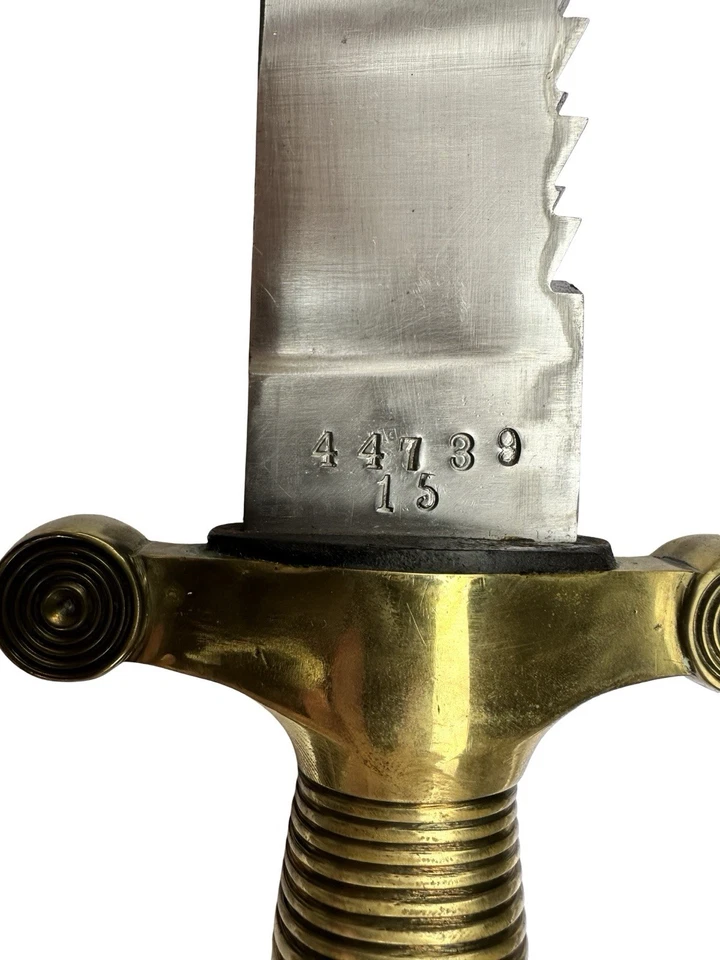
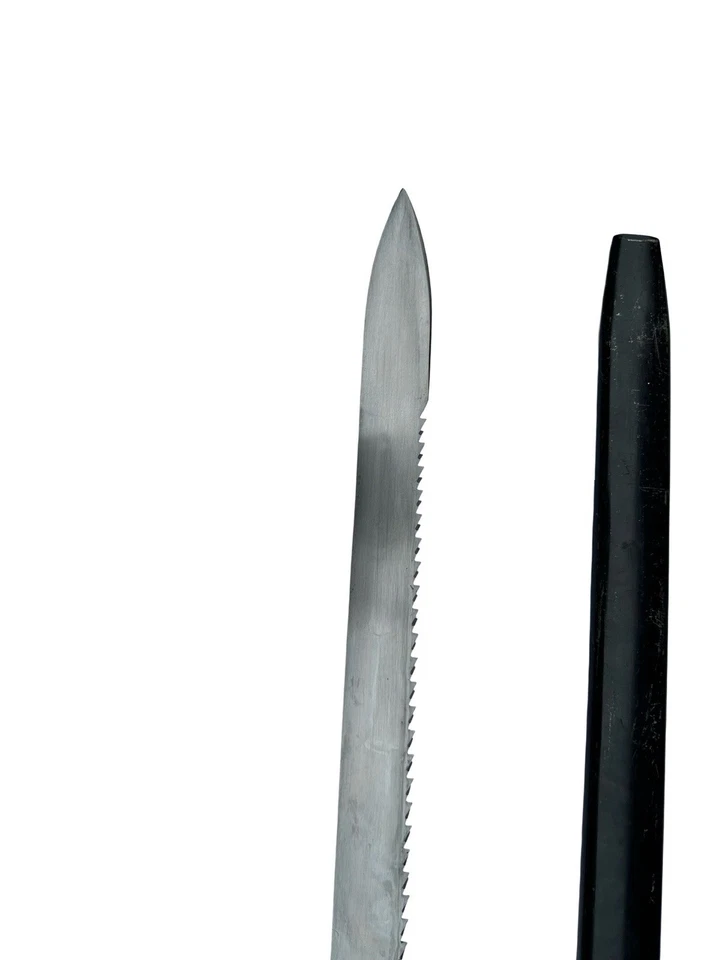
M1842. Beautiful clean blade, no wobbles. Metal scabbard and original frog. Maker marked by Waffenfabrik Neuhausen. Serial numbered and Dated to 1915, the heart of the Great War. Extremely heavy as there are no fullers, truly a wonderful sword to hold in the hand. Sword and scabbard overall rate: MINT.
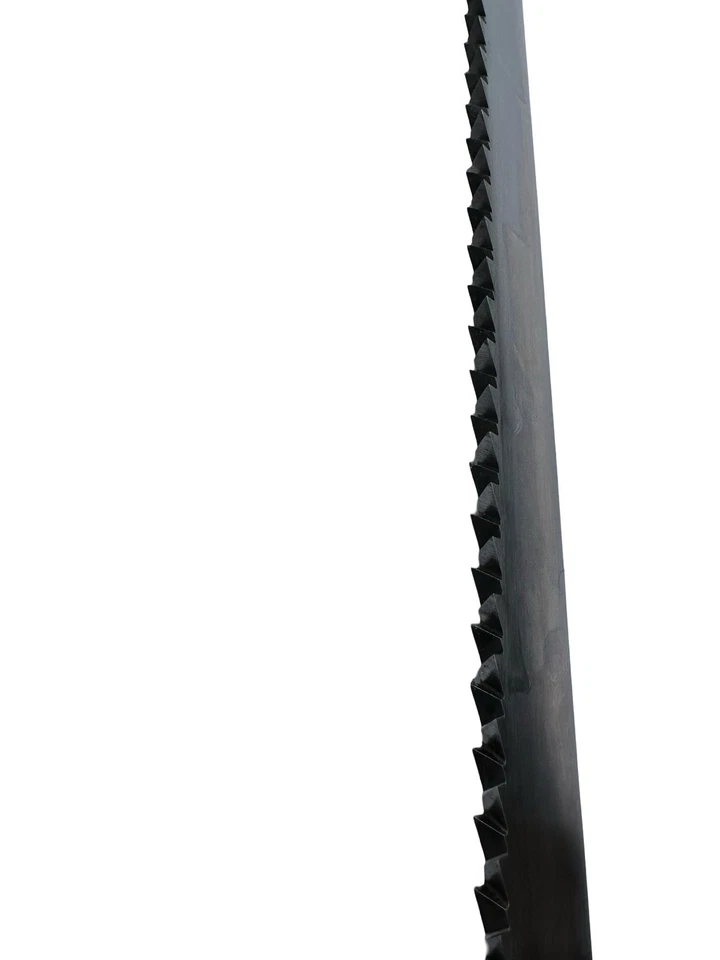
A specialized weapon that was designed for pioneers (and exported by Germany to many other countries leading up to and during WW1), who were responsible for clearing paths and obstacles and building bridges, trenches and roads for military units during the mid-19th century. The sword features a distinctive sawtooth edge, which allowed the pioneers to cut through wood and other materials with ease. It was also reportedly a very effective self defense weapon.
The blade is made of high-carbon steel, which gives it excellent durability and strength. The sawtooth edge runs along the top of the blade, allowing the pioneers to cut through wood and other materials quickly and efficiently.
The hilt of the sword features a large neoclassical, Roman gladius guard that provides minimal protection for the hand The pommel is made of brass or steel, depending on the version of the sword, and is designed to be both functional and aesthetically pleasing.
🏭 Waffenfabrik Neuhausen — The Factory
Waffenfabrik Neuhausen (literally “Arms Factory Neuhausen”) refers to the Swiss state arms factory located in Neuhausen am Rheinfall, in the canton of Schaffhausen, Switzerland.
- The factory was founded in the late 19th century as part of Switzerland’s efforts to modernize and consolidate its small-arms production.
- Initially, the Swiss federal government had relied heavily on private workshops and foreign contractors (especially Solingen in Prussia) for edged weapons, but by the second half of the 19th century it sought to standardize and control quality domestically.
- The Neuhausen works were managed by Schweizerische Industrie-Gesellschaft (SIG) — a company founded in 1853 as the Schweizerische Waggonfabrik, which soon shifted into arms production. By the 1860s–70s, SIG had become the principal state contractor for small arms.
- Over time, “Waffenfabrik Neuhausen” became the shorthand for SIG’s state-controlled arms production facilities in Neuhausen. Later, SIG Neuhausen was famous for producing the Schmidt–Rubin series of rifles, P210 pistols, and other high-quality military arms for both Swiss and foreign clients.
Although the Neuhausen plant is most famous for firearms, during the mid-to-late 19th century it also participated in the manufacture and refurbishment of Faschinenmesser (pioneer short swords) such as the M1842, M1860, and later variants. Many blades from this period bear either:
- A Neuhausen stamp (sometimes abbreviated or with initials),
- Or a Waffenfabrik Neuhausen or SIG Neuhausen mark on the blade or scabbard fittings.
⚔️ Swiss Pioneer Swords Exported to Germany — Pre-WWI and WWI
In the decades before the First World War, Switzerland maintained neutrality, but Swiss arms makers were highly active in international arms trade. SIG Neuhausen, along with Solingen firms, exported pioneer swords and surplus Faschinenmesser widely — and Germany was one of the primary destinations.
Pre–World War I (c. 1890s–1914):
- As Germany modernized its engineer and pioneer units, there was a shortfall of short swords for auxiliary and second-line troops. The German army had its own sawback pioneer swords (like the Seitengewehr 1871/84 and various Pioniersäbel), but Swiss stocks of M1842 and M1860 Faschinenmesser were purchased in bulk to fill equipment gaps, particularly for Landwehr (reserve) and Ersatz (replacement) units.
- German states and military districts often contracted surplus or second-hand Swiss swords because Swiss weapons were high-quality, inexpensive, and immediately available. Many of these swords were originally made in Switzerland for the Swiss army, but later sold off as new models replaced them domestically.
- German depots sometimes re-marked the blades or scabbards, but many still retained their original Neuhausen or Solingen marks. German property stamps (crown over letter, or unit markings) are sometimes added.
During World War I (1914–1918):
- Once the war began, Germany faced enormous shortages of edged weapons, particularly for engineers, pioneers, and auxiliary units. To fill this need quickly, neutral Swiss firms like Waffenfabrik Neuhausen and Solingen intermediaries exported both newly manufactured and surplus Faschinenmesser to the German Empire.
- These swords were distributed mainly to Landsturm, pioneer troops, and sometimes even to Austro-Hungarian units, as the Central Powers cooperated on procurement.
- Some Swiss swords were shortened, modified, or issued as-is with their original scabbards. Period photographs occasionally show German pioneer troops carrying these distinctive Swiss-pattern sawback swords in the trenches.
Why Switzerland Could Export to Germany During the War:
- Switzerland was officially neutral but maintained economic relations with both the Entente and the Central Powers. Its arms exports, particularly to Germany and Austria-Hungary, were a source of foreign currency.
- SIG Neuhausen had no formal prohibition against selling pioneer swords because they were considered non-strategic edged weapons, unlike modern rifles or artillery.
📝 Final Thoughts
- Waffenfabrik Neuhausen = SIG’s arms factory in Neuhausen am Rheinfall, a major Swiss government arms producer since the mid-19th century.
- The factory produced or refurbished M1842 and later pioneer swords.
- Germany imported Swiss pioneer swords in significant numbers from the 1890s up to and including WWI, mainly to equip reserve, pioneer, and auxiliary/artillery units.
- Swiss swords were valued for their craftsmanship, affordability, and quick availability. Many were issued essentially unchanged, sometimes with added German acceptance stamps.