





Napoleonic Wars Officers Sword Briquet – Italian House of Savoy
$1,000.00 CAD
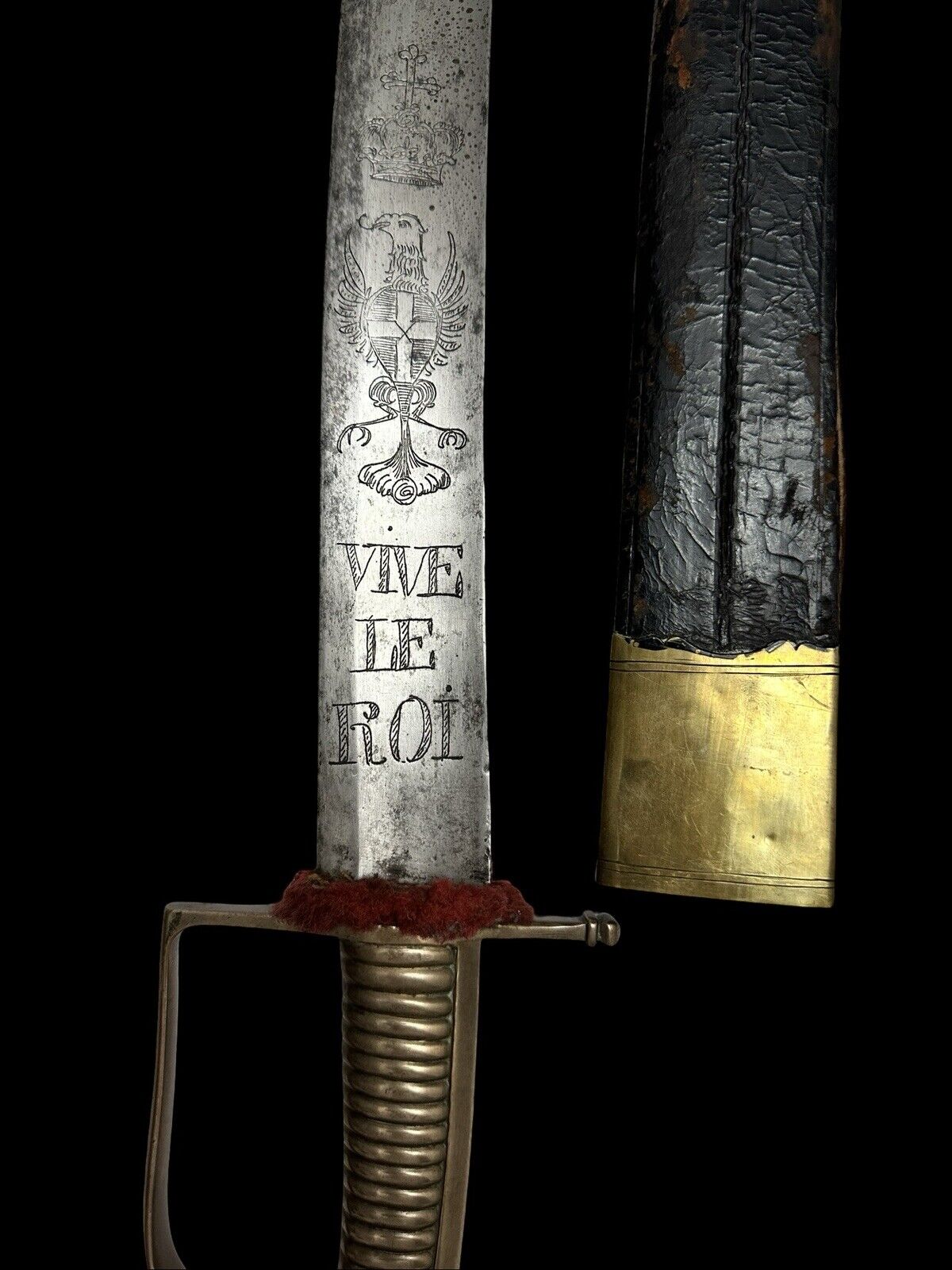
A rare House of Savoy Napoleonic Infantry Officers Briquet.
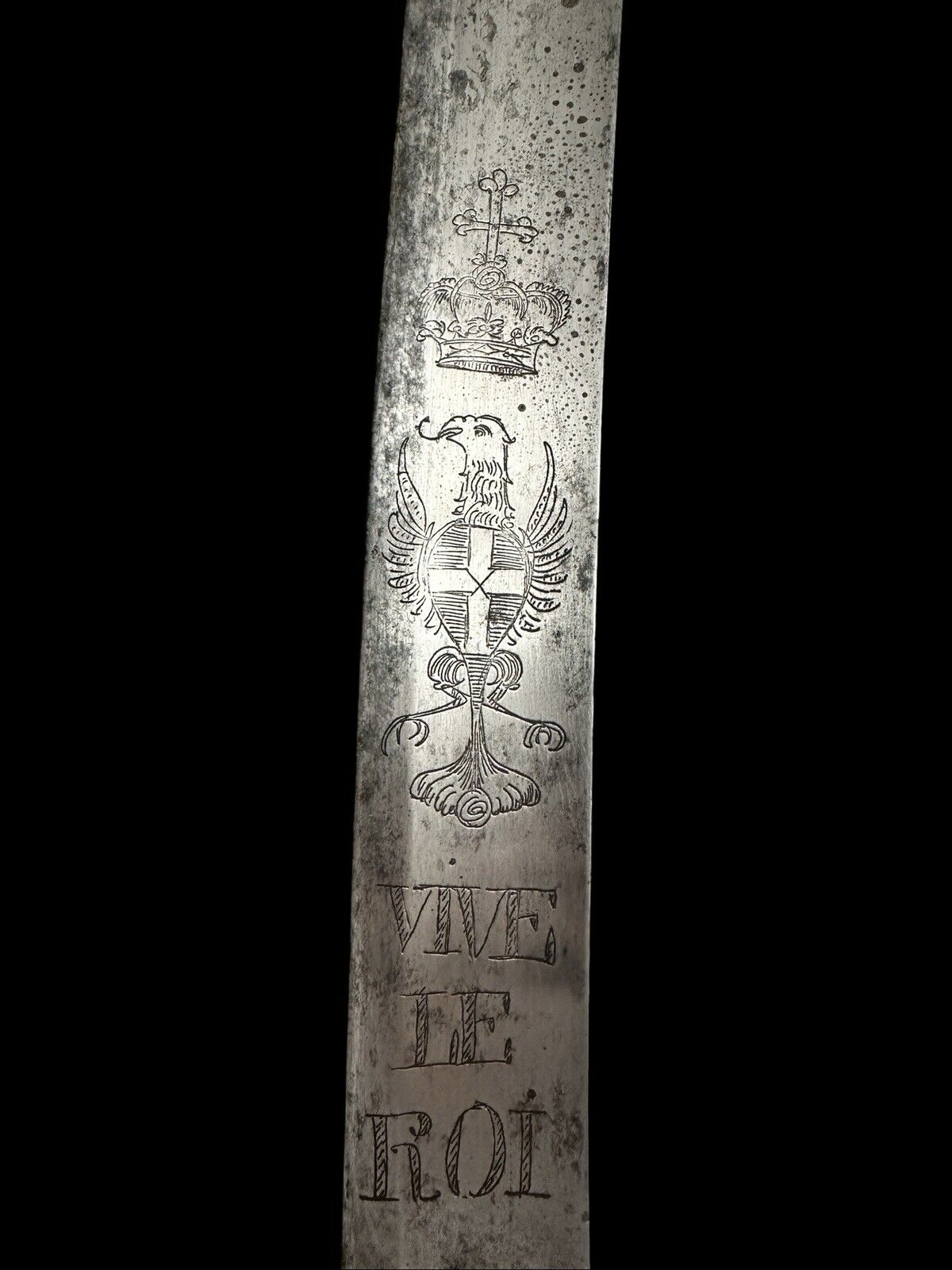
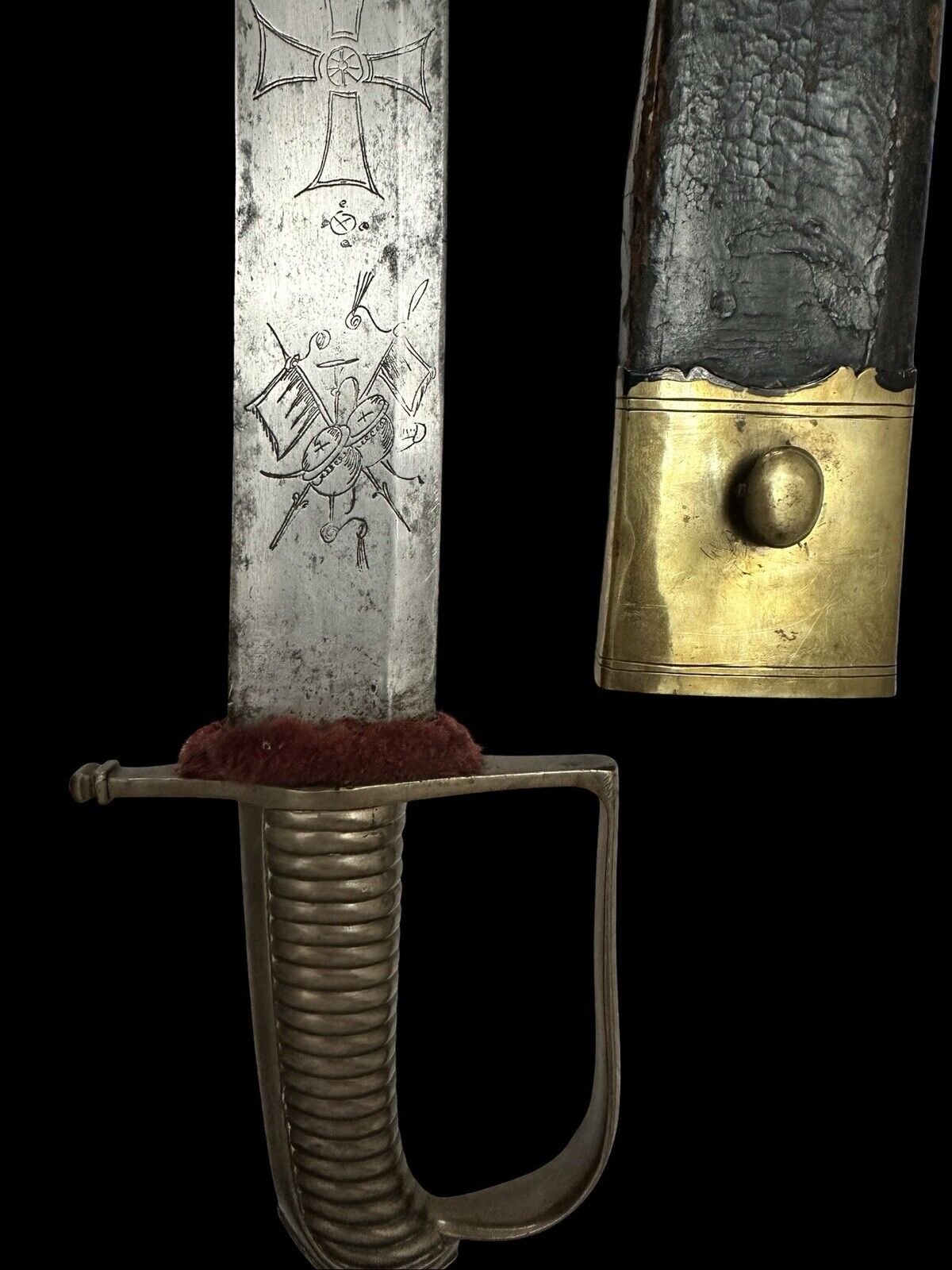
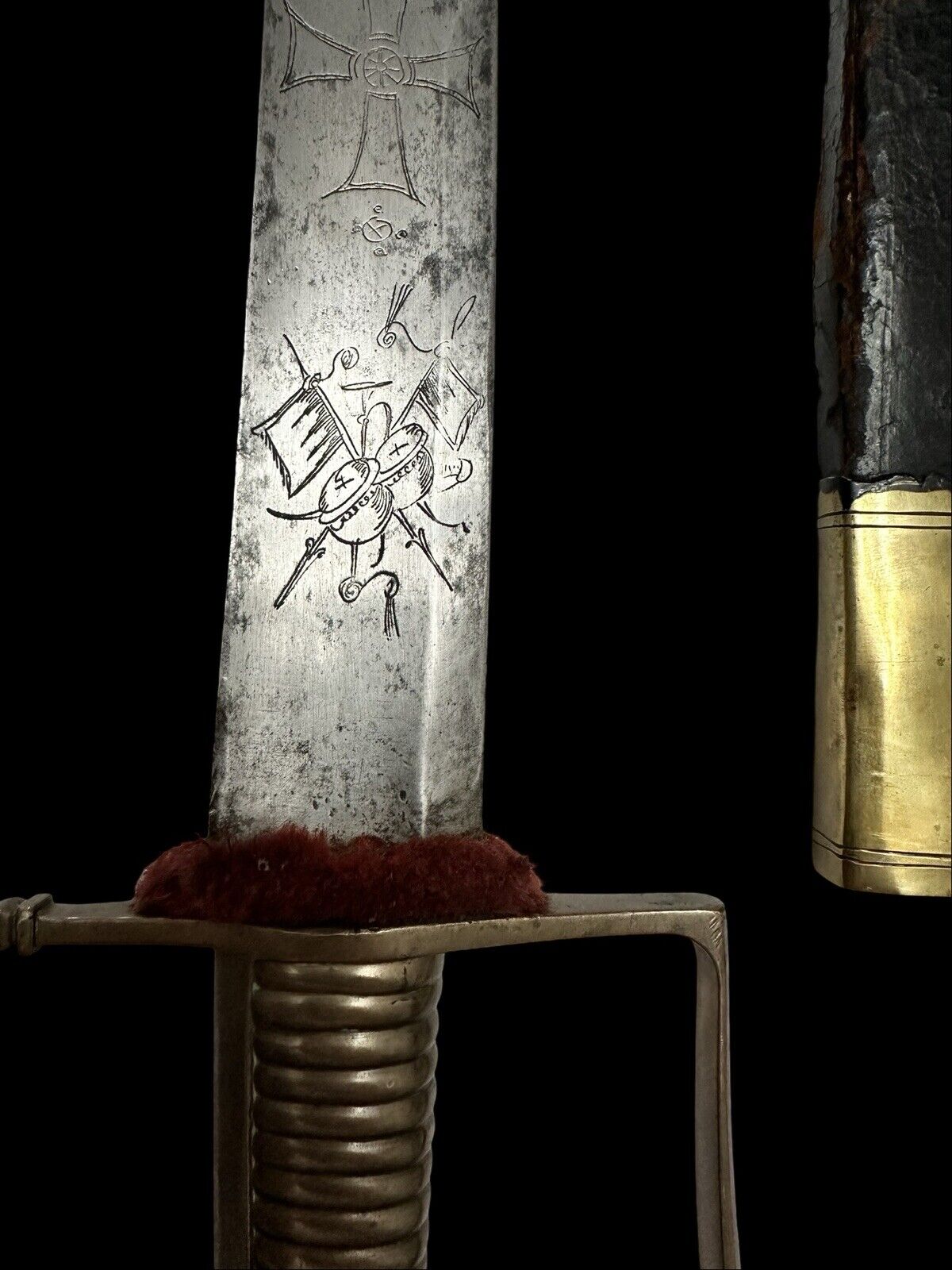
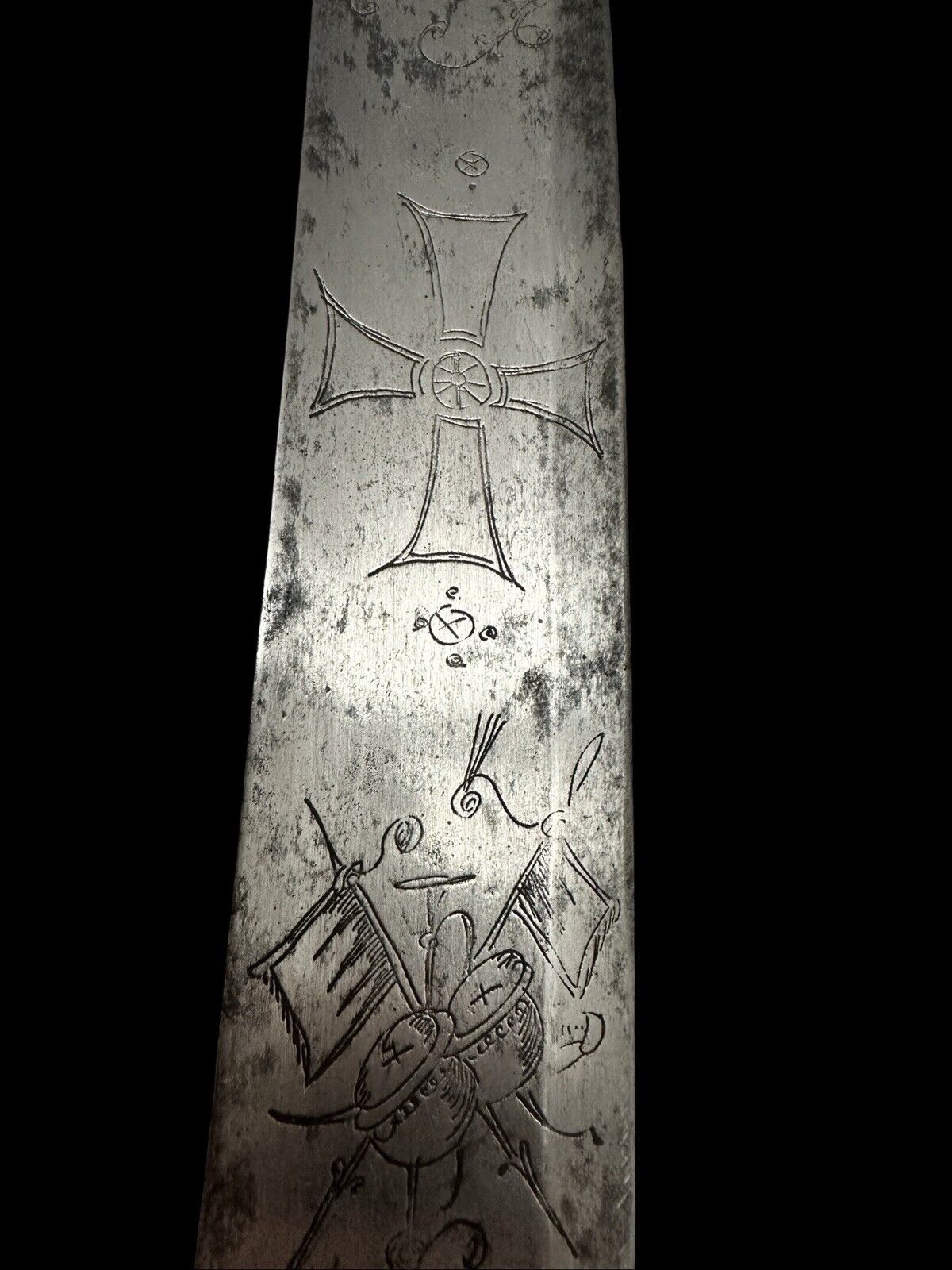
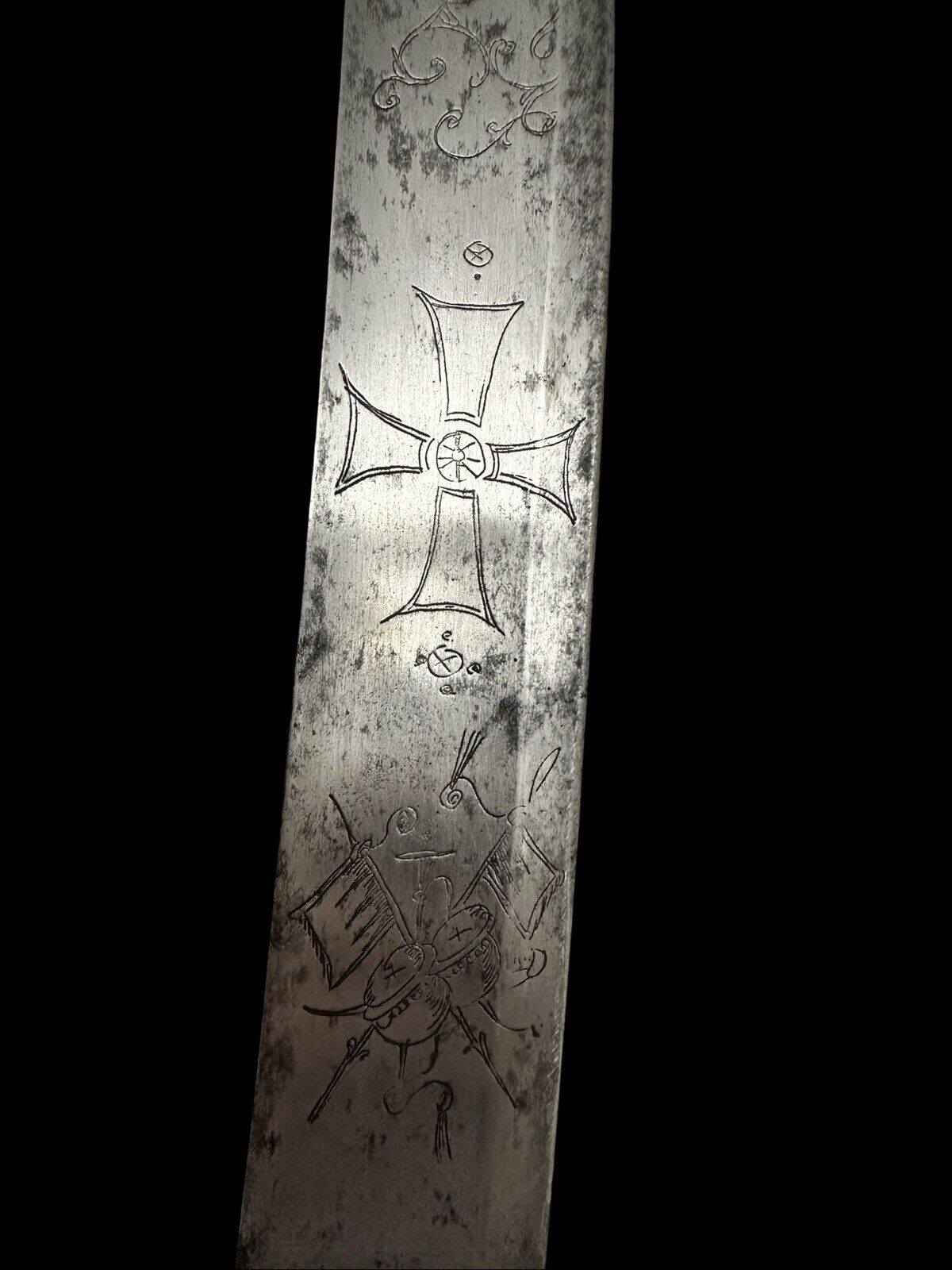
Single edged. hand engraved blade. Brass handle and guard. Very Rare original leather scabbard present. Brass scabbard mounts in very good condition. Leather in fair but expected condition for over 200 years old – exhibits signs of age. Blade fights in scabbard normally. Hand done engravings show the Sigil of the House of Savoy. “Vive Le Roi” is present on the blade demonstrating the French-Napoleonic connection. Martial trophy and “Maltese Type” cross present. Original and rare buffer pad present.
Briquet Short History:
The Model 1805 French Infantry Briquet is a type of short sword, or sabre, that was widely used by the French infantry during the Napoleonic Wars. The term “briquet” is derived from the French word for “lighter,” reflecting the sword’s relatively short and lightweight design, which made it easy for soldiers to carry.
The introduction of the Model 1805 briquet was part of a broader effort to standardize military equipment in the French army. Standardization helped ensure that soldiers were uniformly equipped, simplifying logistics and maintenance.
The briquet saw extensive use throughout the Napoleonic Wars, from the campaigns in Europe to the invasions of Spain and Russia. It was carried by soldiers during famous battles such as Austerlitz, Borodino, and Waterloo.
HOUSE OF SAVOY SHORT HISTORY:
The House of Savoy, a royal family that ruled parts of Italy for centuries, played a complex and evolving role during the Napoleonic Wars. The family’s fortunes were significantly affected by the shifting political and military landscape of the era.
Pre-Napoleonic Era Kingdom of Sardinia: The House of Savoy ruled the Kingdom of Sardinia, which included the island of Sardinia and the mainland territories of Piedmont, Savoy, and Nice. Before the Napoleonic Wars, the kingdom was a significant regional power in Northern Italy.
Early Napoleonic Wars Initial Conflicts: The Kingdom of Sardinia was initially drawn into conflict with Revolutionary France. King Victor Amadeus III attempted to resist French expansion, but the French Army, led by Napoleon Bonaparte, quickly overran Savoy and Nice in 1792 and 1796 respectively.
Treaty of Paris (1796): After a series of defeats, the Kingdom of Sardinia signed the Treaty of Paris in 1796, ceding Nice and Savoy to France. This treaty marked a significant territorial loss and weakened the House of Savoy’s position.
Napoleonic Dominance Occupation and Exile: In 1798, French forces occupied the mainland territories of Piedmont. King Charles Emmanuel IV, who had succeeded Victor Amadeus III, was forced to abdicate and went into exile in Sardinia. The mainland territories were incorporated into the French client state, the Ligurian Republic, and later directly annexed by France.
Continued Resistance: Despite these setbacks, members of the House of Savoy continued to resist French control. They maintained a court in exile and sought alliances with other European powers opposed to Napoleon.
Restoration and Resurgence Congress of Vienna (1814-1815):After Napoleon’s defeat in 1814 and the subsequent Congress of Vienna in 1815, the House of Savoy was restored to its mainland territories. Victor Emmanuel I, brother of Charles Emmanuel IV, reclaimed the throne and the kingdom was restored with additional territories, including the former Republic of Genoa, as compensation for their losses.
Post-Napoleonic Reforms: The restored Savoyard monarchy implemented conservative policies, aiming to stabilize and consolidate their rule. However, the period also saw rising nationalist sentiments and calls for liberal reforms, influenced by the legacy of Napoleonic rule and the broader European revolutionary movements.
Long-Term Impact Role in Italian Unification: The House of Savoy played a crucial role in the subsequent Italian unification movement. Charles Albert, who succeeded Victor Emmanuel I, adopted a more liberal stance and granted a constitution (the Statuto Albertino) in 1848. His son, Victor Emmanuel II, became the first king of a unified Italy in 1861, capitalizing on the nationalist movement that had been partly inspired by the Napoleonic reorganization of Italy.
The Napoleonic Wars significantly reshaped the House of Savoy’s territories and political strategies. The temporary loss of their mainland territories and the experience of exile contributed to their later embrace of Italian nationalism and unification, marking a significant shift from their pre-Napoleonic conservative stance.