







Napoleonic Wars British Model 1776 Heavy Cavalry Troopers Sword – Trooper Modified Example
$1,700.00 CAD
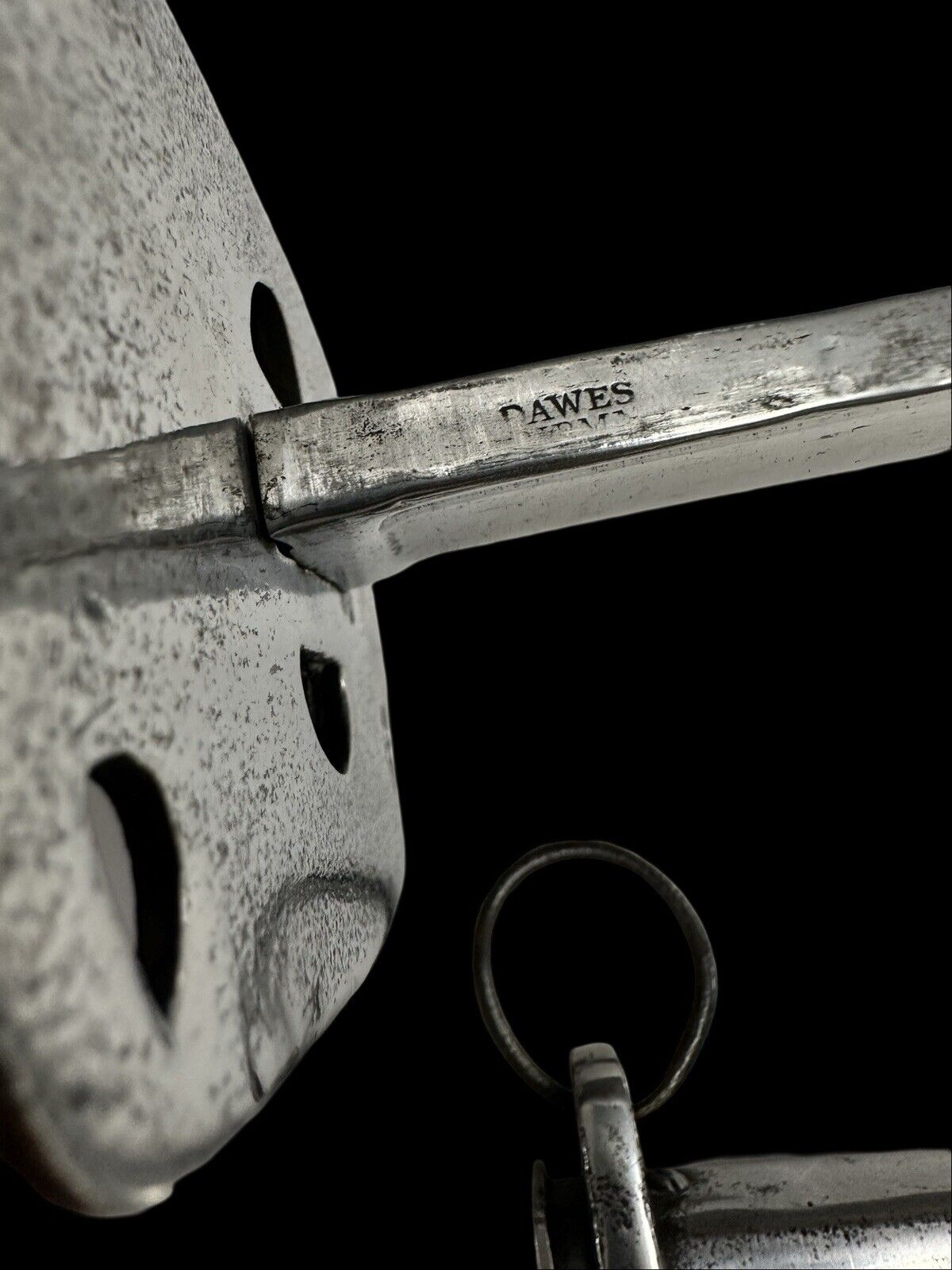
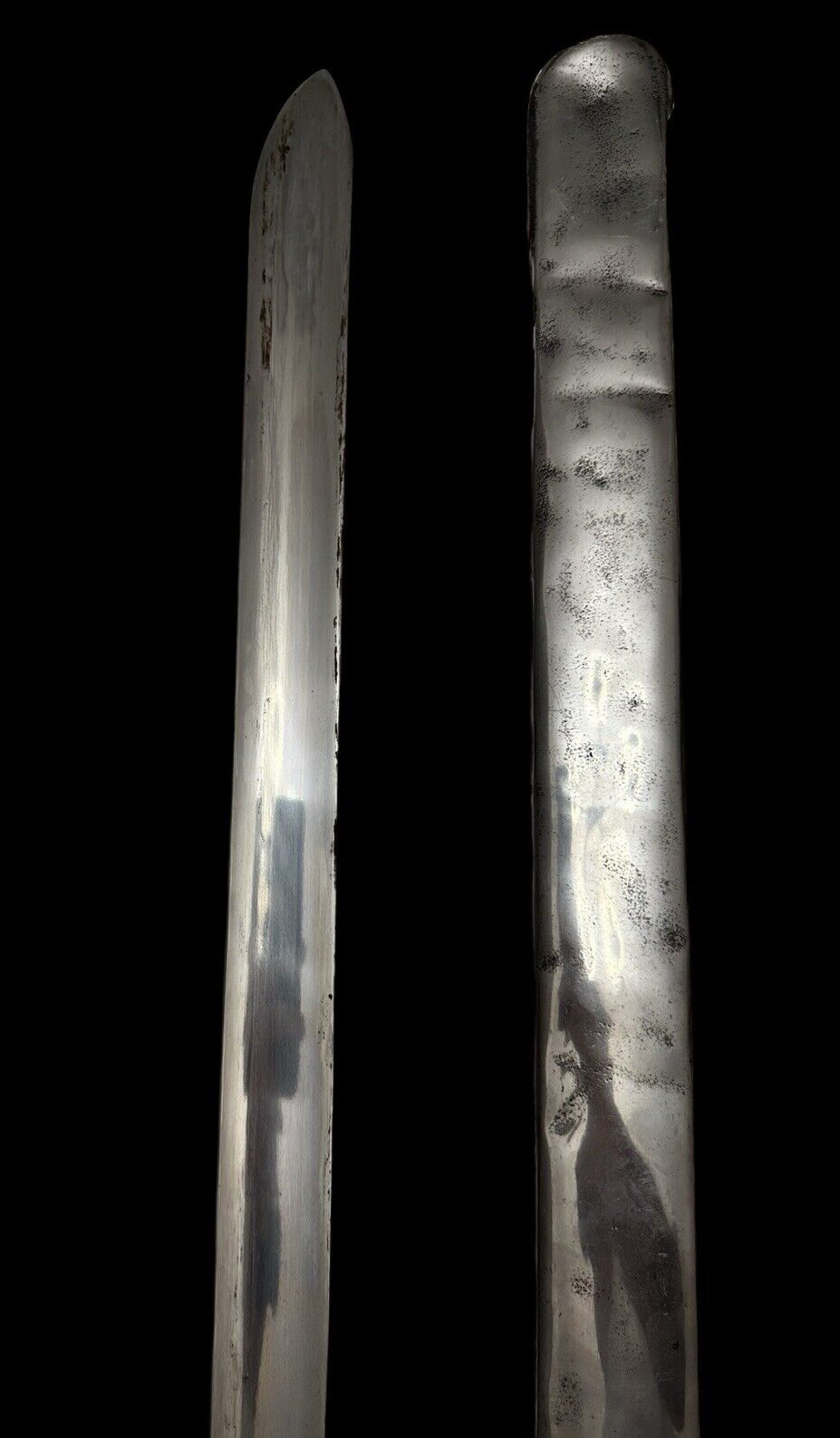
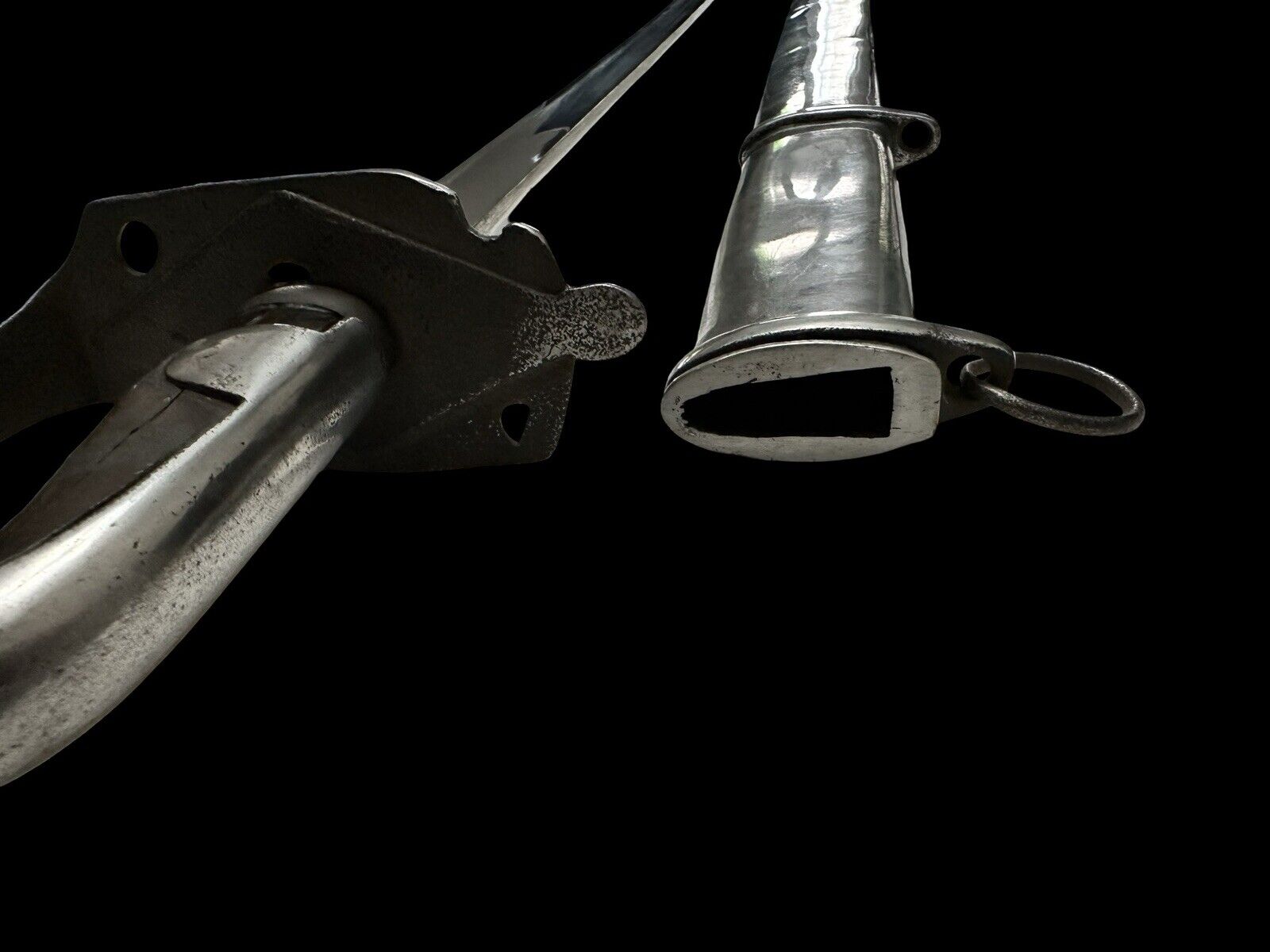
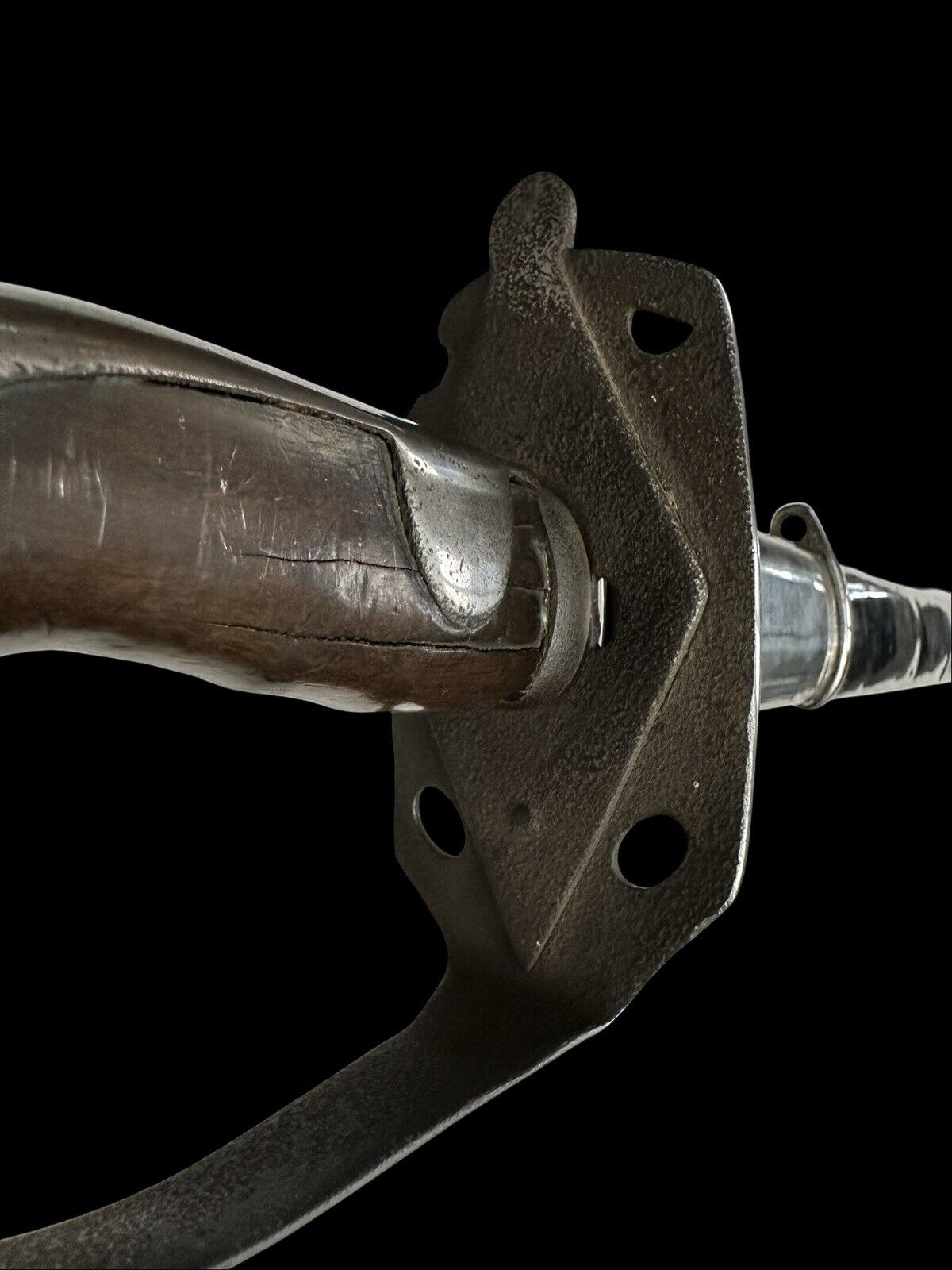
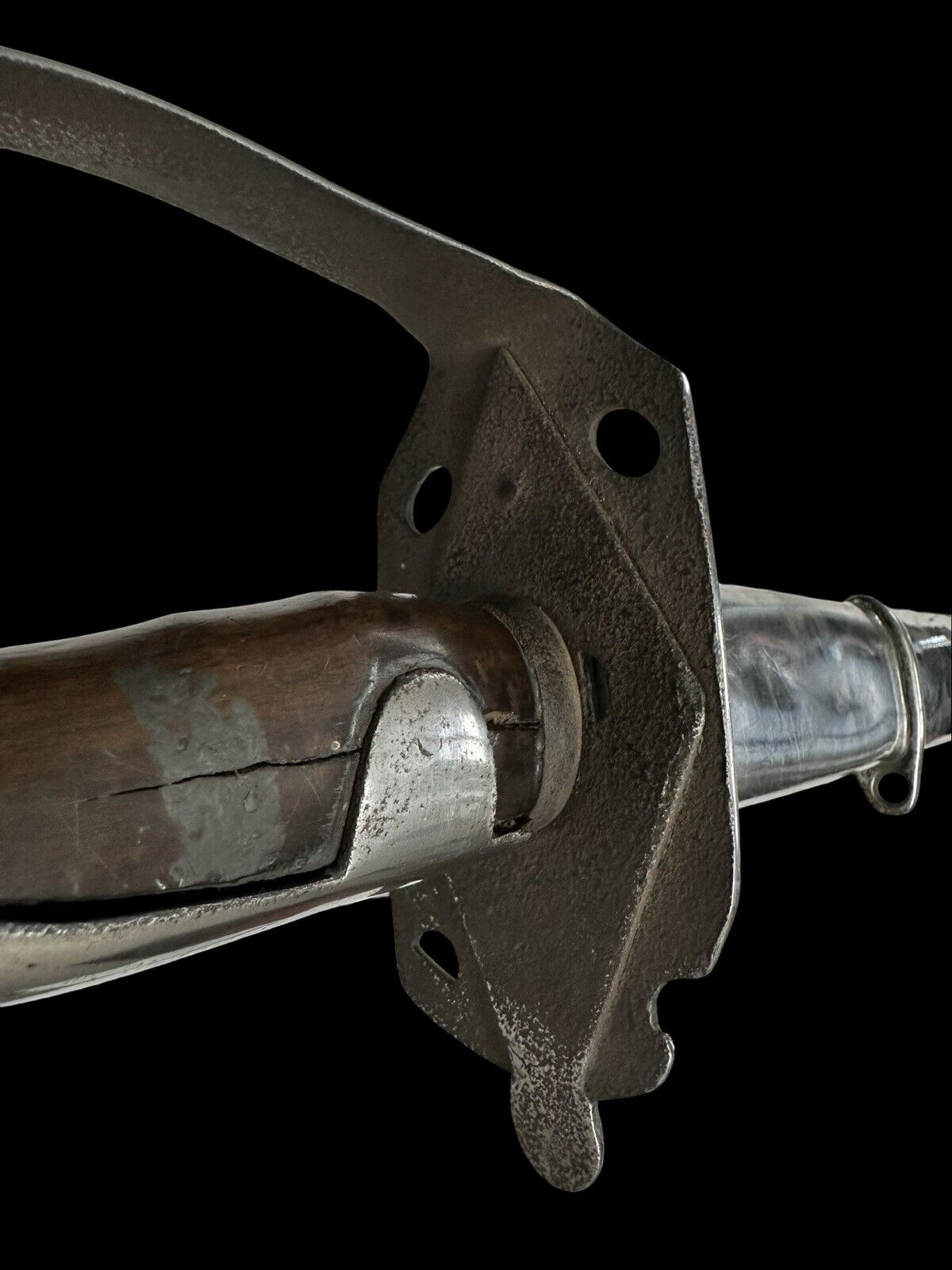
British Model 1796 heavy Cavalry Sabre. Maker marked by Dawes of Birmingham on the spine. A crown over 3 (inspection mark) is also present on the blade. Blade is in very good condition, featuring most of the original finish, old blade grease present near the tip. Scabbard present and in good condition. Grip has some cracks in the wood, commensurate with age. This is the trooper modified example commonly seen of this famous sword, the handguard is ground on the left side to avoid catching and ripping the uniform, the langets are removed, and the tip ground to a spear point, more on that below:
SHORT HISTORY OF 1796 Heavy Cavalry Sword and Modifications:
The 1796 heavy cavalry sword is a backsword, featuring a straight blade with a single cutting edge, while the opposite edge, known as the “back,” is thickened along most of its length to enhance strength. The blade measures 35 inches (890 mm) in length and includes a broad fuller on each side. The grip is made from ribbed wood or wood bound with cord to mimic this design and covered in leather. The iron backpiece of the grip has “ears” that are riveted through the tang of the blade, ensuring a secure connection between the hilt and blade. The hilt features a disc guard with two semicircular and six oval (never circular) holes, along with a single knucklebow and two slim, 2-inch-long (51 mm) langets (projections from the guard that grip the throat of the scabbard) extending from the front of the guard. These langets were often removed, and the left side of the guard was ground down to reduce wear on uniforms, making the sword more comfortable to wear, particularly on horseback.
Users frequently modified the sword. The original “hatchet point,” a curved diagonal front edge similar to that of the Japanese katana, was often altered to a symmetrical “spear point,” more typical of the time, or made more acute while retaining the asymmetry of the tip. These modifications improved the sword’s thrusting capability. Numerous examples of spear-pointed swords exist with shorter blades and appropriately shortened scabbards. The sword was carried in an iron scabbard with wooden liners and hung from the waist via sword-belt slings attached to loose suspension rings. The hand guard was also commonly ground down on the left side. This was due to the fact that it caught and ripped the uniform of the troopers left sleeve, leaving many a British trooper disgruntled at the newly formed hole in their uniform.
The 1796 Heavy Dragoon sword was a weapon designed as a specialized cutting implement, a task it performed very well. However, in use it is apparent that its lack of ability to execute a thrust was found to be limiting. As a result of this perceived limitation a number of methods of modifying the sword-point seem to have been carried out, probably at the regimental level, in order that the thrust could be made. The result of these modifications was a more flexible and effective weapon. A fact to which those French soldiers, both infantry and cavalry, at the receiving end of the charge of the British heavy cavalry brigades on the field of Waterloo could testify. Noble, Duncan. “Cut or Thrust; Testing the Great Sword Debate” Military Illustrated; July, 1998. Pp 37-39
DAWES OF BIRMINGHAM SHORT HISTORY:
Dawes of Birmingham was a prominent sword maker during the late 18th and early 19th centuries. Known for producing high-quality military swords, the company played a significant role in supplying weaponry during a period of numerous military conflicts, including the Napoleonic Wars.
The Dawes family business was based in Birmingham, a city renowned for its metalworking and manufacturing capabilities. Birmingham’s “Gun Quarter” – where Dawes was located – was particularly famous for producing firearms and bladed weapons. The swords made by Dawes were known for their craftsmanship, and durability.
Blade Length Approx.: 28 Inches, Overall Length approx.: 34 Inches (88 CM)