













Lord Lieutenant Estate
$3,400.00 CAD
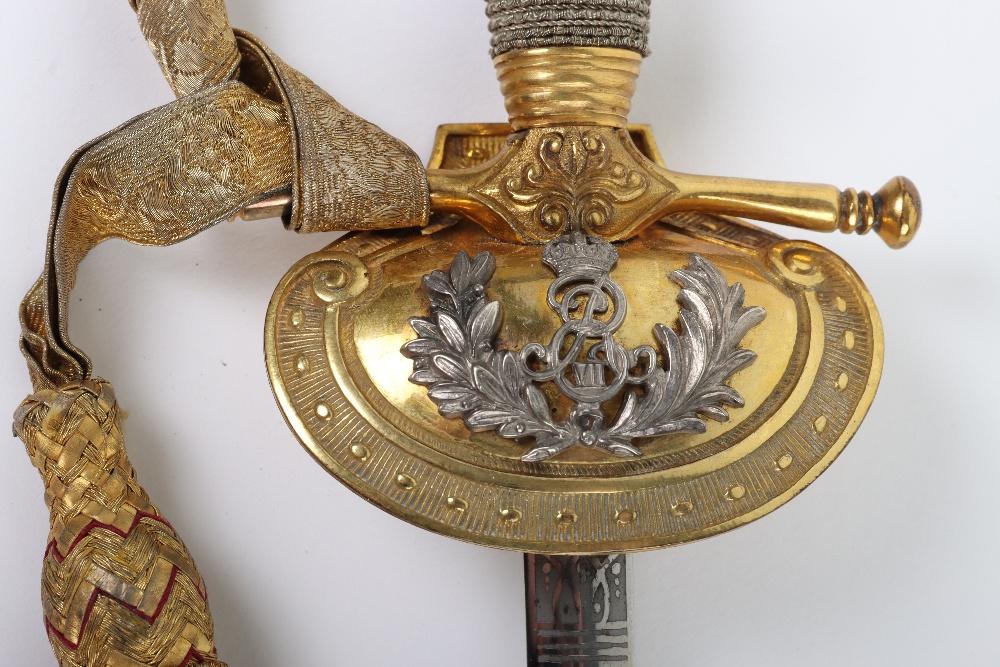
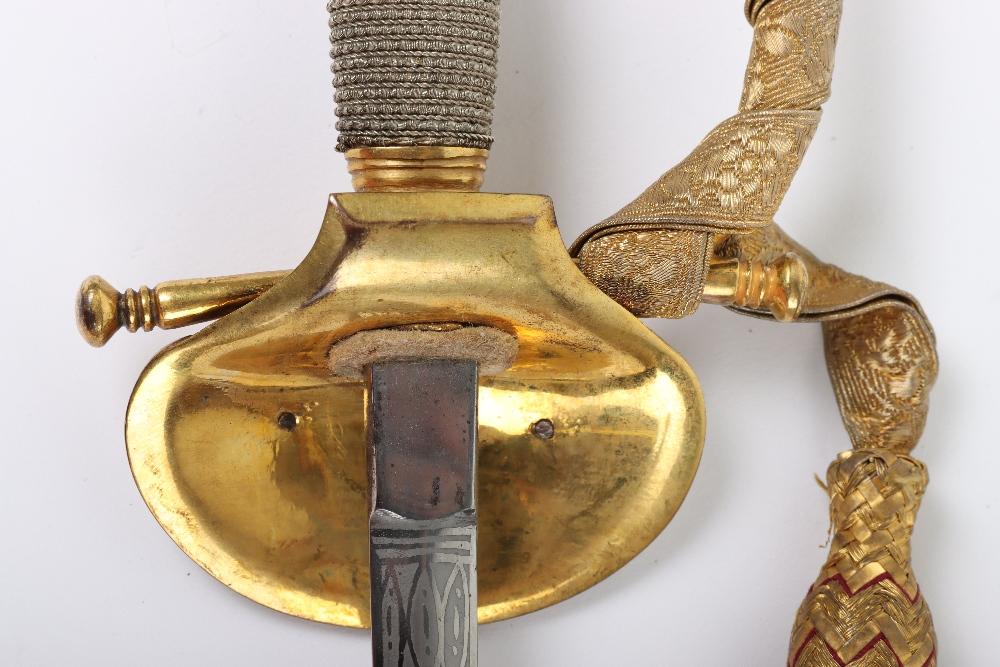
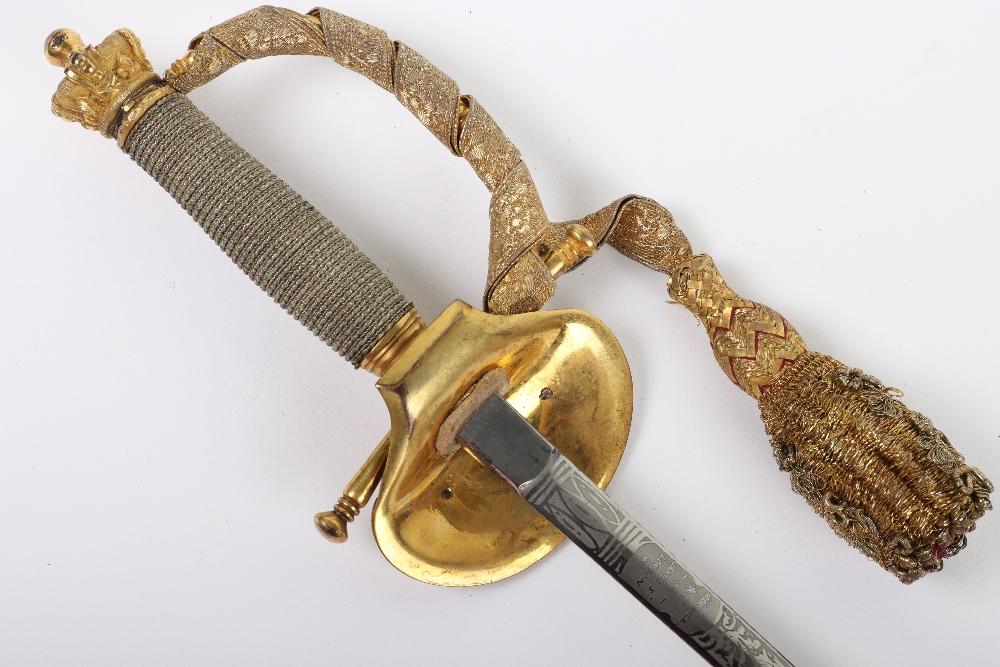
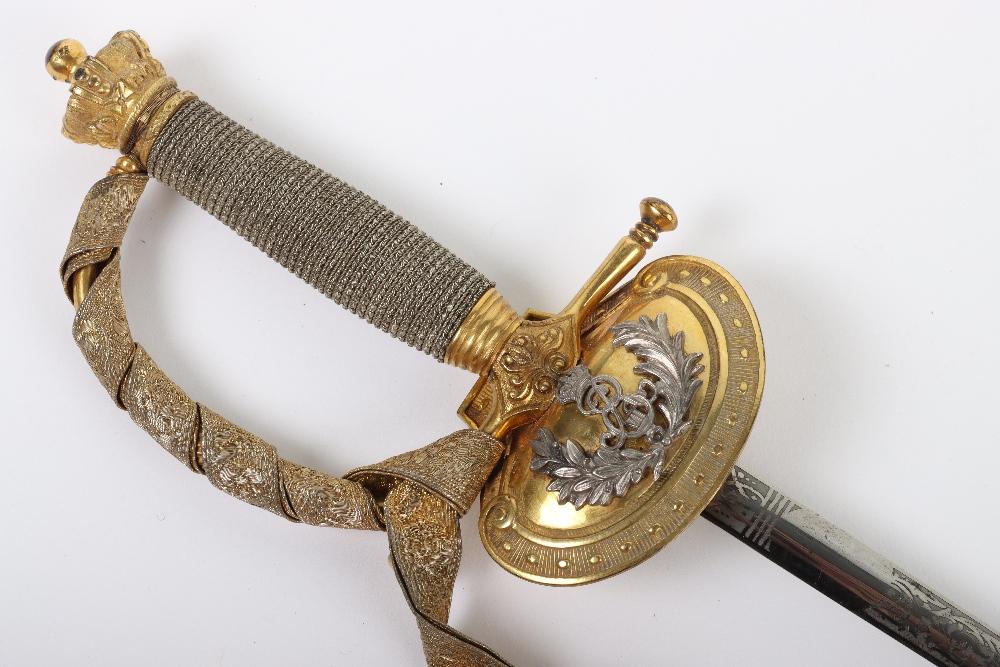
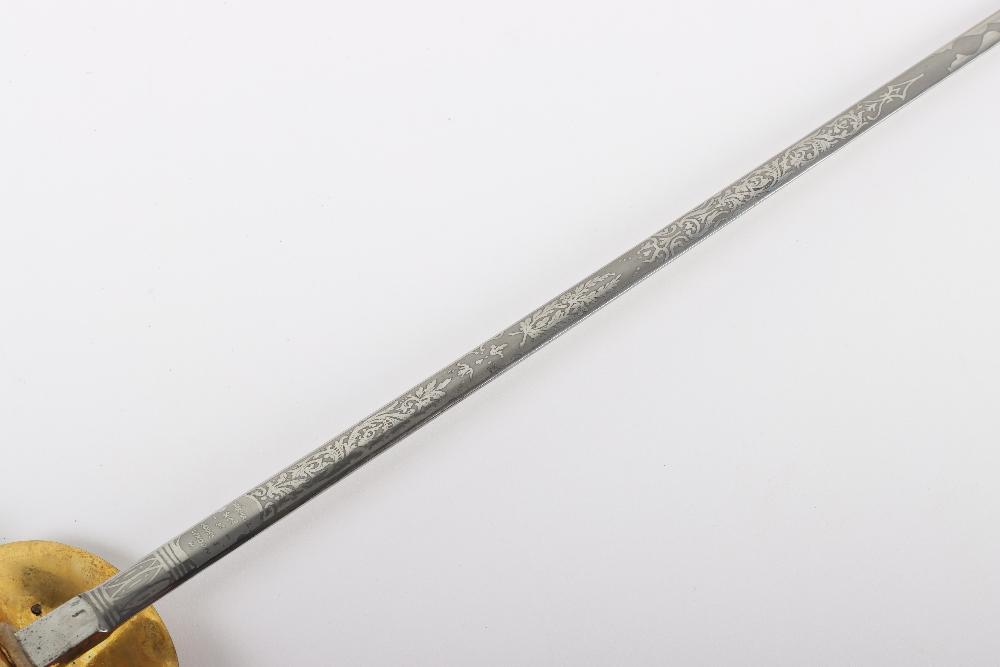
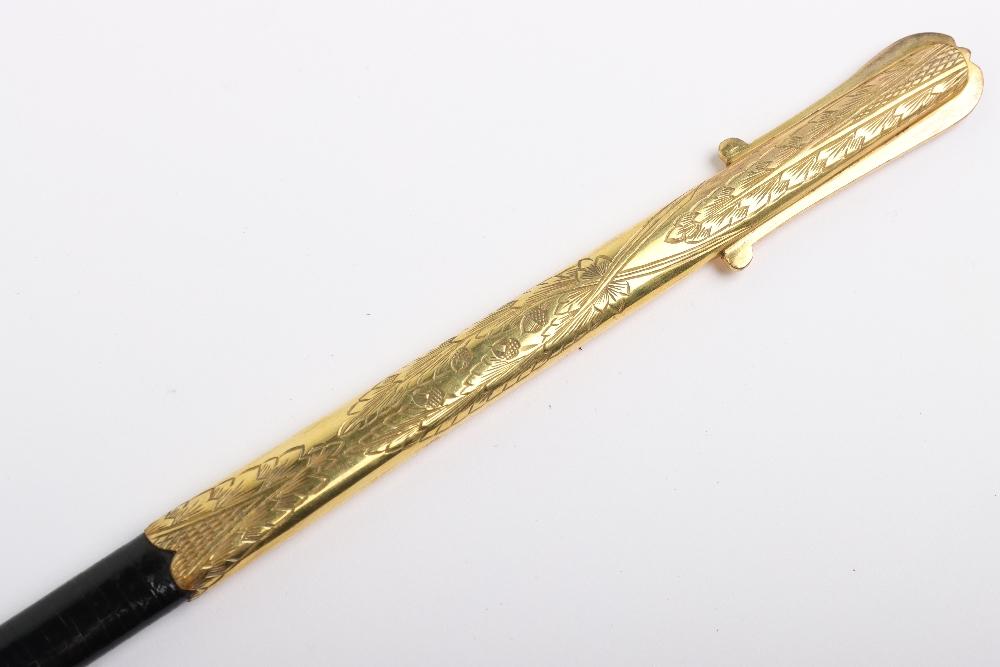
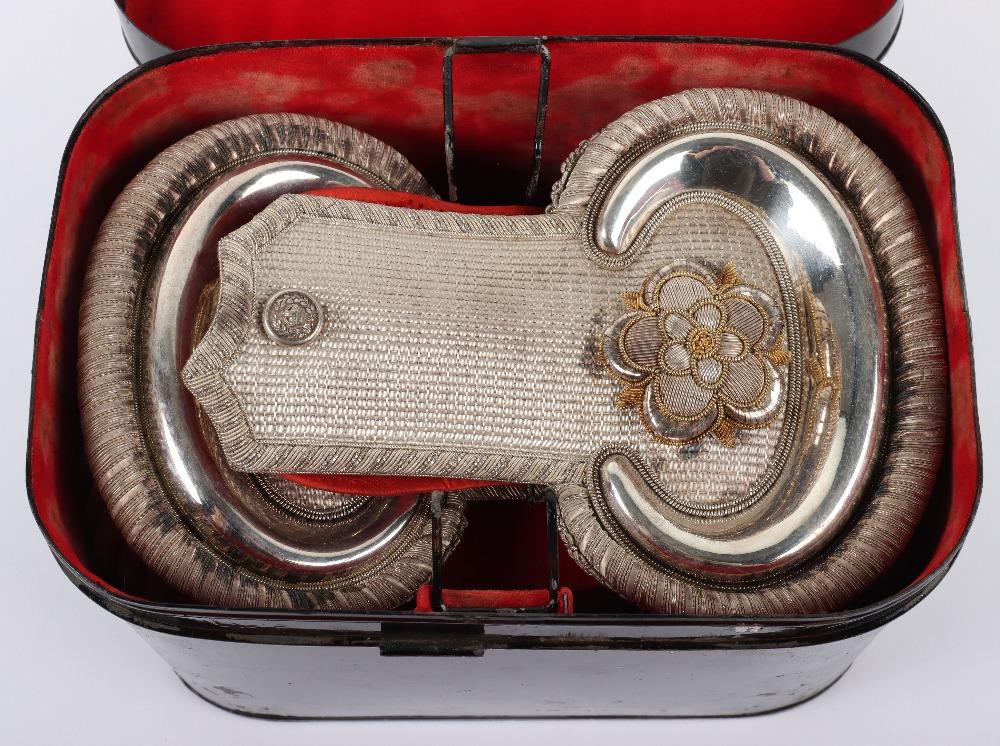
Edward 7th Lord-Lieutenant Sword , Embroidered Belt & Hanger, Cased Epaulettes.
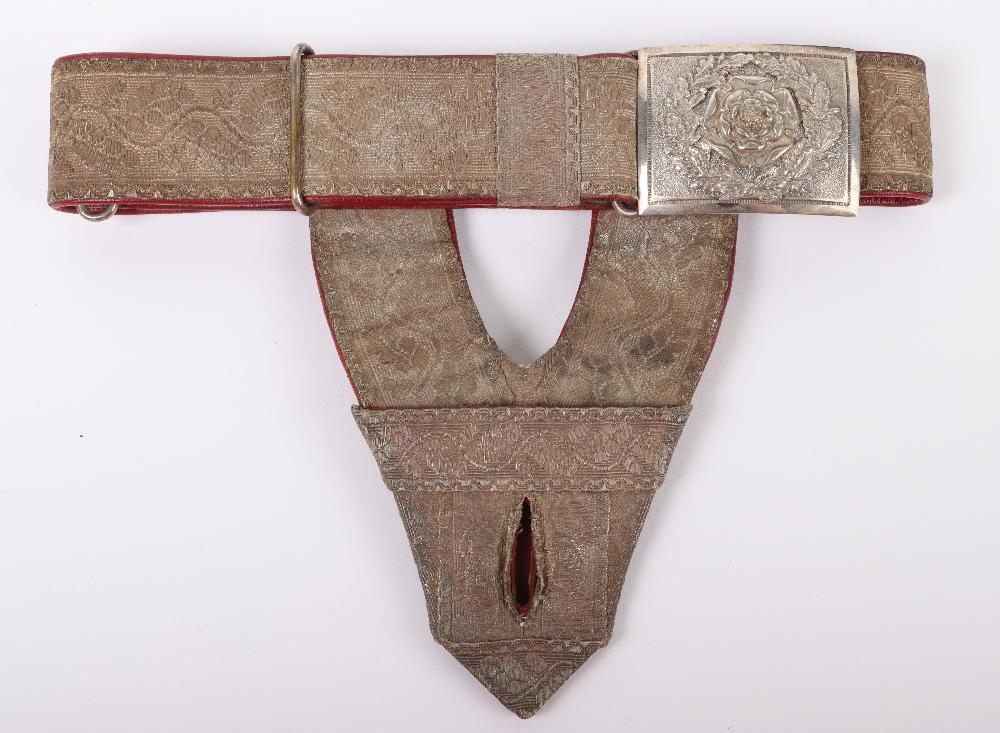
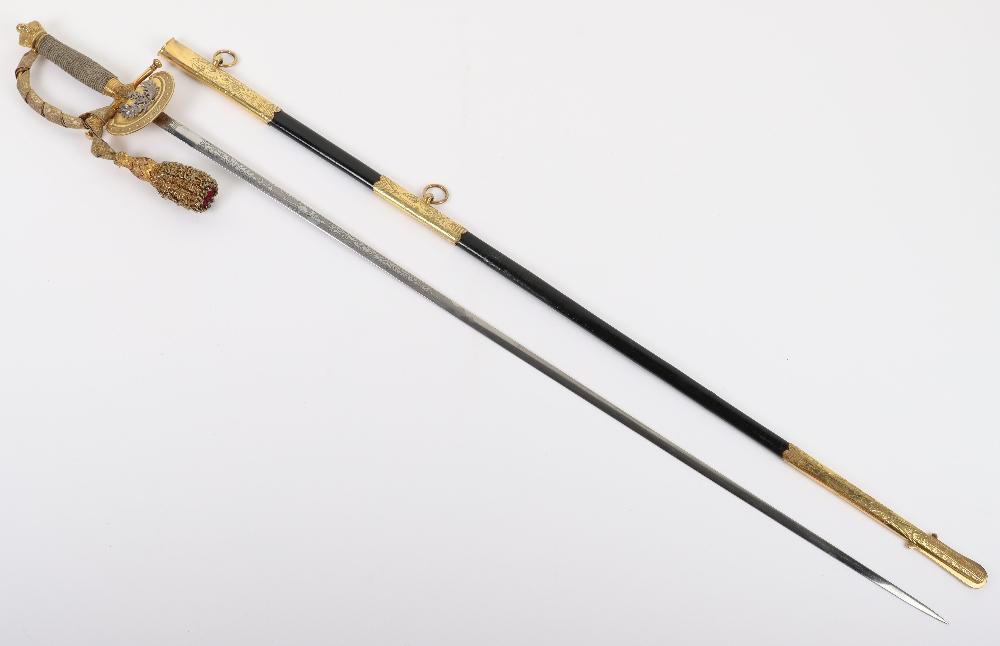
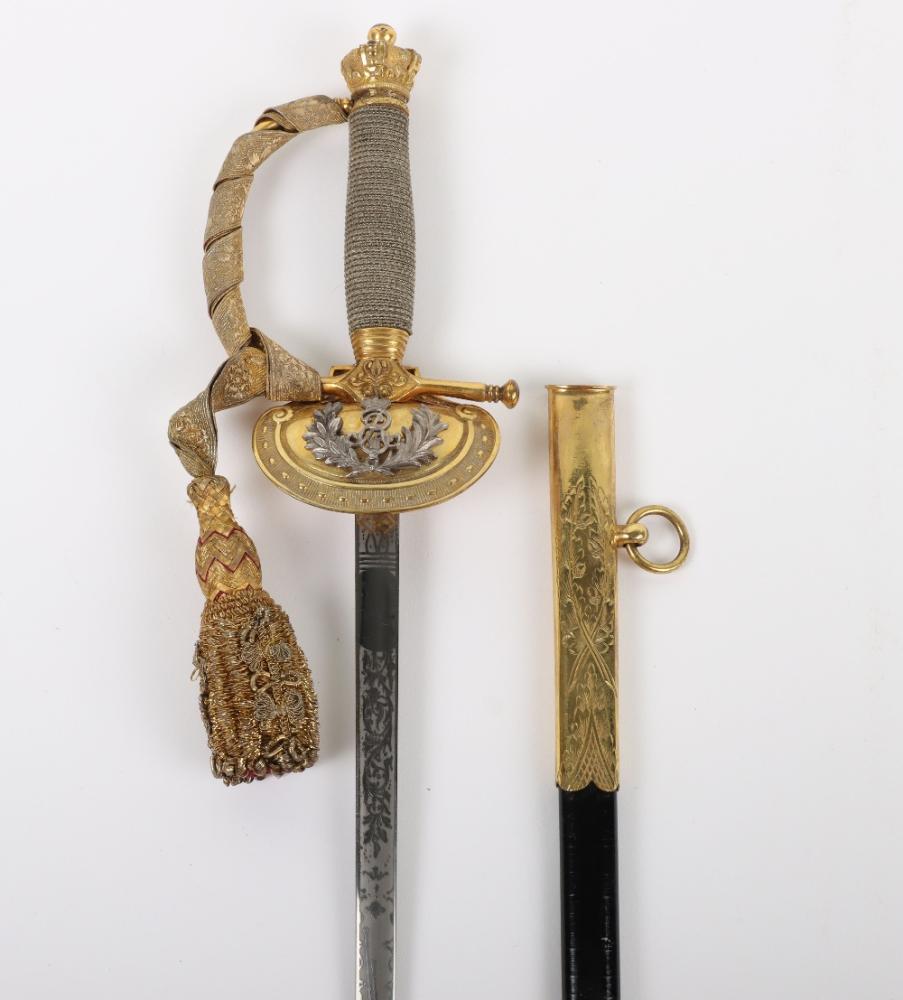
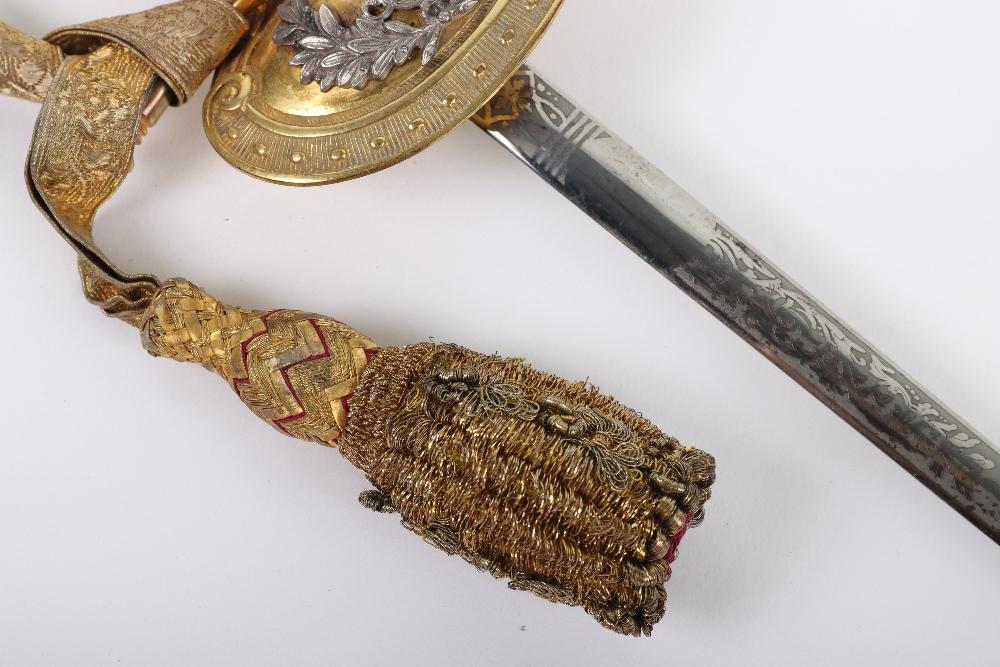
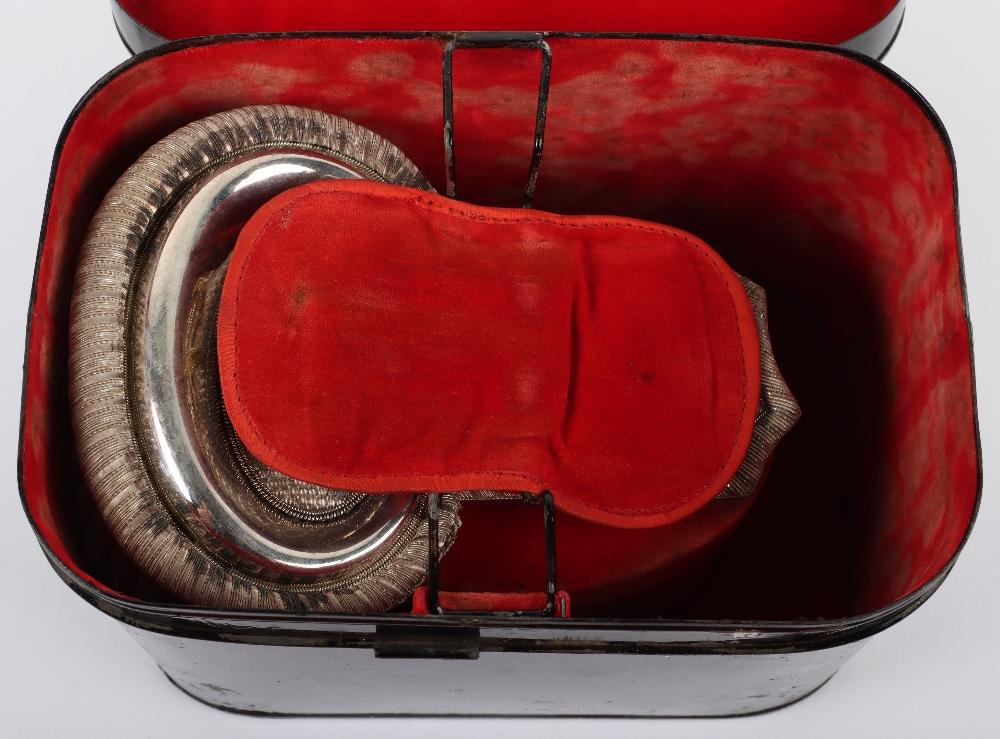
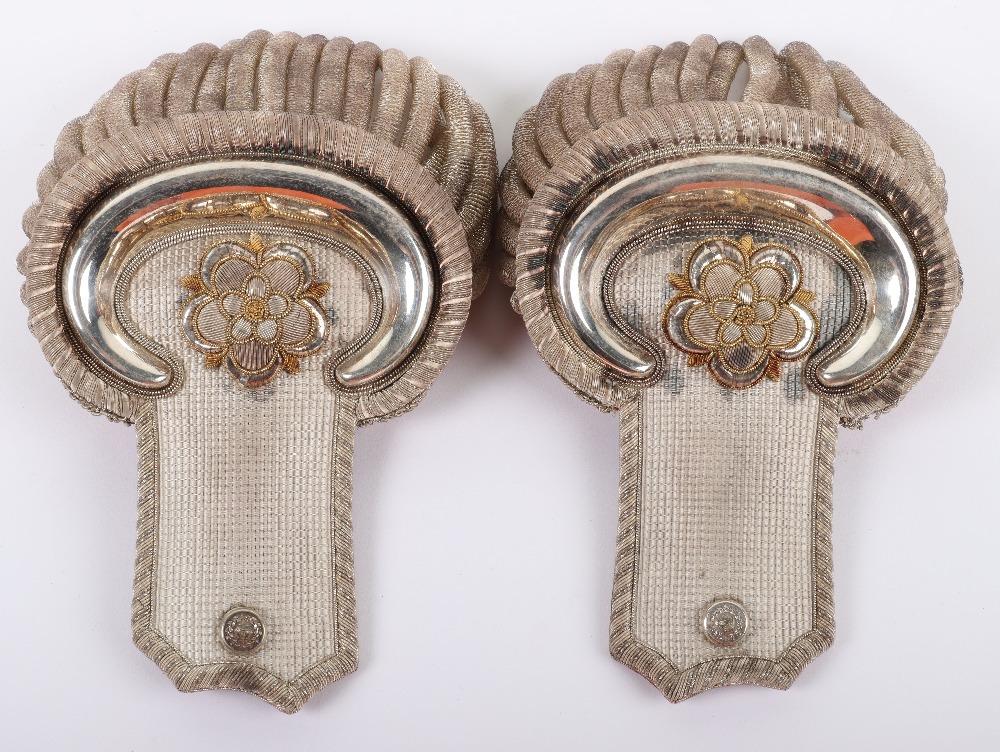
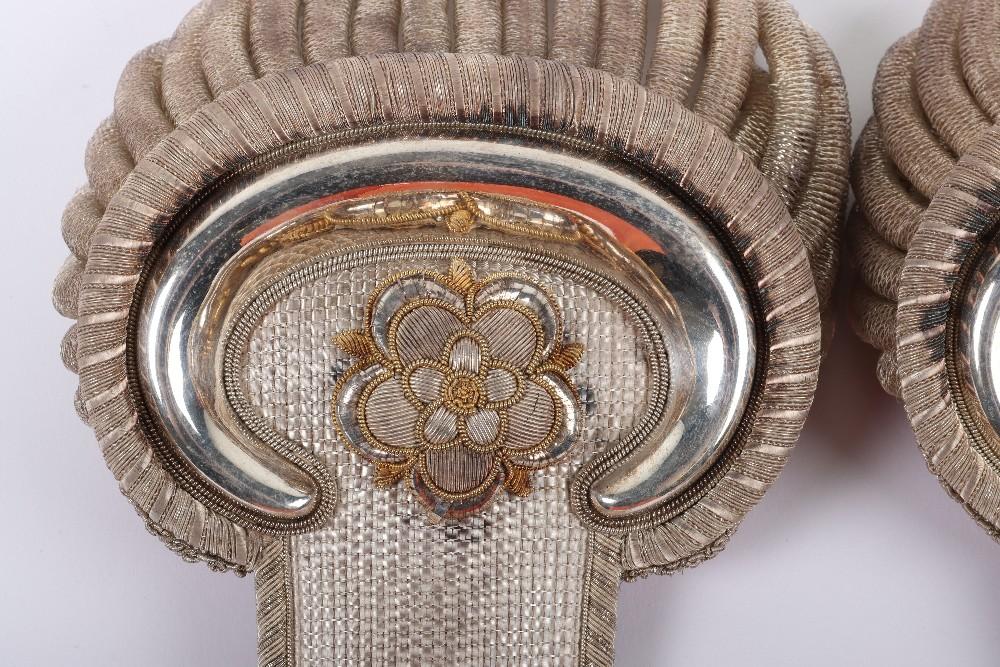
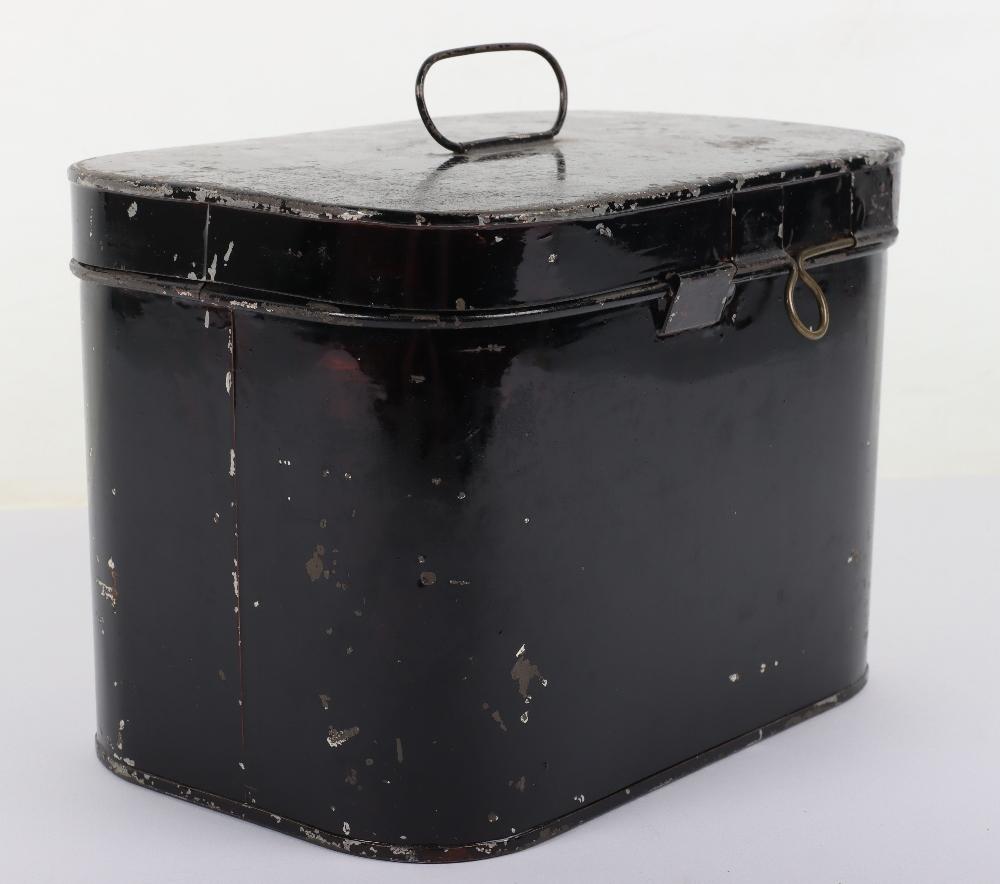
Edward 7th Courtsword, Embroidered Belt & Hanger, Cased Epaulettes for a Lord Lieutenant of an English county c.1901-1910, slender extremely fine blade signed Marshall & Co. St. James St. London W, etched and mirror polished with martial trophy, laurel wreath and scrolling foliage, regulation ormolu hilt retaining all its original gilding, crown-shaped pommel, silver wire bound grip and applied silver crowned royal cipher and laurel, bullion dress knot embroidered with roses, in its black patent leather scabbard, ormolu mounts engraved with fruiting oak; together with its red Morocco leather backed silver bullion belt and hanger embroidered with fruiting oak, silvered belt buckle with rose and fruiting oak, and fine pair of silver bullion epaulettes in their red velvet lined japanned tin case, the whole preserved in close to mint condition. Original felt buffer pad is present. Blade length 80cms.
Short History of the Title:
A lord-lieutenant is the British monarch’s personal representative in each lieutenancy area of the United Kingdom. Historically, each lieutenant was responsible for organizing the county’s militia. In 1871, the lieutenant’s responsibility over the local militia was removed. However, it was not until 1921 that they formally lost the right to call upon able-bodied men to fight when needed.
Lieutenants were first appointed to a number of English counties by King Henry VIII in the 1540s, when the military functions of the sheriffs were handed over to them. Each lieutenant raised and was responsible for the efficiency of the local militia units of his county, and afterwards of the yeomanry and volunteers. He was commander of these forces, whose officers he appointed. These commissions were originally of temporary duration, and only when the situation required the local militia to be specially supervised and well prepared; often when invasion by Scotland or France might be expected.
Lieutenancies soon became more organized, probably in the reign of Henry’s successor King Edward VI, their establishment being approved by the English parliament in 1550. However, it was not until the threat of invasion by the forces of Spain in 1585 that lieutenants were appointed to all counties and counties corporate and became in effect permanent. Although some counties were left without lieutenants during the 1590s,following the defeat of the Spanish Armada, the office continued to exist, and was retained by King James I even after the end of the Anglo-Spanish War.
The office of lieutenant was abolished under the Commonwealth, but was re-established following the Restoration under the City of London Militia Act1662, which declared that:
The King’s most Excellent Majesty, his Heirs and Successors, shall and may from Time to Time, as Occasion shall require, issue forth several Commissions of Lieutenancy to such Persons as his Majesty, his Heirs and Successors, shall think fit to be his Majesty’s Lieutenants for the several and respective Counties, Cities and Places of England and Dominion of Wales, and Town of Berwick upon Tweed.
Although not explicitly stated, from that date lieutenants were appointed to “counties at large”, with their jurisdiction including the counties corporate within the parent county. For example, lieutenants of Devon in the seventeenth and eighteenth centuries appointed deputy lieutenants to the City of Exeter, and were sometimes described as the “Lieutenant of Devon and Exeter”. The one exception was Haverfordwest, to which a lieutenant continued to be appointed until 1974. The origin of this anomaly may have lain in the former palatine status of Pembrokeshire.
The official title of the office at this time was His or Her Majesty’s “Lieutenant for the county of x”, but, as almost all office-holders were peers of the realm, they were referred to as “Lord-Lieutenant”.
*Most other examples of a set like this are in museums and art galleries, a truly fantastic and rare set.
Please see the Imperial War Museum Catalogue Number: 12522, for a Lord Lieutenant sword and belt hanger.