


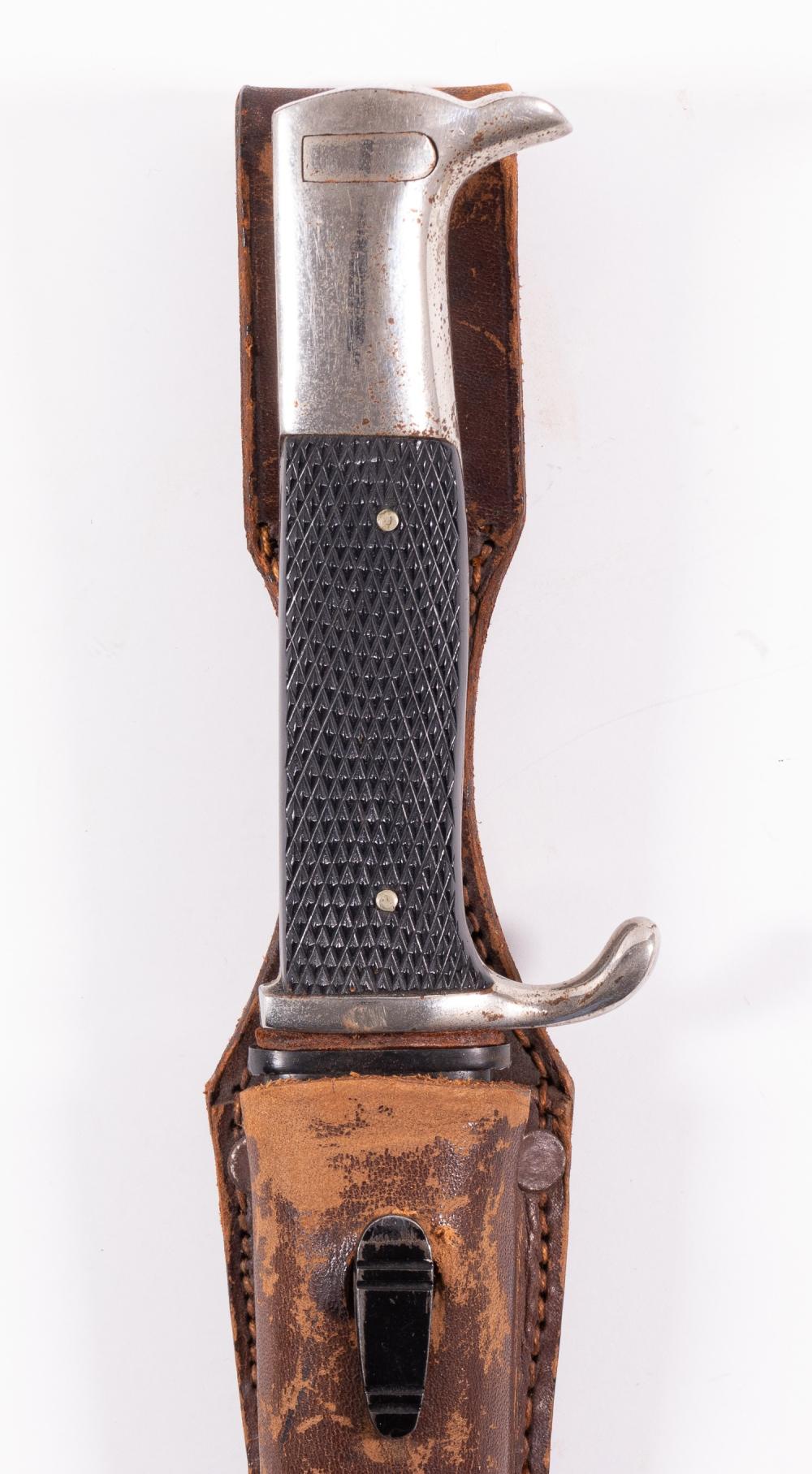

WW2 German Army Officers Dress Dagger by Anton Wingen JR – Mint Example
$320.00 CAD
German WWII Dress/Parade bayonet. Dark grip, blade is marked ‘Anton Wingen Jr. Solingen’. With black metal scabbard and brown frog, very minor pitting on pommel. Blade is 8.25 inches, total length is 12.5 inches.
Extremely wonderful condition, blade shines with 98 percent of original polish as if it just left the factory. Very minimal scabbard runners.
Short History: The K98 parade bayonets held significance to Third Reich soldiers for several reasons:
Symbolism: The parade bayonets were primarily ceremonial and were used in military parades, inspections, and other formal events. They symbolized the military prowess and discipline of the Third Reich and showcased the strength of the German armed forces.
Prestige and Honor: Carrying a parade bayonet signified an honor bestowed upon a soldier. It represented a mark of distinction, indicating that the soldier was part of an elite unit or had demonstrated exceptional service or bravery.
Display of Authority: Parade bayonets were often carried by officers and high-ranking officials during formal military ceremonies. Their presence denoted authority and leadership, emphasizing the hierarchy within the military structure.
Propaganda and Indoctrination: The Third Reich utilized propaganda extensively to promote its ideology and bolster nationalistic fervor. The display of K98 parade bayonets in public events helped reinforce the image of a powerful and disciplined military, instilling a sense of pride and loyalty among the soldiers and the German population.
Morale and Unity: The sight of soldiers marching in uniform with bayonets fixed, even in ceremonial settings, fostered a sense of unity, camaraderie, and esprit de corps among the troops. It reinforced the idea of a cohesive and disciplined fighting force dedicated to the goals of the Third Reich.
It’s important to note that while parade bayonets held ceremonial significance, they were not typically intended for combat use.
The WWII German K98 bayonet with frog manufactured by Anton Wingen Jr. is a historically significant weapon and accessory used by the German military during World War II.
Bayonet:
Blade: The bayonet features a single-edged, full-tang blade that measures approximately 8-10 inches (25 centimeters) in length. The blade is made of high-quality carbon steel and has a sharp, spear-point tip. Crossguard: The bayonet has a metal crossguard that extends perpendicular to the blade, providing protection for the user’s hand during combat. Grips: The handle of the bayonet, known as the grip, is made of wood or bakelite and is typically checkered or ribbed to enhance the user’s grip and control. Pommel: The pommel is located at the end of the handle and is used to secure the bayonet to the rifle’s lug.
Frog:
Material: The frog, or bayonet scabbard, is typically made of durable leather. Attachment: The frog is designed to securely hold and carry the bayonet on the user’s belt or equipment. It usually has belt loops or straps that allow for easy attachment and adjustment. Utility: The frog not only provides a means of carrying the bayonet but also protects the blade from damage and helps to keep it in a readily accessible position.
Anton Wingen Jr. was a renowned German cutlery manufacturer during World War II. Their bayonets were known for their craftsmanship, durability, and reliability, and they supplied them to the German military. The combination of the K98 bayonet with the frog made by Anton Wingen Jr. would have been an essential accessory for German soldiers equipped with the Mauser K98 rifle during the war.
This example is a high grade, private purchase parade/dress piece.