
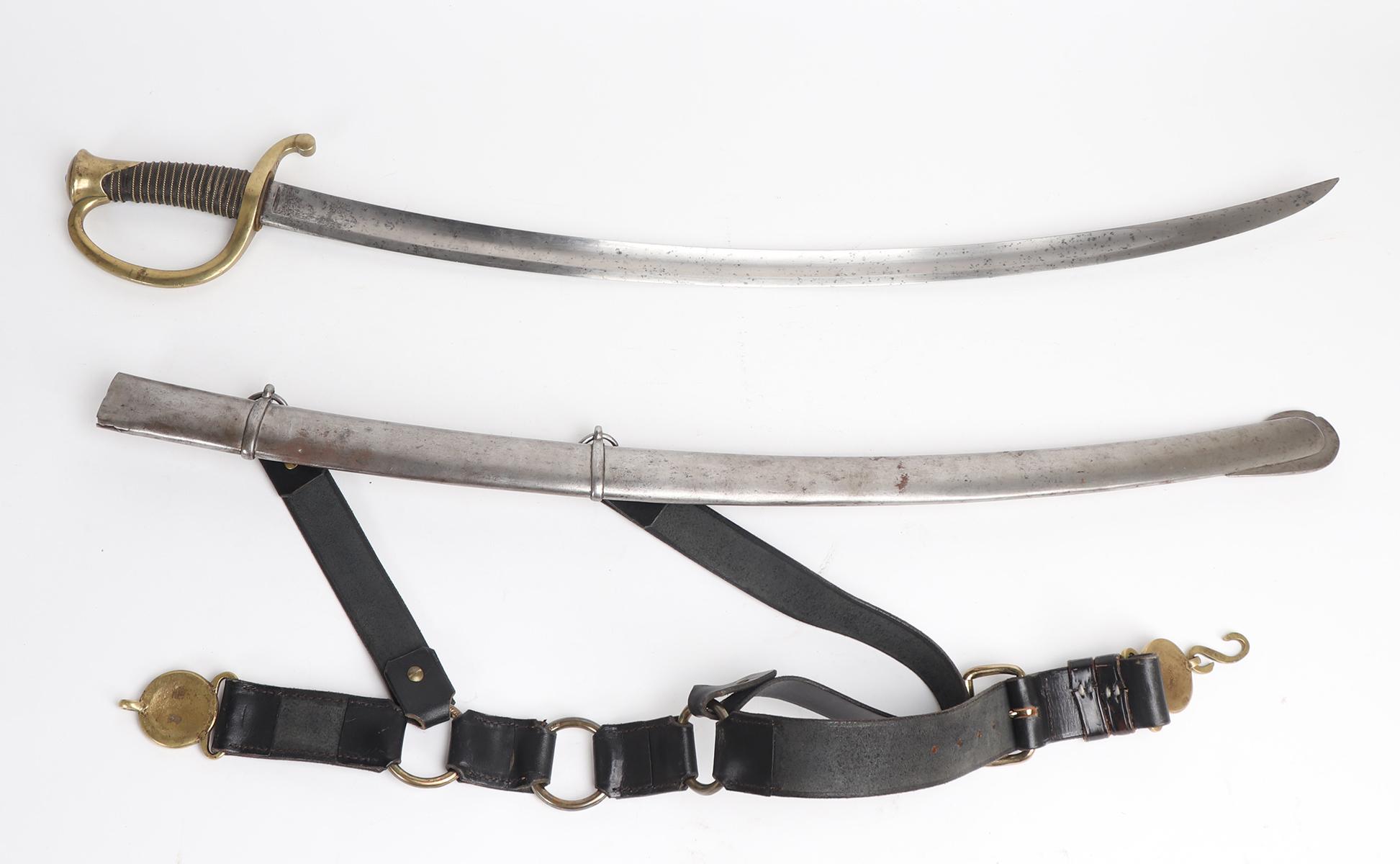





French Second Empire Artillery Sword Marked 1844
$1,150.00 CAD
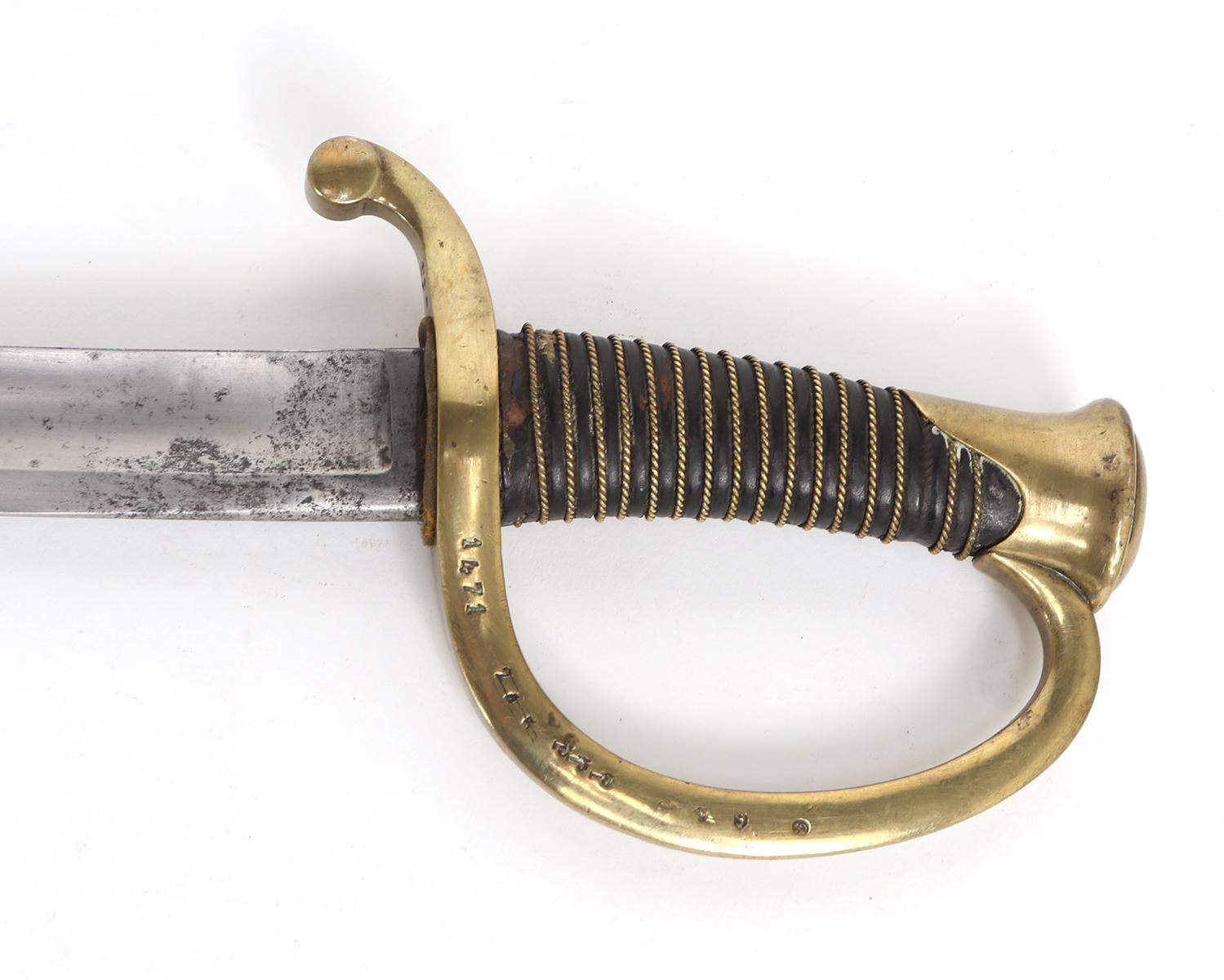
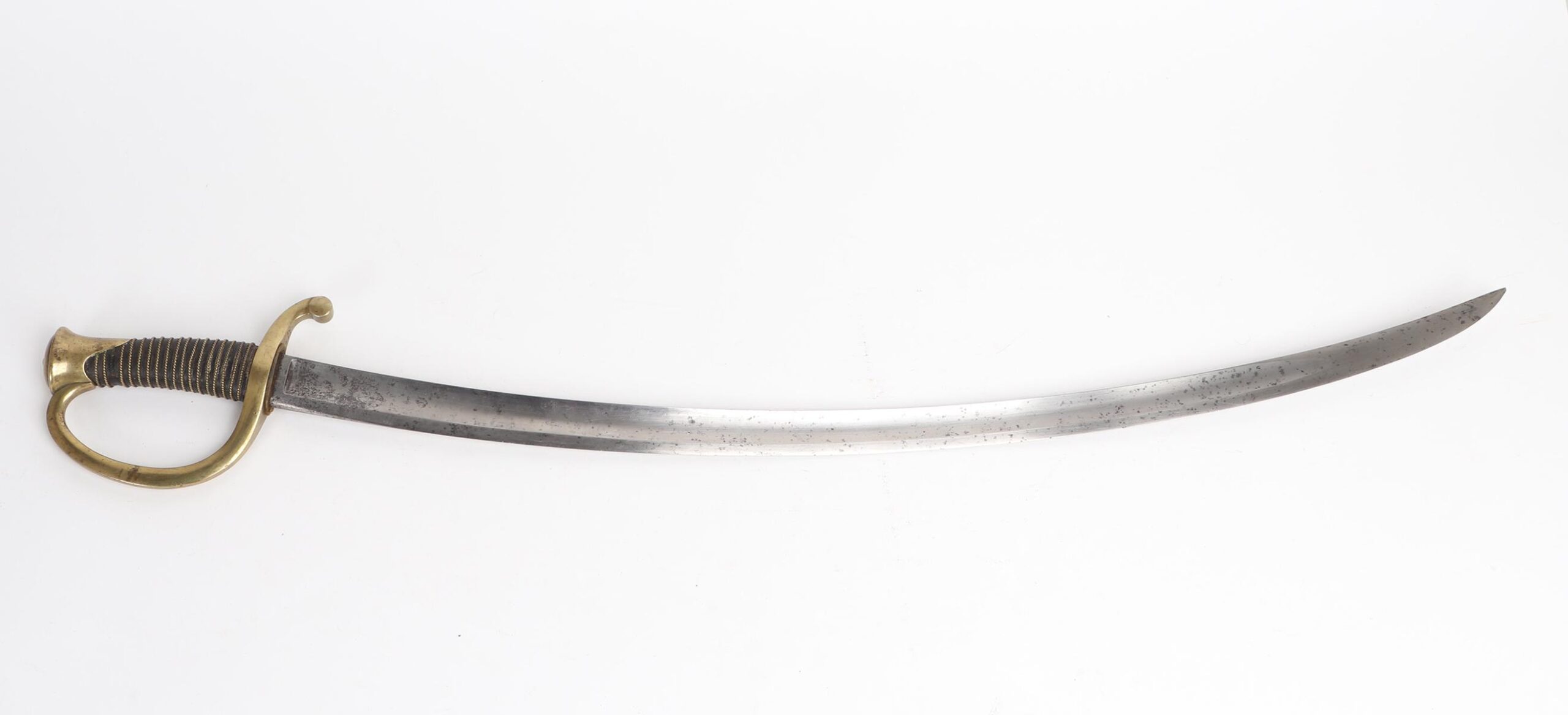
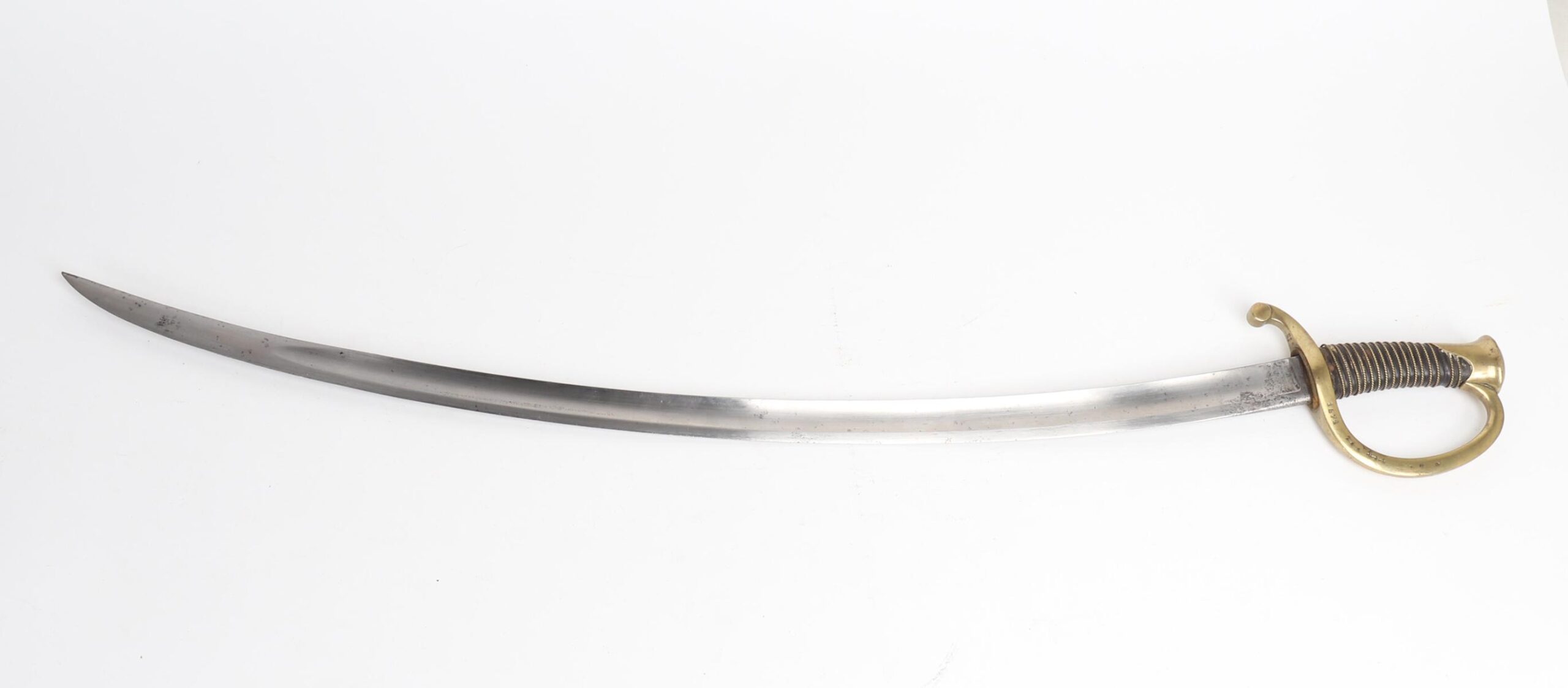
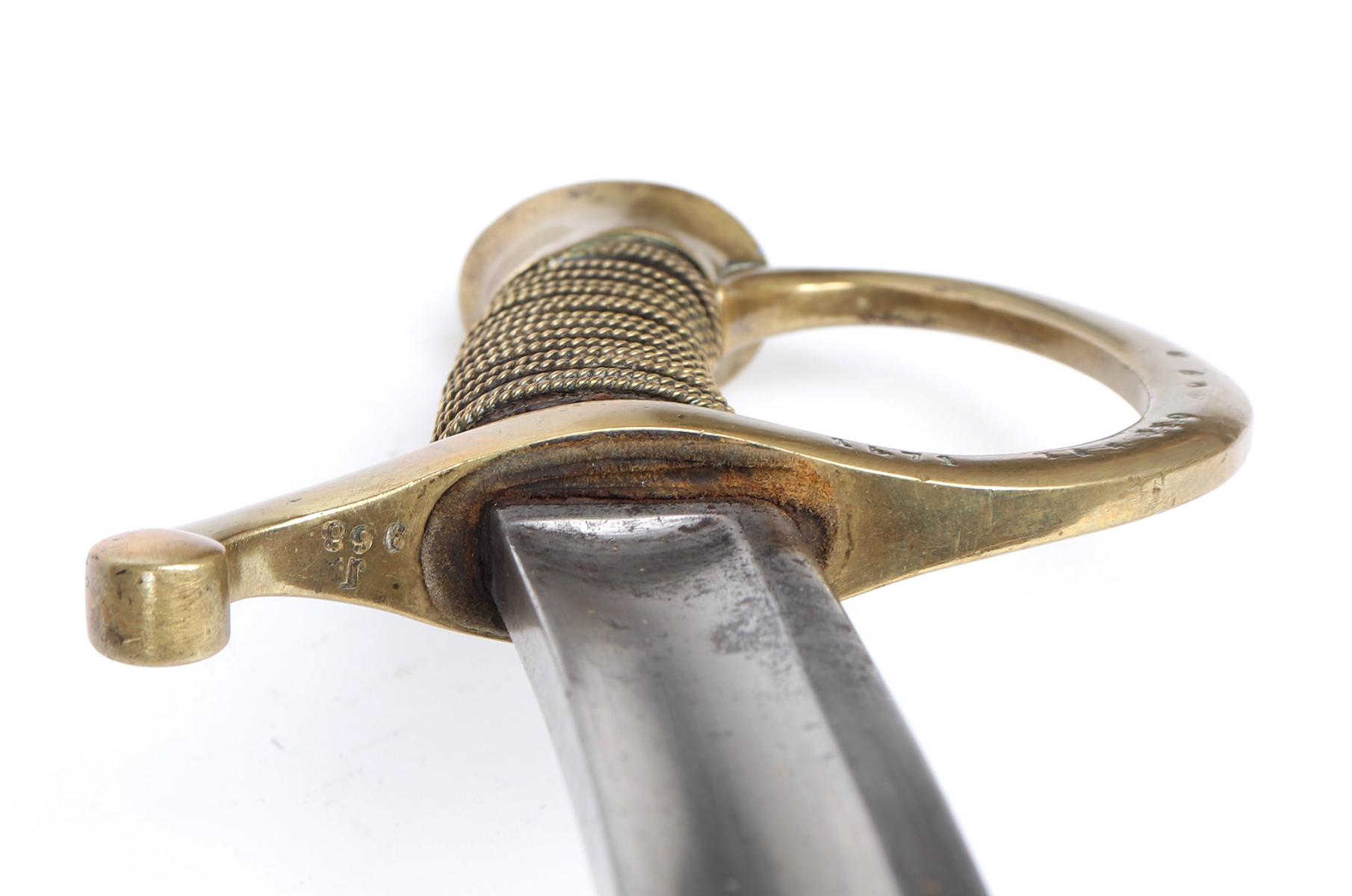
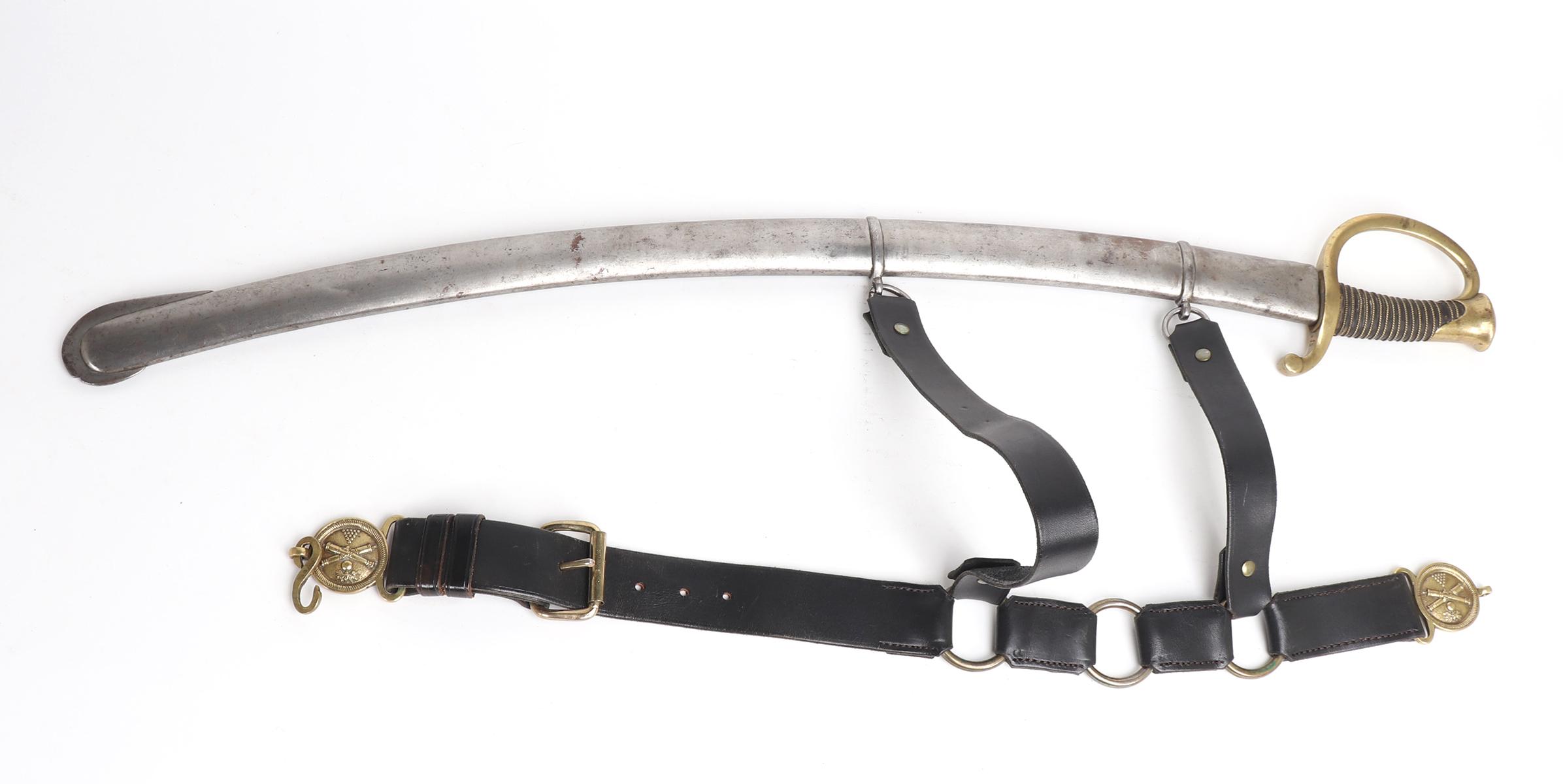
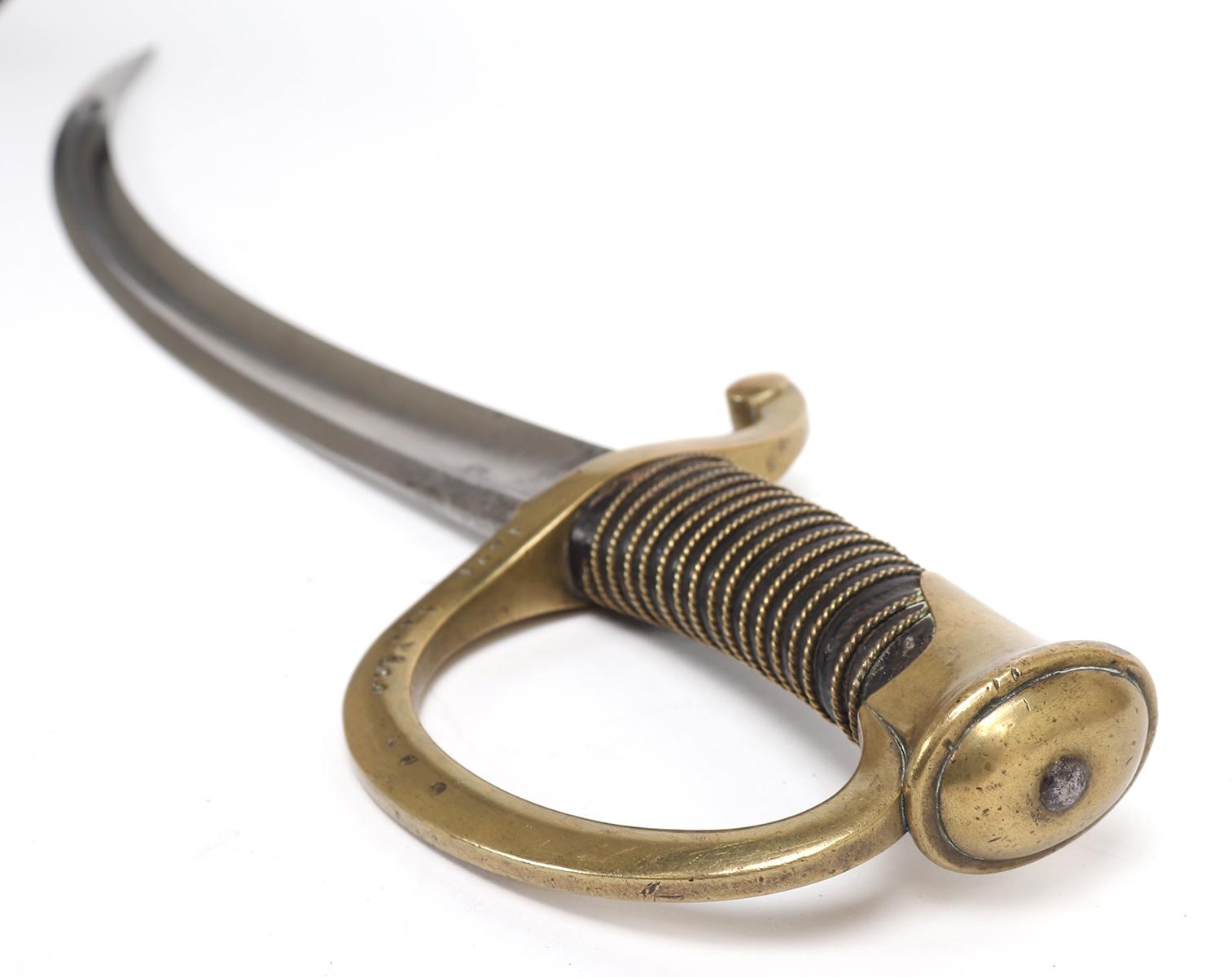
French Second Empire Artillery Officers “Bombardier” Saber w/ Belt & Mounts, (Blade signed to spine Arsenal of Chatellerault 1844). Marked with various arsenal and inventory marks from use to the left side of the guard (1471 245 350) and several smith marks, to the underside of the guards quillion (J 968). Pommel, guard, and grip all composed of brass and a twisted wire pattern over leather, blade of calvary saber with a single edge and steep curve for cutting and thrusting, wide shallow fuller. Belt, Sheath and Hardware all matching with Restored leather and the original brass bombardier mounts and hooks. This is the longer variant for mounted artillery officers, quite nice and rare.
Size: 38 3/4″ L, blade 32″ L
Short History:
In 1844, France was a constitutional monarchy ruled by King Louis-Philippe I. He had ascended to the throne in 1830 during the July Monarchy. Louis-Philippe I was known as the “Citizen King” because of his middle-class background and support for constitutional monarchy. However, his reign faced increasing opposition from various political factions, and he struggled to maintain stability.
Louis-Philippe I ruled until the February Revolution of1848, which led to his abdication and the establishment of the French Second Republic. The events of 1848 marked a significant shift in French political history, transitioning from a monarchy to a republic.
The Arsenal of Châtellerault, known as “Arsenal de Châtellerault” in French, is a historic military facility located in the town of Châtellerault in western France. Here are some key points about the Arsenal:
- Historical Significance: The Arsenal of Châtellerault has a long history, dating back to the 19th century. It played a crucial role in the production and maintenance of firearms for the French military.
- Firearms Production: The arsenal was primarily involved in the manufacture of firearms, including rifles and other small arms. It contributed significantly to the French military’s armament during various periods.
- Napoleonic Era: The arsenal gained prominence during the Napoleonic era when France was actively engaged in military campaigns. It played a role in supplying weapons to the French army under Napoleon Bonaparte.
- Continued Use: Over the years, the Arsenal of Châtellerault continued to operate and adapt to changing military technologies. It remained an important facility for the French military.
- Museum: Today, the Arsenal is home to the Musée de l’Armée et des Armes (Museum of the Army and Weapons). The museum showcases the history of the arsenal and displays a collection of firearms, military equipment, and artifacts.
- Industrial Heritage: The Arsenal of Châtellerault is not only a historical military site but also represents an important part of France’s industrial heritage. The facility reflects the technological advancements in firearm production over the years.
- Tourism: The museum attracts visitors interested in military history and weaponry. It provides insights into the evolution of firearms and the role of the arsenal in supporting the French military.
Weight sabre:……….916 gram.
Weight scabbard:….511 gram.
Weight of blade:……555 gram.
Length total:…………….97.5 cm.
Length sabre:………….95.5 cm.
Length of blade:………81.5 cm.
Width of blade:………..32 mm.
Thickness:……………….9.7 – 7 – 6 – 5.5 – 2.5 mm.
Length of inside grip: 9.5 cm.
Length of outside:….12.5 cm.
Length of foible:……….18 cm.
A very nice and well marked example of a classic French sword.