
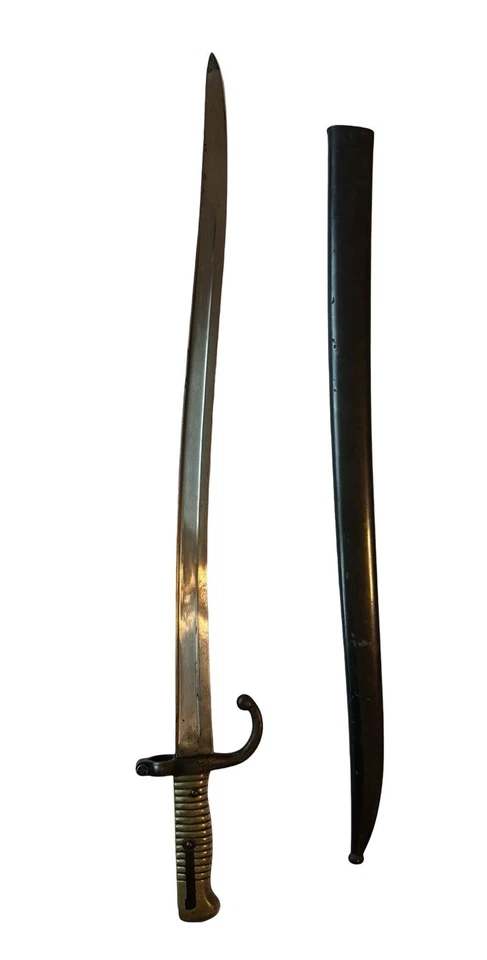
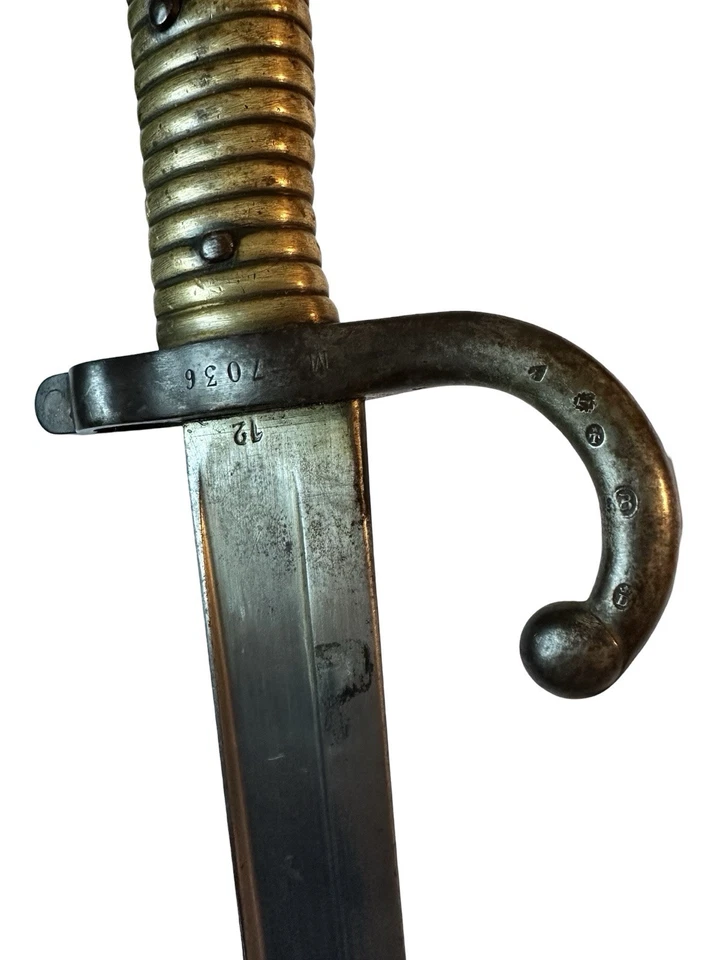
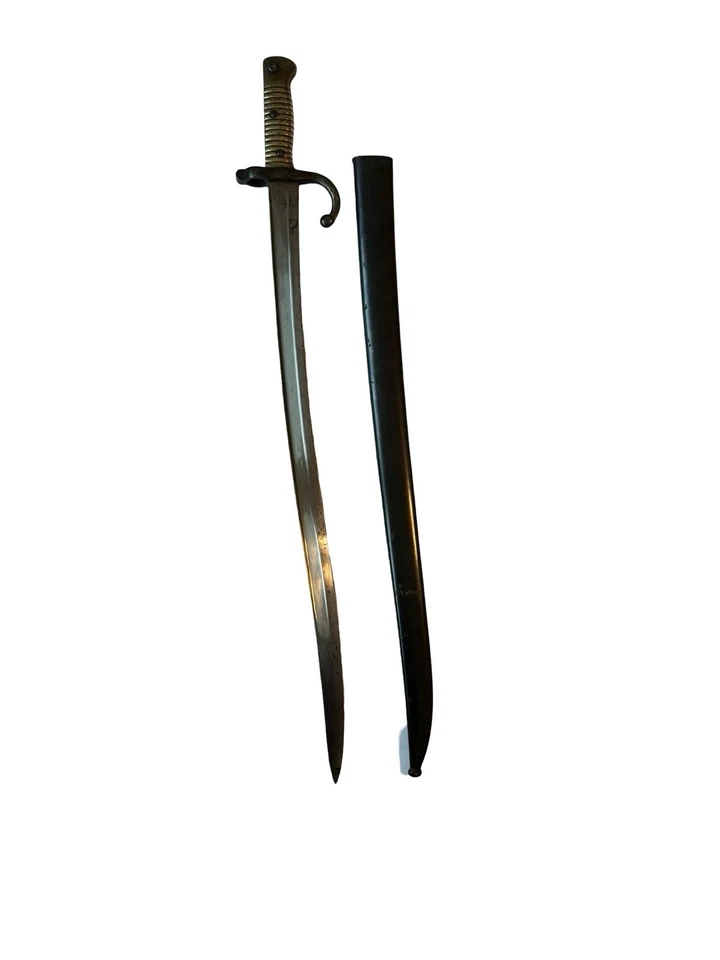
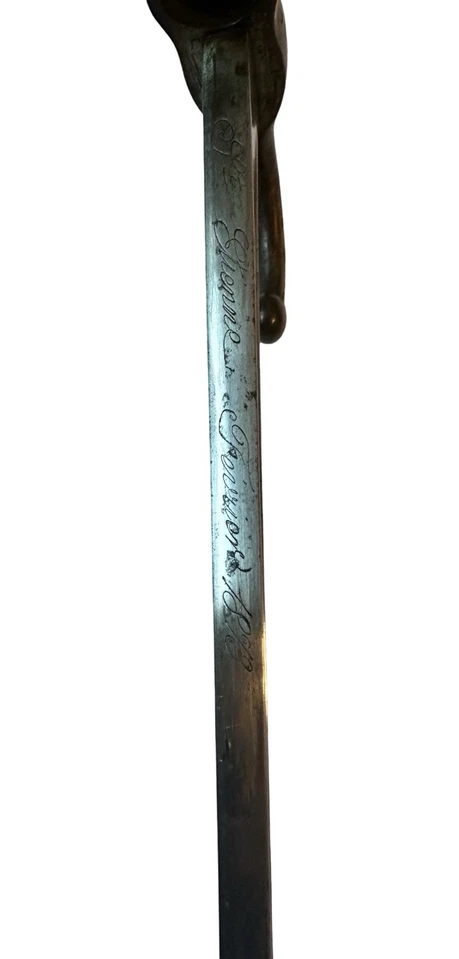
French M1866 Chassepot Sabre Bayonet – Prussian War
$310.00 CAD
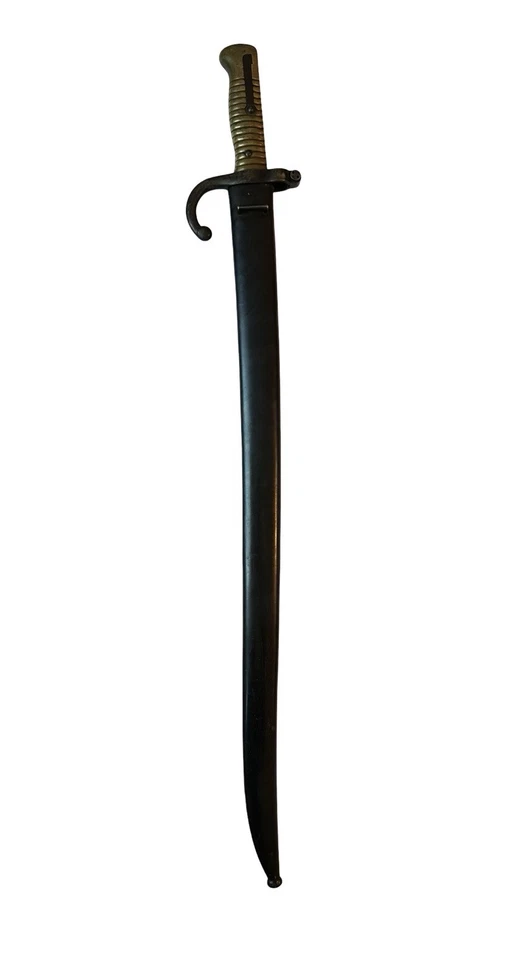
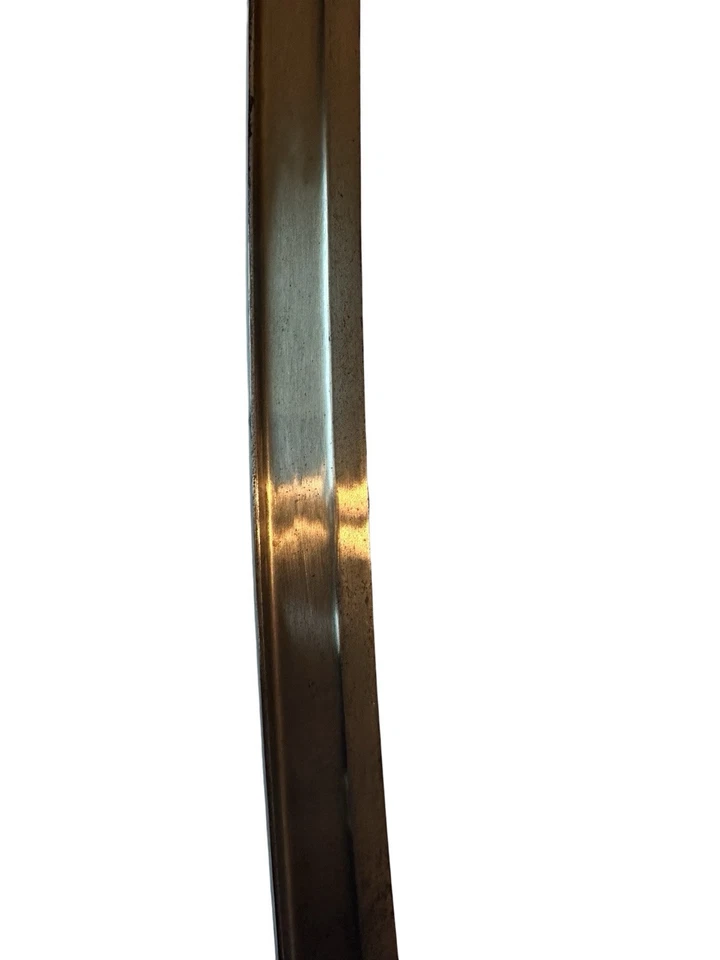
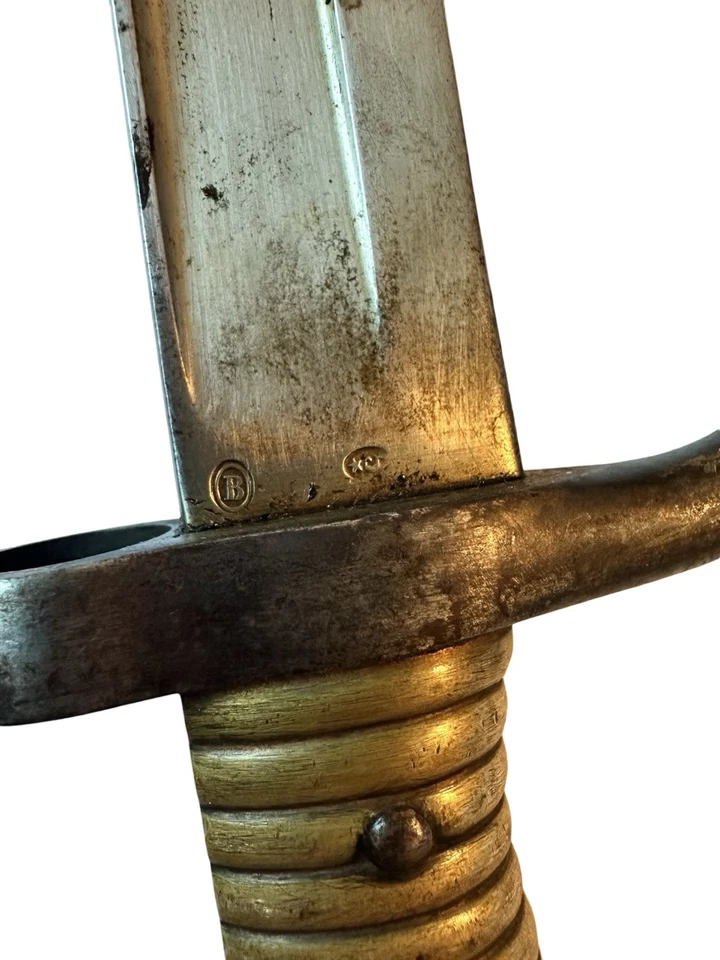
The French Chassepot bayonet, officially known as the Model 1866 bayonet, was designed for use with the Chassepot rifle (Fusil modèle 1866), a revolutionary bolt-action needle rifle adopted by the French Army in 1866. This bayonet is one of the most recognizable 19th-century military blades, notable for its Yataghan-style curved blade and distinctive hooked quillon. Very nice condition. Matching numbers. Never cleaned, original condition. Solid and attractive bayonet. The Chassepot bayonet marked a significant evolution in French saber bayonets, being the first to incorporate a hooked quillon. This design element was widely favored during the late 19th century, an era in which bayonet combat was closely associated with fencing techniques. The quillon functioned much like that of a sword, serving to deflect an opponent’s blade during a parry and preventing it from sliding downward along the length of the rifle, thereby protecting the soldier’s left arm and hand as they supported the weapon. Contrary to some misconceptions, the quillon was not designed as a blade breaker, nor was it intended to wrench an adversary’s rifle from their grasp. Additionally, while some have suggested it was used for stacking arms, most military rifles of the period were equipped with dedicated stacking swivels or other hardware designed for this purpose. Another distinctive feature of the Chassepot bayonet, inherited from the French Model 1840 bayonet, was its recurved, or “Yataghan-style,” blade. This design, inspired by North African yataghan swords, was widely adopted across the Balkans and the Ottoman Empire, influencing bayonet designs throughout Europe in the latter half of the 19th century. Some have speculated that the recurved shape was intended to keep the blade clear of the bullet’s trajectory; however, given the prevalence of straight sword bayonets during the black powder era and the absence of any contemporary documentation supporting this claim, this theory remains unsubstantiated. In 1883, the noted British author and scholar Richard Burton (not to be confused with the actor) commented on the design, stating: “The ‘curved thrust’ so imposed upon Colonel Mercy, of the French army, that he proposed…to adopt the yataghan, whose beautifully curved line of blade coincides accurately with the motion of the wrist in cutting, and to which he held to be equally valuable for the point.” However, Burton was critical of its application as a bayonet, adding: “As a bayonet it lost all its distinctive excellence; the forward weight, so valuable in cutting with the hand, made it heavy and unmanageable at the end of a musket.” Despite this critique, the widespread adoption of the yataghan-style blade suggests that military tacticians of the period placed considerable trust in French weapon design. Lastly, the Chassepot bayonet featured fullers—longitudinal grooves hollowed into the blade. These are often erroneously referred to as “blood grooves,” with the mistaken belief that they were designed to release blood or prevent suction within a wound. In reality, fullers function similarly to the flanges of an “I” beam in structural engineering, reducing the blade’s weight while maintaining its strength and rigidity. This innovation allowed for a more maneuverable yet durable weapon, reinforcing the balance between effectiveness and practicality in 19th-century bayonet design.