
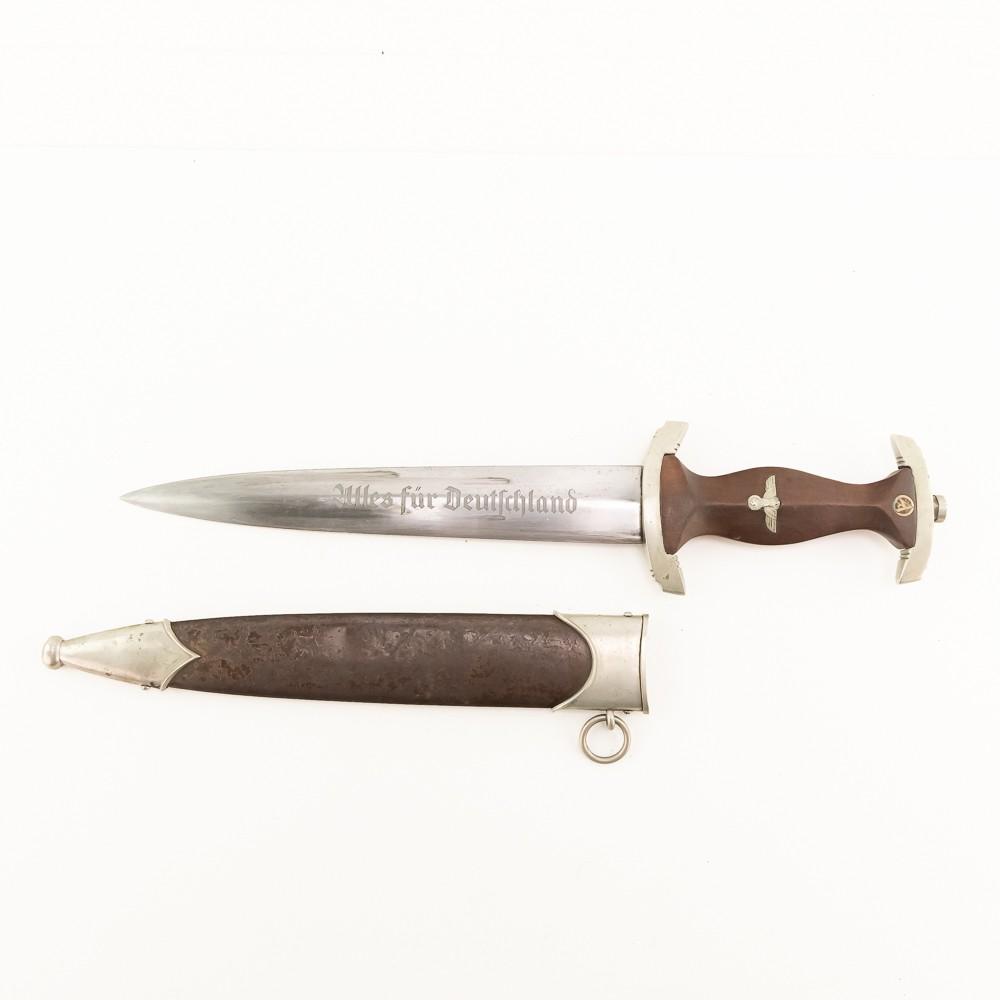
Exceedingly Rare WW2 German W. Krieger Early SA M33 Dagger
$2,800.00 CAD
Description
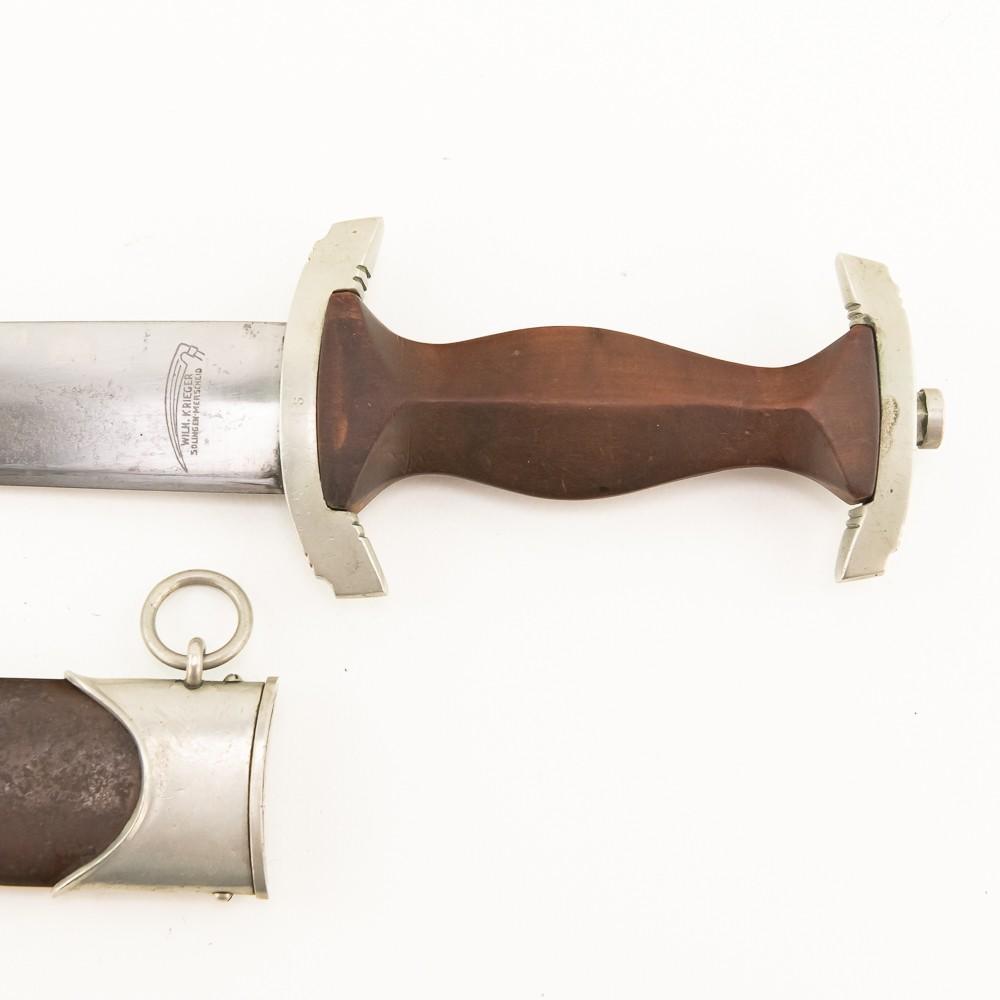
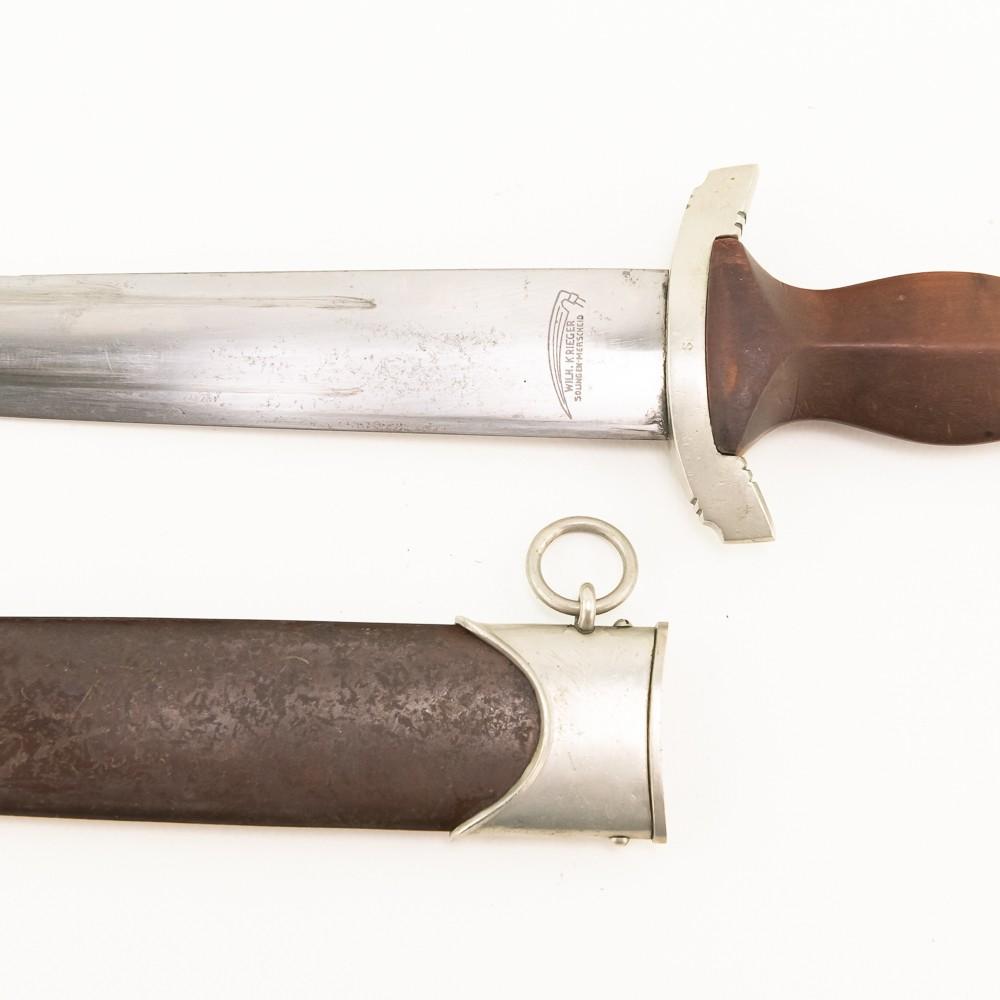
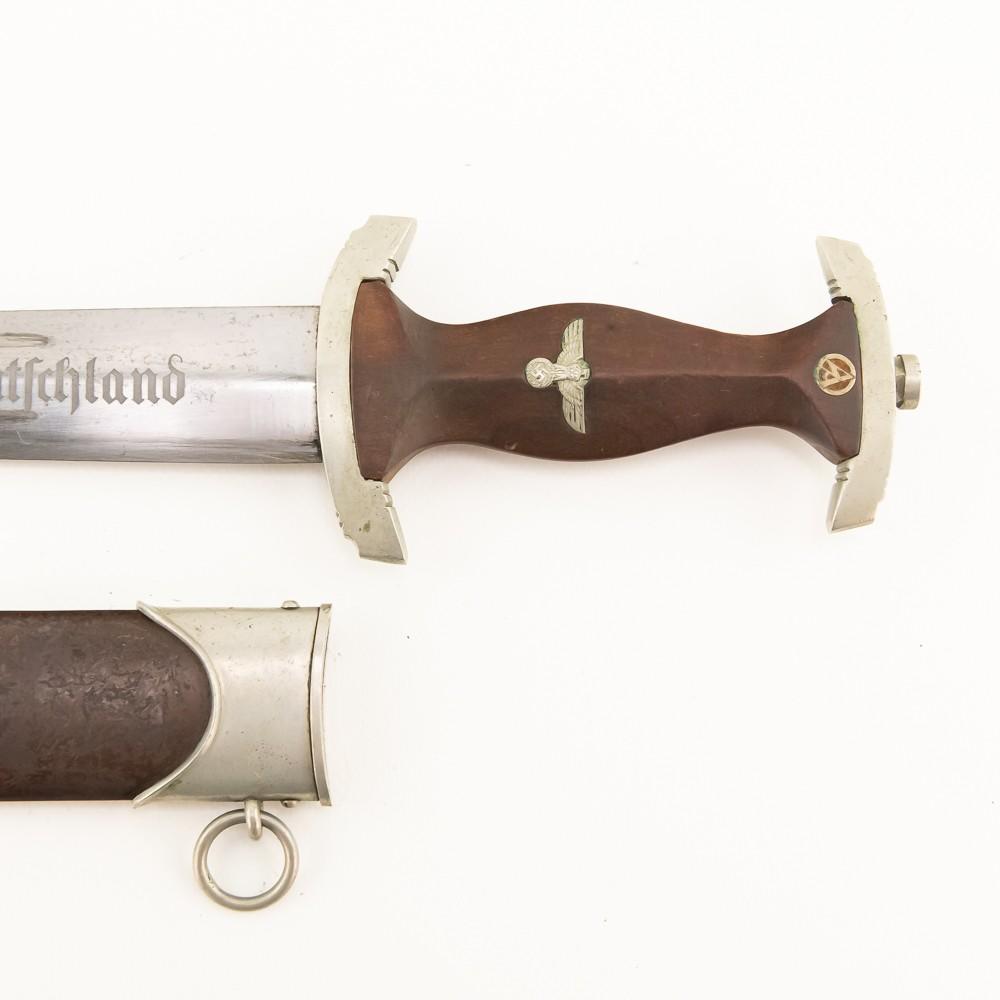
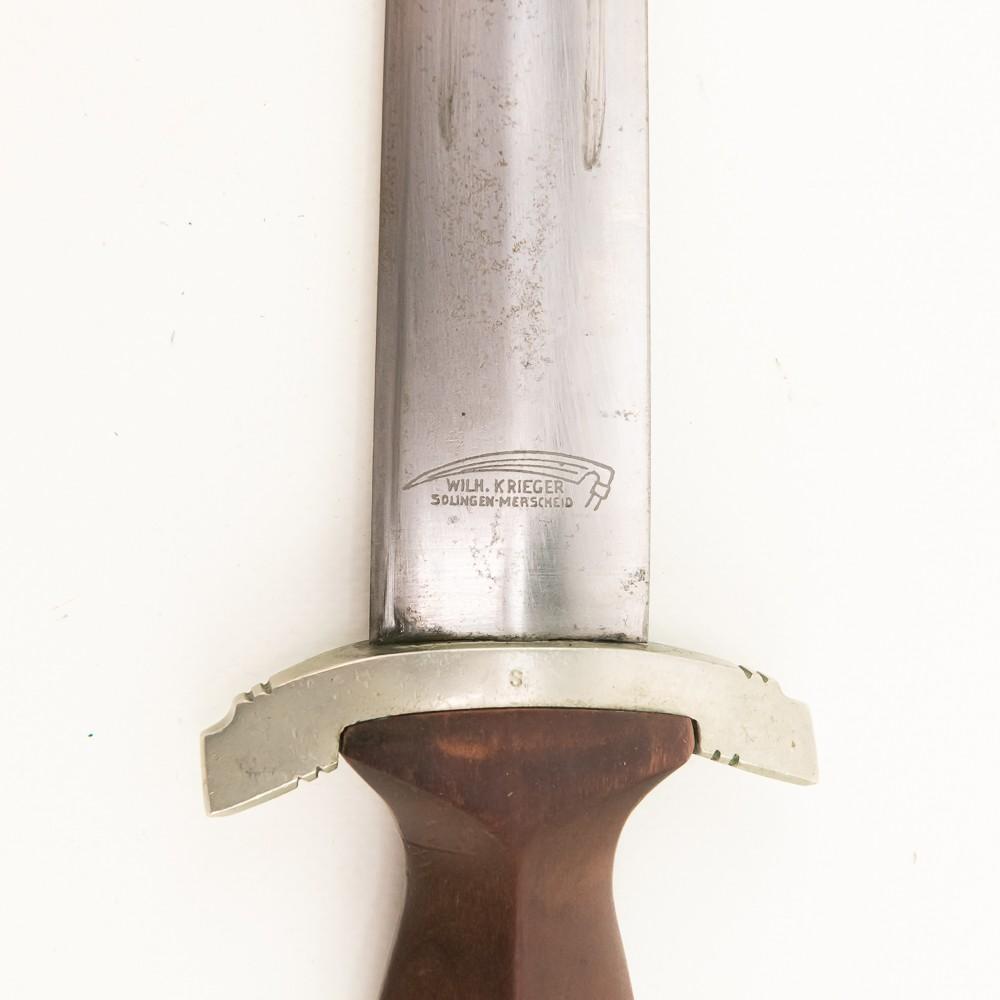
Truly a creme de la creme for standard SA Daggers. A piece like this seldom comes up on the collector market. This maker represents 0.005% of all found SA Daggers. It is regarded as the rarest SA M33 dagger maker of all. 10/10 – MAKER RARITY Plus with an extremely rare and historically significant SA gruppe regiment marking for this maker “S” – Silesia.
This particular dagger is archived.
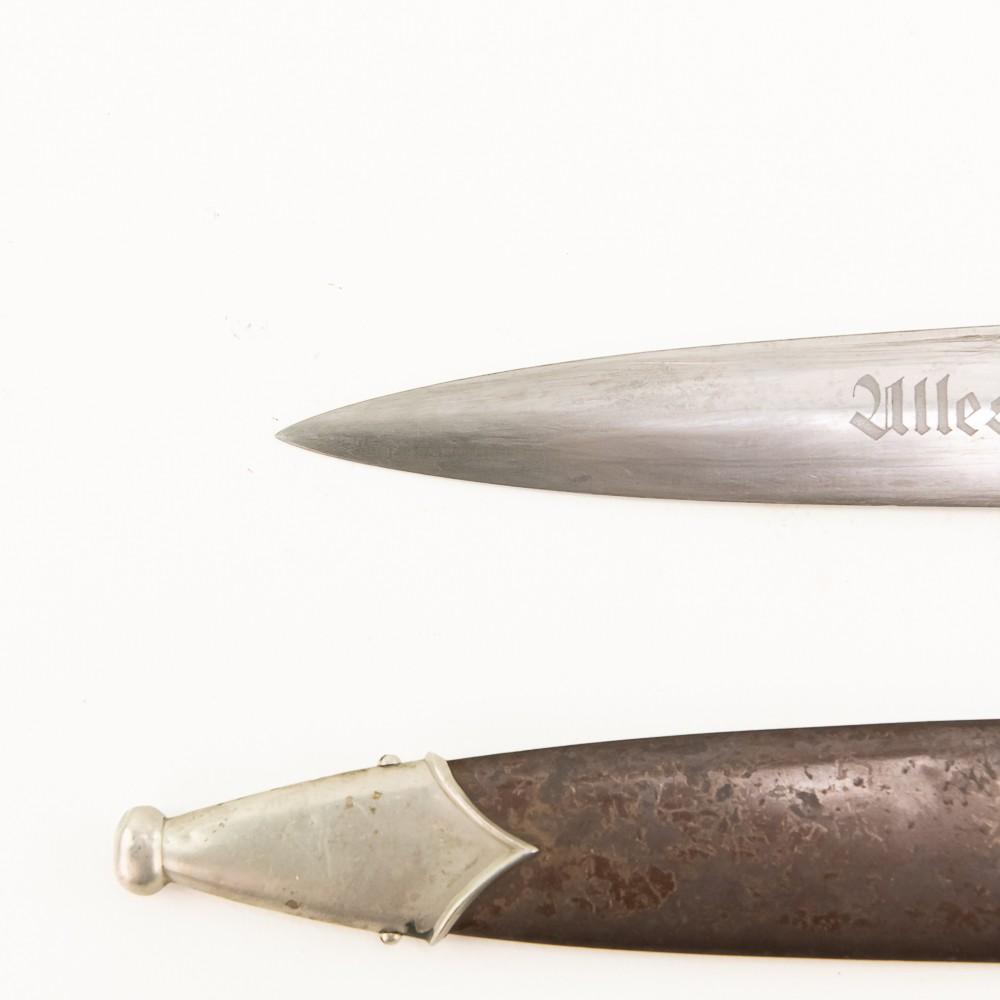
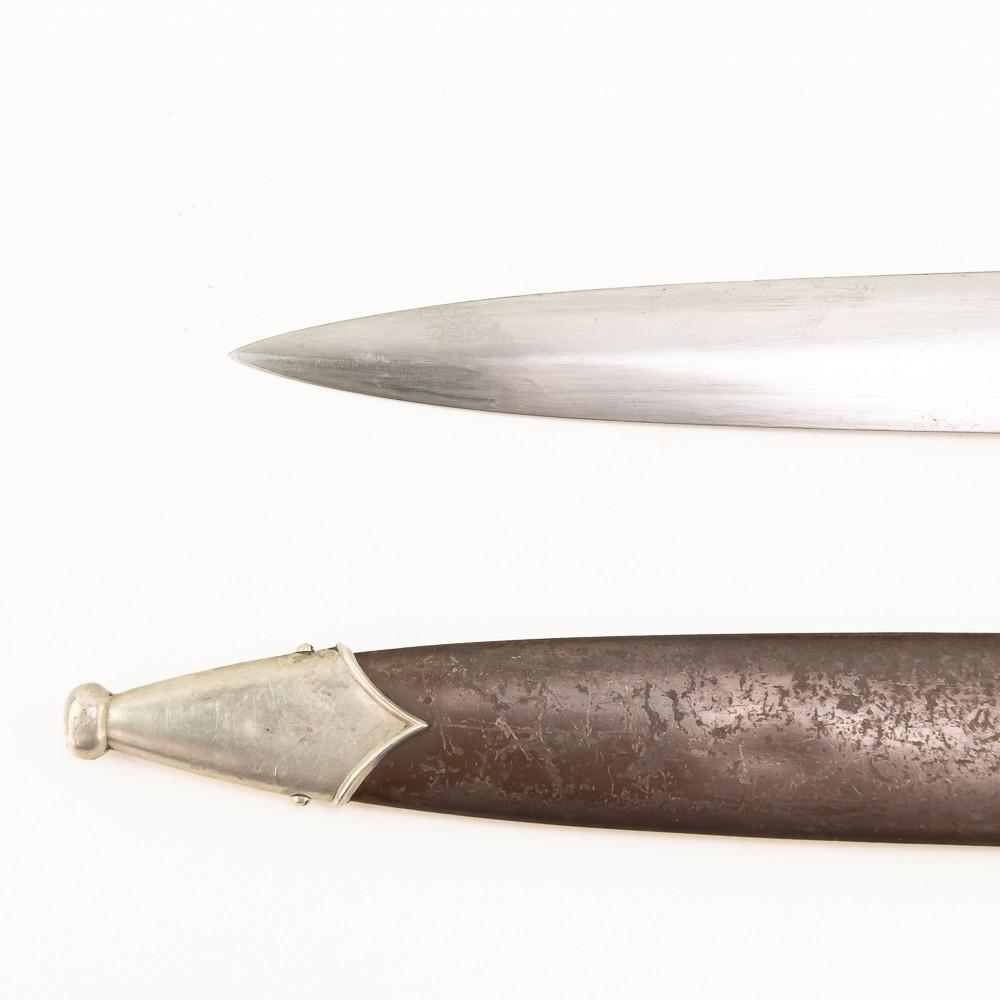
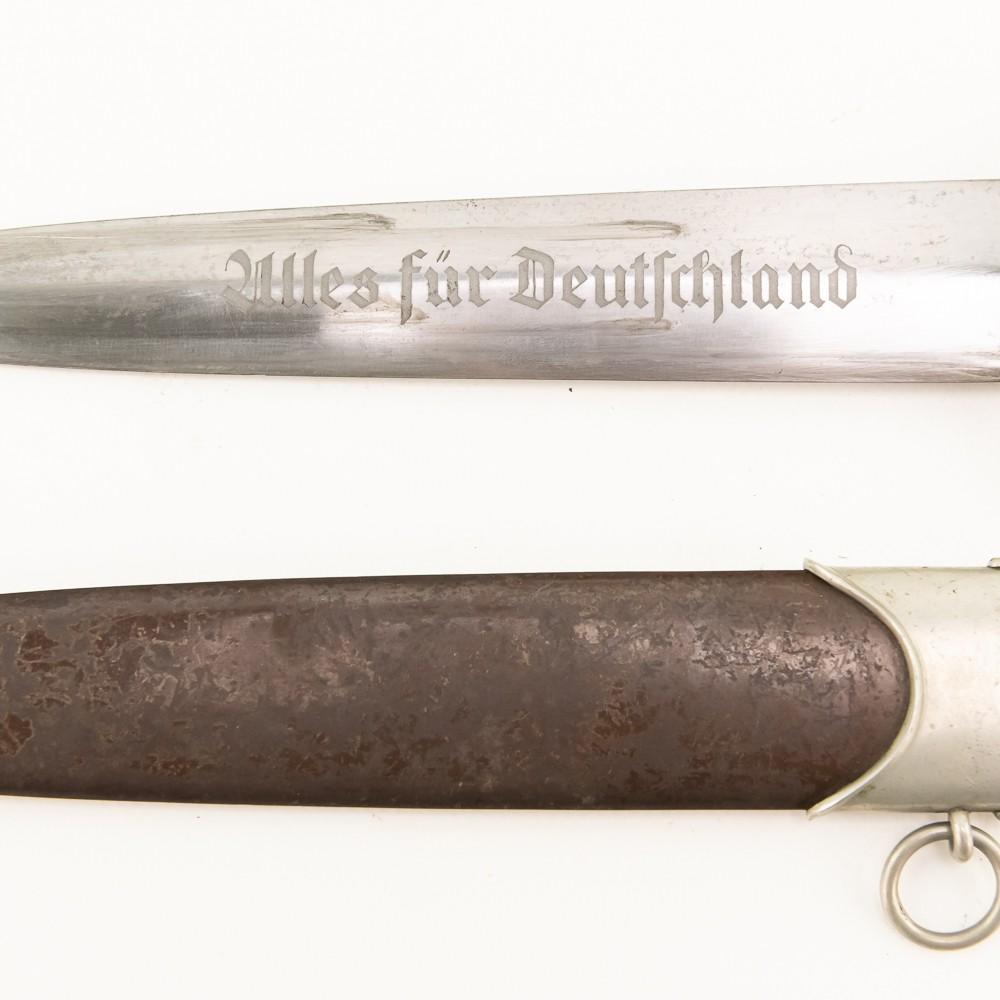
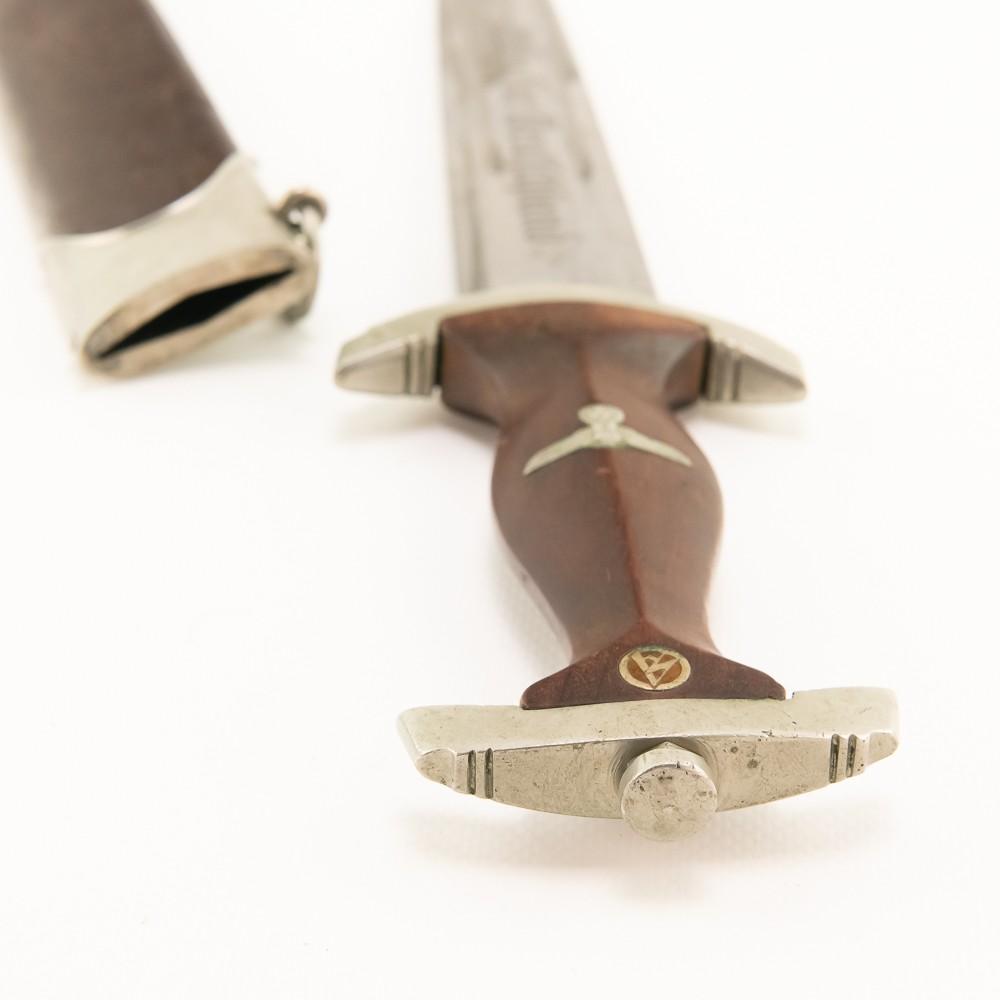
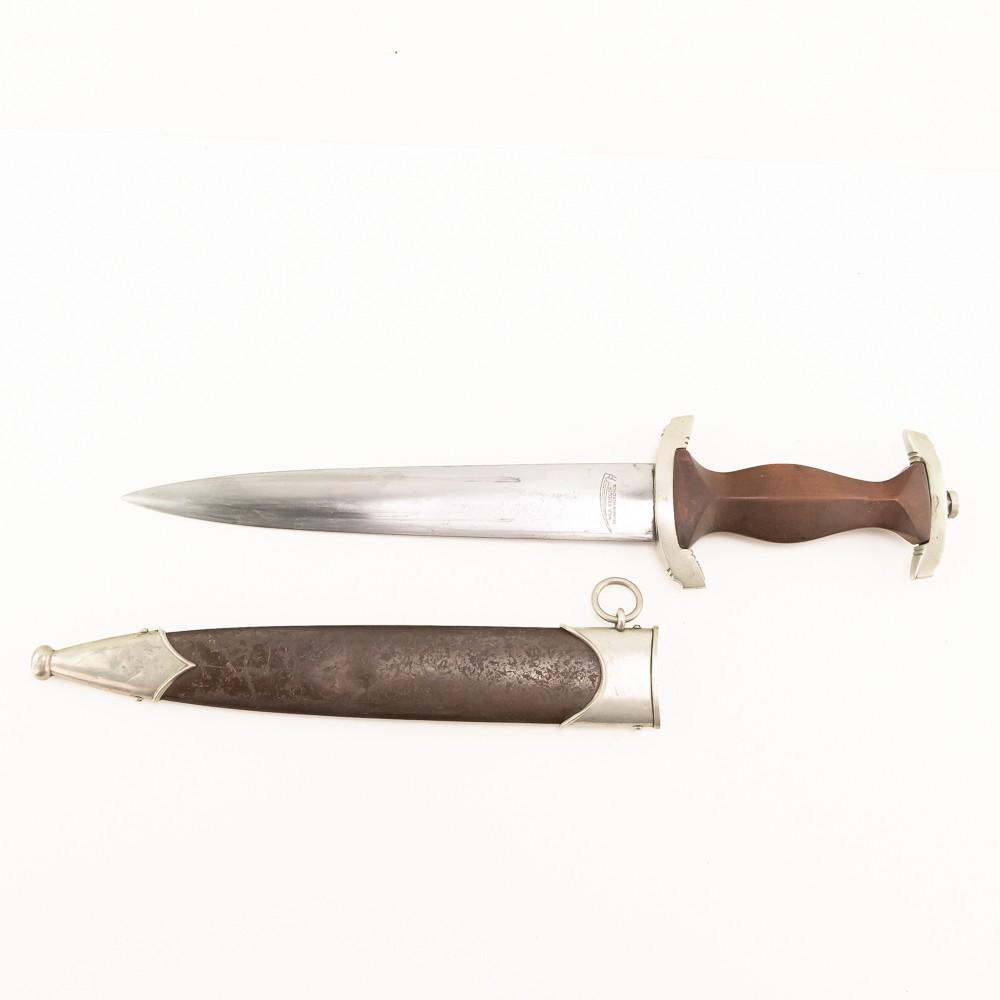
This early dagger has anodized scabbard and nickel fittings. The blade was the scarce Wilhelm Krieger maker mark with Grim Reaper Scythe logo. The blade shows a in/out wear but remains in good condition. The tip has nice point. The crossguard is SA Gruppe marked “S”. Both crossguards don’t show any cleaning and still have patina. The wooden grip has some regular wear but has no chips or cracks, and it is in excellent condition overall. The scabbard shows lots of wear and paint loss. The maker puts this dagger into a very desirable collectable category.
W. KRIEGER INFO: Wilhelm Krieger Besteck-u. Stahlwaren-Fbk, Solingen Merscheid 1910 – Established 1937 – Address Turnerstrasse 26 .. wares and cutlery 1970 – Company Closes
NS Edged weapons manufactured party Daggers and Knives …( I have yet to see to this date any ” other ” party related knives from this producer )
TM early daggers 1934 estimated production is 1000 daggers …observation is 1/1000
Daggers assigned to SA Gruppes “P” and “Wf”, in rare cases “S” Billet clamp marks on tang …” None ”
SA Rohm – None made SA RZM – RZM permit not acquired NSKK TM – Some examples are 1934 SAs converted to 1936 NSKKs …( black scabbard was either upgraded and purchased from an SA outlet or painted by the dagger holder himself ) NSKK Chained – None HJ Knives – None made SS – None made
Wilhelm Krieger was a German maker of high-quality knives and cutlery, who was based in Merscheid, a district of the city of Solingen. Solingen has a long history of producing high-quality knives and blades, and it is sometimes referred to as the “City of Blades.” Krieger was born on January 15, 1880, in Solingen. He learned the craft of knife-making from his father, who was also a master cutler. In 1900, Krieger founded his own knife-making workshop in Merscheid, which is located on the outskirts of Solingen. Krieger quickly gained a reputation for producing knives of exceptional quality, using traditional methods and the finest materials. His knives were highly sought after by chefs, butchers, and other professionals who valued precision and reliability in their tools. In addition to producing knives and cutlery, Krieger also developed several innovative designs and manufacturing techniques. He was one of the first makers to use stainless steel in his knives, and he developed a method for hardening blades that was widely admired by his peers. Krieger’s knives were known for their durability and sharpness, and they were often used by German soldiers during World War I and II. Krieger continued to produce knives until his death in 1955, and his legacy is carried on by his family and the current generation of knife-makers in Solingen. Today, knives made by Wilhelm Krieger of Merscheid are highly prized by collectors and enthusiasts of fine cutlery. They are considered some of the finest examples of German knife-making, and they represent a rich tradition of craftsmanship that dates back centuries.
SA GRUPPE SILESIA “S” INFORMATION: The SA Gruppe Silesia was a regional unit of the SA, or Sturmabteilung, which was a paramilitary organization that played a significant role in the rise of the Nazi Party in Germany. The SA Gruppe Silesia was based in the province of Silesia, which was located in southeastern Germany and is now part of Poland and the Czech Republic. The SA Gruppe Silesia was formed in 1926 and was one of the largest and most active SA units in Germany. It was responsible for organizing and carrying out a wide range of activities, including political rallies, marches, and demonstrations. The SA Gruppe Silesia also played a role in the persecution of Jews and other minority groups, as well as in the suppression of political opposition. During the early years of the Nazi regime, the SA played a significant role in enforcing Nazi policies and maintaining order. However, as the power of the Nazi Party grew, the role of the SA diminished, and many of its members were absorbed into the regular military or other branches of the Nazi Party. In 1934, Adolf Hitler ordered a purge of the SA, known as the “Night of the Long Knives,” which resulted in the arrest and execution of many of its leaders, including the commander of the SA Gruppe Silesia, Edmund Heines. After the purge, the SA was reorganized and placed under the control of the SS, or Schutzstaffel, which became the primary paramilitary organization of the Nazi Party.
The SA Gruppe Silesia played a significant role in the political and social landscape of Silesia during the interwar period. Silesia was a region with a large German minority population, and the SA Gruppe Silesia saw itself as a defender of German interests in the region. The SA Gruppe Silesia organized rallies and marches in support of the Nazi Party and its leaders, including AH. It also carried out acts of violence and intimidation against political opponents, including members of other parties and labor unions. The SA Gruppe Silesia was particularly active in the city of Breslau (now Wroclaw, Poland), where it clashed with left-wing groups and engaged in street battles. One of the most infamous incidents involving the SA Gruppe Silesia occurred in 1932, when a group of SA members attacked a Communist demonstration in Breslau. The resulting violence, known as the “Bloody Sunday” incident, left 14 people dead and over 100 injured. After the Night of the Long Knives, the SA Gruppe Silesia was reorganized and placed under the control of the SS. Many former members of the SA Gruppe Silesia went on to serve in the Waffen-SS, the combat branch of the SS, during World War II.
The Bloody Sunday incident in Breslau (now Wrocław, Poland) occurred on July 31, 1932, and it is considered one of the most violent and tragic clashes between Nazi paramilitary forces and their opponents during the Weimar Republic. The incident began when the local branch of the Communist Party organized a demonstration against the government’s ban on a May Day rally earlier that year. The demonstration attracted a large crowd, and tensions rose when a group of SA members arrived on the scene. The SA members attempted to disrupt the demonstration, and a scuffle broke out. The situation quickly escalated into a full-blown street battle, with SA members attacking demonstrators and passersby with clubs, knives, and other weapons. The fighting continued for several hours, with both sides using whatever weapons they could find. The police initially stood by and did not intervene, but eventually, they began to use tear gas to disperse the crowds. When the fighting finally subsided, 14 people were dead, and over 100 had been injured. The victims included both demonstrators and SA members, as well as bystanders caught in the crossfire. The incident shocked Germany and drew international attention to the growing violence and extremism of the Nazi Party. The Bloody Sunday incident was a turning point in the history of the Weimar Republic. It demonstrated the willingness of Nazi paramilitary forces to use violence to achieve their goals and the inability of the government to maintain order. The incident also highlighted the deep political divisions within German society and foreshadowed the violent clashes that would come to define the Nazi era.