
Antique Japanese Samurai Knife Edo Period 19th C Tanto Knife in ornate Koshirae
$1,200.00 CAD
East Asia, Japan, Late Edo period, ca. 19th century CE.
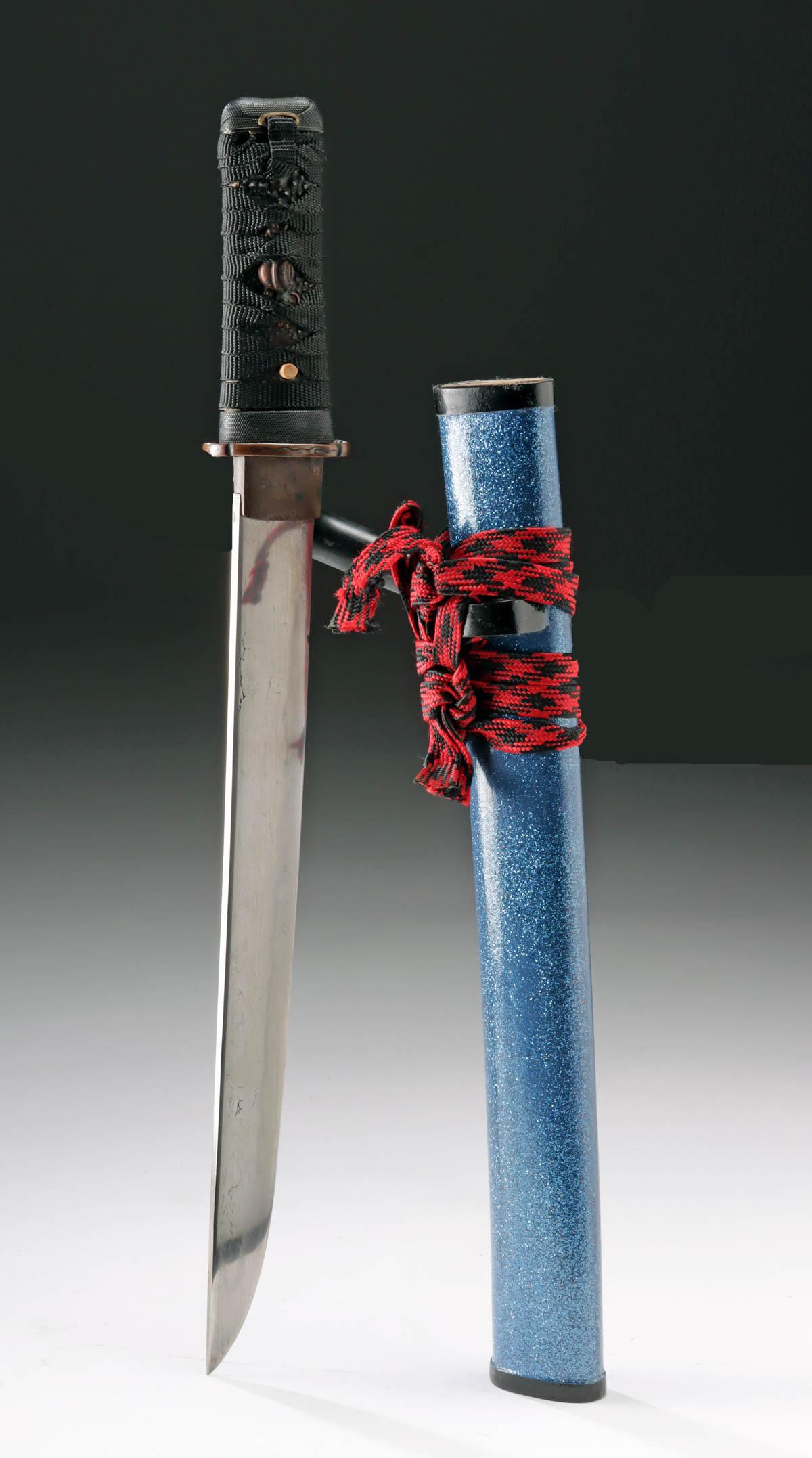
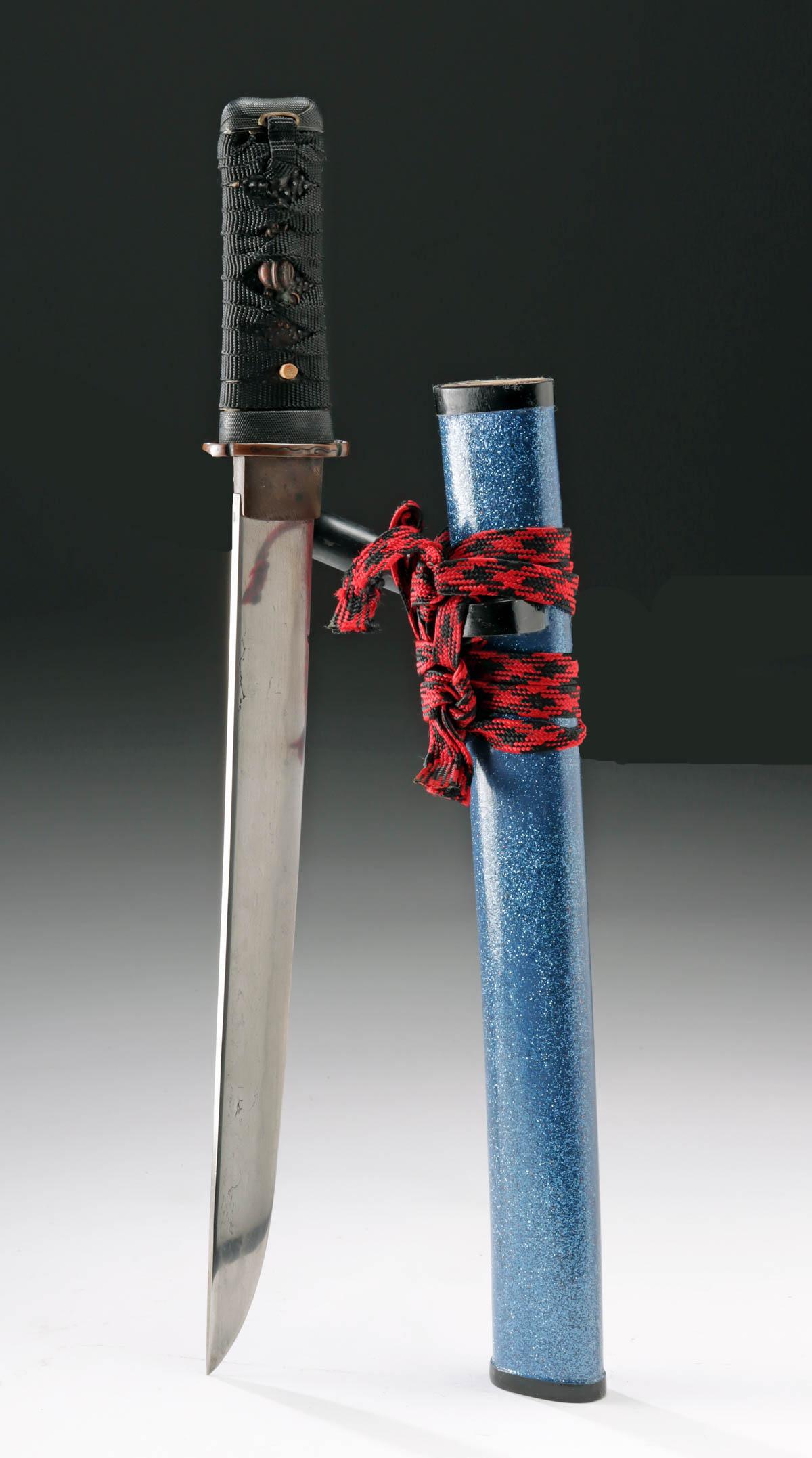
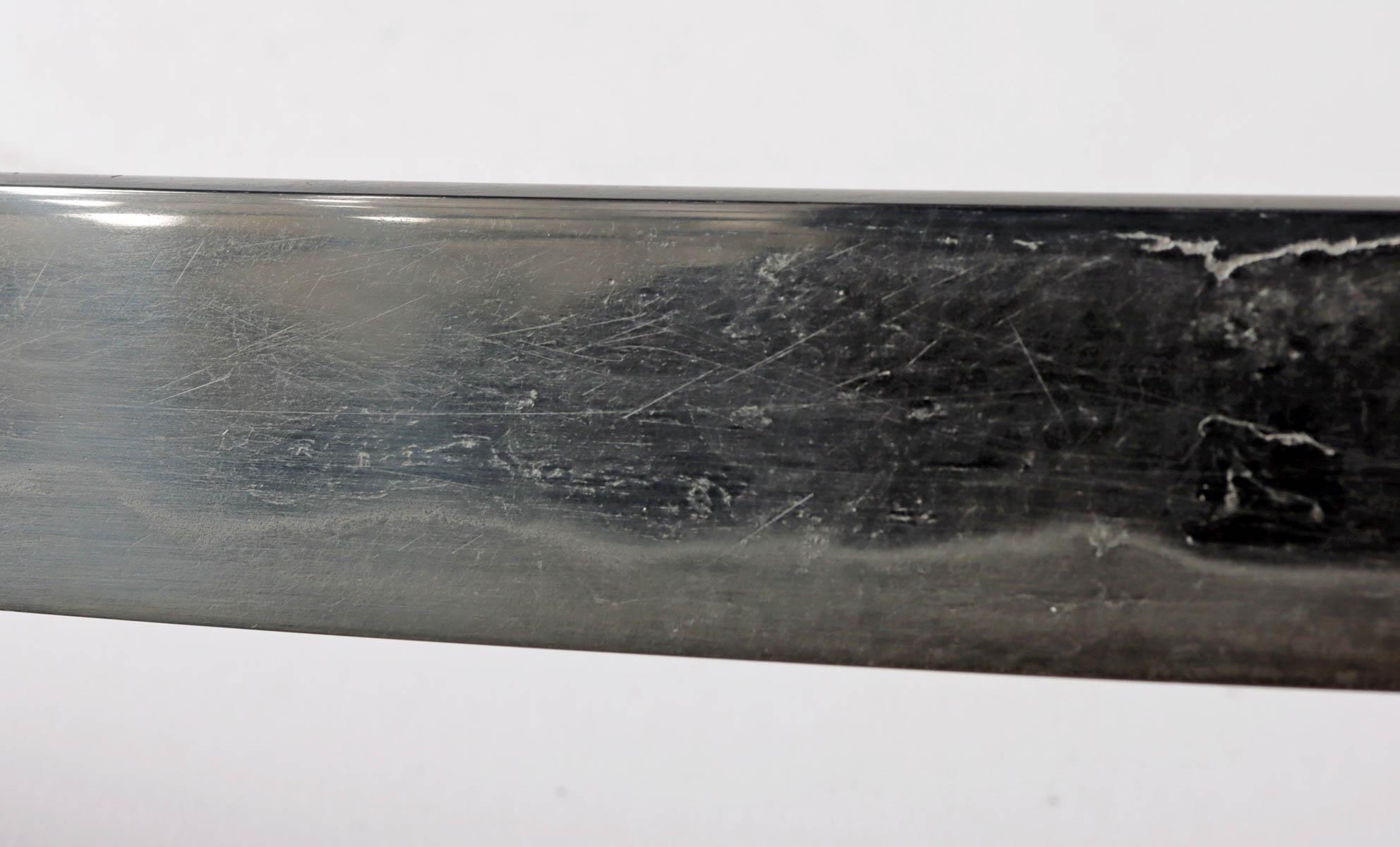
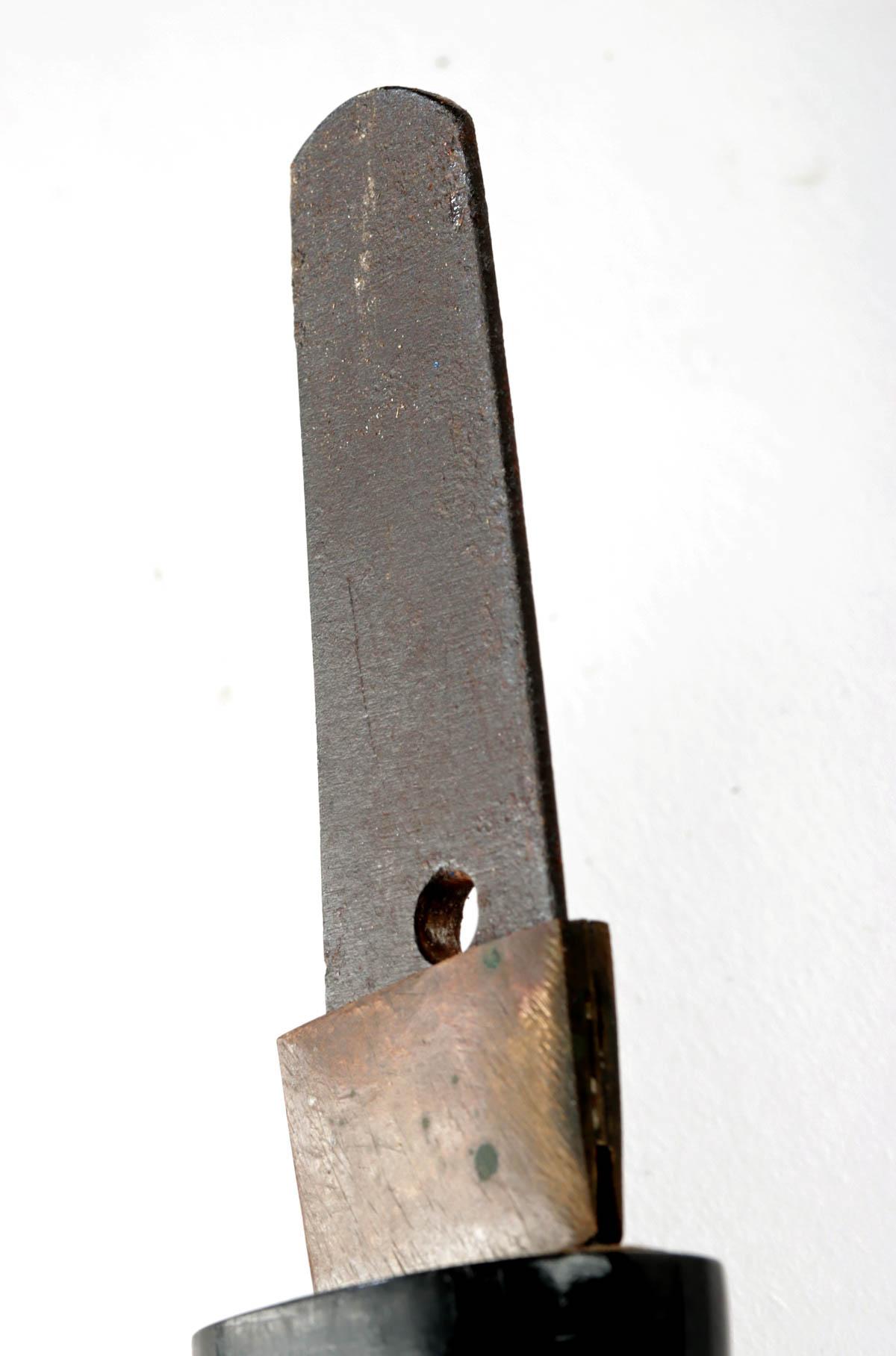
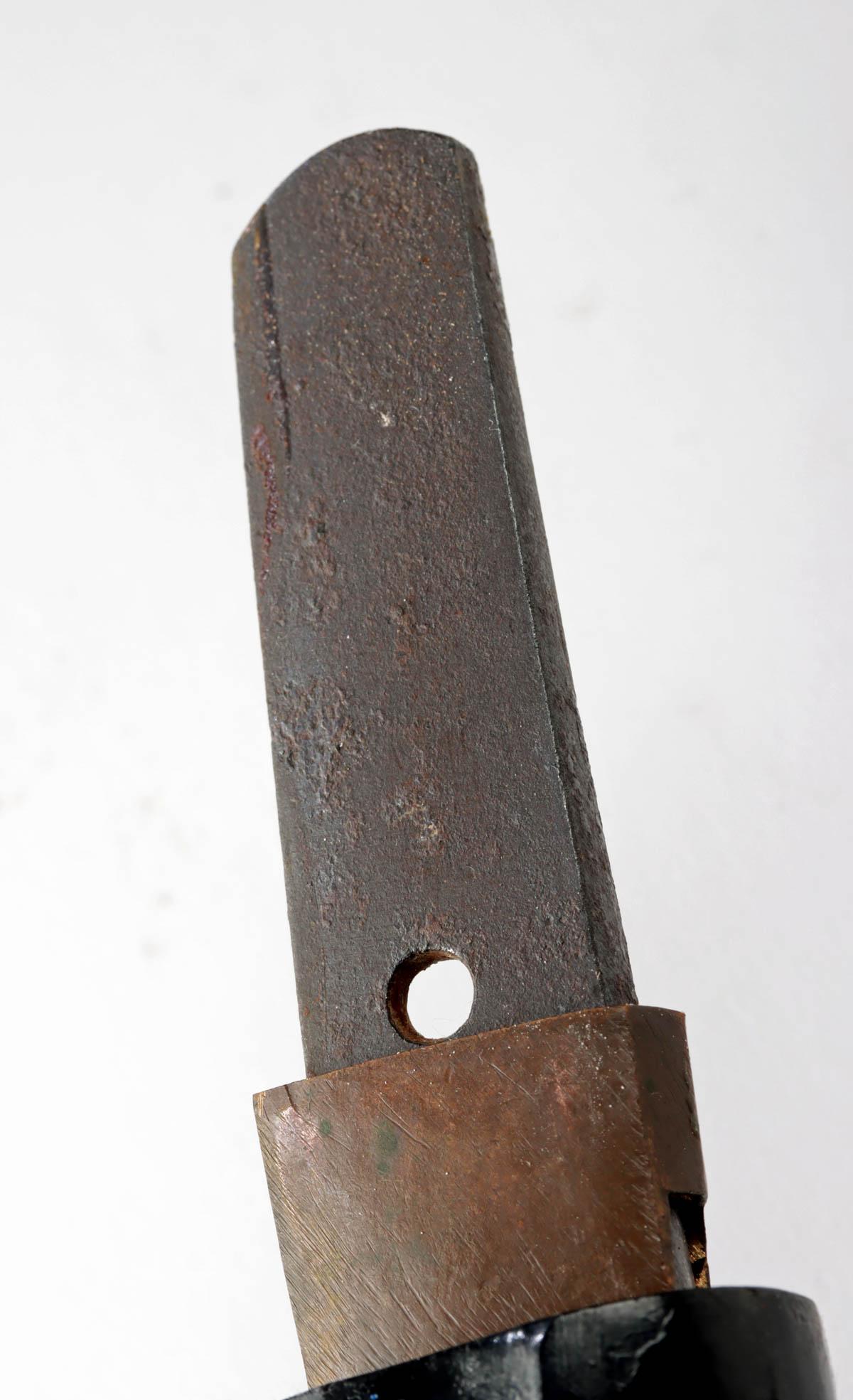
An antique Japanese Samurai tanto, mumei (unsigned), complete with its original koshirae and sword bag. The blade is in good polish, presenting a clear and active suguha hamon (straight temper line) that runs evenly along the edge. Subtle hataraki (activity within the hamon) can be observed, adding depth and liveliness to the temper pattern. The ji (surface steel) reveals areas of shintetsu where the softer inner core peeks through the hardened jacket steel, a hallmark of traditional lamination methods and an indication of both honest age and extensive service. Minor surface scratches and a small nick are present, yet they do not detract from the overall beauty of the craftsmanship.
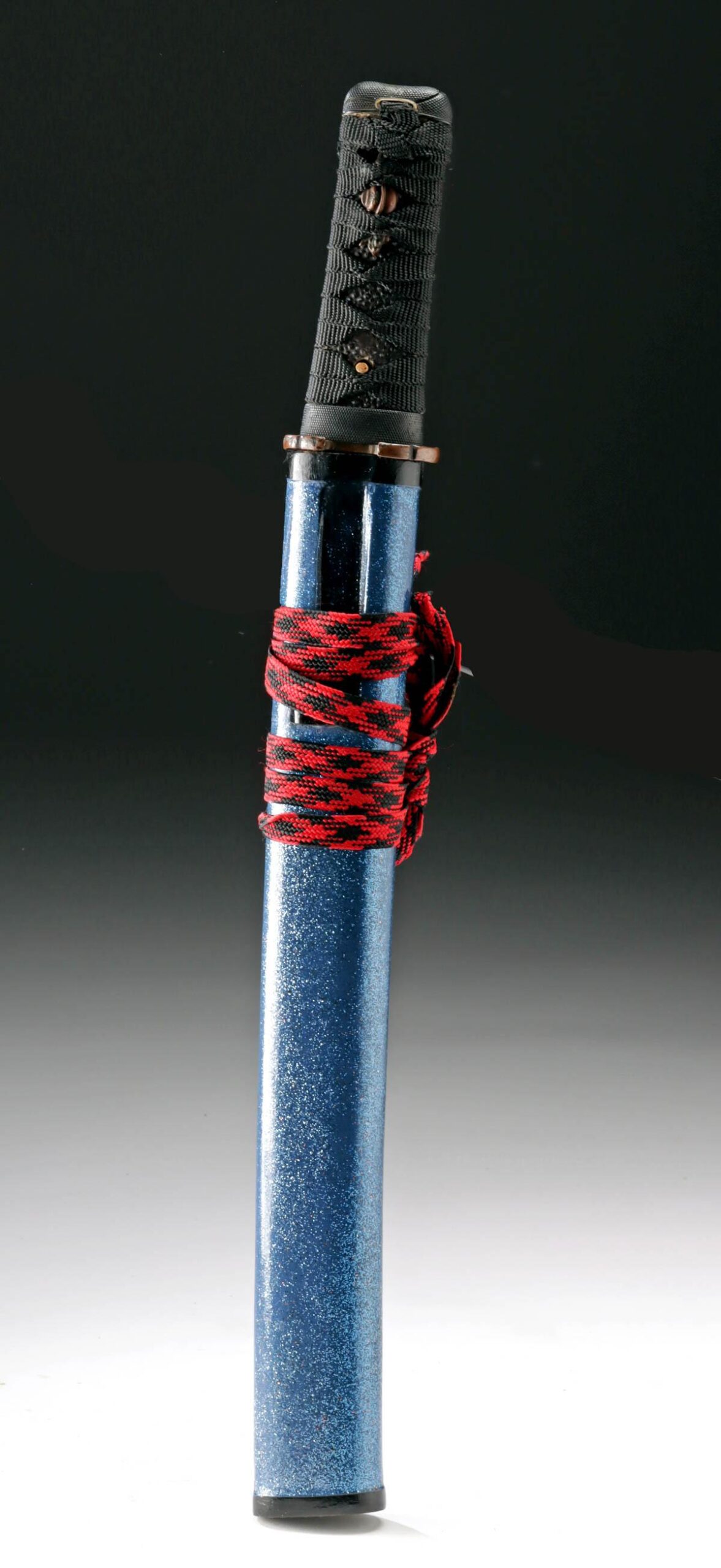
The koshirae is striking in design: the saya is finished in a brilliant blue lacquer with a sparkling, glitter-like effect, bound with a bold red-and-black cord. The tsuka is wrapped in tight black silk ito over black rayskin, with a pair of copper floral menuki concealed beneath the wrap. The fuchi and kashira are copper with faint traces of gold (1–3%) and silver (1% or less), lending a refined, understated elegance, while the tsuba is of copper with incised characters. A copper habaki secures the blade firmly, completing the mountings.
In the cultural and martial context of the Edo period, the tanto was both a weapon and a status symbol. Traditionally carried by samurai, it served as a close-combat sidearm, often reserved for indoor fighting where longer blades were less practical. Beyond its martial function, the tanto was a canvas for metallurgical skill and artistic expression—the straight suguha hamon seen here is a timeless style, admired for its restraint and clarity. Such blades exemplify the Japanese swordsmith’s pursuit of both functional perfection and aesthetic refinement.
Small nick on blade, in old original polish, please observe pictures.
Size (in koshirae): 17.5″ L x 1.8″ W (44.4 cm x 4.6 cm)
Blade: 11″ L x 1″ W (27.9 cm x 2.5 cm)