
Antique German cavalry sabre Franco Prussian war Sword
$1,200.00 CAD
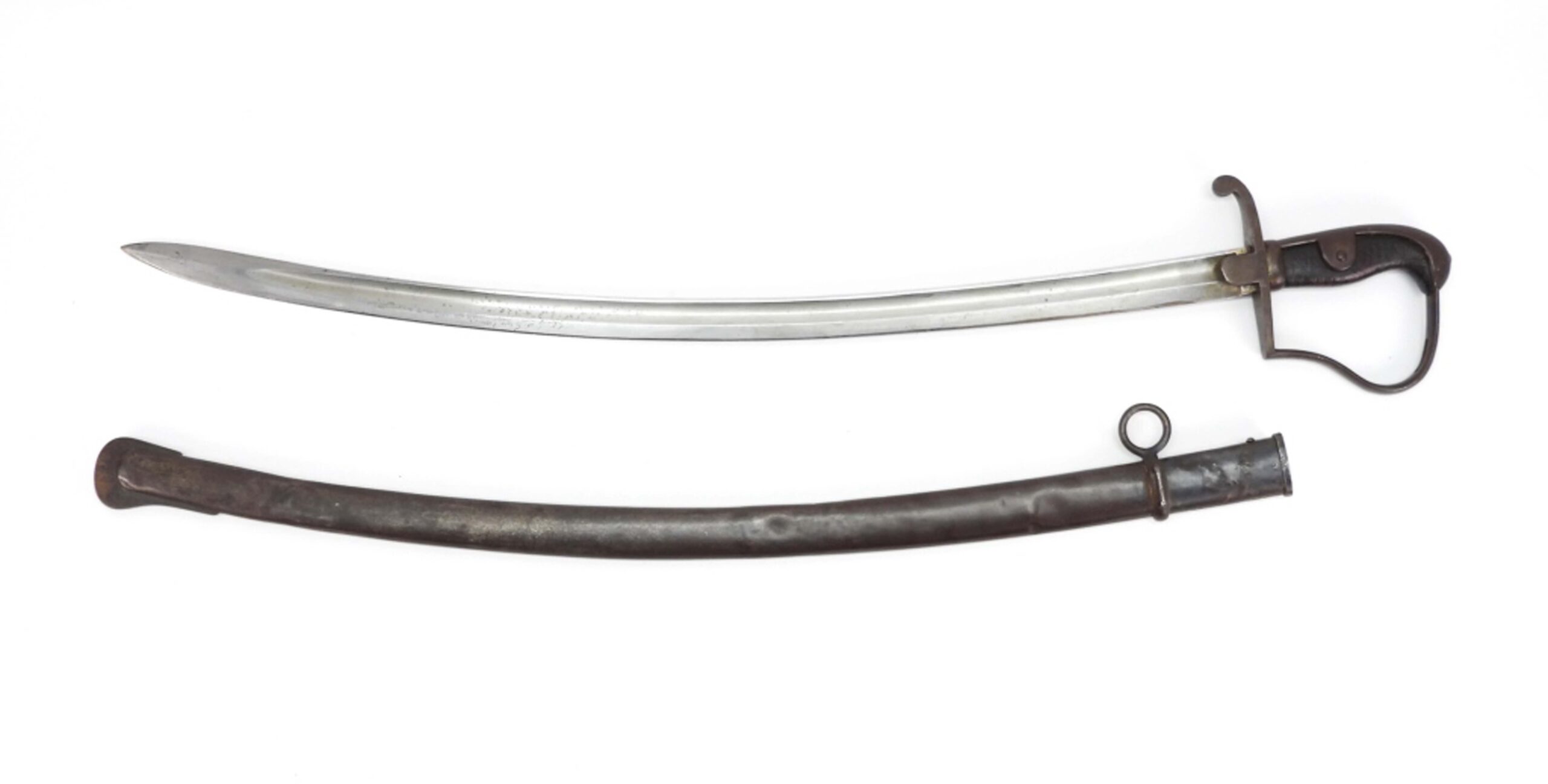
Franco Prussian War – Cavalry troopers Bluchersabel – Regiment marked.
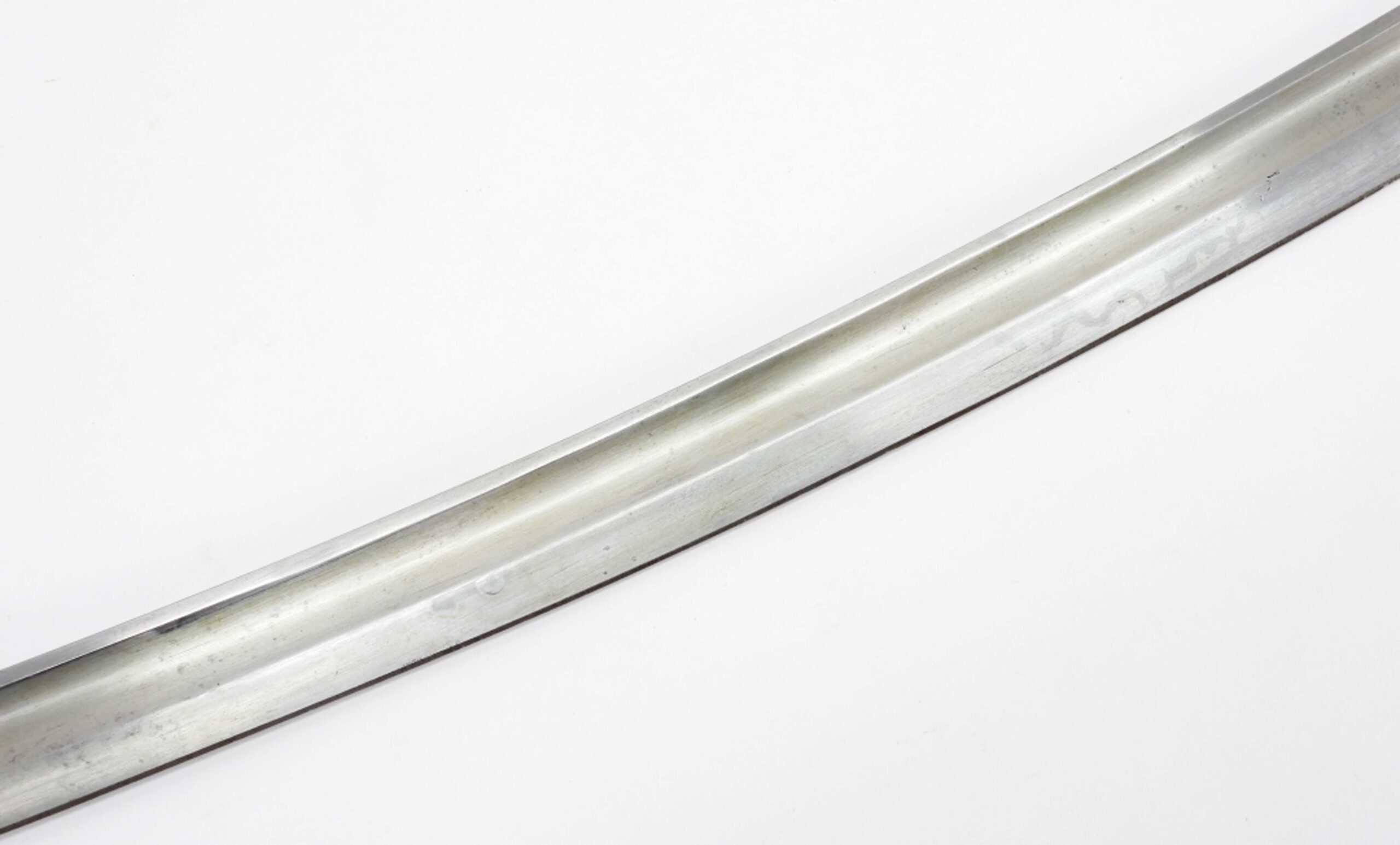
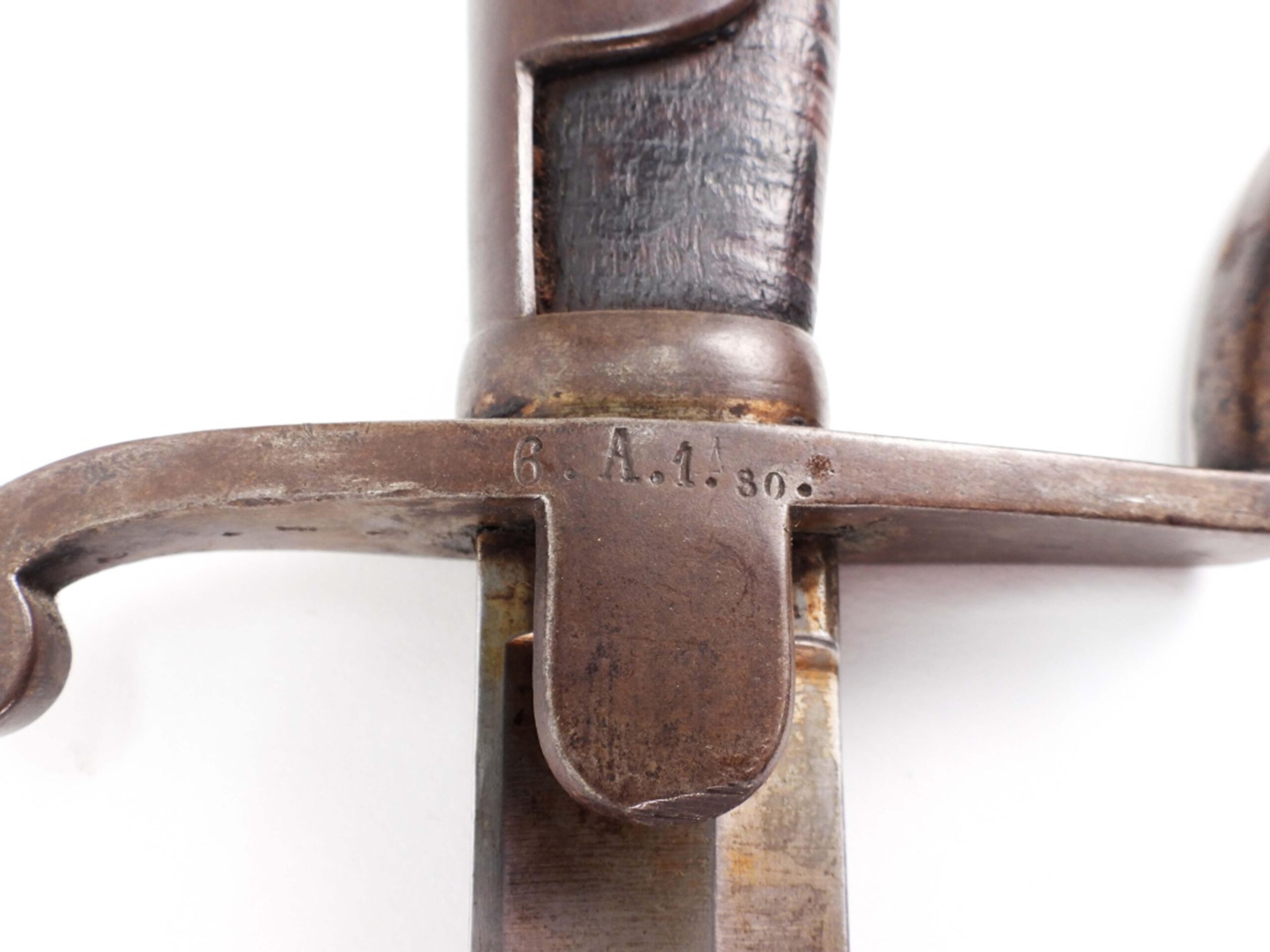
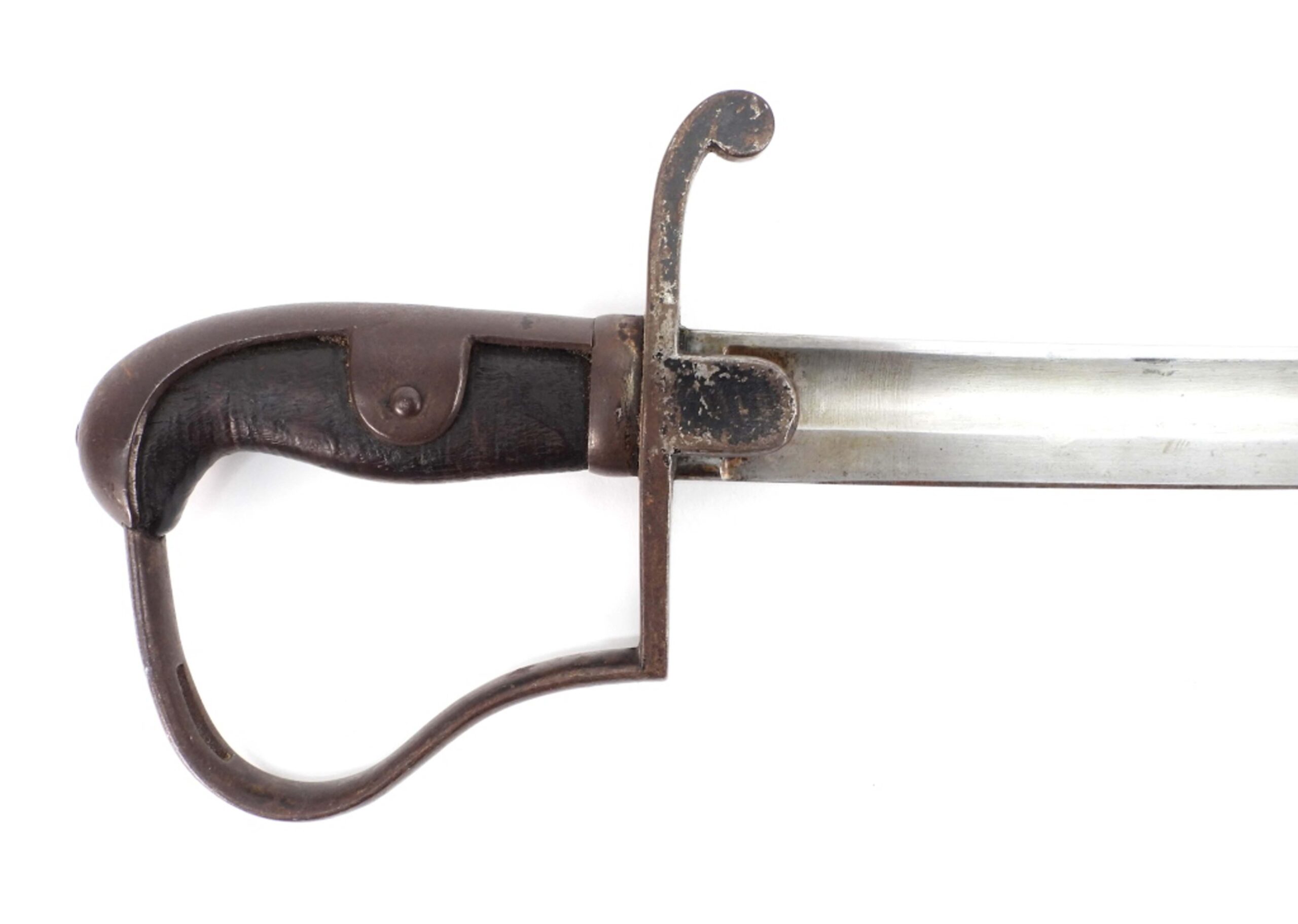
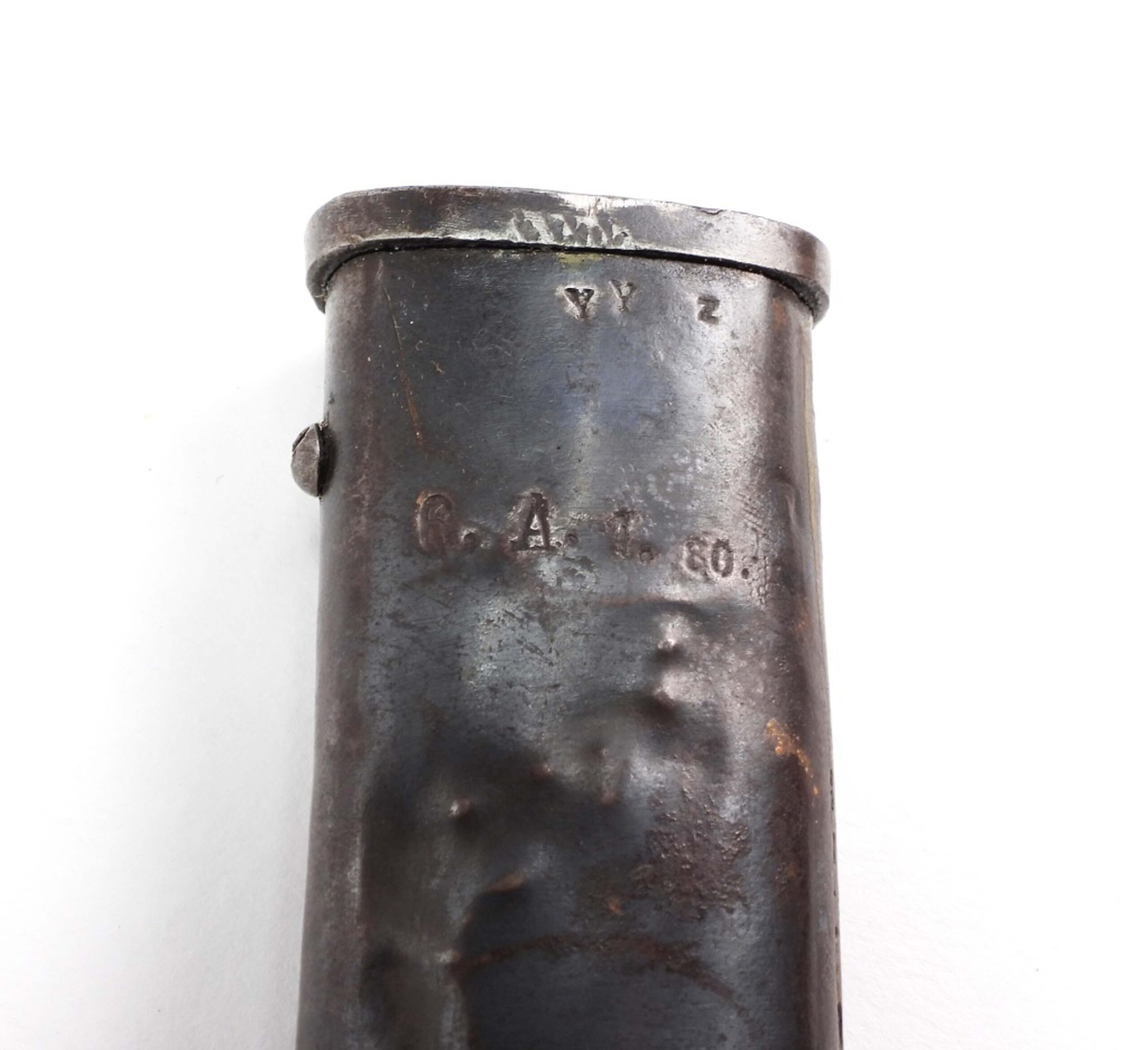
Steel P-guard hilt, wooden grip with leather covering, steel blade marked on the spine with a crown over “W/80” meaning issued in 1880. Maker marked under the rain guard by Alexander Coppel of Solingen. With a steel scabbard, matching markings on the counter-guard and the scabbard throat “6.A.1.80″ for a Prussian Cavalry unit. Inspection marks present throughout.
Dimensions:
Blade lg. 29 3/4”.Overall lg. 35″
Condition Report: Hilt and scabbard have some light patina, Blade rates an excellent – heavy and well balanced – zero play in the whole sword. Original, nice factory sharpening is present as this was a trooper issued blade.
Short History of the sword: The Blücher saber (Blüchersäbel) refers to a type of cavalry saber that gained prominence in the early 19th century, particularly during the Napoleonic Wars. This weapon is named after the Prussian field marshal Gebhard Leberecht von Blücher, who played a crucial role in the defeat of Napoleon at the Battle of Waterloo in 1815.
Key Features: Design: The Blücher saber was characterized by its slightly curved, single-edged blade, making it effective for both cutting and thrusting. The blade length typically ranged from 33 to 35 inches (about 85-90 cm). The hilt often featured a simple, yet sturdy design, with a knuckle bow to protect the hand and a leather-covered grip for better handling.
Usage: This saber was primarily used by light cavalry units, such as hussars and dragoons, who needed a versatile weapon for both close combat and charges. The curvature of the blade made it particularly effective for slashing from horseback.
Historical Significance: The Blücher saber was introduced into the Prussian army in 1811 and became widely recognized due to its association with the famous cavalry commander. It was a reliable weapon during the Napoleonic Wars and was also used by other European armies. Its design influenced later cavalry sabers, including the British 1796 light cavalry saber, which shares many similarities.
Legacy: The Blücher saber became a symbol of Prussian military tradition and was used throughout the 19th century, with variations and updates made to the design.
The Blüchersäbel, has its origins in the military innovations of the early 19th century, a period marked by intense conflicts and rapid advancements in military technology. Its creation and adoption were closely linked to the Prussian military reforms and the influence of the Napoleonic Wars.
Background: During the late 18th and early 19th centuries, European armies were undergoing significant changes. The French Revolutionary Wars and the Napoleonic Wars introduced new tactics and emphasized the need for more effective cavalry forces. Cavalry units, especially light cavalry like hussars, played a crucial role in reconnaissance, skirmishing, and flanking maneuvers. This period highlighted the need for a reliable, versatile saber that could meet the demands of these fast-moving units.
Development: Prussian Military Reforms: After the Prussian defeat by Napoleon at the Battle of Jena-Auerstedt in 1806, the Prussian military underwent extensive reforms. One aspect of these reforms was the standardization and improvement of weaponry. The Prussian army sought to develop a saber that was not only effective in combat but also standardized for easier mass production and supply.
Influence of the British 1796 Light Cavalry Saber: The British 1796 light cavalry saber significantly influenced the design of the Blücher saber. The British saber, known for its effective cutting capability due to its curved blade, became highly regarded across Europe. The Prussians, recognizing its effectiveness, used it as a model when developing their version.
Adoption and Naming: In 1811, the Prussian army officially adopted the saber that would become known as the Blücher saber. The weapon was named after General Gebhard Leberecht von Blücher, a distinguished Prussian cavalry commander who became famous for his aggressive tactics and leadership during the Napoleonic Wars. The saber was particularly associated with the Prussian cavalry units, who used it extensively during campaigns against Napoleon.
Role in the Napoleonic Wars: The Blücher saber saw extensive use in the later stages of the Napoleonic Wars, particularly during the 1813-1814 campaigns and the Battle of Waterloo in 1815, where Blücher’s Prussian forces played a decisive role in defeating Napoleon. The saber’s effectiveness in battle, combined with Blücher’s military successes, cemented its place in history.
FRANCO PRUSSIAN WAR USE**:
The Blücher saber played a notable role during the Franco-Prussian War (1870-1871), a conflict that marked the culmination of tensions between the Second French Empire and the Kingdom of Prussia, alongside its German allies. This war ultimately led to the unification of Germany under Prussian leadership and the fall of the French Empire.
Continued Use and Significance: By the time of the Franco-Prussian War, the Blücher saber had already become a traditional weapon in the Prussian cavalry, with its origins dating back to the Napoleonic Wars. Although military technology had advanced significantly by the 1870s, with the increasing use of firearms and artillery, cavalry units still played an important role in reconnaissance, flanking movements, and charges. The Blücher saber remained a symbol of the Prussian cavalry’s heritage and was still in use, albeit alongside more modern weapons.
Role in the War: Cavalry Charges and Reconnaissance: The Franco-Prussian War saw limited but significant use of cavalry for traditional roles such as charges, reconnaissance, and pursuing retreating forces. The Blücher saber was employed by Prussian and German cavalry units during these operations. Although the saber was not the primary weapon of the war—given the dominance of rifled muskets, breech-loading rifles, and artillery—it was still essential for close combat situations, particularly in cavalry skirmishes and when charging disorganized enemy troops.
Symbol of Tradition and Morale: The Blücher saber also served as a symbol of the Prussian military tradition, instilling a sense of pride and continuity among the troops. As the Prussian military had a strong emphasis on discipline and tradition, carrying a weapon associated with the victories of the Napoleonic Wars had a significant psychological impact on both the soldiers and their adversaries.
Decline in Practical Use: While the Blücher saber was still in use during the Franco-Prussian War, the nature of warfare was changing rapidly. The increasing firepower and effectiveness of infantry and artillery made large-scale cavalry charges less effective and more dangerous. This conflict highlighted the declining practical role of the saber in modern warfare, even as it remained an important part of military tradition.
Legacy Post-War: After the Franco-Prussian War, the role of cavalry continued to diminish in European armies due to the rise of machine guns and other advanced weaponry. However, the Blücher saber remained an iconic symbol within the German military, and versions of it continued to be carried by cavalry and officers in ceremonial roles well into the 20th century.
The Blücher saber’s use during the Franco-Prussian War thus marks one of the last significant instances of its deployment in a major conflict, bridging the gap between the age of Napoleonic warfare and the modern era of industrialized military engagements.
ALEXANDER COPPEL SOLINGEN (ALCOSO) INFO:
Alexander Coppel Solingen is a name associated with one of the most prominent and historic manufacturers of blades, cutlery, and edged weapons in Solingen, Germany—a city renowned for its blade-making tradition, often referred to as the “City of Blades.” The Coppel family and their company, Alexander Coppel (A. Coppel Co.), played a significant role in the development and production of high-quality weapons and tools, contributing to Solingen’s global reputation.
Early History: Founding: The company was founded by Alexander Coppel in the early 19th century, likely around the 1820s or 1830s. Coppel’s family was part of a long tradition of metalworkers in Solingen, a region that had been producing swords, knives, and other edged weapons since the Middle Ages. Expansion and Development: Initially, the Coppel company focused on producing blades for various purposes, including swords, sabers, bayonets, and later, knives and cutlery. As the company grew, it became one of the largest and most respected producers in Solingen. By the late 19th century, A. Coppel Co. had expanded its operations significantly, employing a large workforce and exporting its products globally.
19th Century Success: Military Contracts: Throughout the 19th century, Alexander Coppel Solingen secured numerous military contracts, supplying swords, sabers, and bayonets to various armies, including the Prussian and German armies. The company’s blades were known for their quality and durability, making them highly sought after by military forces.
Diversification: In addition to military contracts, the company also produced a wide range of civilian products, including kitchen knives, scissors, and other tools. This diversification helped the company maintain its position in the market and adapt to changing demands. 20th Century and World Wars:
World War I: During World War I, A. Coppel Co. was heavily involved in producing weapons for the German military, including bayonets and other edged weapons. The war effort required a significant increase in production, and the company’s facilities in Solingen played a crucial role in meeting these demands. Interwar Period and World War II: After World War I, the company continued to produce weapons, but like many others in Germany, it faced challenges due to the Treaty of Versailles, which limited Germany’s military capabilities. Despite these restrictions, Alexander Coppel Solingen remained an important manufacturer. During World War II, the company once again ramped up production to meet the needs of the German military, producing bayonets, knives, and other military tools.
Post-War Era and Legacy: Post-War Production: After World War II, Germany’s defeat led to significant changes in its industry. The Coppel company, like many others in Solingen, had to adapt to a peacetime economy. The focus shifted back to civilian products, with an emphasis on cutlery and other tools for everyday use.
Legacy: The Alexander Coppel brand is remembered for its long history of producing high-quality blades and weapons. The company contributed significantly to Solingen’s reputation as a world-leading center for blade manufacturing. Even today, antique swords, bayonets, and knives marked with the Coppel name are highly prized by collectors and military historians. Final Years:
Later Developments: In the later part of the 20th century, the company, like many traditional manufacturers, faced increasing competition from mass-produced goods and changes in global trade. Eventually, Alexander Coppel Solingen either merged with or was absorbed by other companies, as was common in the industry. The brand name is less prominent today