
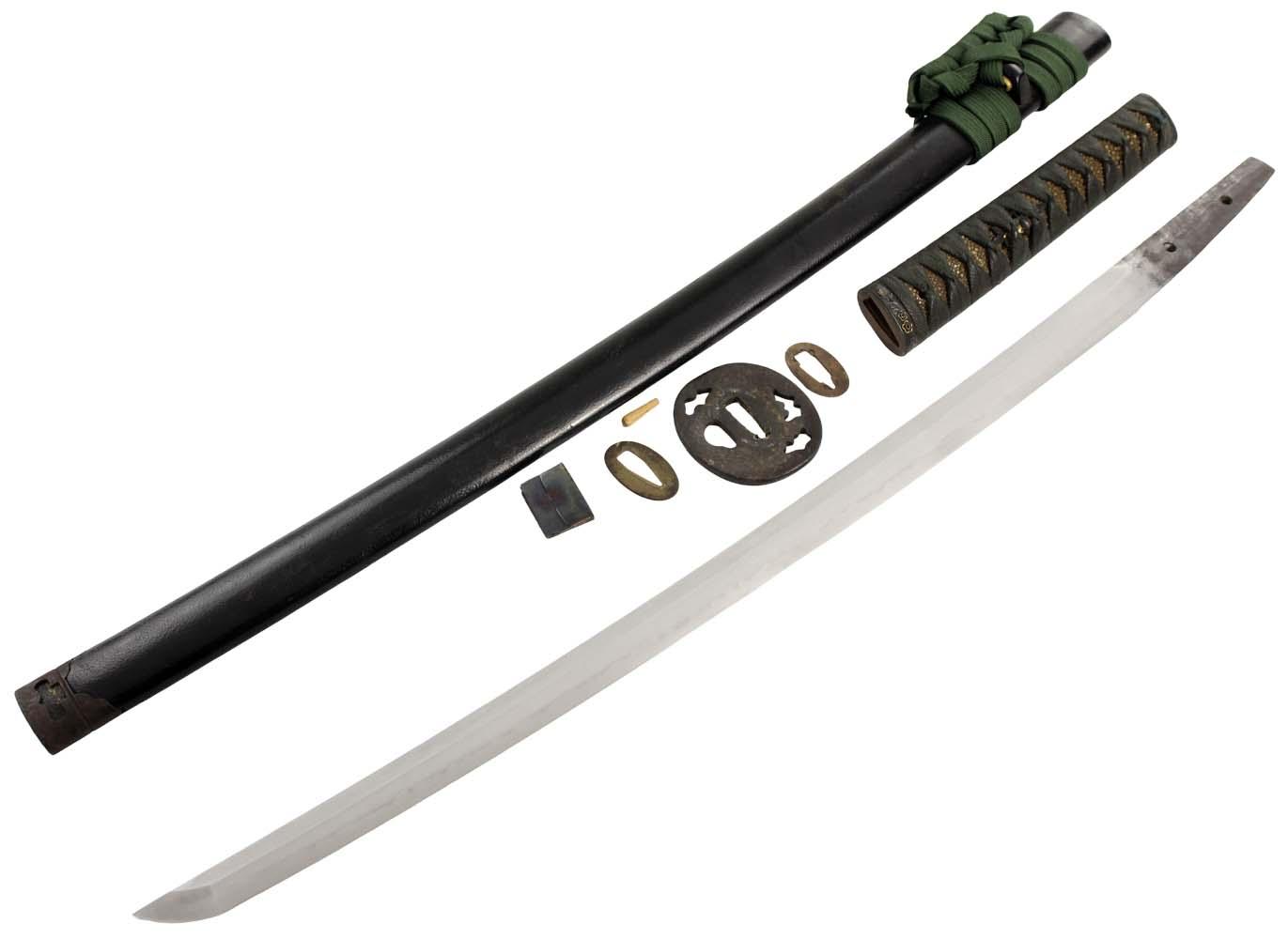
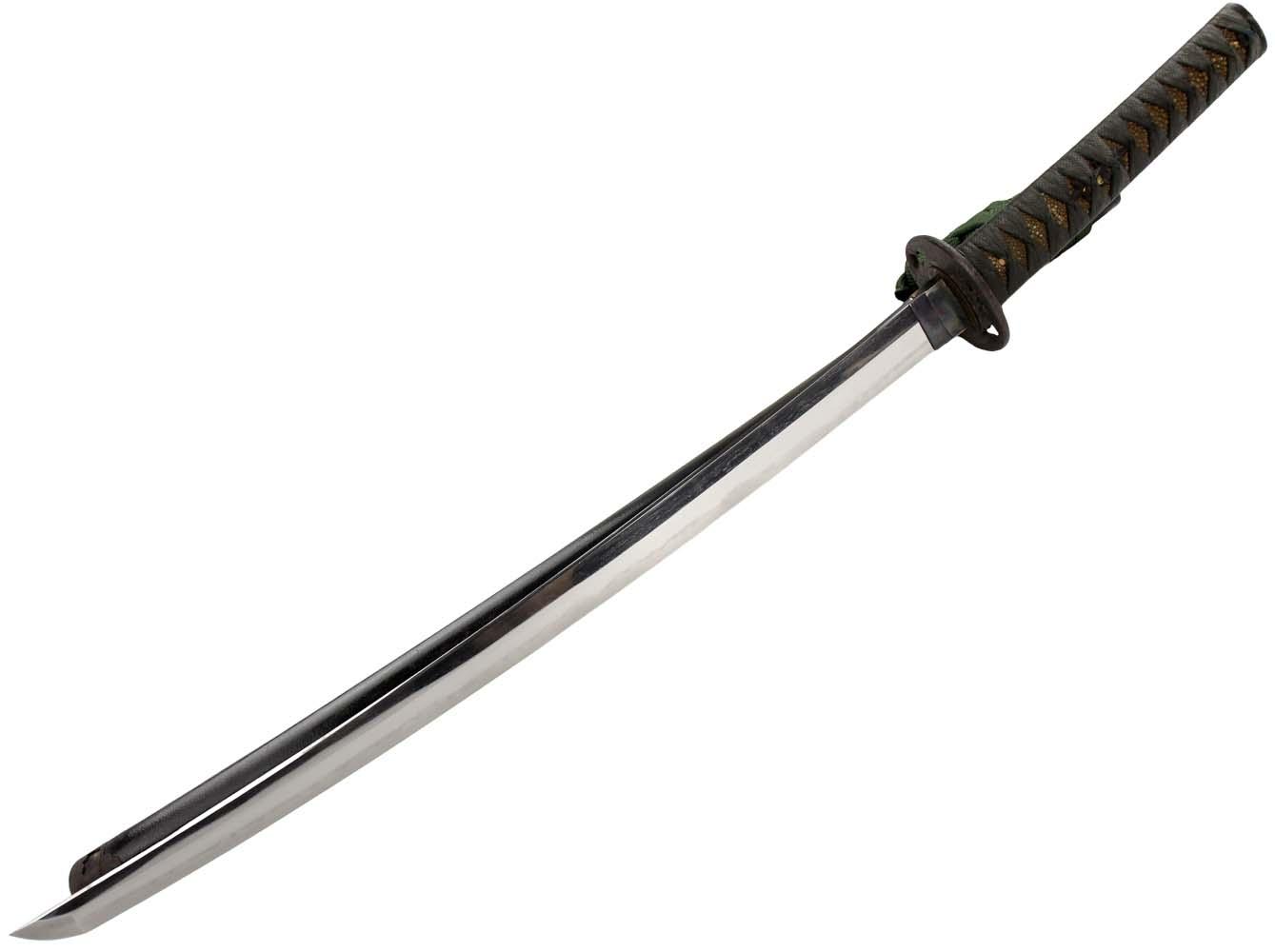

Antique 14th-15th Century Japanese Katana Uchigatana – Koto Era Sword in Marked Original Tsuba
$4,000.00 CAD
Japanese Katana (Koto Period, ca. 1400s–1500s CE)
Region: Japan
Type: Katana (Uchigatana)
Period: Muromachi to early Sengoku era (Koto period)
School: Bizen–Mino Transitional Tradition
Overall Length/ Cutting Edge Length: Approx. 35″ Approx. 22″
Overview
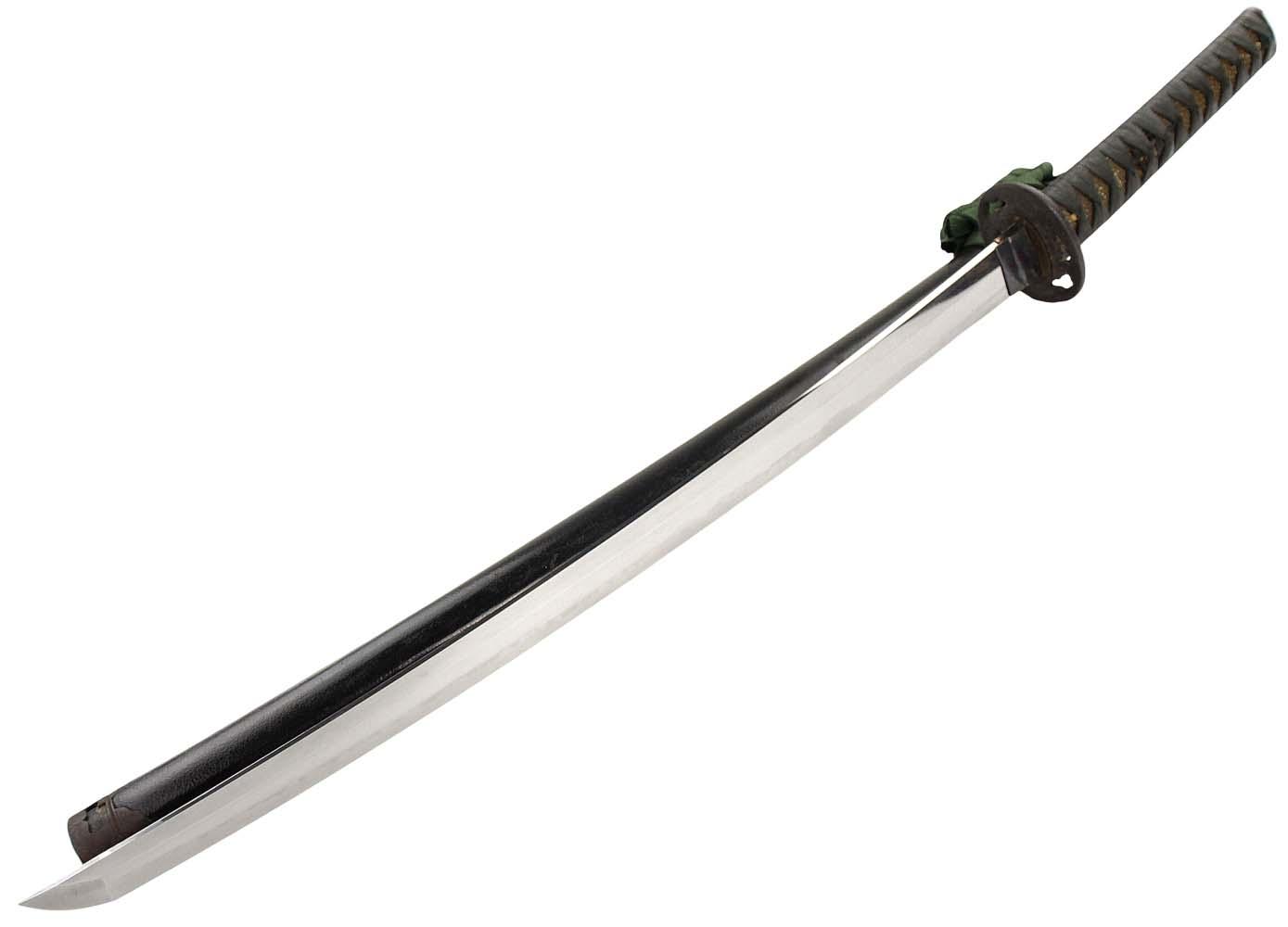
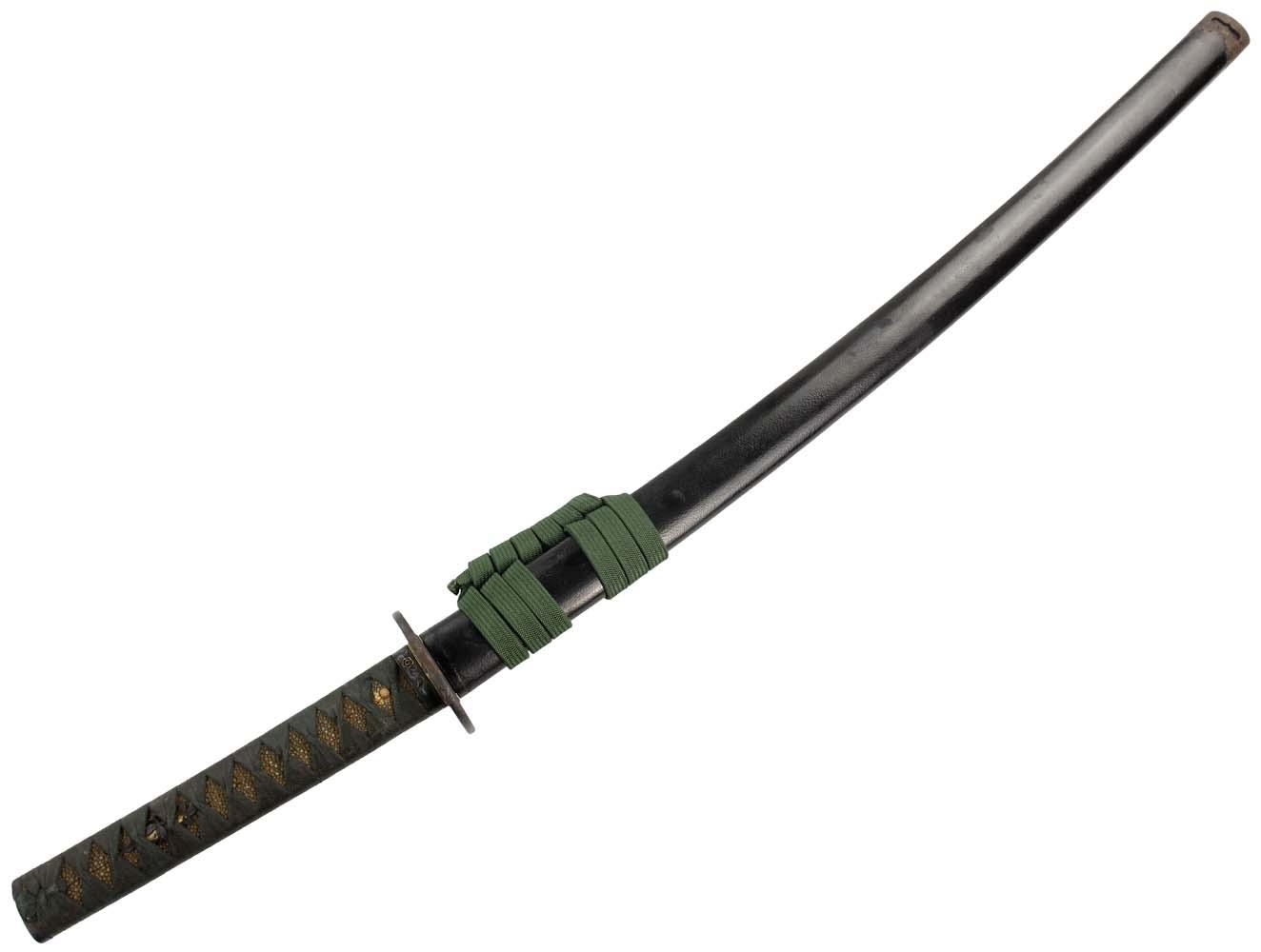
A beautifully preserved Koto-period katana, dating to the 15th–16th century, from Japan’s turbulent Muromachi–Sengoku era—a time when swordmaking reached both artistic and functional perfection. This sword exhibits the hallmarks of the Bizen–Mino schools, combining refined craftsmanship with battlefield practicality. It remains accompanied by its original iron tsuba and full mountings, a rarity among swords of such age and quality.
Blade (Nagasa)
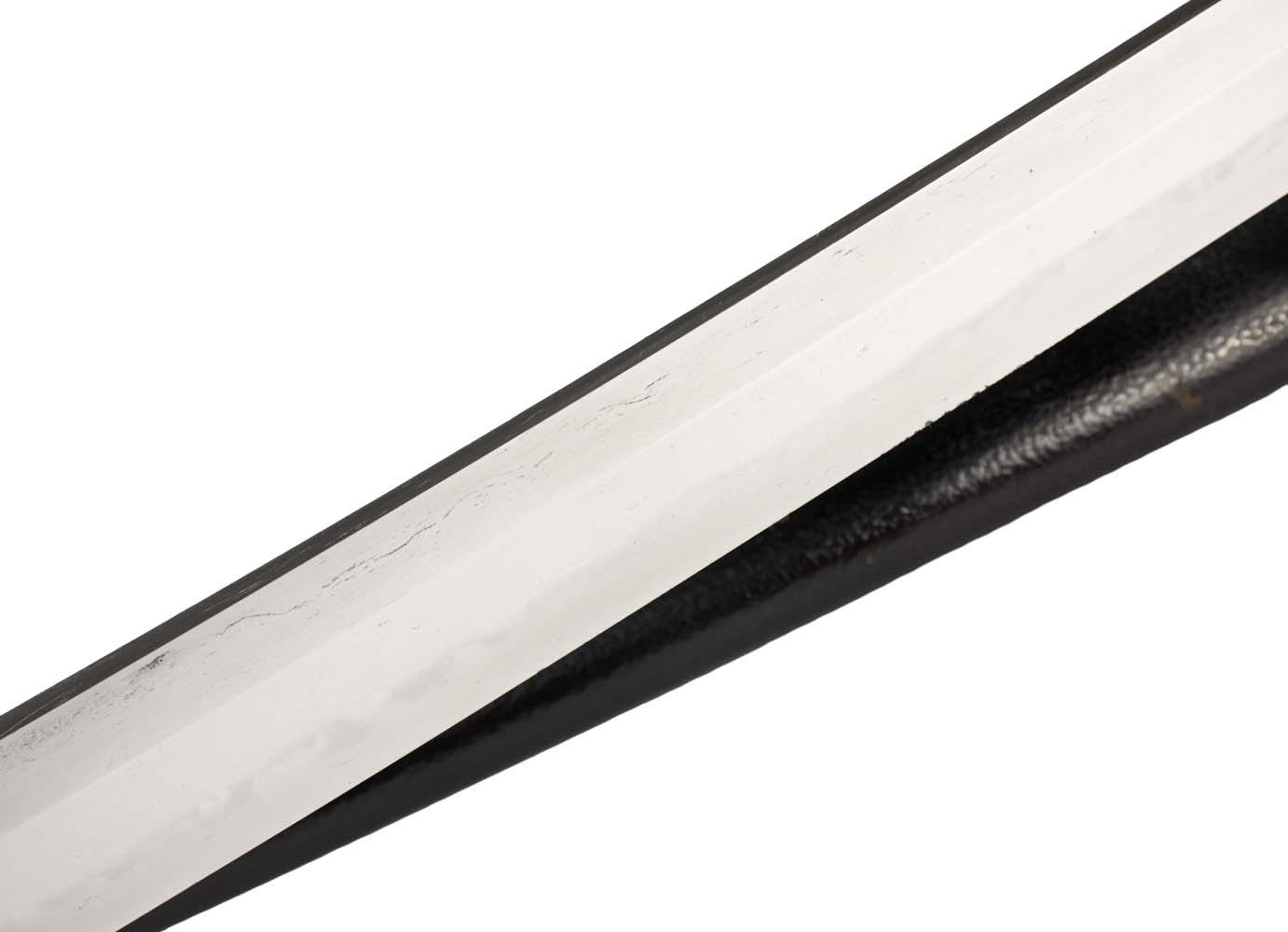
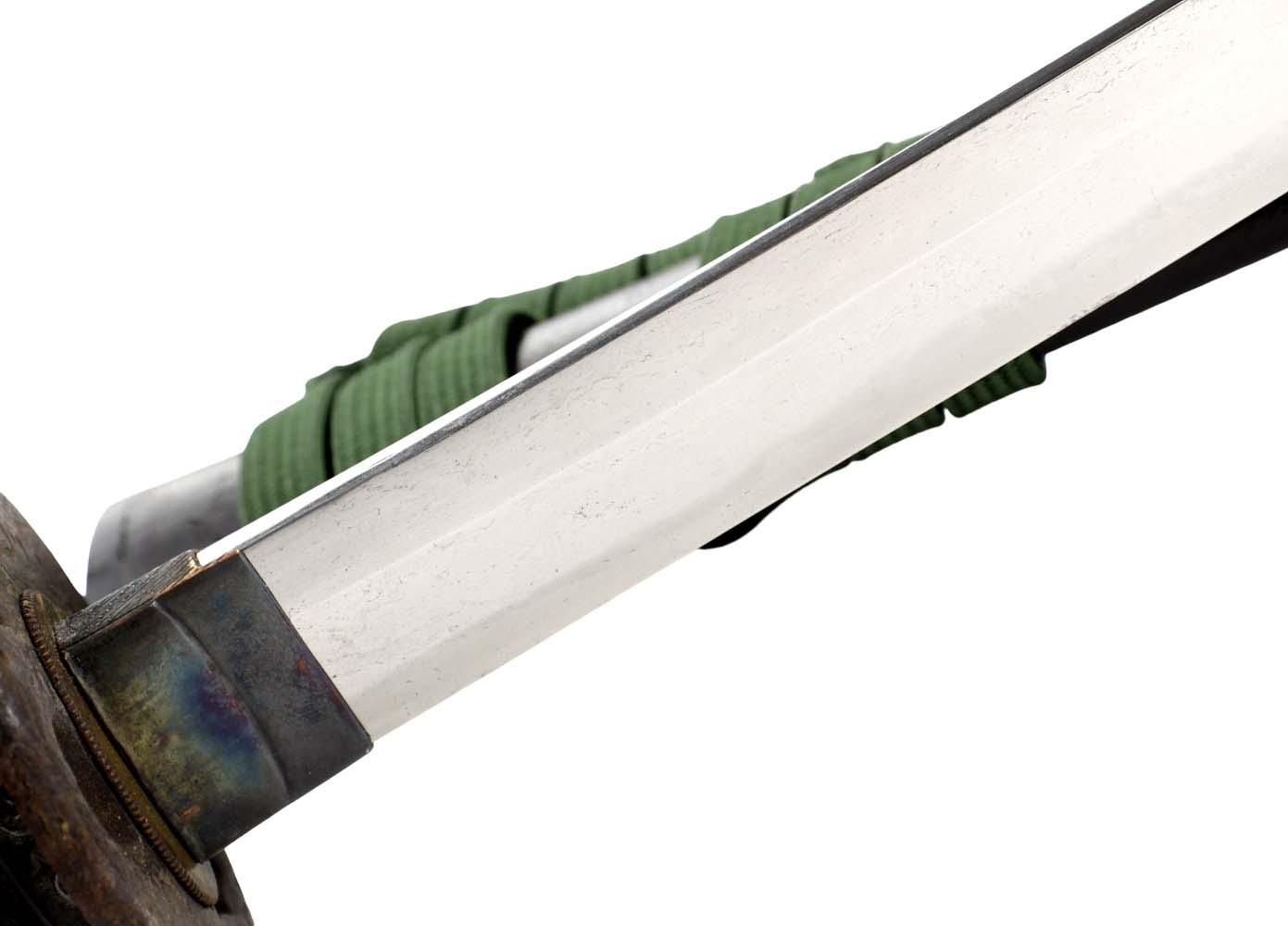
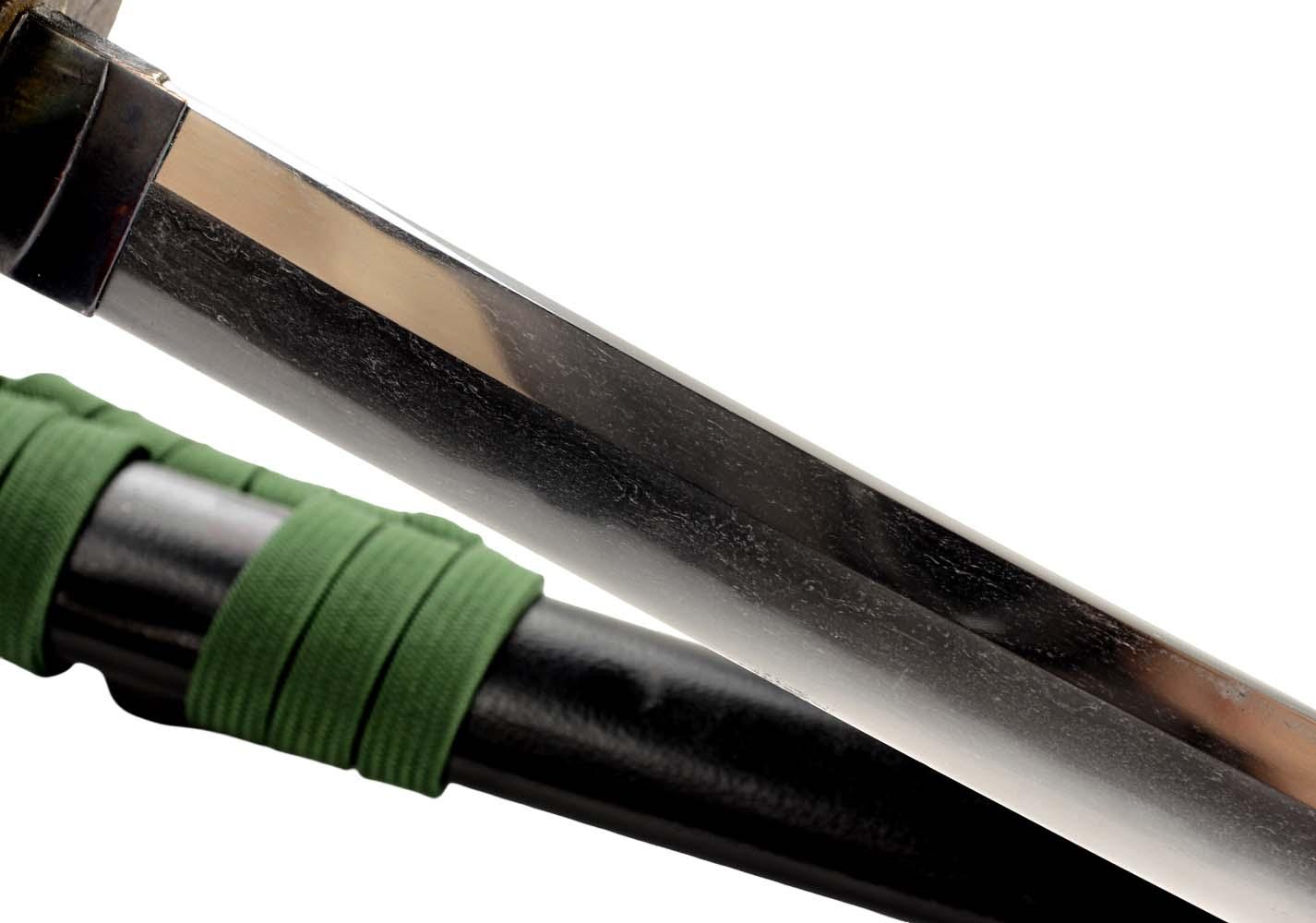
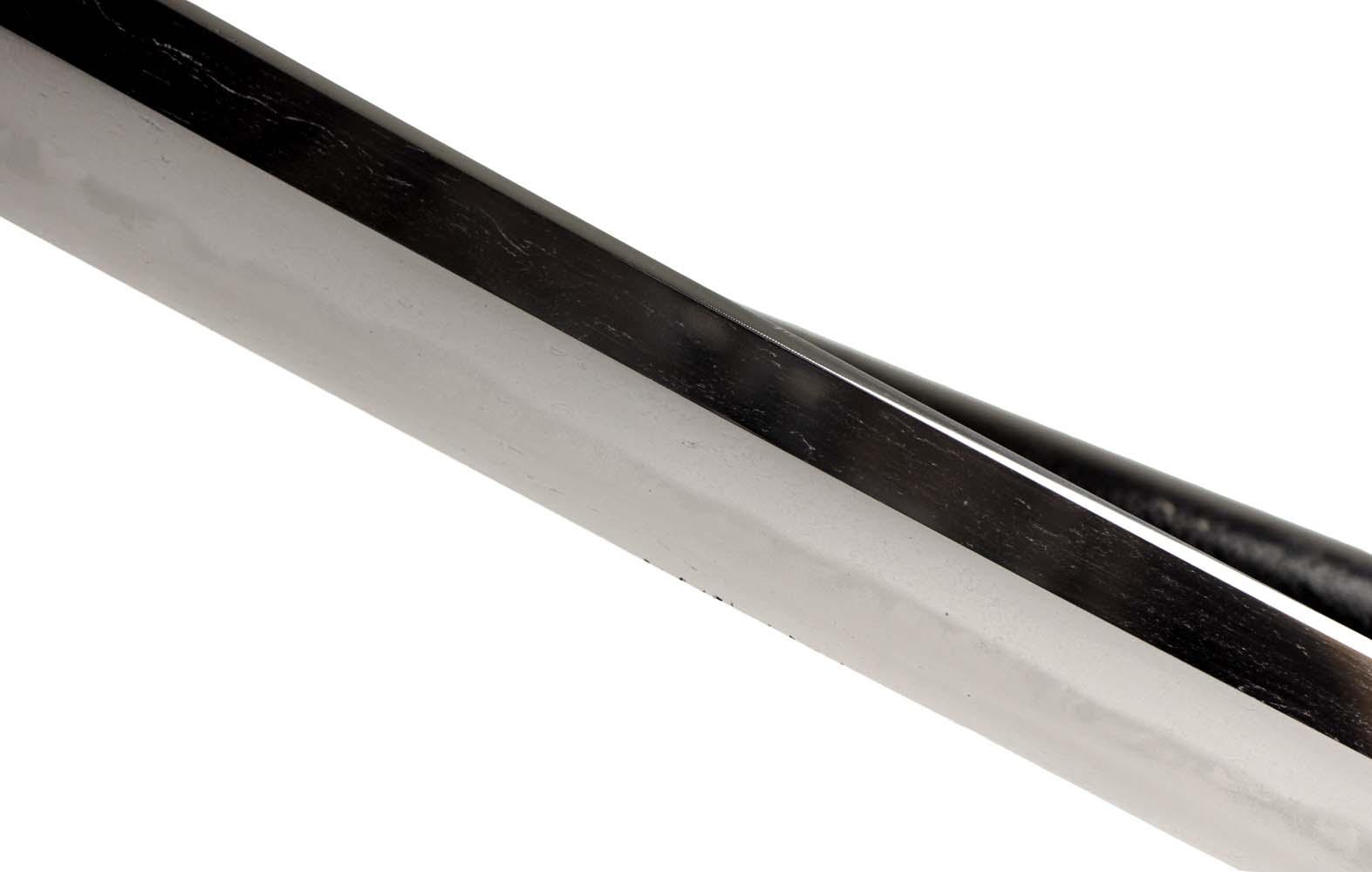
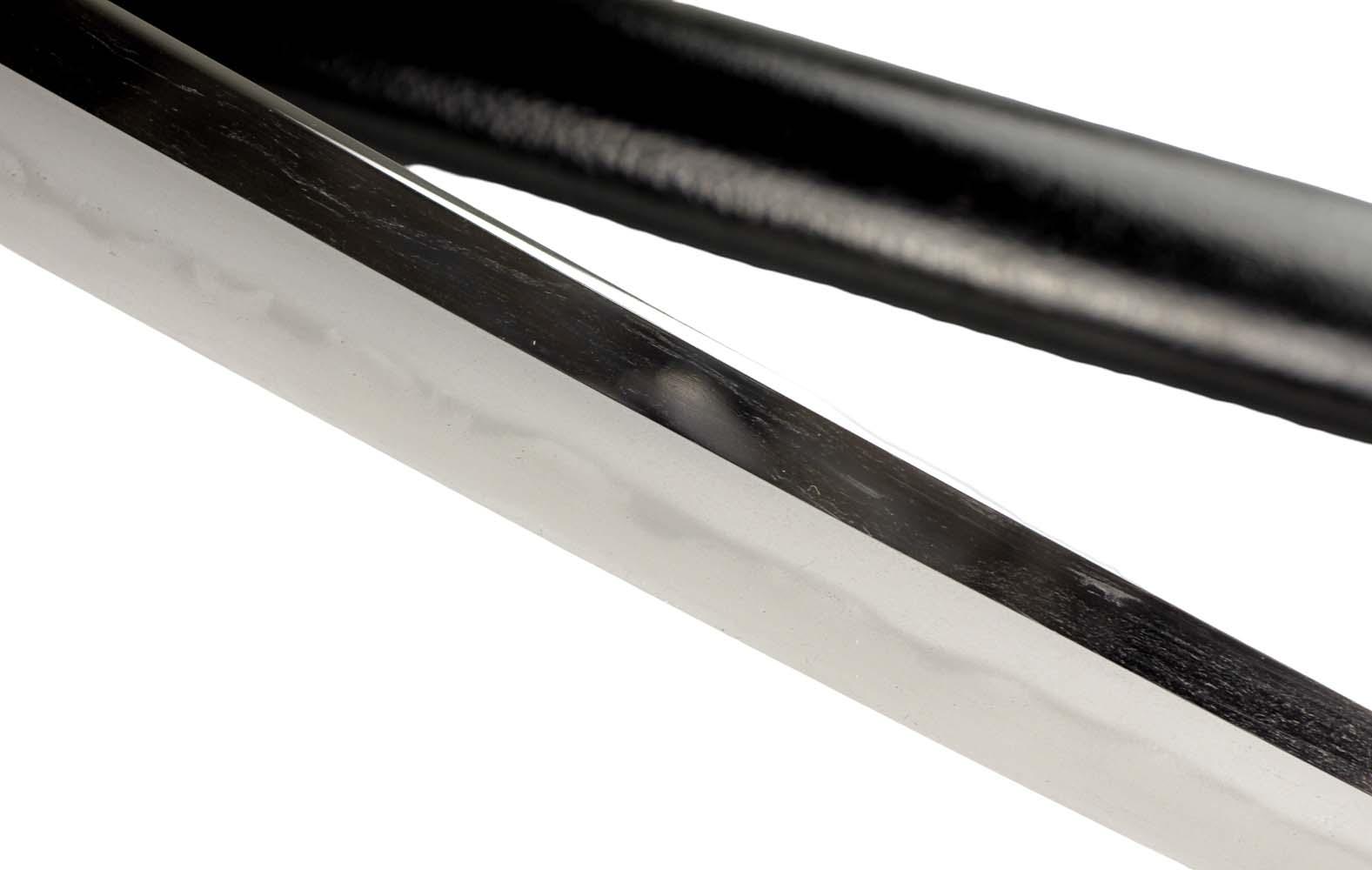
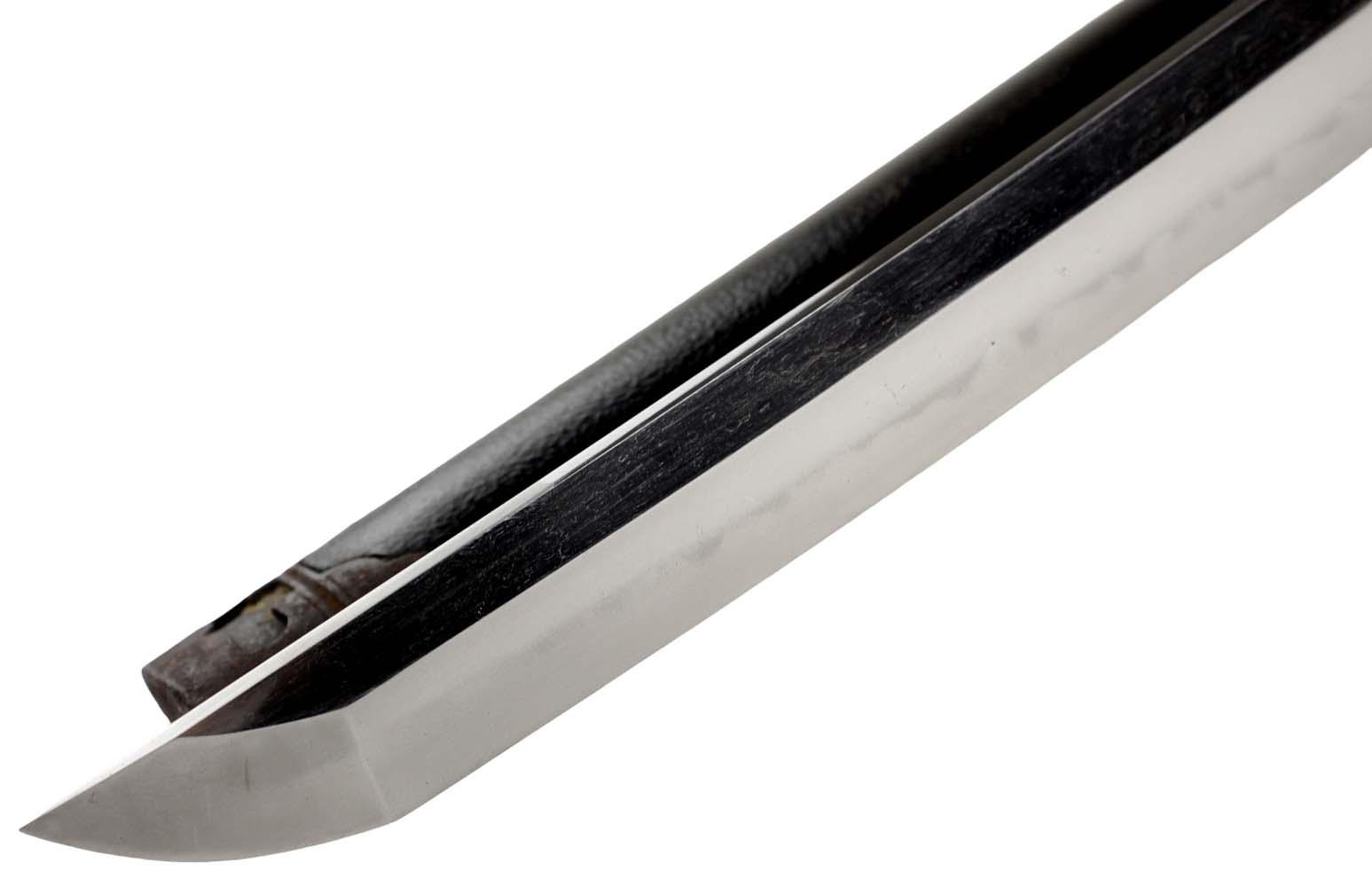
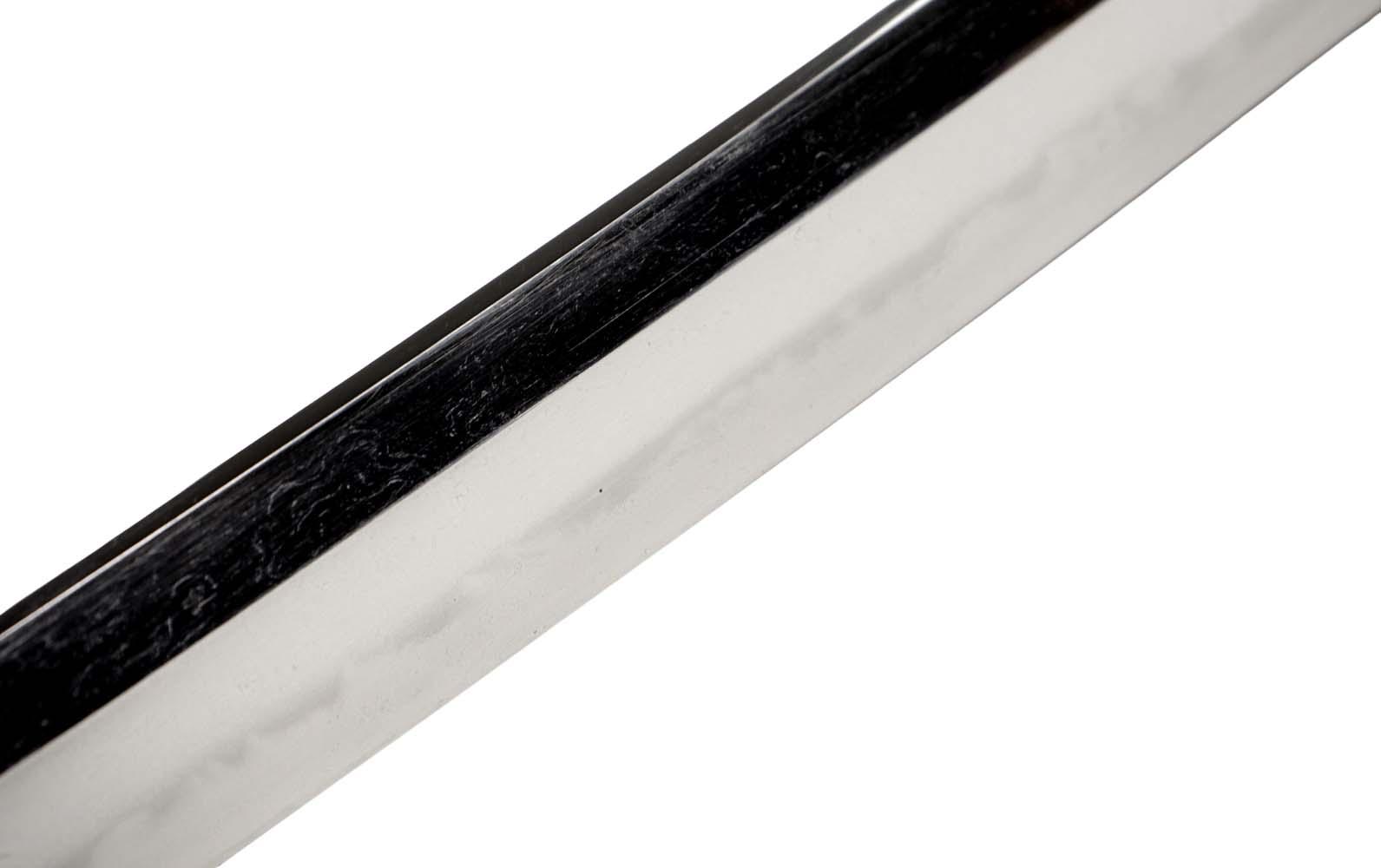
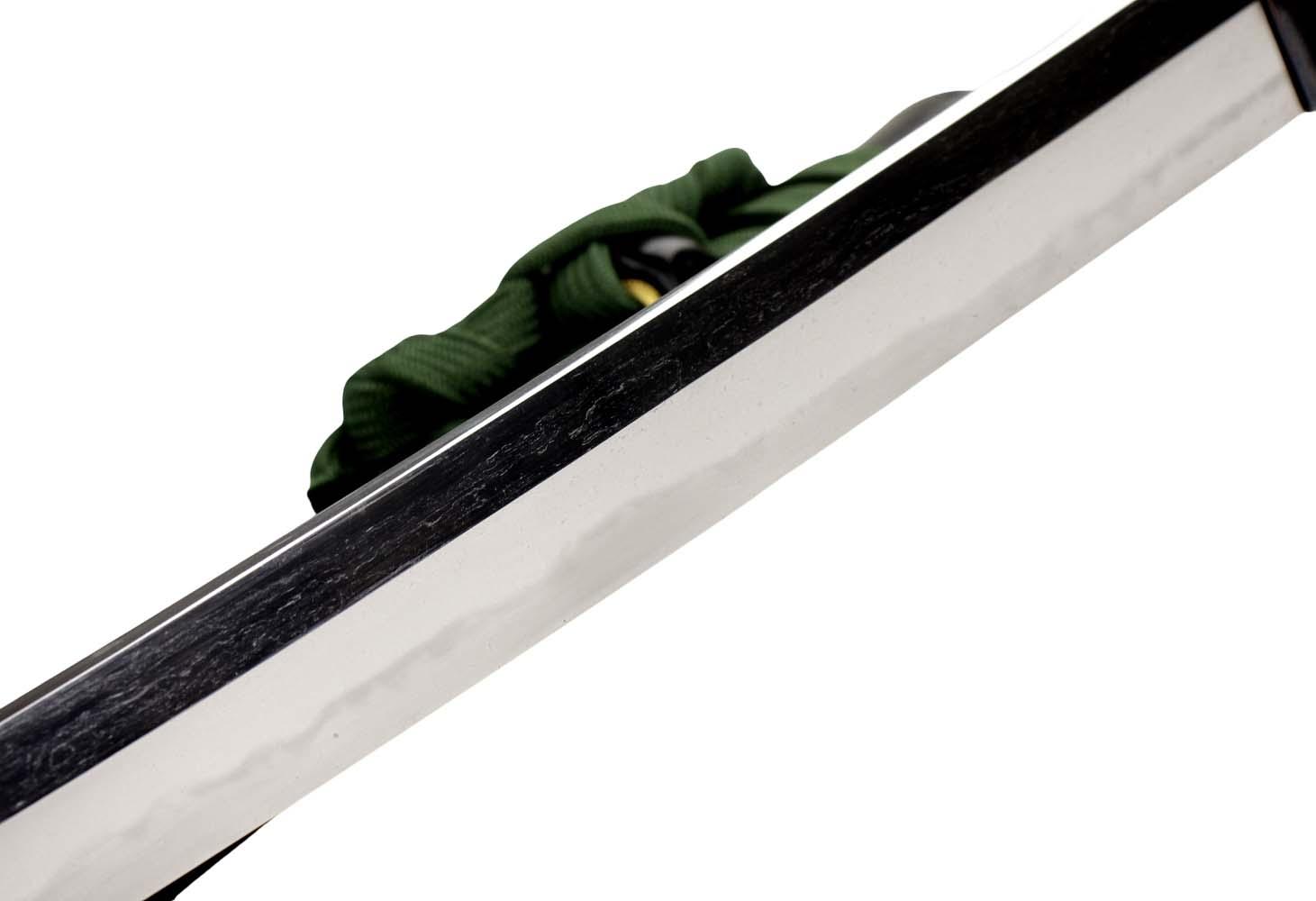
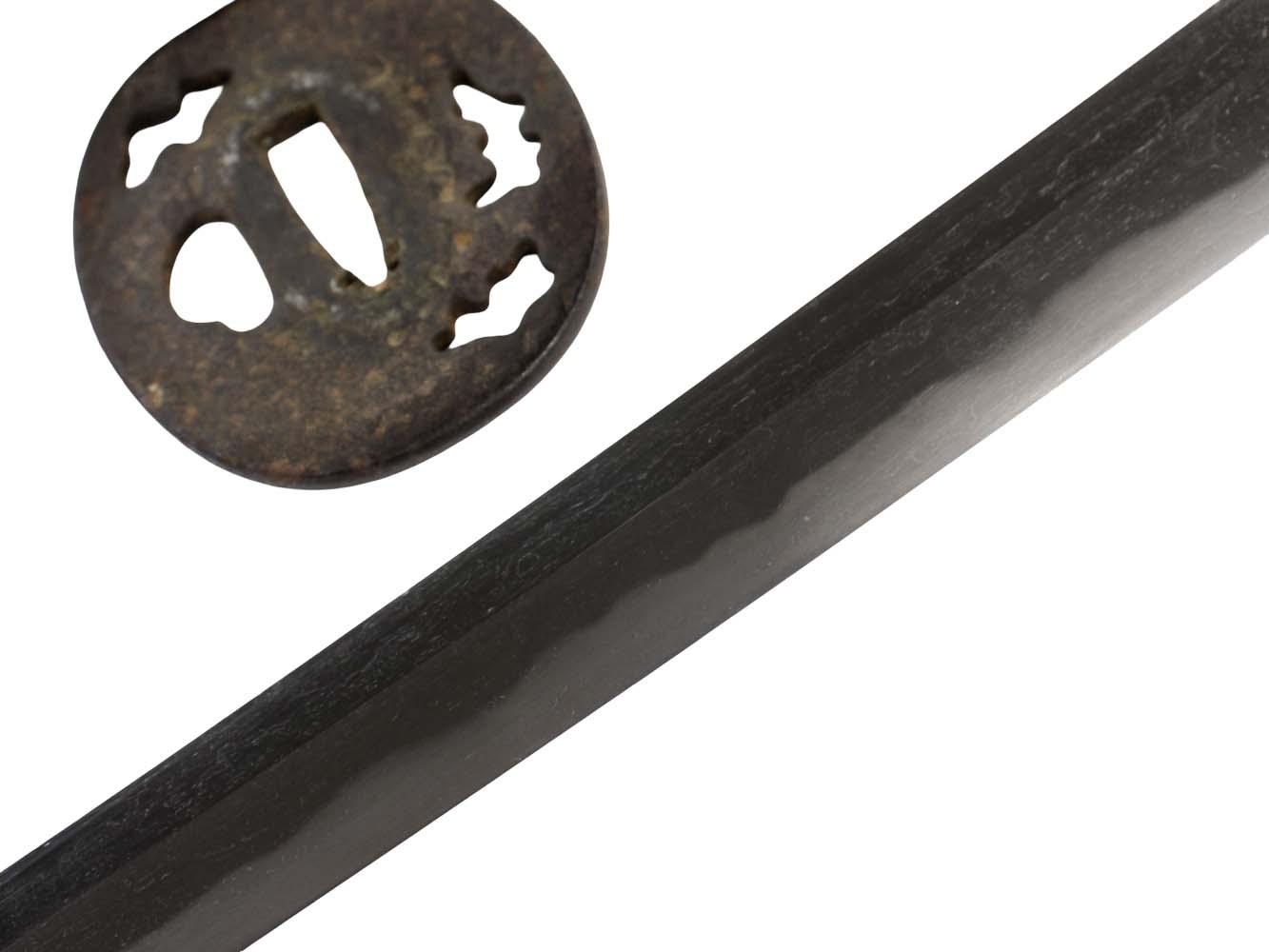
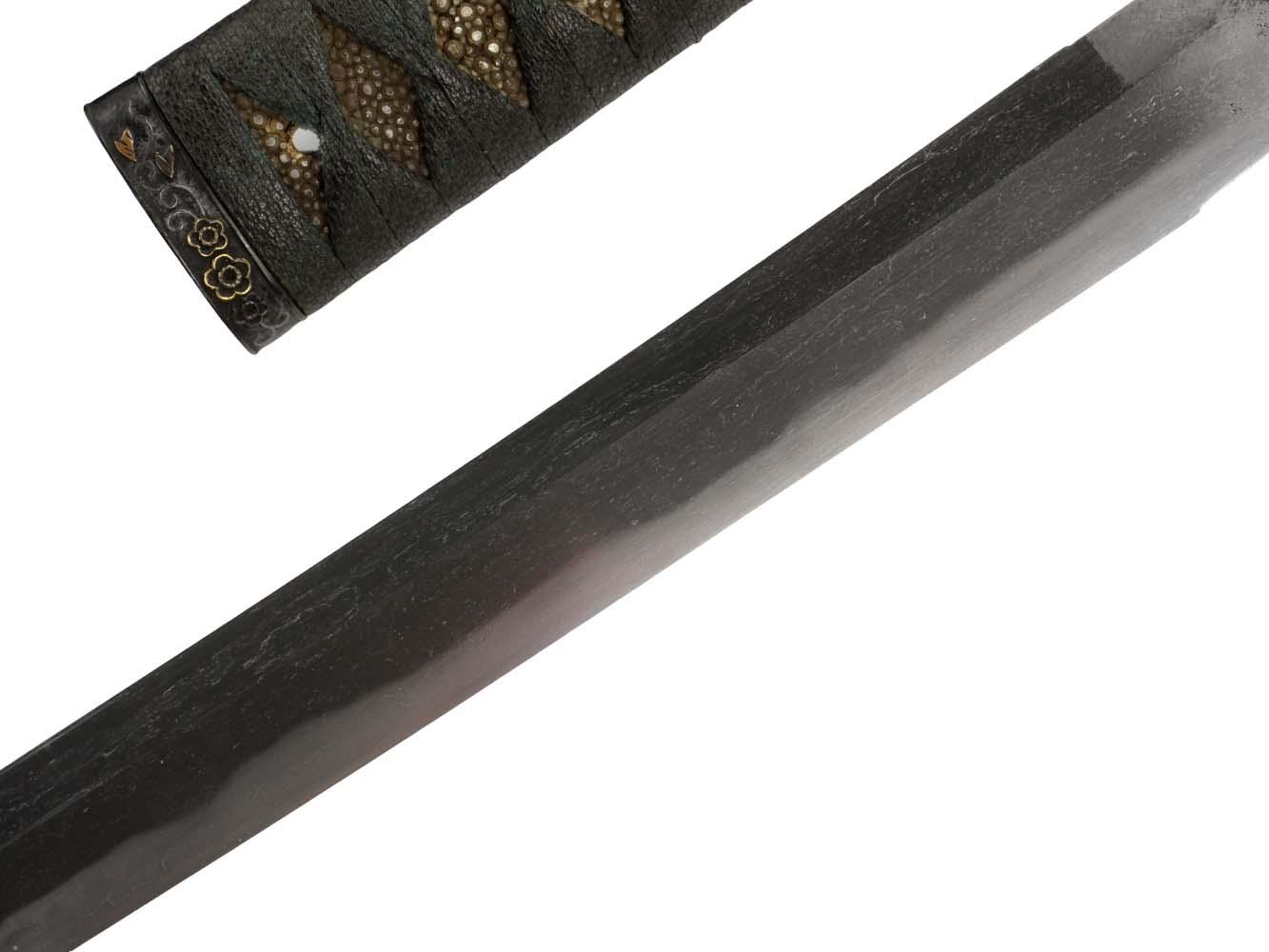
Forged in the classical shinogi-zukuri form, the blade presents a shallow torii-zori curvature with a ko-kissaki (small tip). The surface reveals a tight itame-hada mixed with areas of mokume, showing fine forging layers and elegant folding patterns—evidence of meticulous tamahagane steelwork.
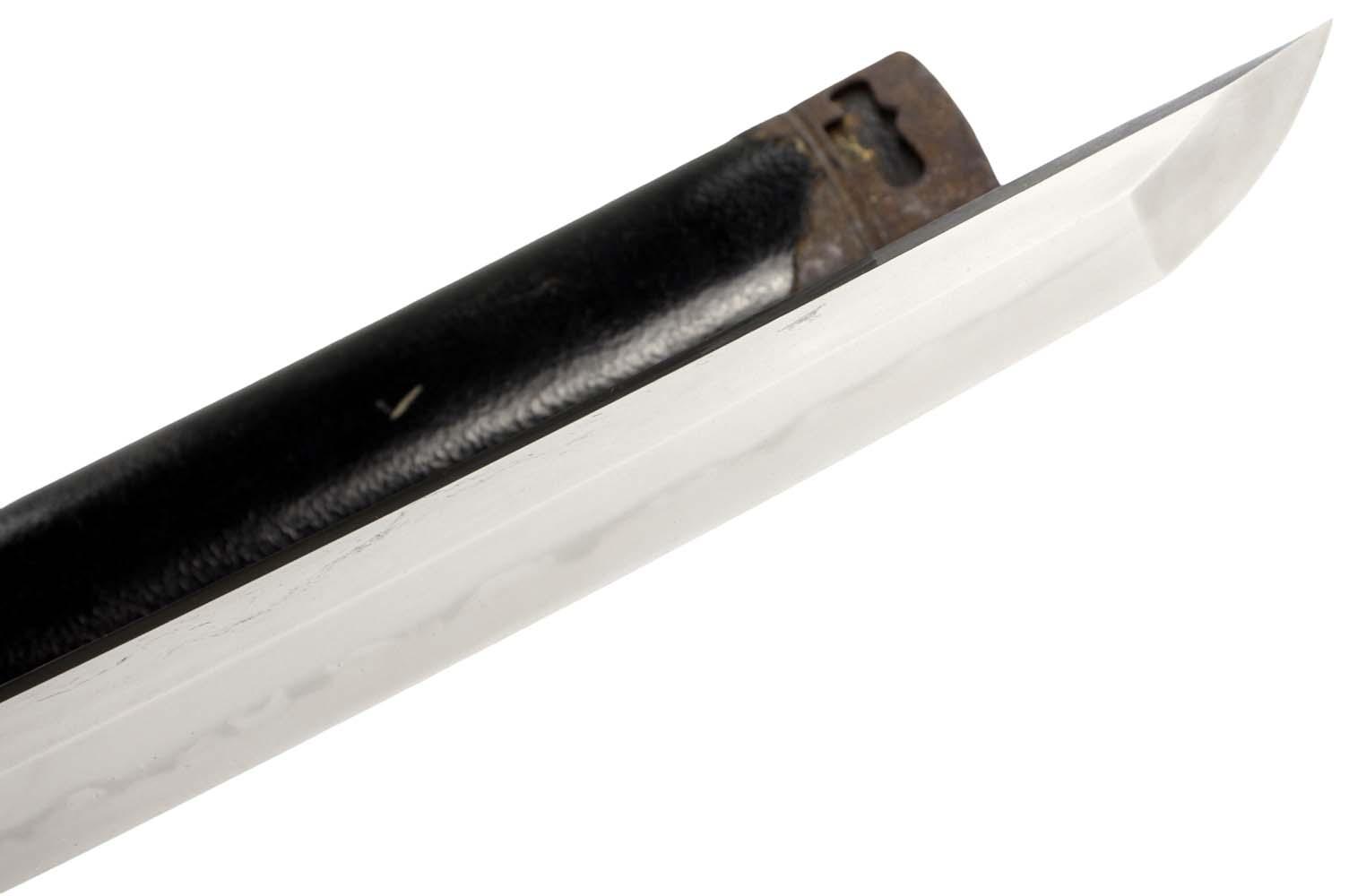
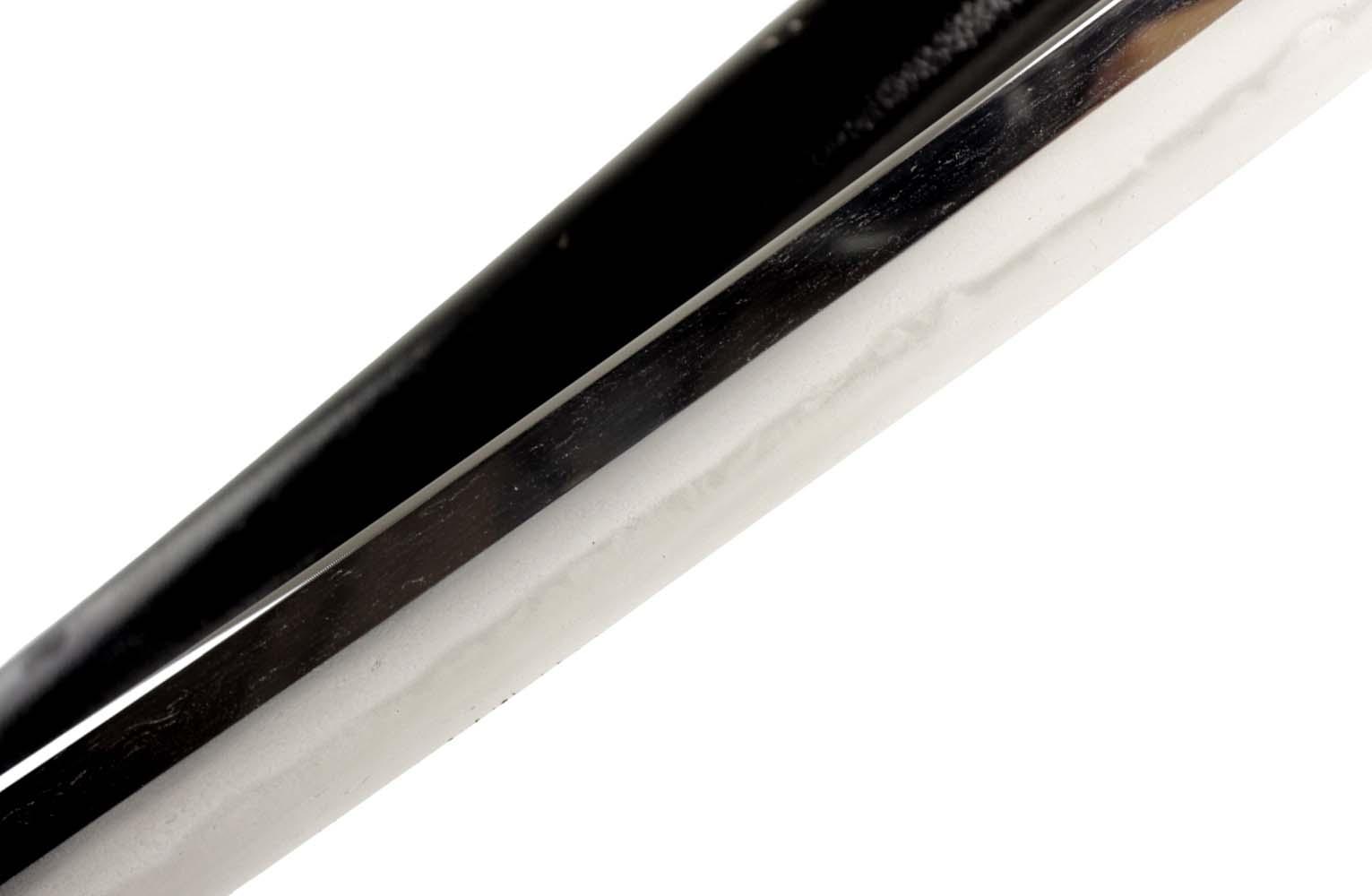
The hamon is a refined suguha with gentle ko-midare, a hallmark of Bizen-style elegance, running in an even line with faint undulations. The nioiguchi is bright and consistent, lined with a misty brilliance typical of high-quality differential hardening. Within the hamon, one can observe sparkling nie grains, as well as sunagashi (flowing streaks) and delicate kinsuji (lightning-like lines).
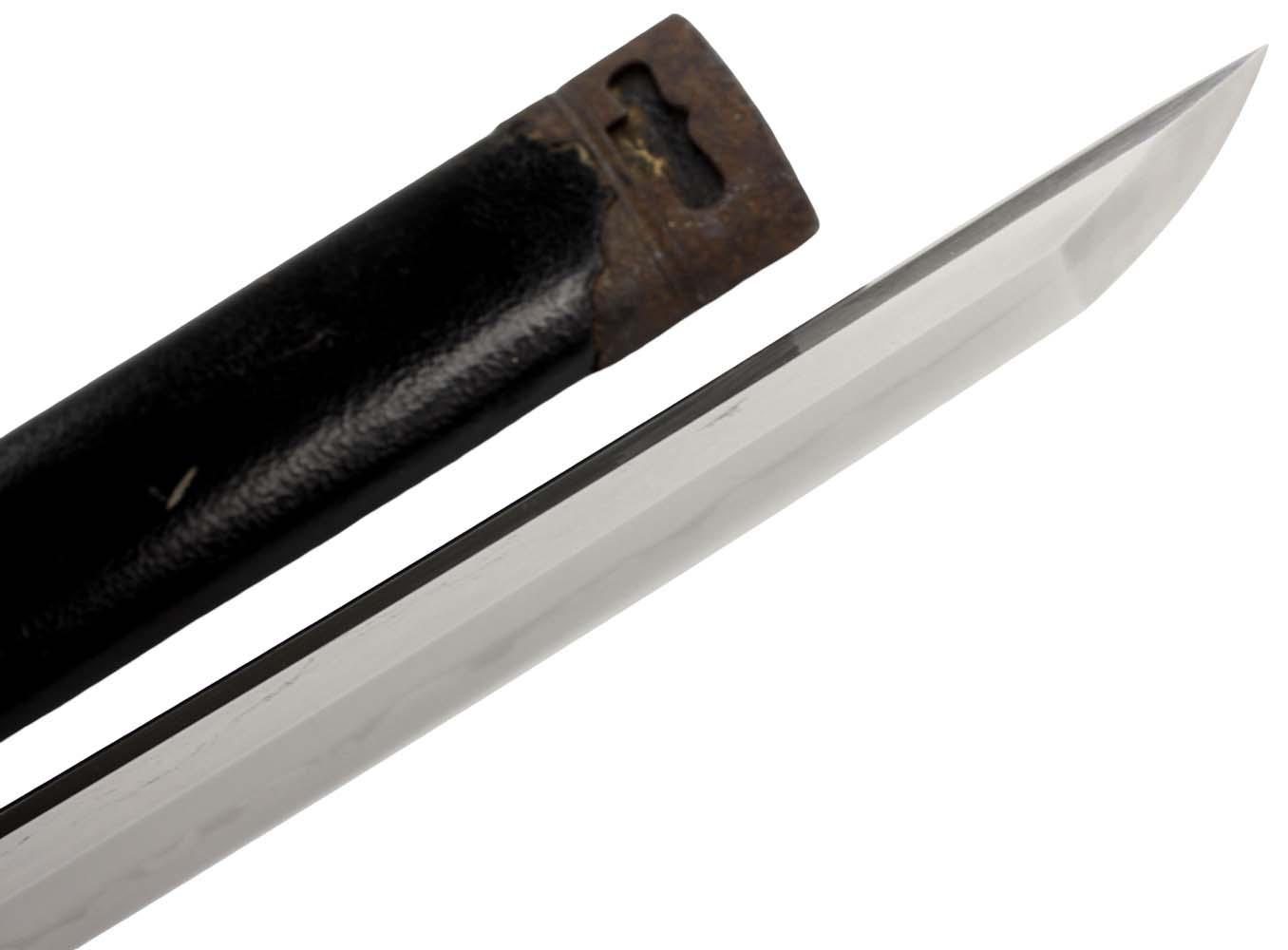
At the tip, the boshi transitions smoothly into a ko-maru form with a short return, rich in nie, and a healthy kaeri—demonstrating both skill and structural soundness. Overall, the blade reflects Muromachi-era Bizen workmanship tempered with the durability and boldness characteristic of early Mino influence.
Mounts (Koshirae)
The koshirae (mounts) are well matched and historically coherent:
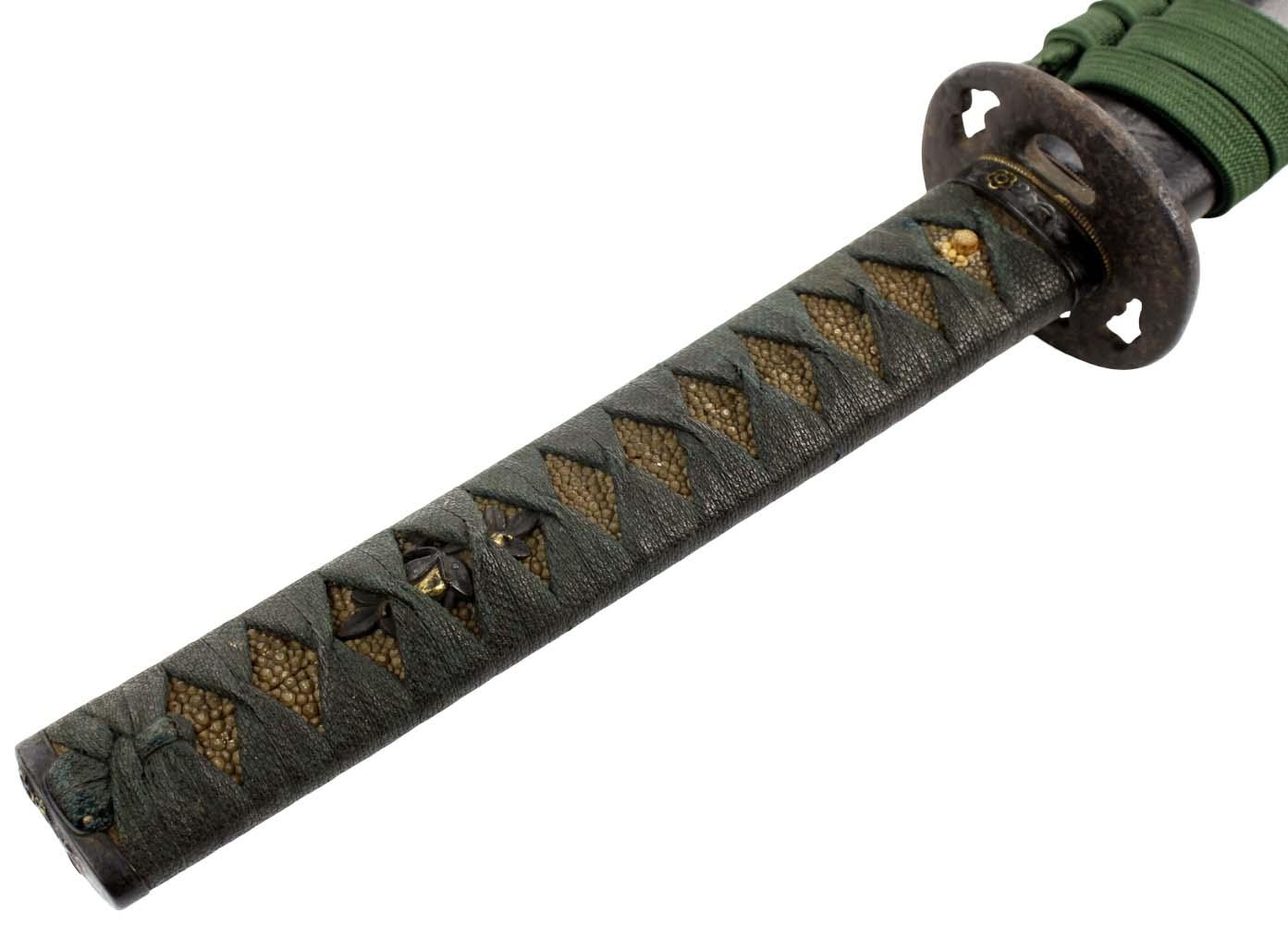
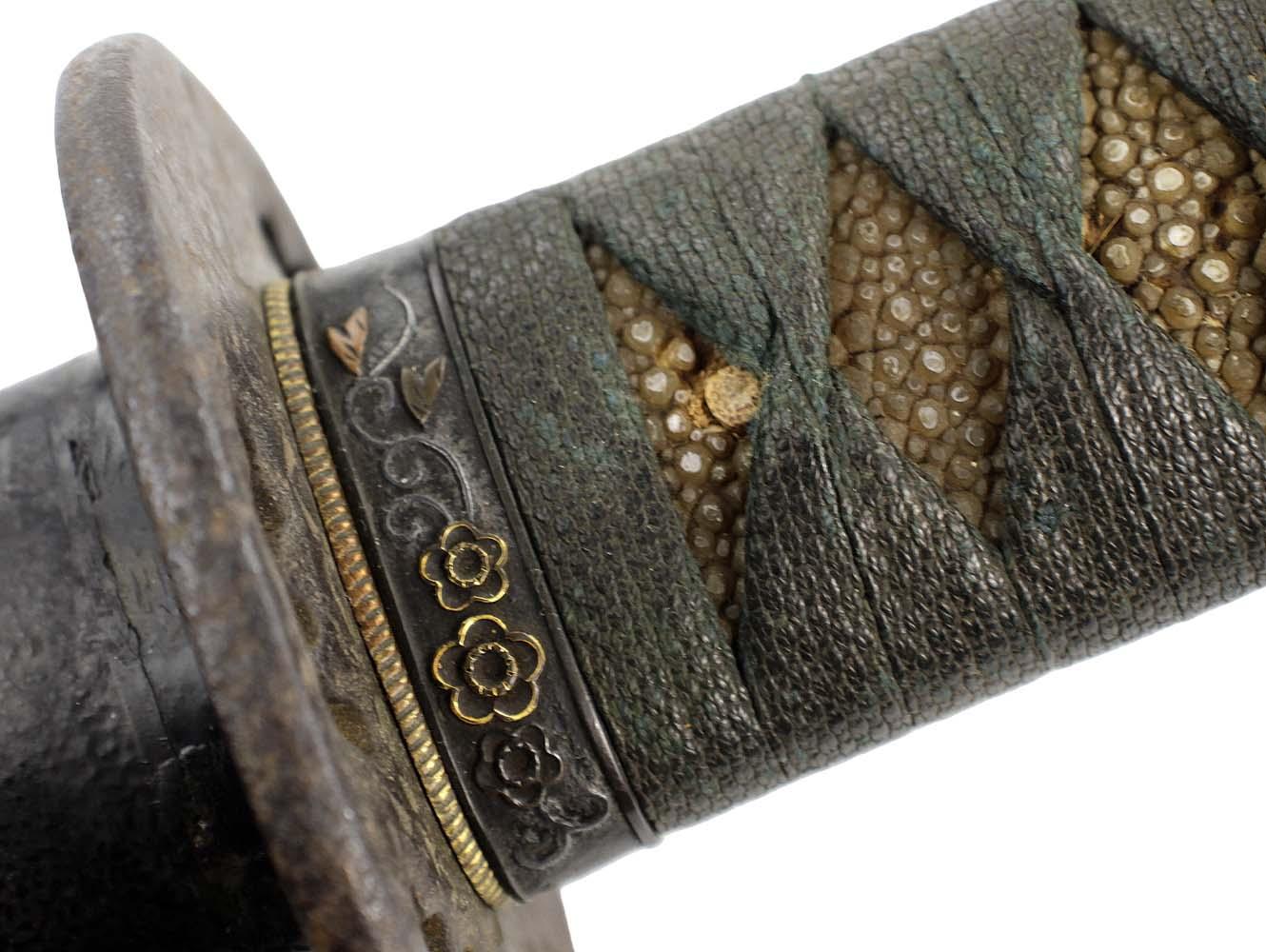
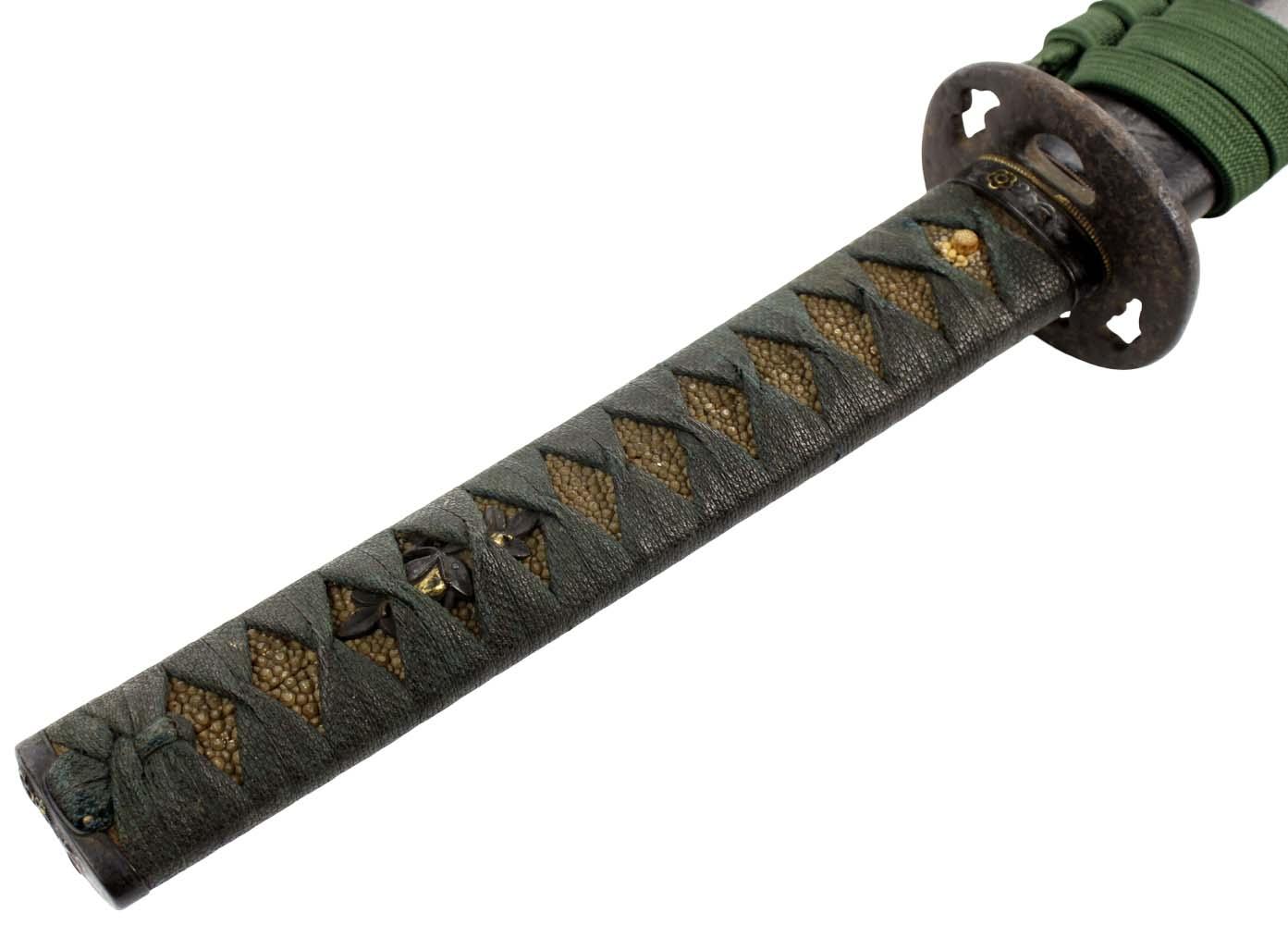
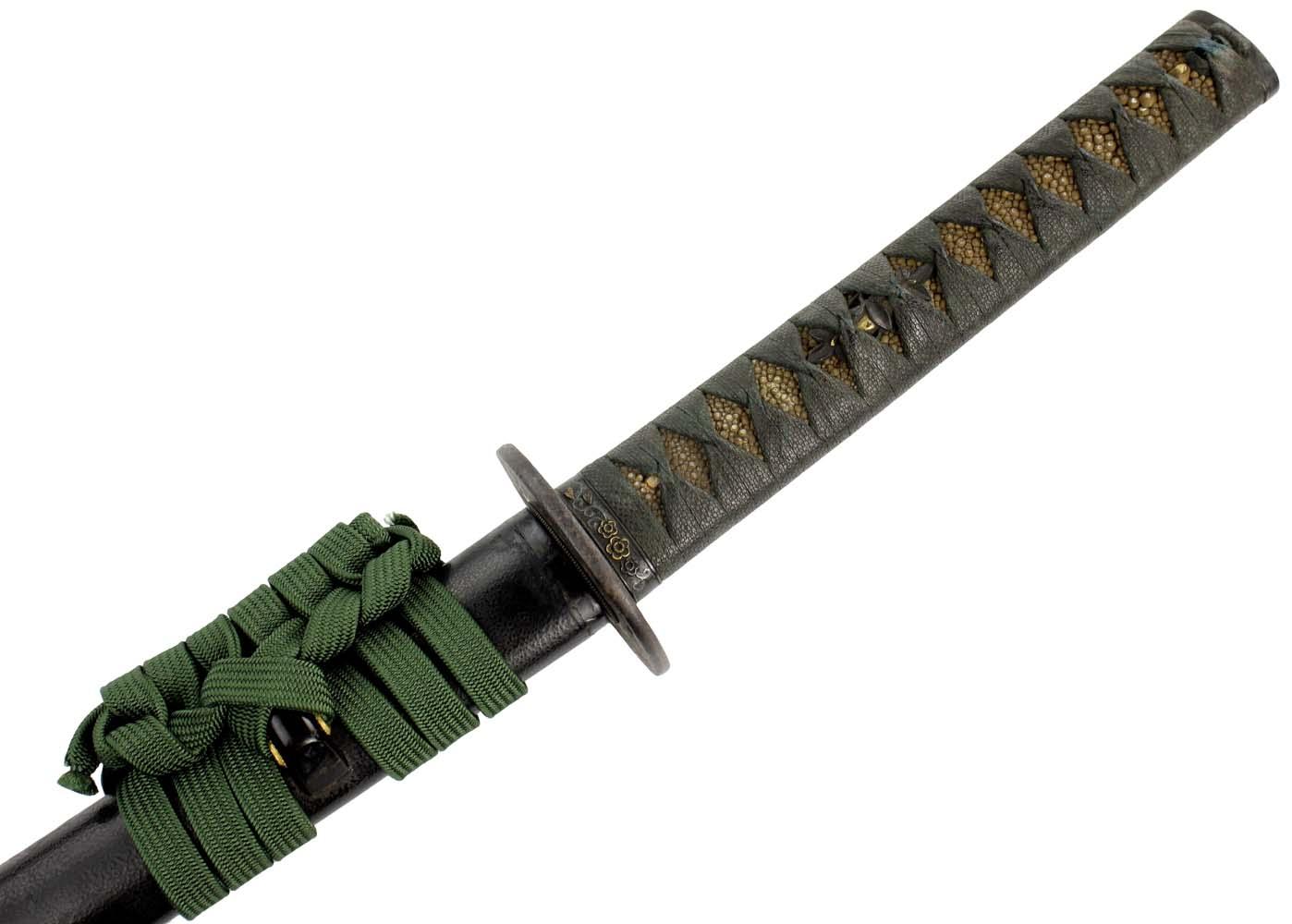
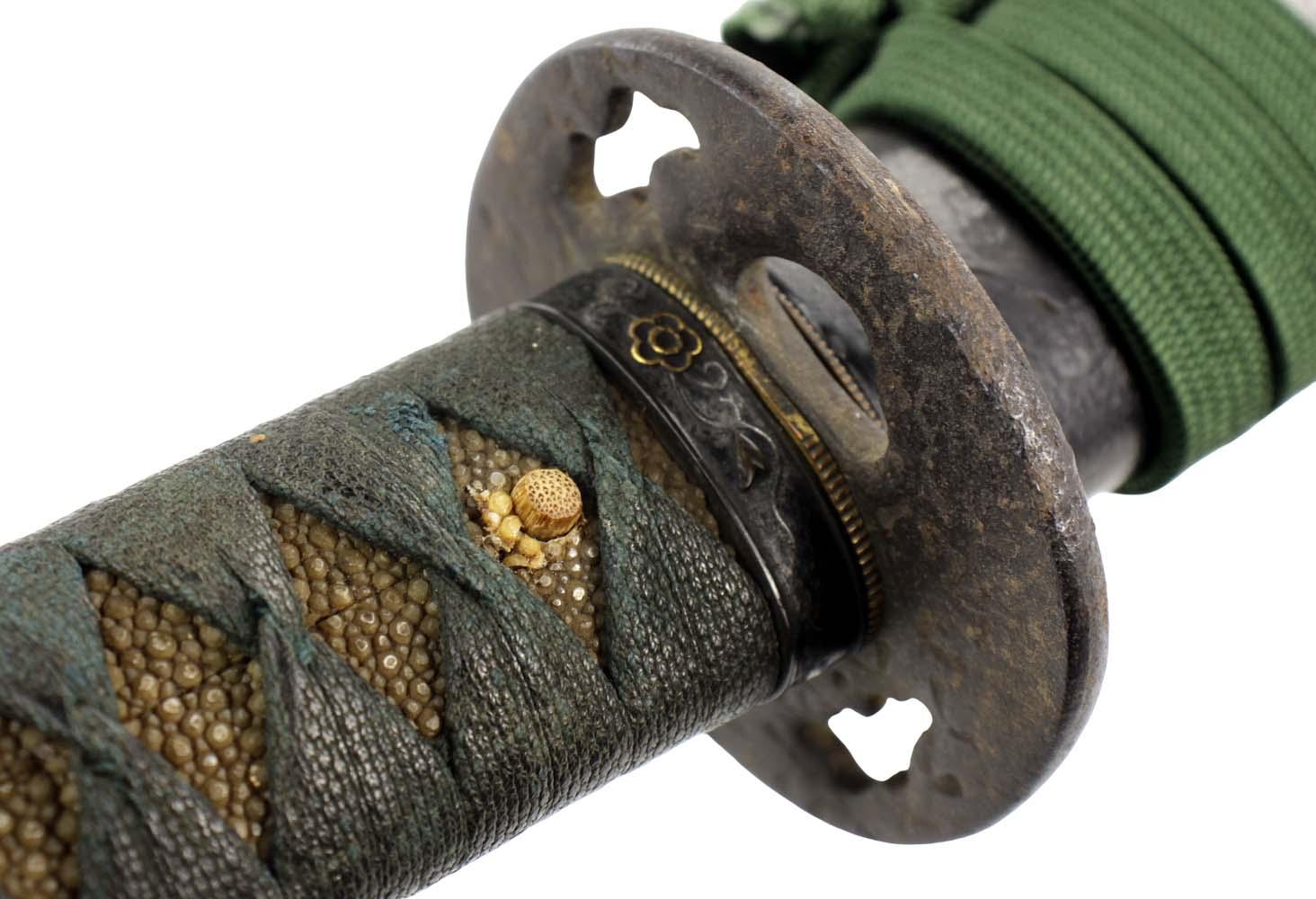
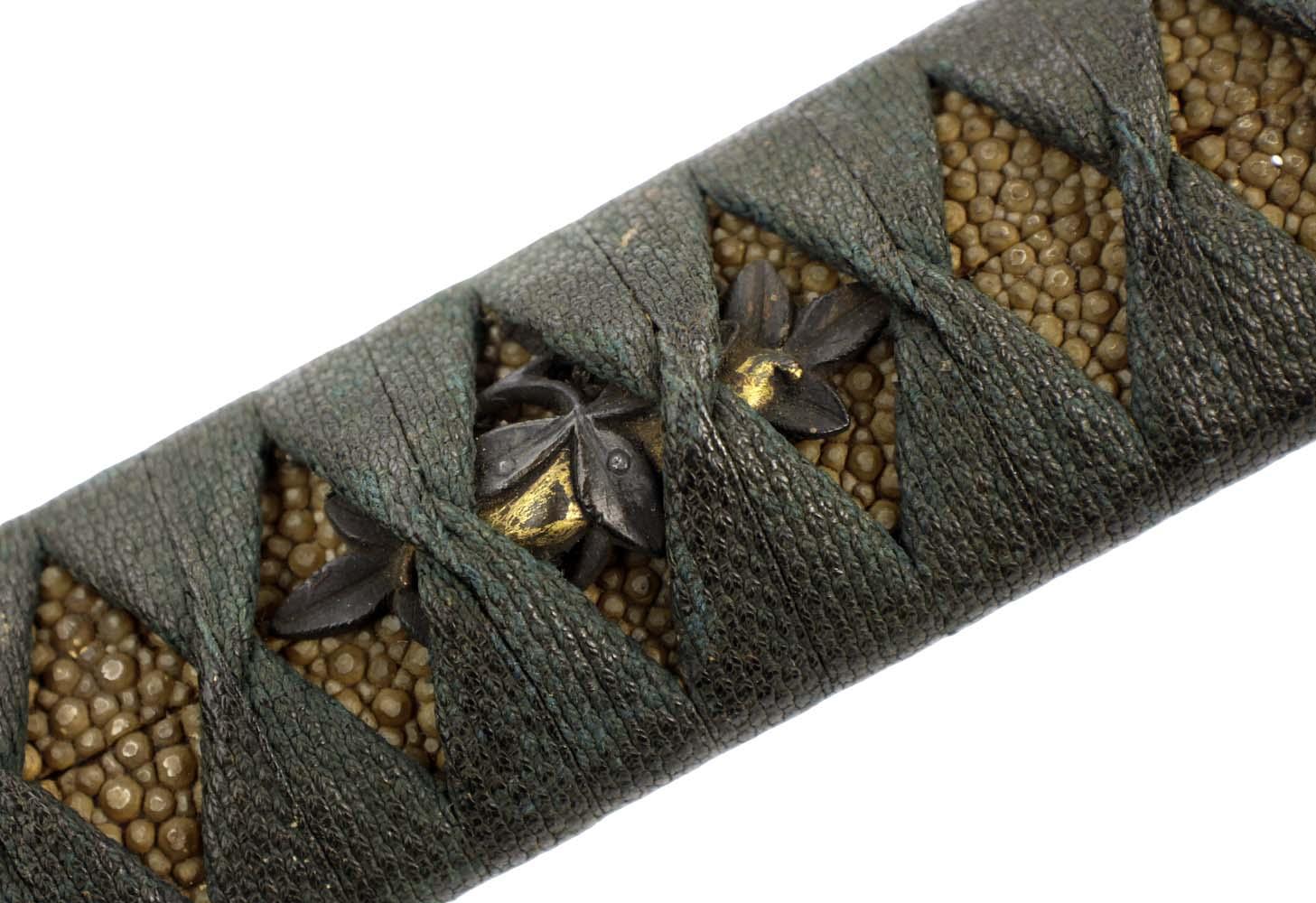
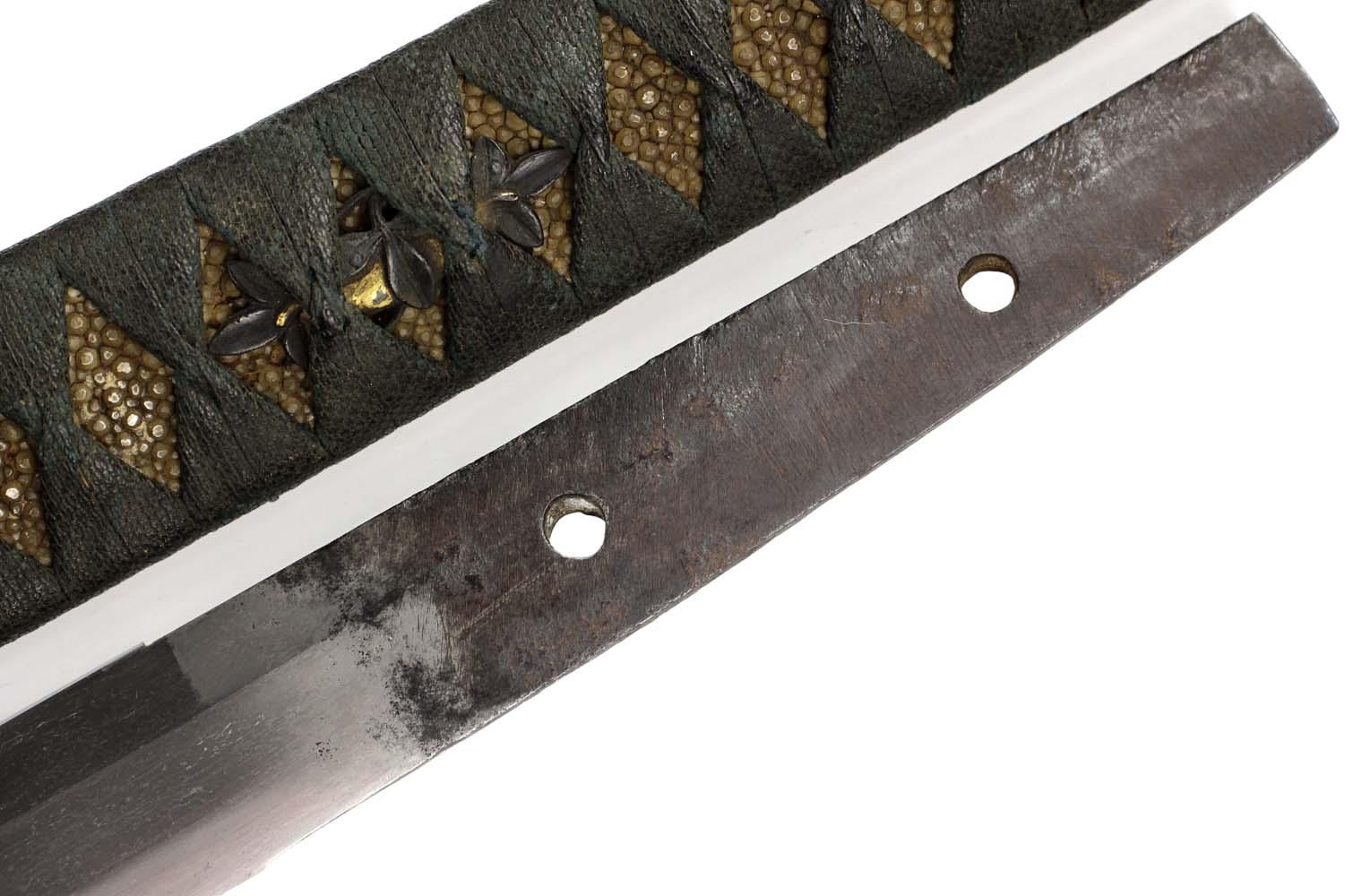
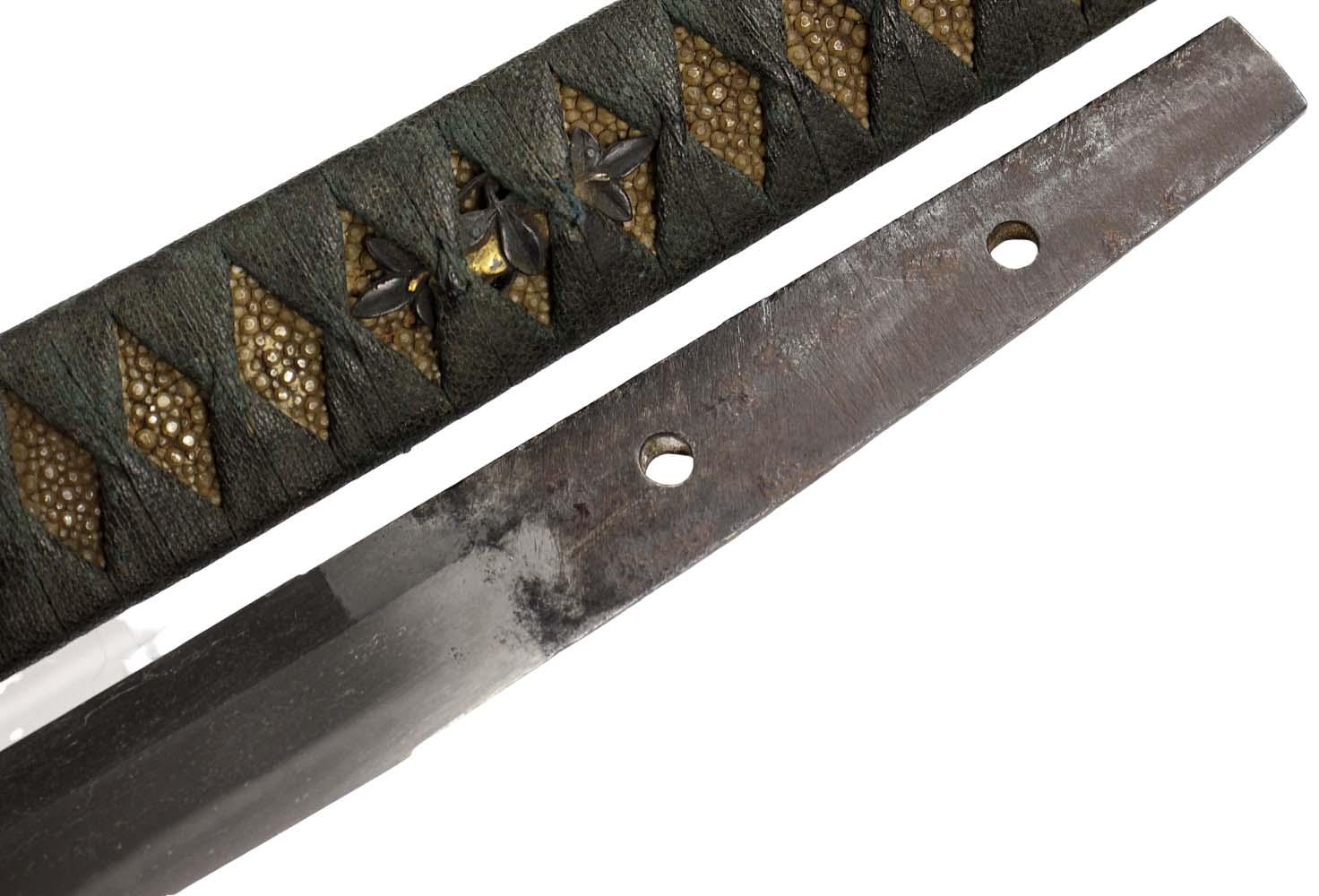
- The tsuka (hilt) is wrapped in aged dark green silk ito over samegawa (ray skin), revealing finely detailed menuki in the form of floral motifs with traces of gilt.
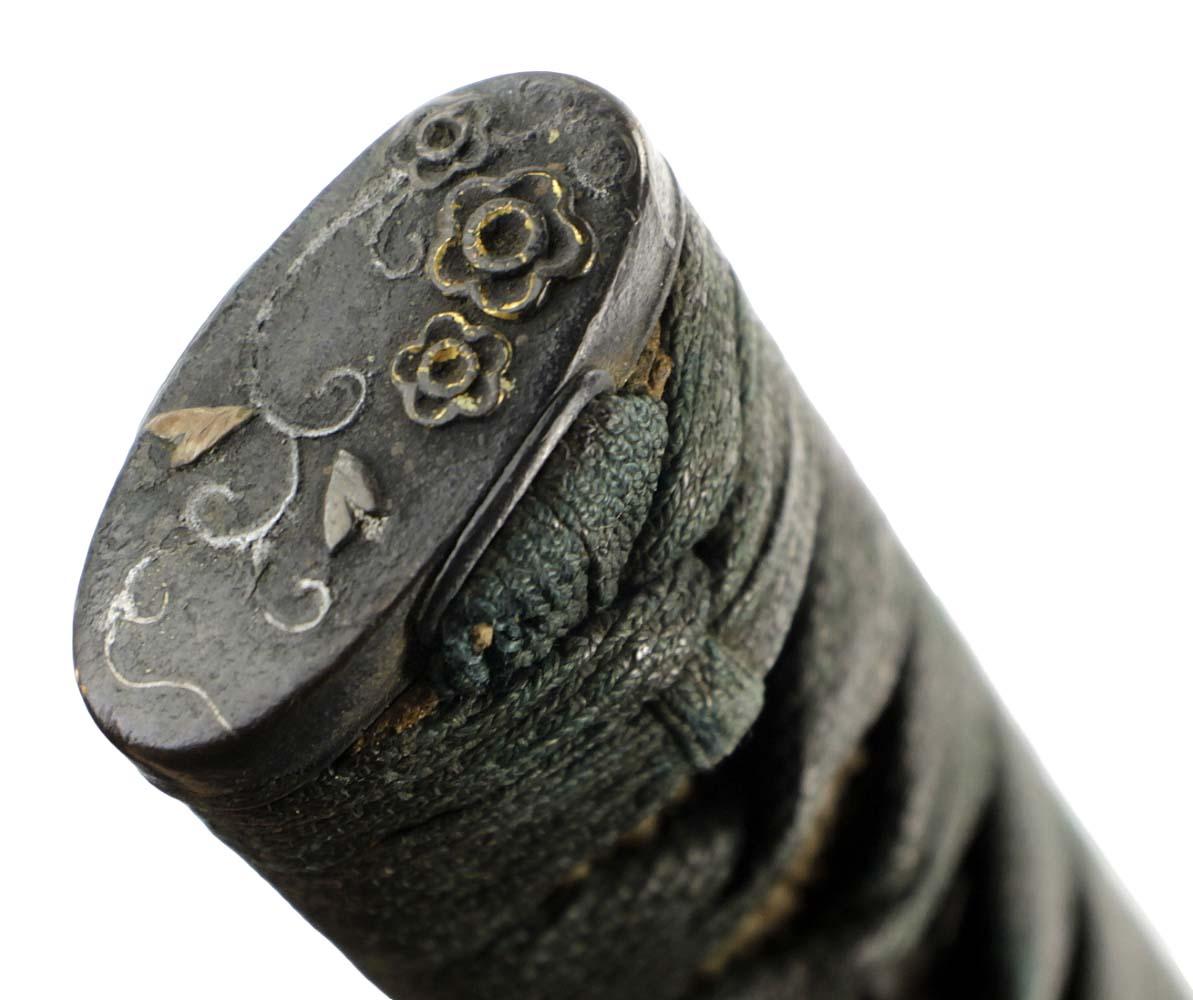
- The fuchi and kashira are of shakudō or darkened iron, delicately inlaid with gold and silver plum blossoms (ume) and vinework—symbols of endurance and renewal. These fittings show the understated elegance of mid-Muromachi samurai taste.
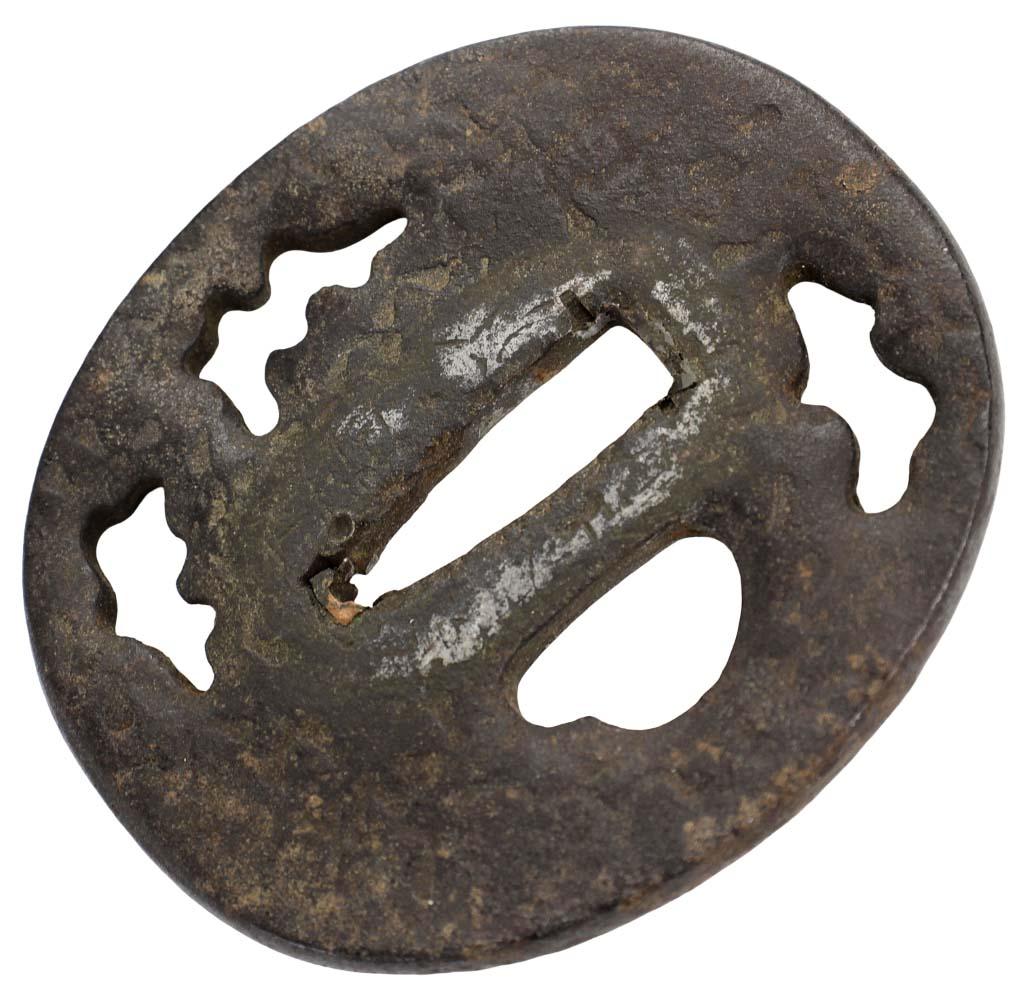
- The tsuba (guard) is of iron, with a time-softened surface, rich russet patina, and small openwork cutouts. Its shape and texture indicate 15th-century Owari or early Shoami workmanship, known for balanced simplicity and strength. The tsuba’s age and fit strongly suggest it has accompanied this blade since the Koto period—a rare instance of an unaltered original pairing.
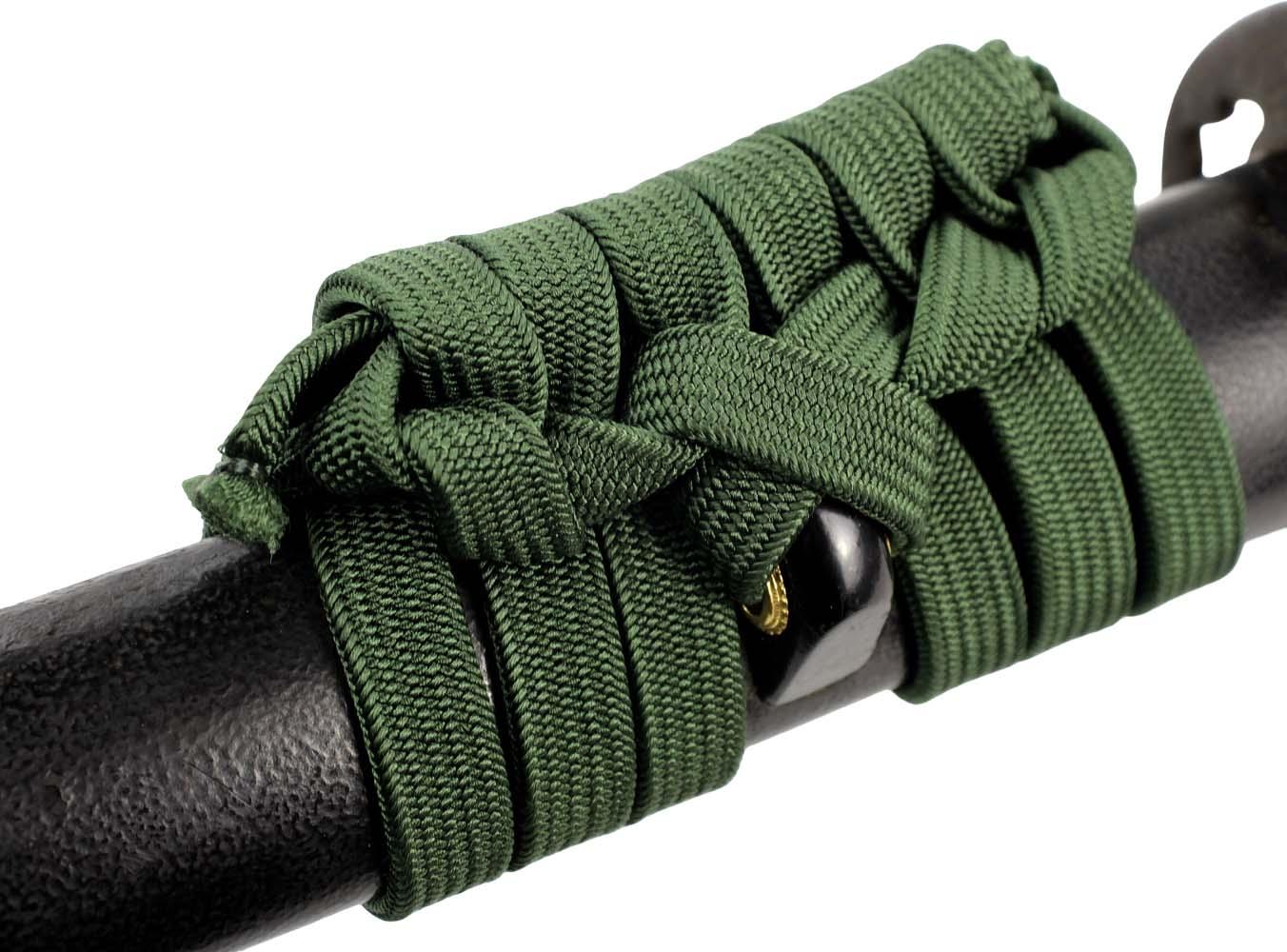
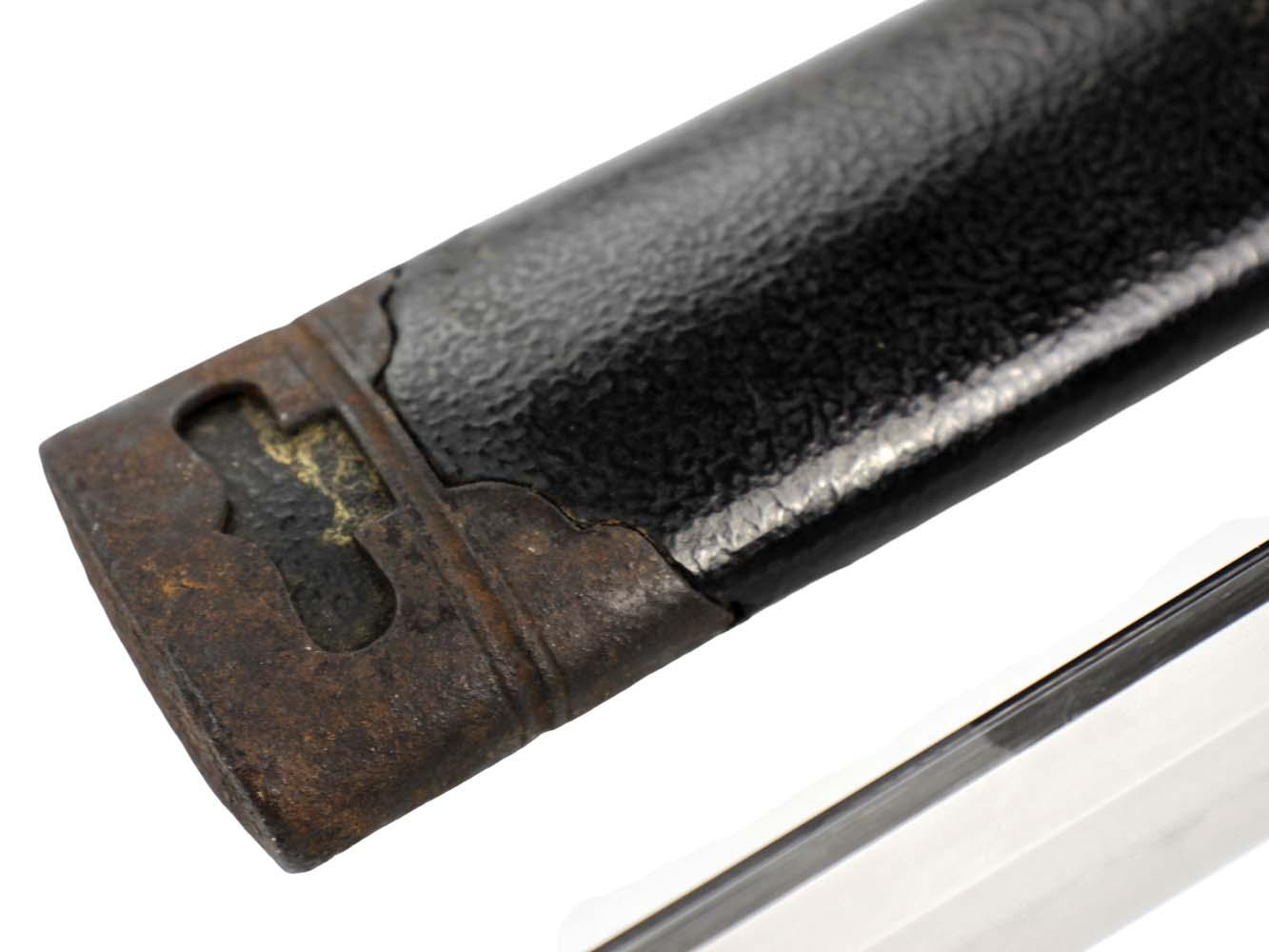
- The habaki (blade collar) is copper with visible heat-toned coloration, and the saya (scabbard) is finished in deep black lacquer, with a green sageo cord completing the ensemble.
Together, these elements form a visually harmonious and historically authentic set, balancing aesthetic restraint with functional precision.
Probable School Attribution
The blade’s features indicate a Bizen–Mino transitional lineage, forged circa late 1400s to early 1500s CE.
- The soft suguha and bright nioiguchi suggest Bizen-den Osafune influence (notably the Sukesada or Morimitsu lines).
- The straight, strong geometry and abundance of nie align with Mino-den styles that emerged in the Seki region during the Sengoku period.
- The sword likely originated from a Mino-trained smith influenced by Bizen techniques, typical of the mid–Muromachi migrations when warfare displaced many swordsmiths across provincial borders.
Condition
The sword remains in very good condition for its age. The blade retains a visible and active hamon with a fine jihada, showing an older but well-maintained polish. The mounts display rich patination and honest wear from centuries of preservation, with all components intact and stable.
Historical Context
This katana was forged during the height of the Sengoku Jidai (Warring States Period), when Japan was divided among rival clans and the demand for superior blades reached its peak. Swords of this era were not only tools of war but also symbols of rank and spirit. The combination of elegant grain, bright temper, and restrained mountings reflects the aesthetic of a samurai who valued both refinement and reliability in battle.
Summary
A highly desirable Koto-period katana, combining the refined metallurgy of the Bizen school with the robust practicality of Mino tradition. The active suguha hamon, bright nioiguchi, and original iron tsuba attest to its early manufacture. Together with its complete mounts and well-preserved polish, this sword represents an outstanding artifact of Muromachi-era samurai culture—both a functional weapon and a historical treasure.