Rare WW2 German Enamel Factory Sign German Workers Front
$450.00 CAD
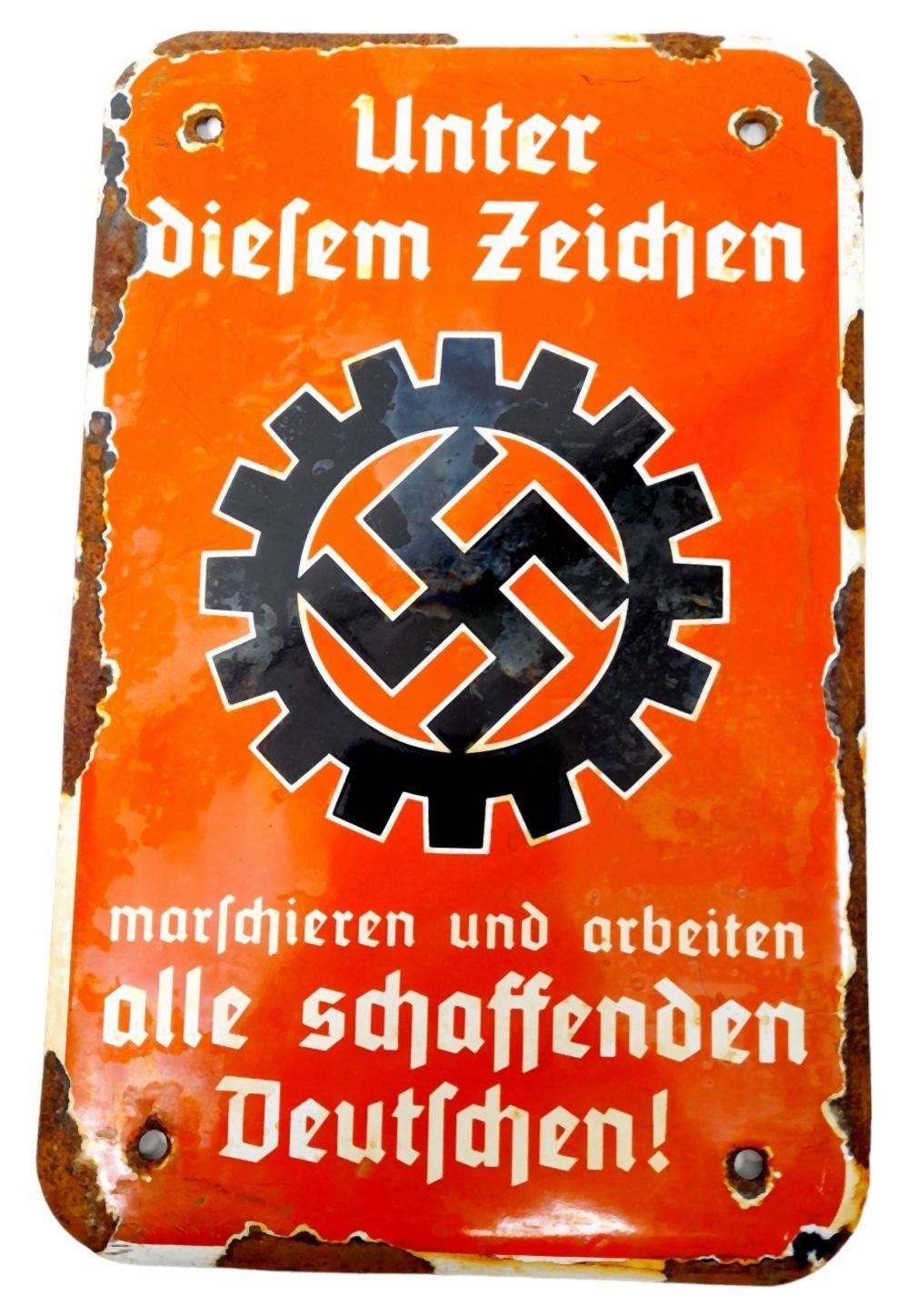
“Under this sign, marching and working are all creative Germans” – Rough Translation
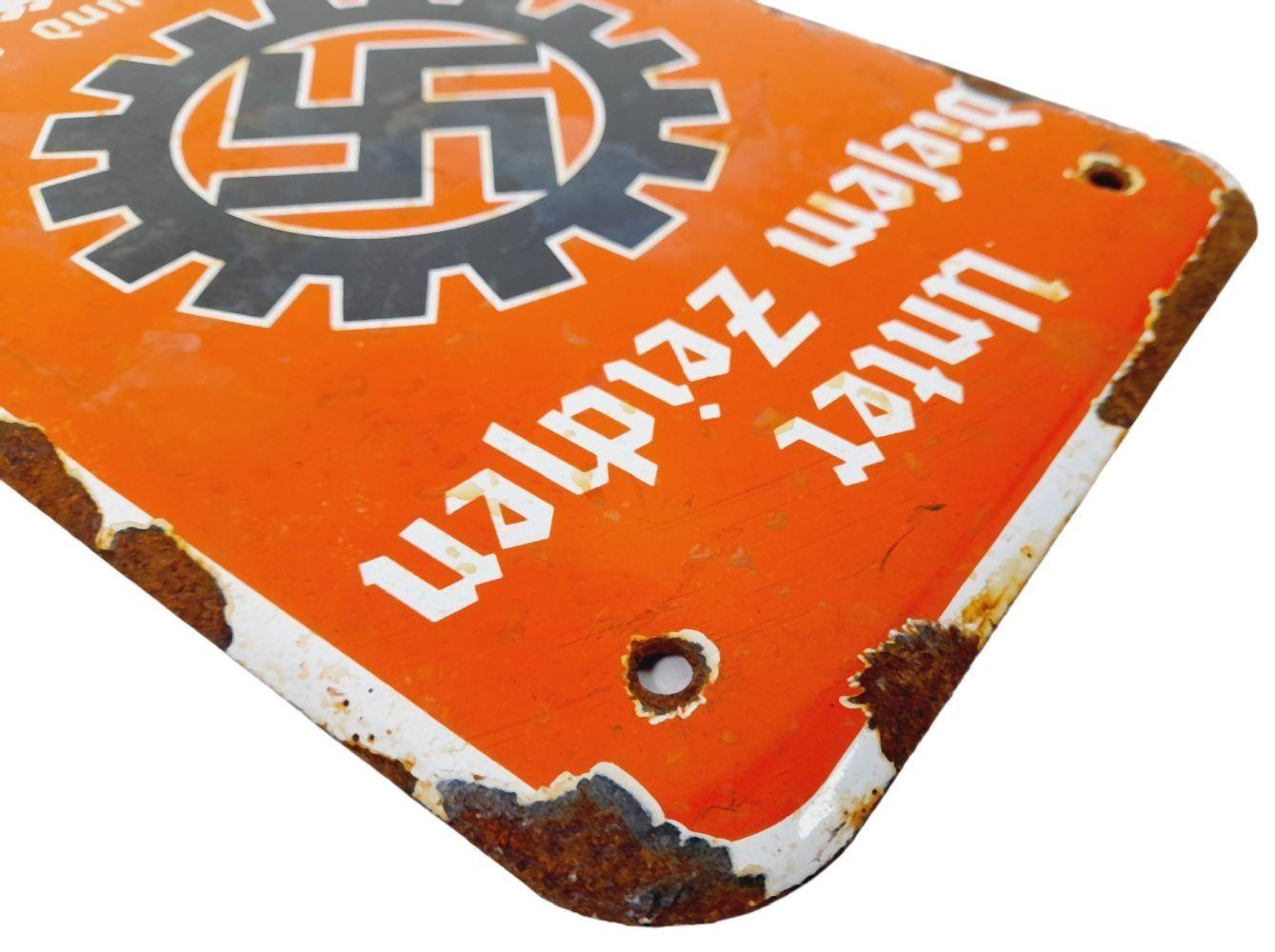
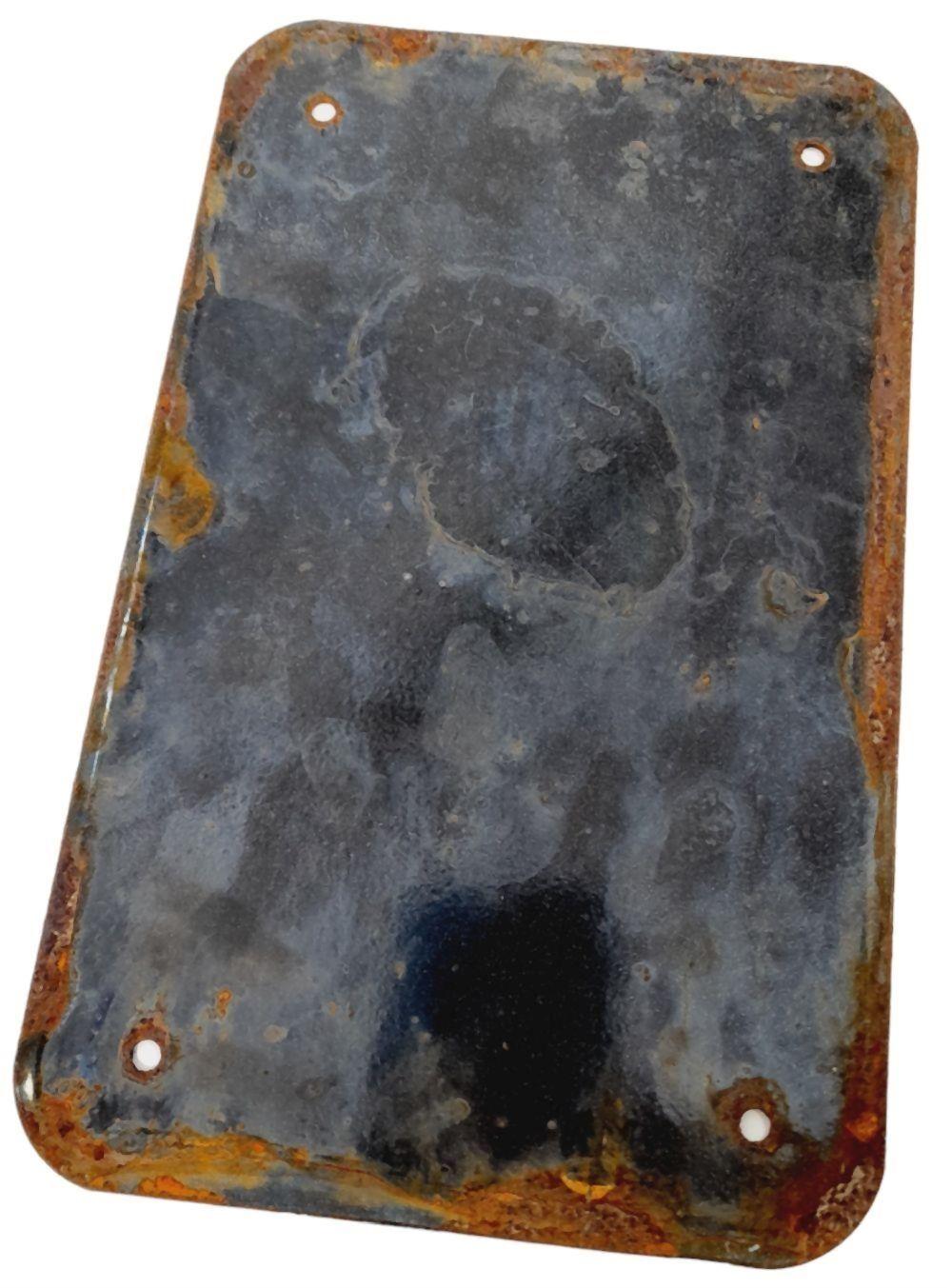
3rd Reich Enamel Deutche Arbeits Front Factory Sign, rare sign that hung in a DAF Factory. As these signs hung in factories – usually the entranceway to the “rec room” – most were destroyed in the extensive Allied bombing campaign on German military infrastructure, thus the signs were lost in the fires and debris. The ones that made it through were usually destroyed during the De-Nazification process. A rare and attractive DAF sign that hardly comes up for sale.
SHORT DAF HISTORY: The Deutsche Arbeitsfront (DAF), or German Labor Front, was a national organization established by the Nazi Party after they came to power in Germany in 1933. Its primary purpose was to replace the various trade unions, which were dissolved and banned, with a single, state-controlled entity. Here are the key details about the Deutsche Arbeitsfront:
Establishment and Structure: Founded: May 10, 1933
Founder: The DAF was founded by Robert Ley, who was appointed by Adolf Hitler as the leader of the organization.
Purpose: The DAF aimed to unify workers and employers in a single organization to control labor and promote Nazi ideology within the workforce.
Objectives and Functions: Elimination of Class Conflict: One of the main objectives was to eliminate class struggle and create a harmonious relationship between workers and employers, promoting the idea of a Volksgemeinschaft (people’s community).
Control of Labor: The DAF had complete control over labor relations, working conditions, wages, and the assignment of labor. Strikes were banned, and workers had no collective bargaining rights. Propaganda: The DAF served as a tool for Nazi propaganda, instilling Nazi ideals and promoting loyalty to the Führer and the Nazi state.
Activities and Programs: Kraft durch Freude (KdF): Translated as “Strength Through Joy,” this was a state-operated leisure organization under the DAF that organized recreational activities, vacations, and cultural events for workers to increase productivity and loyalty.
Beauty of Labor (Schönheit der Arbeit): This campaign focused on improving workplace conditions, such as lighting, cleanliness, and safety, to enhance worker morale and efficiency. Training and Education: The DAF provided vocational training and educational programs to improve workers’ skills and align their education with Nazi ideology. Impact and Legacy
Totalitarian Control: The DAF was instrumental in establishing totalitarian control over the German workforce, ensuring that all aspects of labor were regulated according to Nazi policies.
Economic Contribution: The organization played a significant role in the economic mobilization of Germany, particularly during World War II, by organizing labor for war production.
Post-War: After the fall of the Nazi regime in 1945, the DAF was disbanded, and efforts were made to restore independent trade unions and workers’ rights in post-war Germany.
Organizational Structure Leadership: The DAF was led by Robert Ley until the end of World War II.
Membership: Membership was mandatory for all workers and employers, making it one of the largest organizations in Nazi Germany.
Hierarchical Structure: The DAF had a highly centralized and hierarchical structure, with regional and local branches across Germany, all reporting to the central authority in Berlin. The Deutsche Arbeitsfront was a critical component of the Nazi regime’s control over the German populace, ensuring that the workforce was aligned with the party’s goals and ideology. Approx. 10 in. by 6 in.