
World War 1 WW1 Imperial German Sword Saber Blucher Sabel Regiment Marked
$650.00 CAD
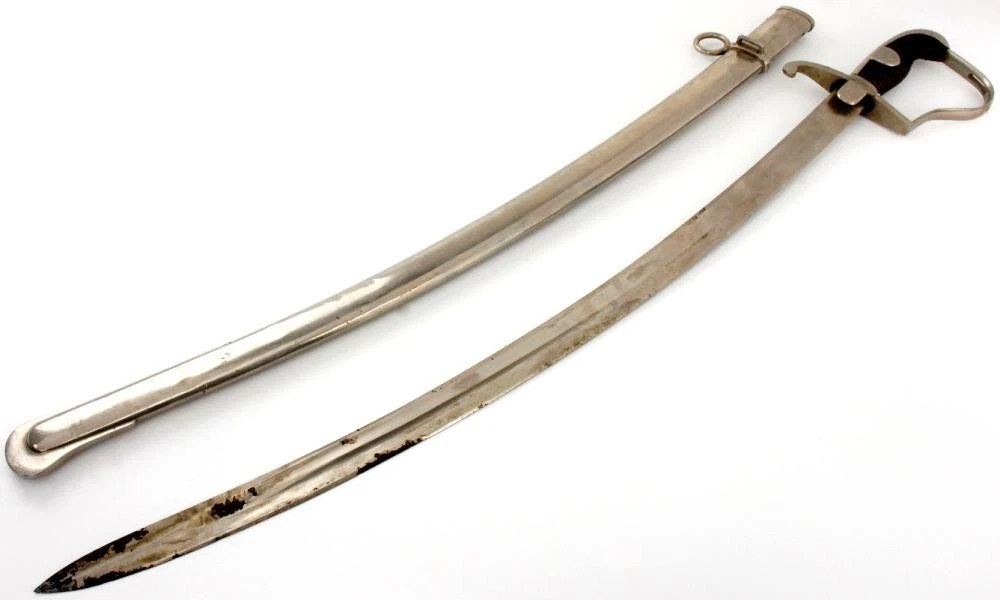
Imperial German Model 1889 “Blücher” Cavalry Sabre
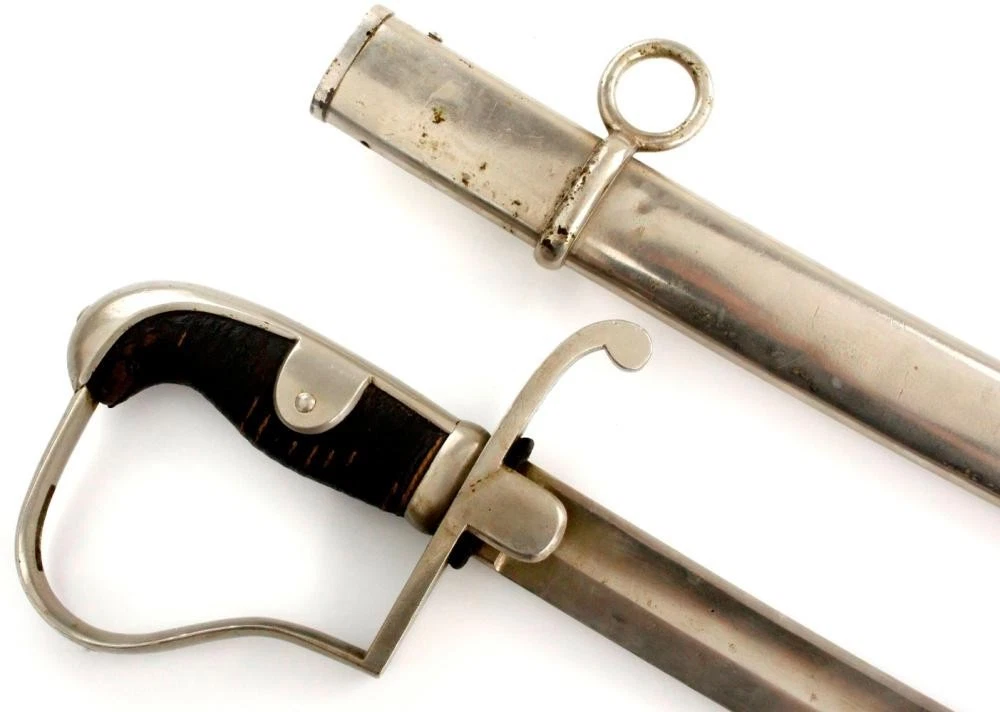
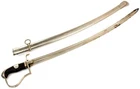
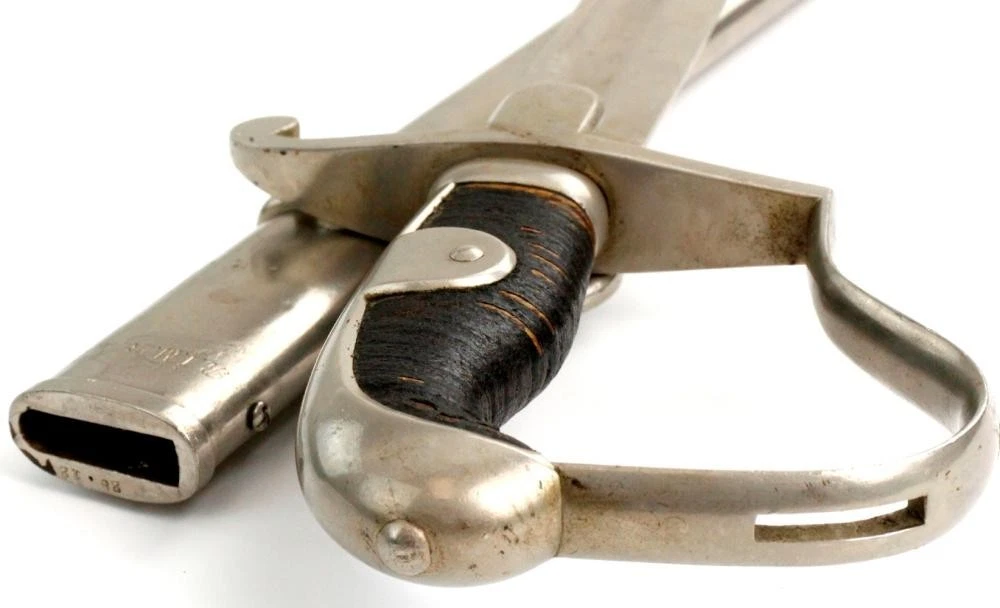
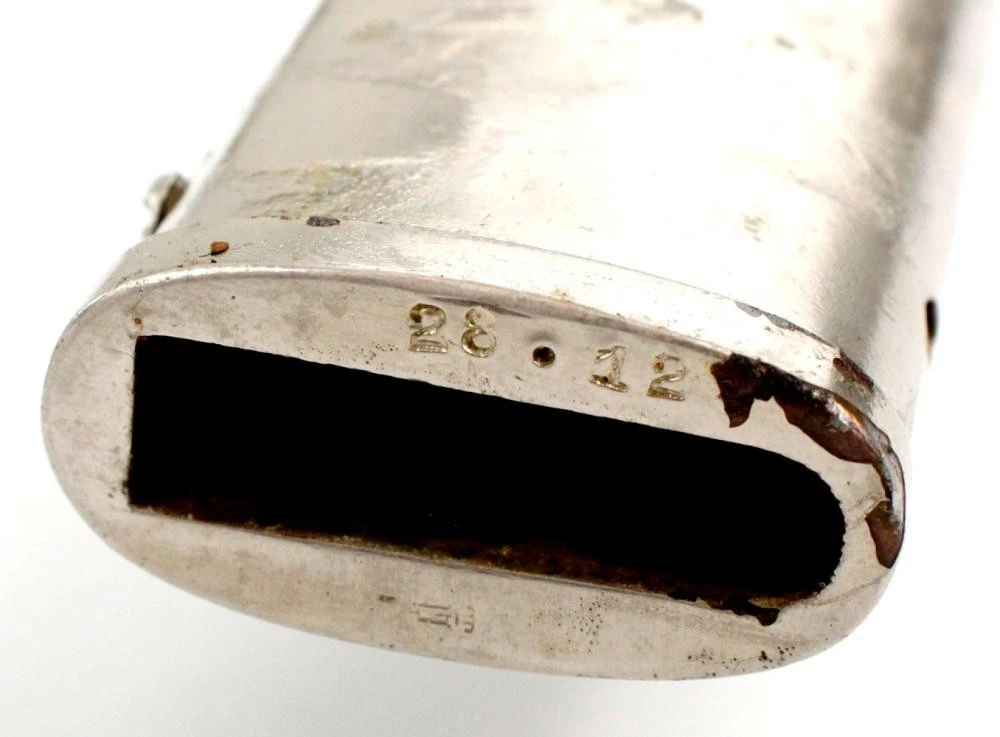
**Please be advised, sword only goes half way into scabbard. Scabbard and sword are both straight, inner scabbard material is rotted, should be an easy fix for someone who is handy. **
Dated 1899 – Regimentally Marked – World War I Service
This is an original Imperial German Model 1889 Blücher Sabre, a pattern famously associated with Prussian cavalry and mounted troops of the Kaiserreich and carried extensively into World War I.
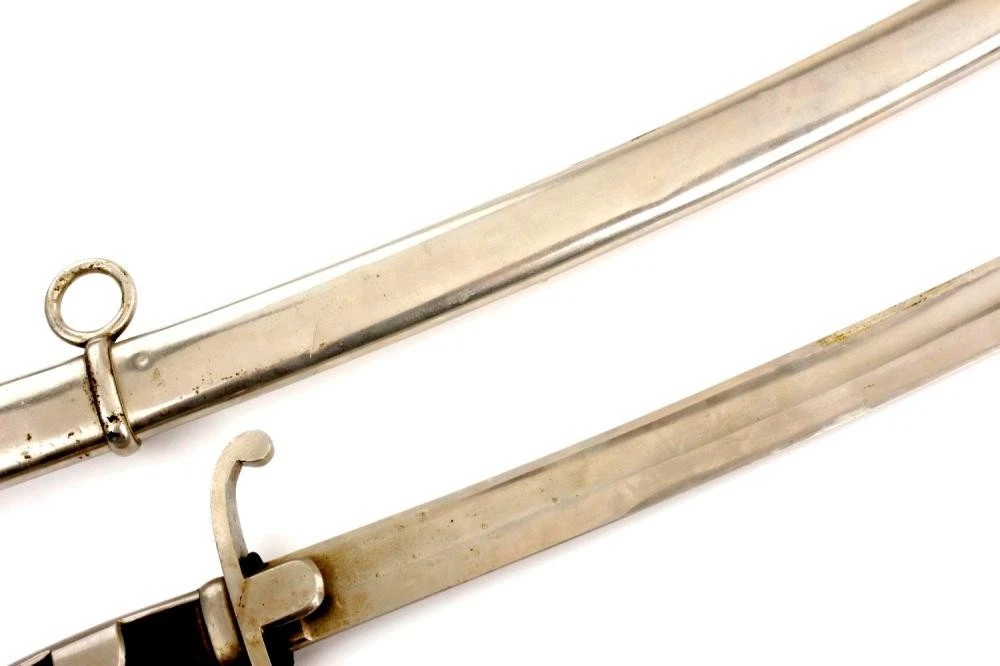
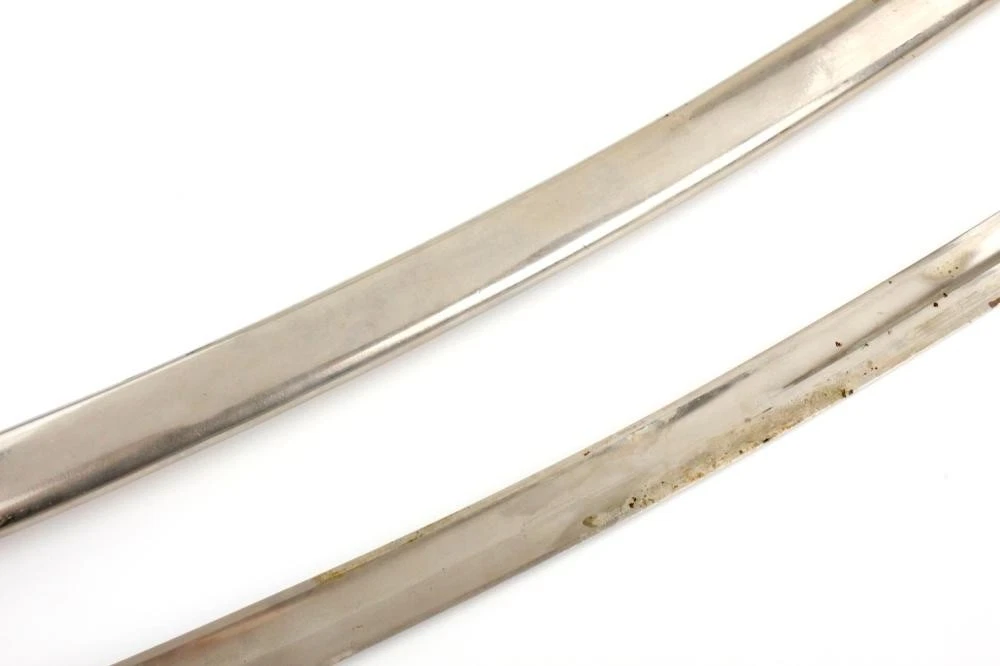
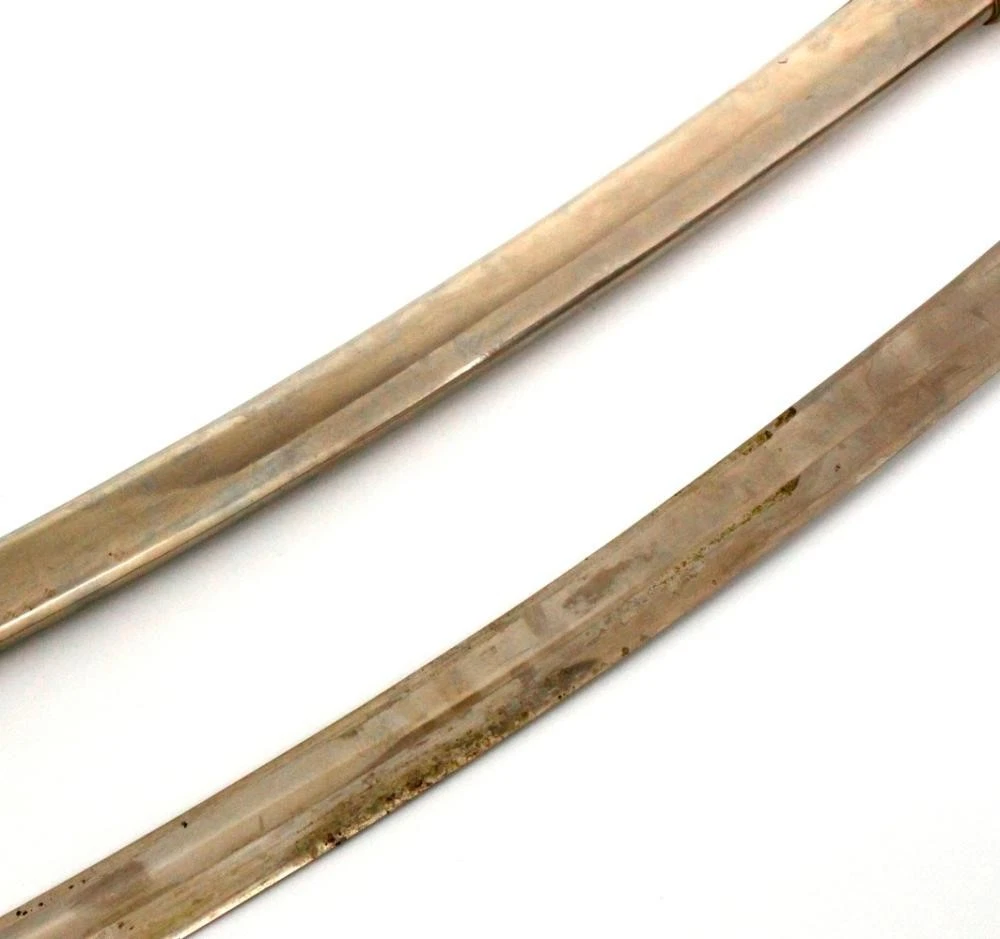
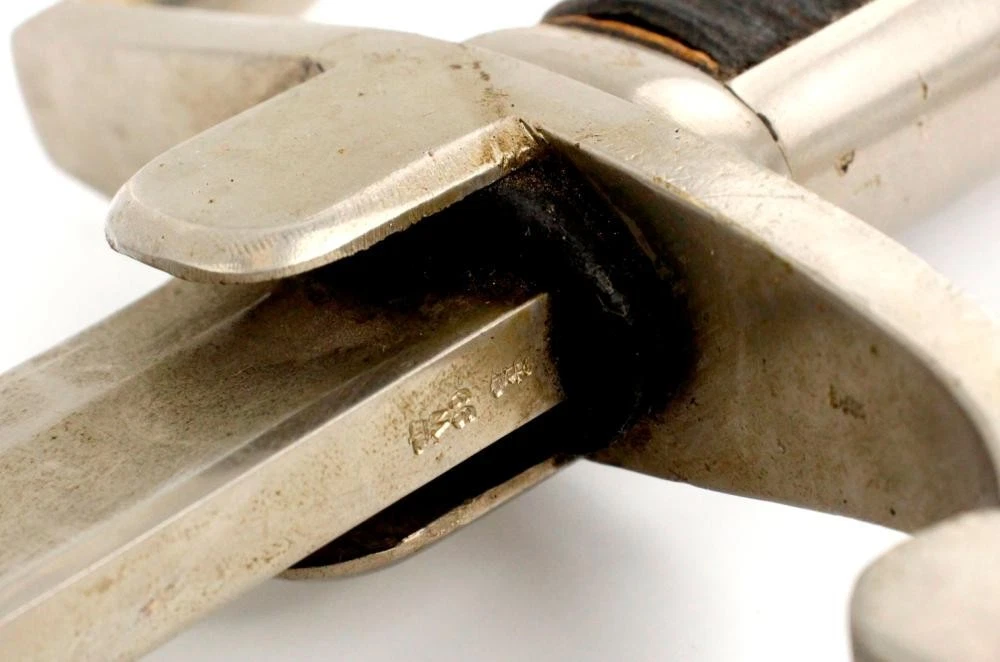
The sabre retains its bright steel blade with spots of rust near the tip, check pics – with a gentle, regulation curve and a clean single fuller, showing only honest age spotting consistent with service use. The blade is clearly dated 1899, placing its manufacture firmly in the late Imperial period, well before the outbreak of the Great War. As was typical, earlier Blücher sabres like this example remained in frontline and reserve service through 1914–1918.
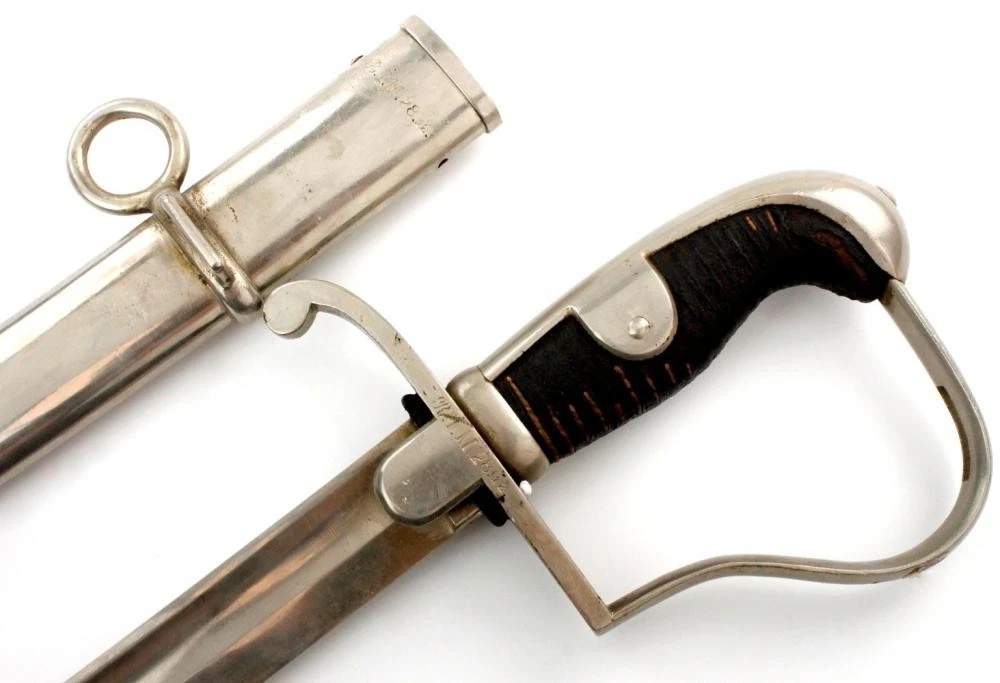
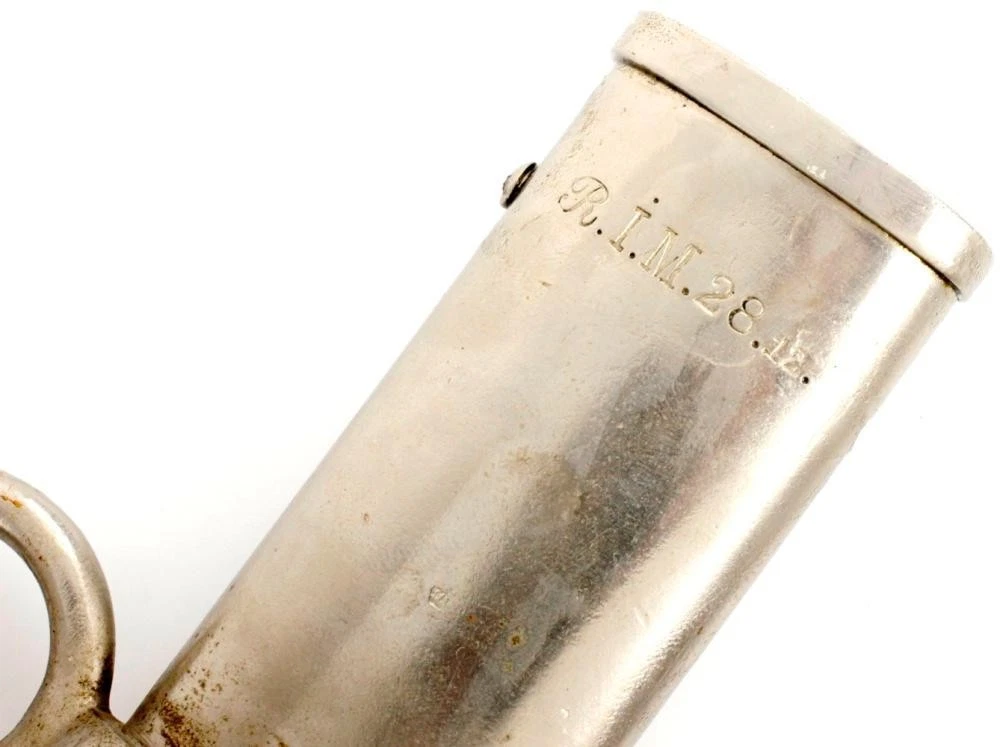
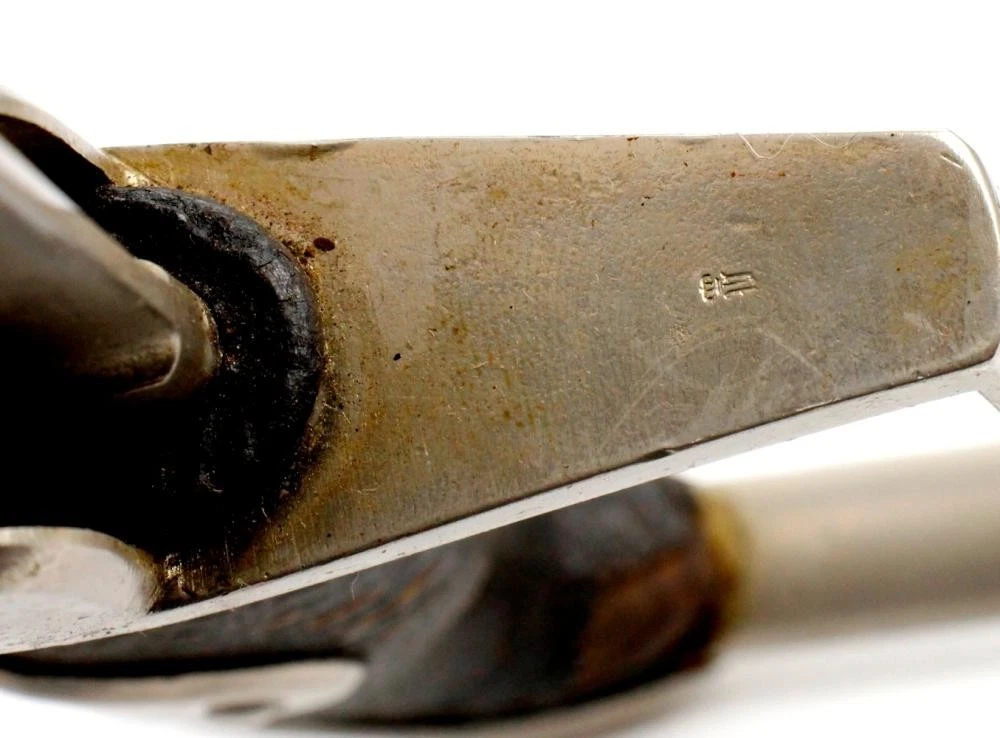
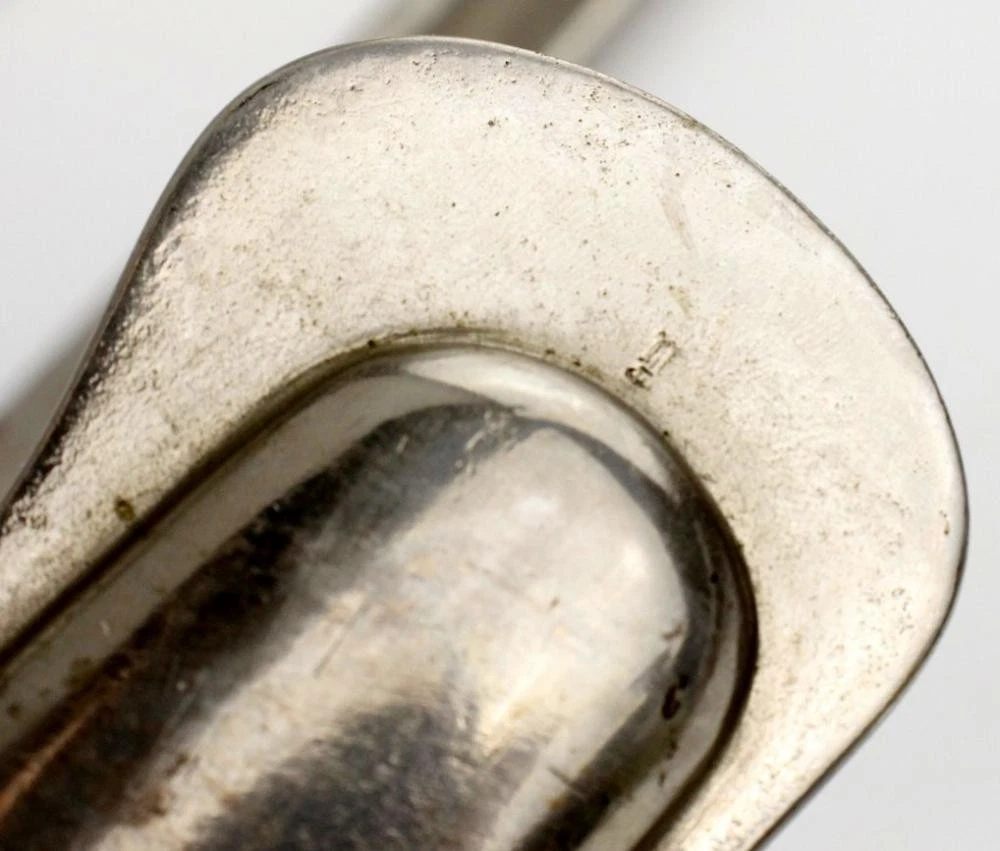
The steel hilt features the correct D-guard with rolled quillon, black ribbed grip scales, and domed pommel. The original steel scabbard is present and correctly matched, fitted with a suspension ring, and bears matching unit markings—an increasingly difficult feature to find today.
Regimental Markings (Matched)
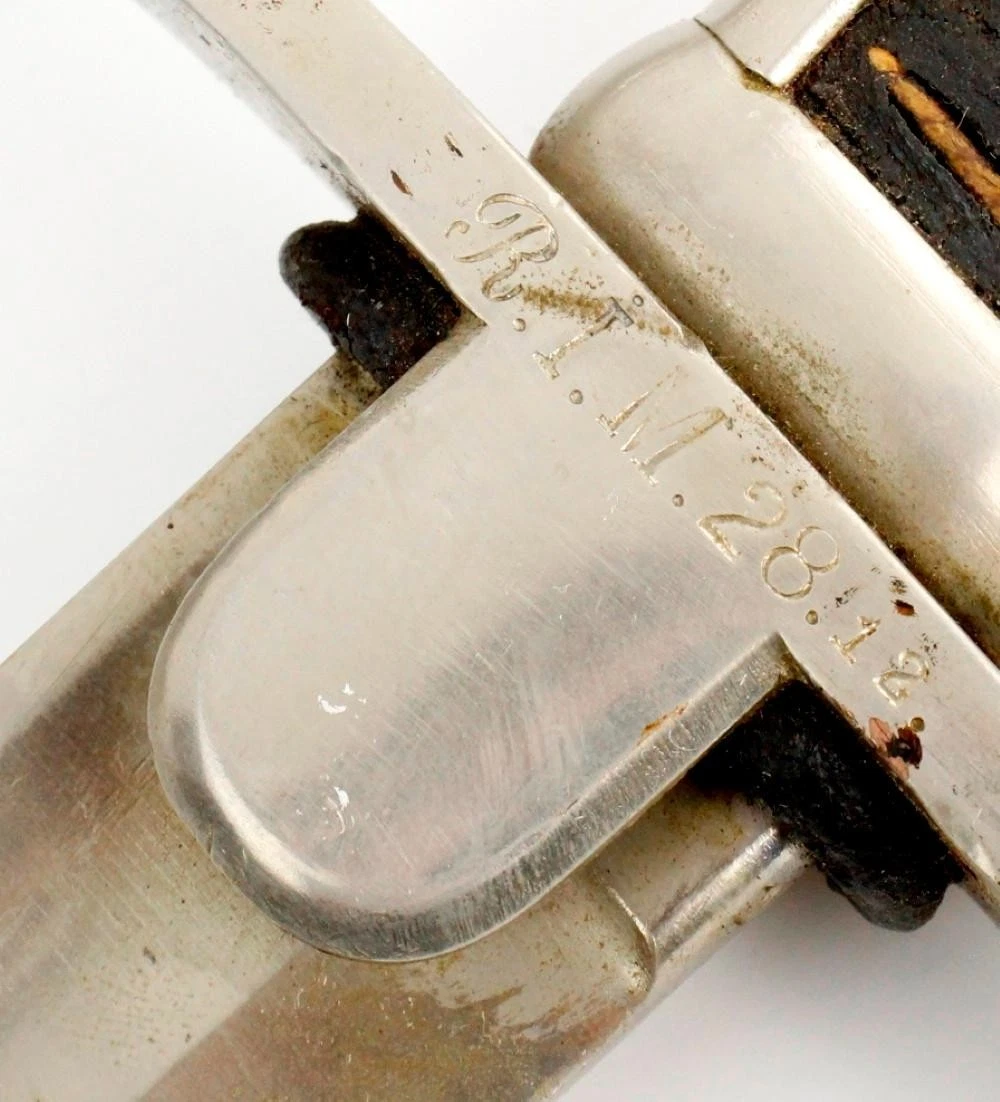
Both the sabre and scabbard are marked:
“R.I.M. 28”
This marking denotes Reserve Infantry Munitions Column No. 28
(Reserve-Infanterie-Munitionskolonne 28)
These munitions columns were integral logistical units attached to Reserve Infantry formations, responsible for ammunition transport and supply at the front—often operating dangerously close to combat zones. Personnel issued edged weapons such as this Blücher were typically mounted or semi-mounted troops tasked with escort, security, and rapid movement of supplies.
World War I Context & Campaign Service
Reserve units associated with Infantry formations numbered “28” were mobilized in 1914 and served primarily on the Western Front. While exact battlefield assignment could vary by attachment, Reserve Infantry formations of this designation were involved in:
- The Opening Campaigns of 1914 (Belgium & Northern France)
- The First Battle of the Marne (1914)
- Trench warfare operations in France and Flanders (1915–1918)
- Sustained logistical and support roles under artillery fire and air observation
Munitions columns, though non-combat units by designation, suffered heavy losses during the war due to artillery bombardment and counter-battery fire—making marked weapons from these formations especially evocative survivors.
Regimental History
Reserve-Infanterie-Munitionskolonne Nr. 28 (R.I.M. 28)
The marking “R.I.M. 28” identifies this sabre as having been issued to Reserve Infantry Munitions Column No. 28 (Reserve-Infanterie-Munitionskolonne 28), a logistical support unit of the Imperial German Army.
Role & Function
Munitions columns were vital formations tasked with the transport, storage, and forward delivery of ammunition to infantry and artillery units at the front. These units operated horse-drawn wagons and mounted detachments, often under fire, ensuring the continuous supply of rifle, machine-gun, and artillery ammunition during combat operations.
Although categorized as support units, munitions columns frequently worked dangerously close to the front lines, particularly during major offensives, and were exposed to:
- Artillery bombardment
- Aerial observation and attack
- Counter-battery fire
- Rapid redeployments under combat conditions
Personnel assigned to these units were issued edged weapons such as the Model 1889 Blücher sabre, especially in mounted or escort roles.
World War I Service
Reserve formations associated with the number 28 were mobilized in August 1914 and served primarily on the Western Front. Units supported by Reserve Infantry Munitions Column No. 28 were involved in:
- The 1914 Western Front Campaign (Belgium and Northern France)
- The First Battle of the Marne (September 1914)
- Subsequent static trench warfare in France and Flanders
- Sustained logistical operations throughout 1915–1918, including ammunition resupply during major battles and defensive actions
As the war progressed and Germany’s logistical burden increased, munitions columns became critical to maintaining front-line effectiveness, often suffering significant losses despite their non-combat designation.
Historical Significance
Weapons bearing markings of munitions and logistics units are notably scarcer than standard infantry or cavalry issues, as these units were smaller and their equipment was often reissued, worn out, or lost during the war.
This sabre represents:
- A pre-war Imperial weapon (dated 1899)
- Carried into World War I service
- Issued to a specialized logistical formation essential to Germany’s war effort
Such marked examples provide a tangible link to the often-overlooked backbone of the German Army: the supply troops who kept the guns firing at the front.