
Antique German Short Sword Prussian M1845/M1865 Faschinenmesser
$530.00 CAD
Prussian M1845/M1865 Faschinenmesser
Regimentally Marked – Complete with Original Scabbard
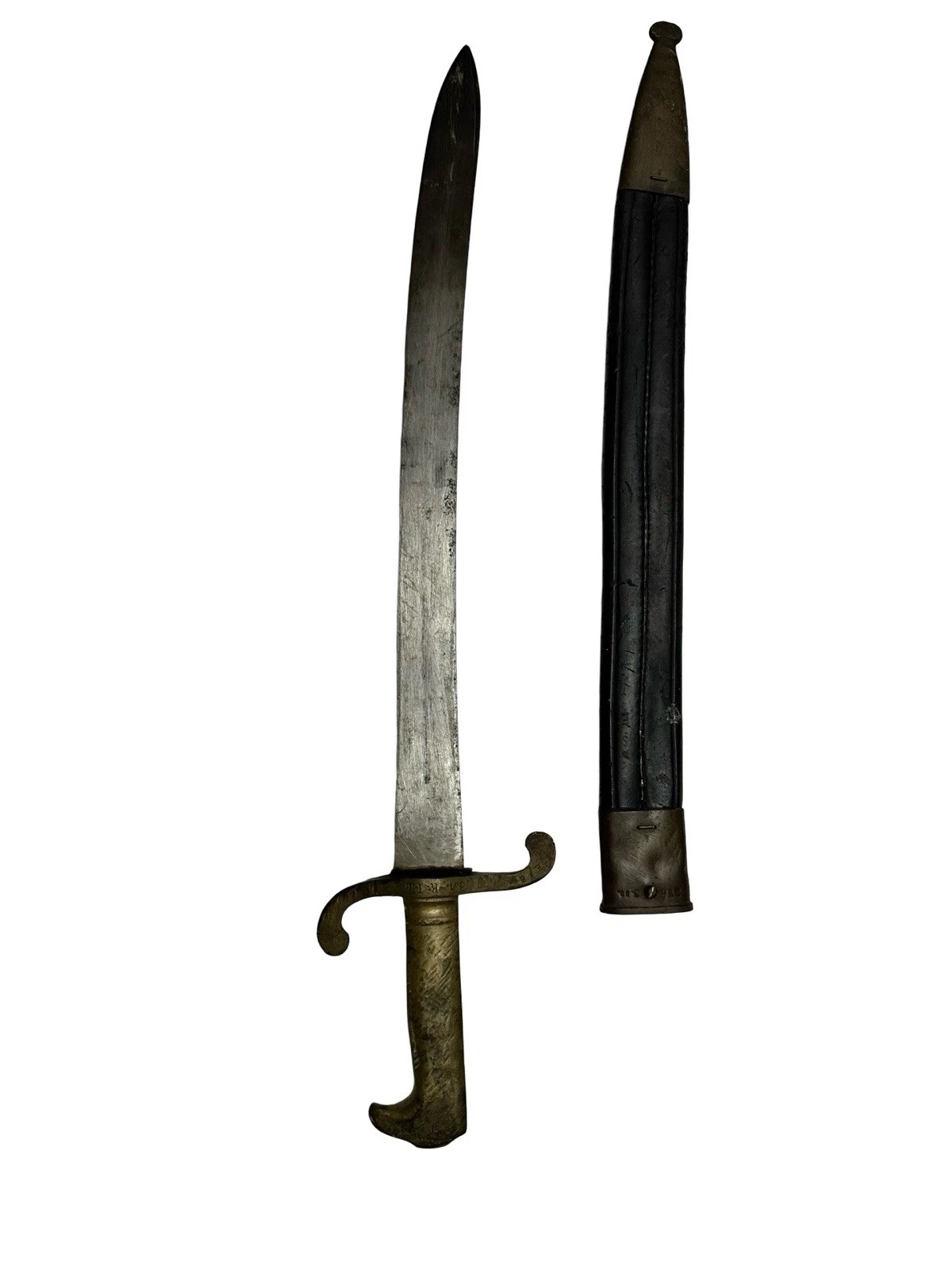
This is a fine and fully original example of the Prussian Faschinenmesser, the heavy short sword issued to infantry and artillery troops throughout the mid–late 19th century. Serving as both a sidearm and a field utility tool, the Faschinenmesser was used for cutting brush, clearing gun positions, constructing fascines, and forming firing lanes — a direct descendant of the earlier pioneer and sapper swords.
This specimen shows the classic transitional features of the M1845/M1865 pattern, along with highly desirable Prussian regimental markings and an intact issued leather scabbard with brass fittings.
⸻
Description of the Sword
• Model: Prussian Faschinenmesser (Transitional M1845/M1865 pattern)
• Era: Ca. 1845–1870s
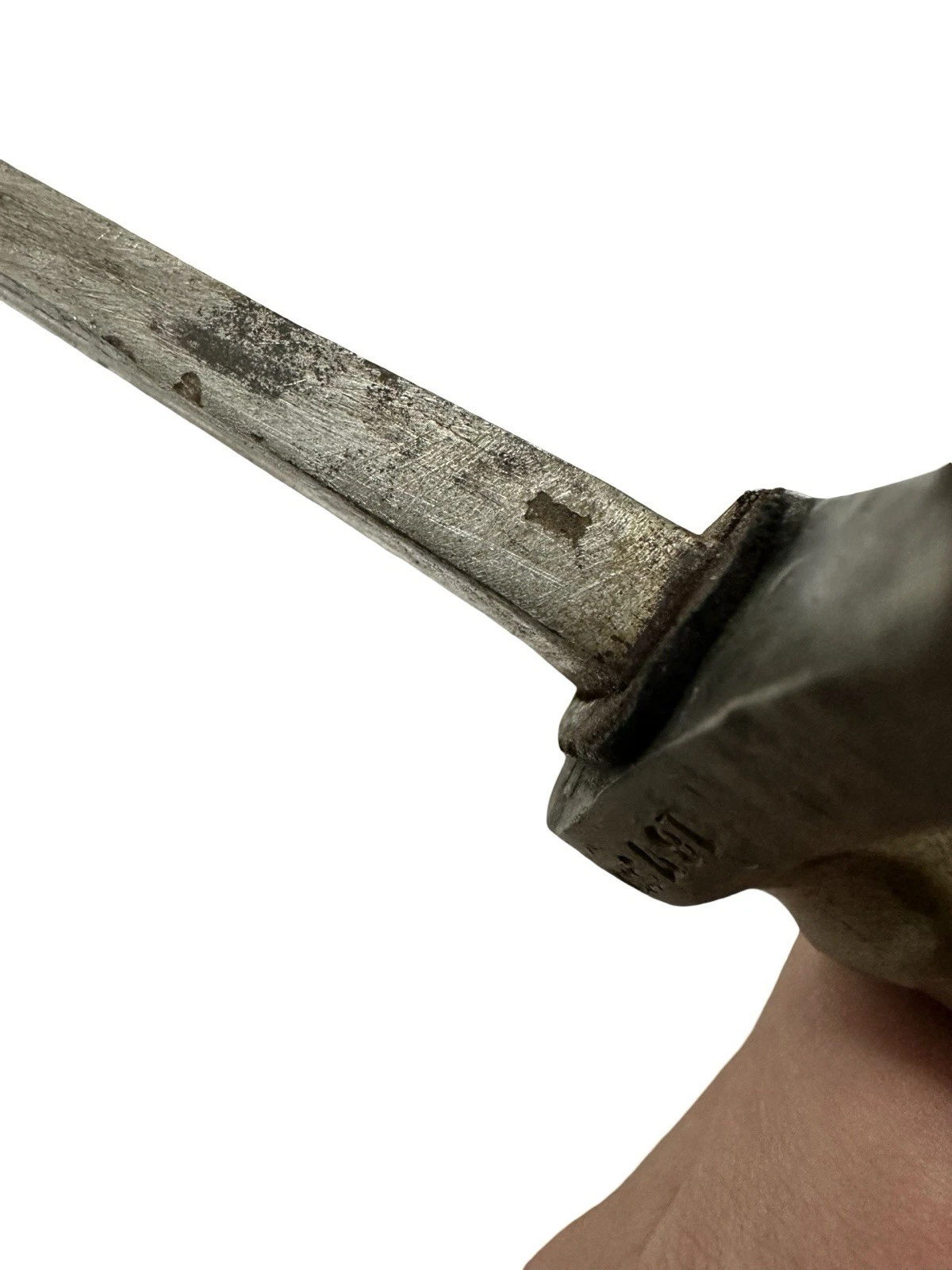
• Blade: Broad, straight, single-edged utility blade showing honest patina and clear 19th-century forging lines
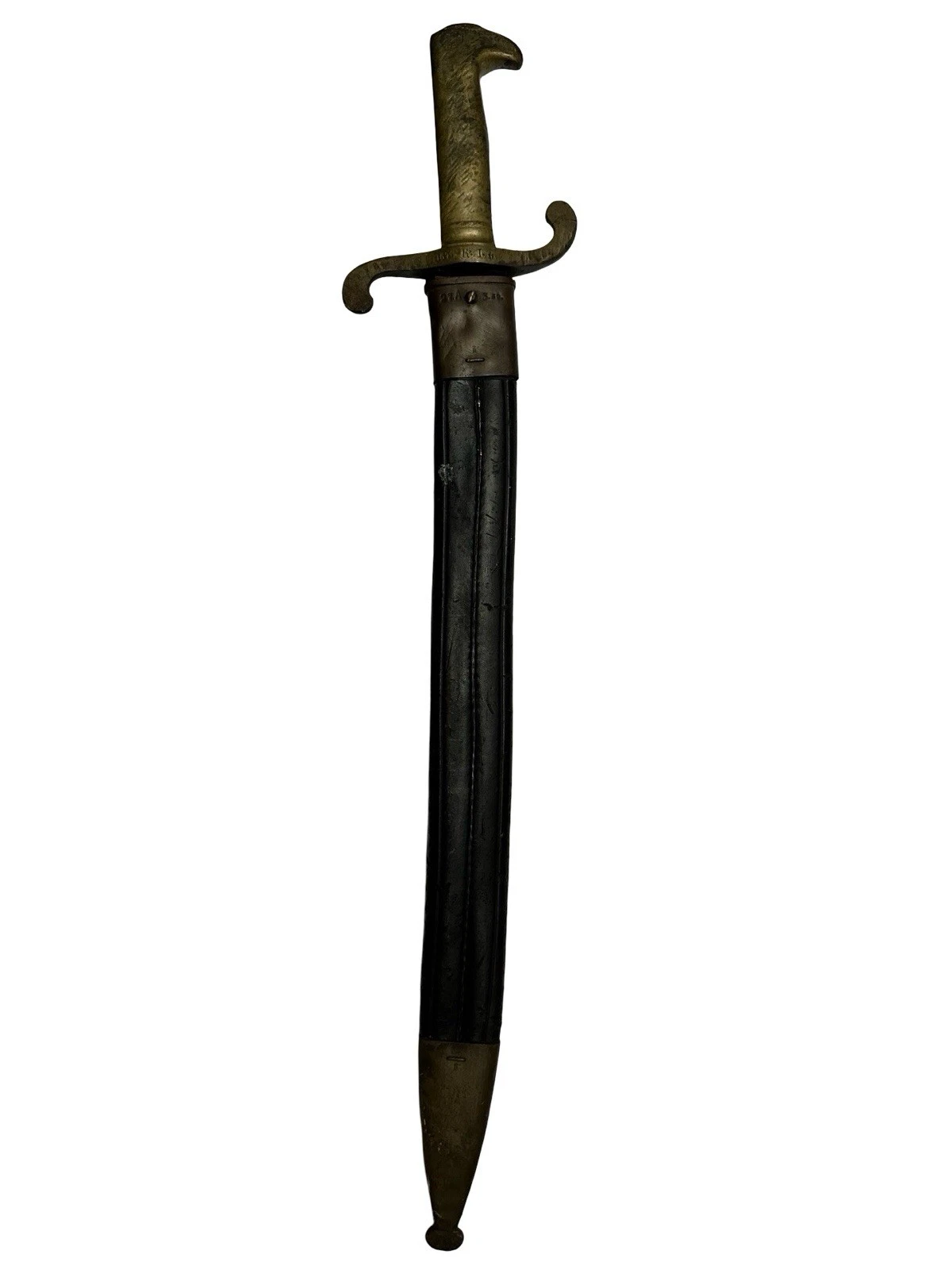
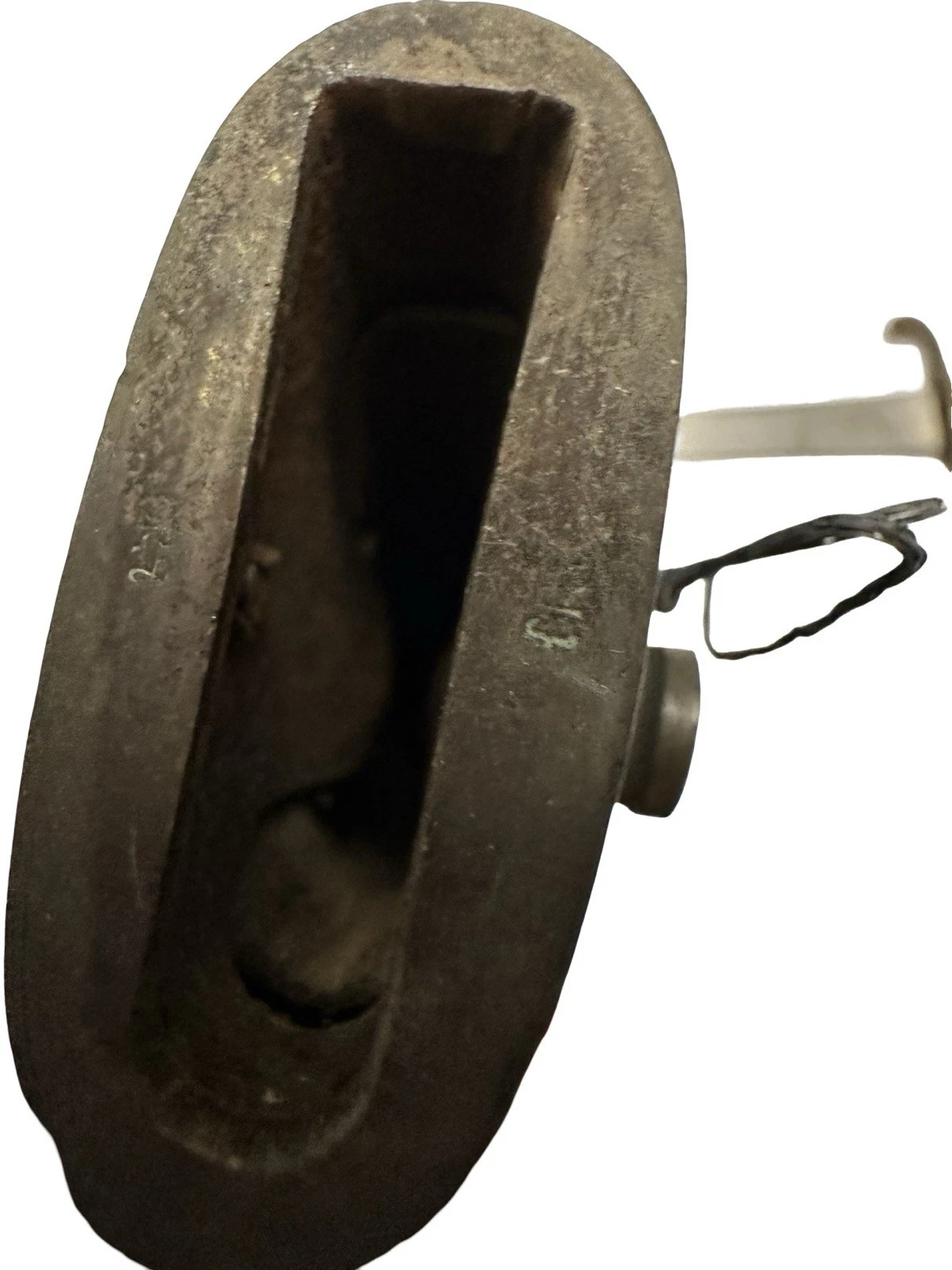
• Hilt: Cast brass with deeply cut diagonal grip fluting and a forward-curving bird-head pommel
• Guard: Brass crossguard with the distinctive Prussian upward/downward curled quillons unique to the 1845/65 line
• Tang Stammpunze: Small inspector’s mark visible on the blade spine — correct for Prussian manufacture
The overall form firmly identifies this piece as Prussian and clearly separates it from the shorter, leaf-shaped French artillery swords of the same era.
⸻
Regimental Markings
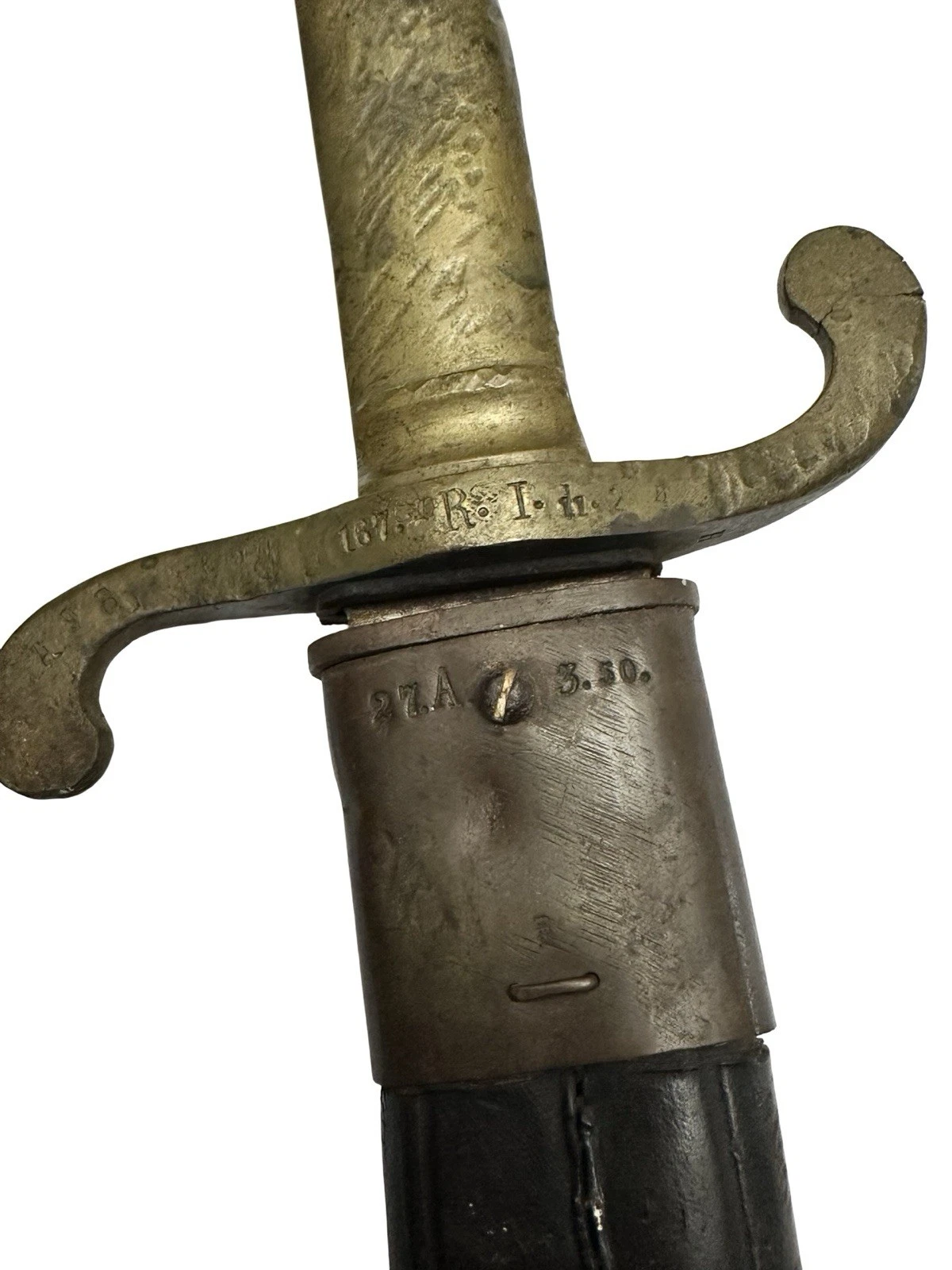
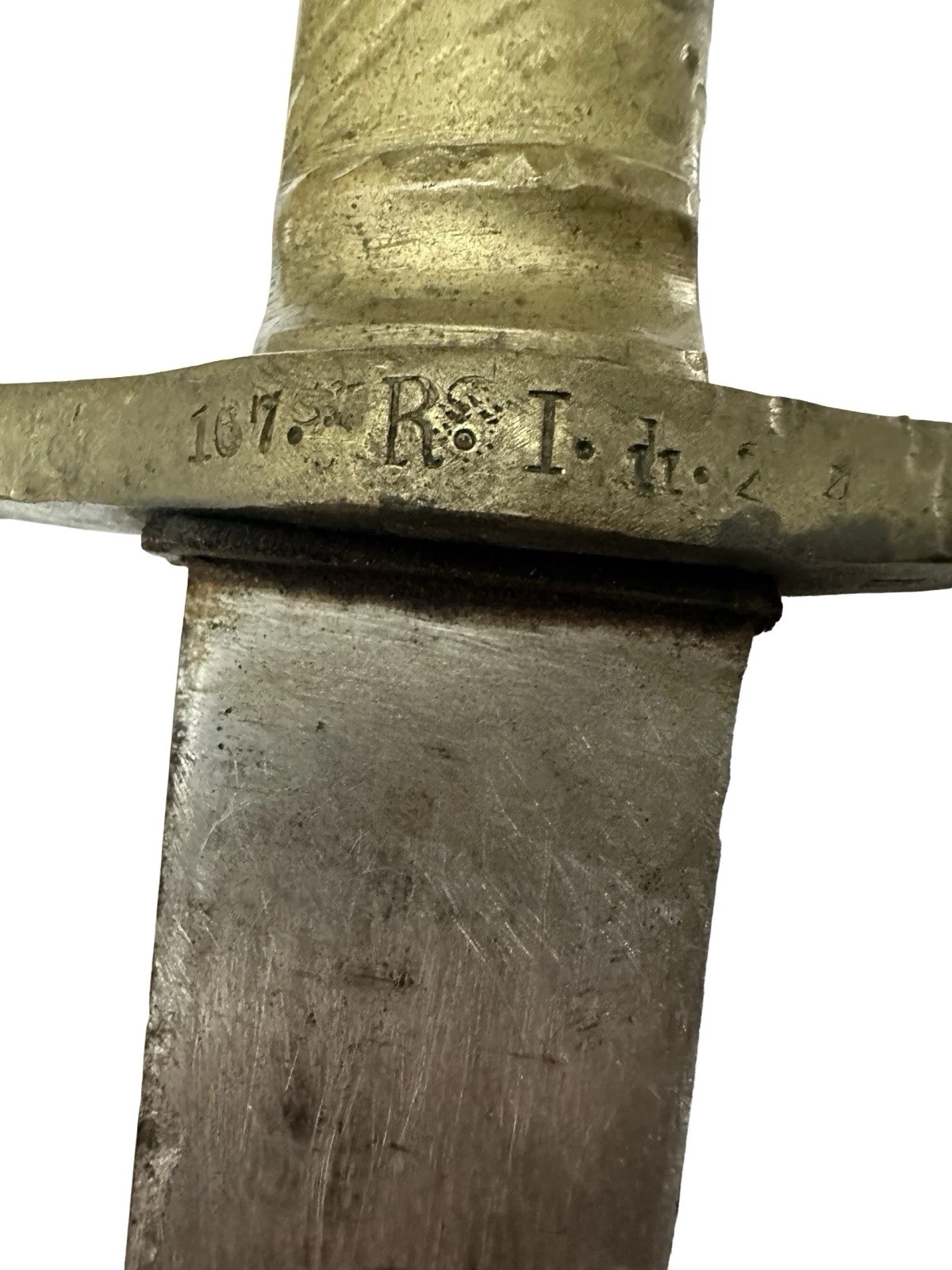
The sword is stamped on the crossguard:
“167. R.8. I.d.2”
This follows traditional Prussian unit-marking sequence:
• 167 — Weapon number
• R.8 — 8. Reserve-Infanterie-Regiment
• I.d.2 — 1st Detachment / 2nd Company
This is a desirable Reserve Infantry unit that saw restructuring and re-arming leading up to the Franco-Prussian War.
Additional Assembly / Rack Markings
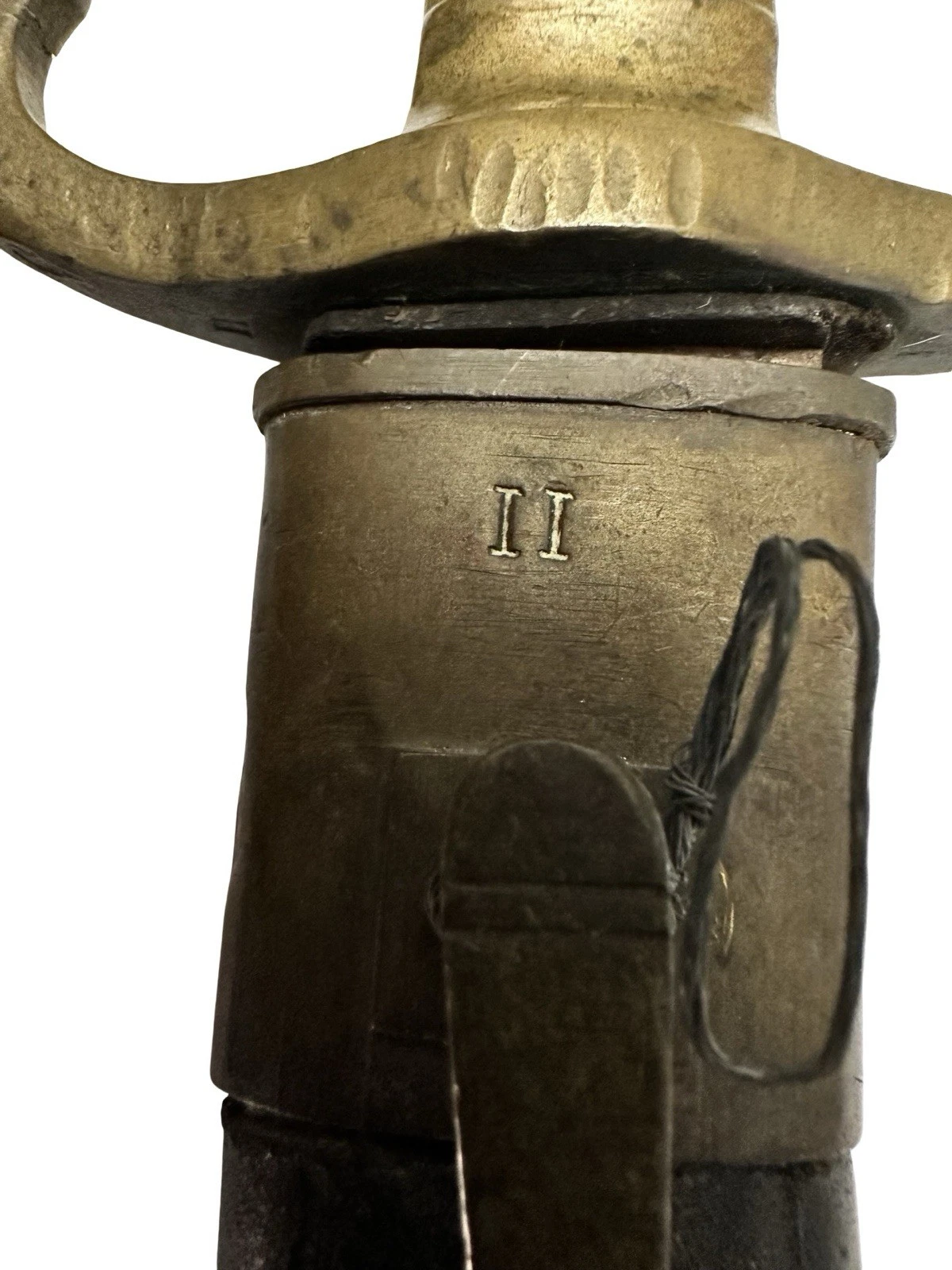
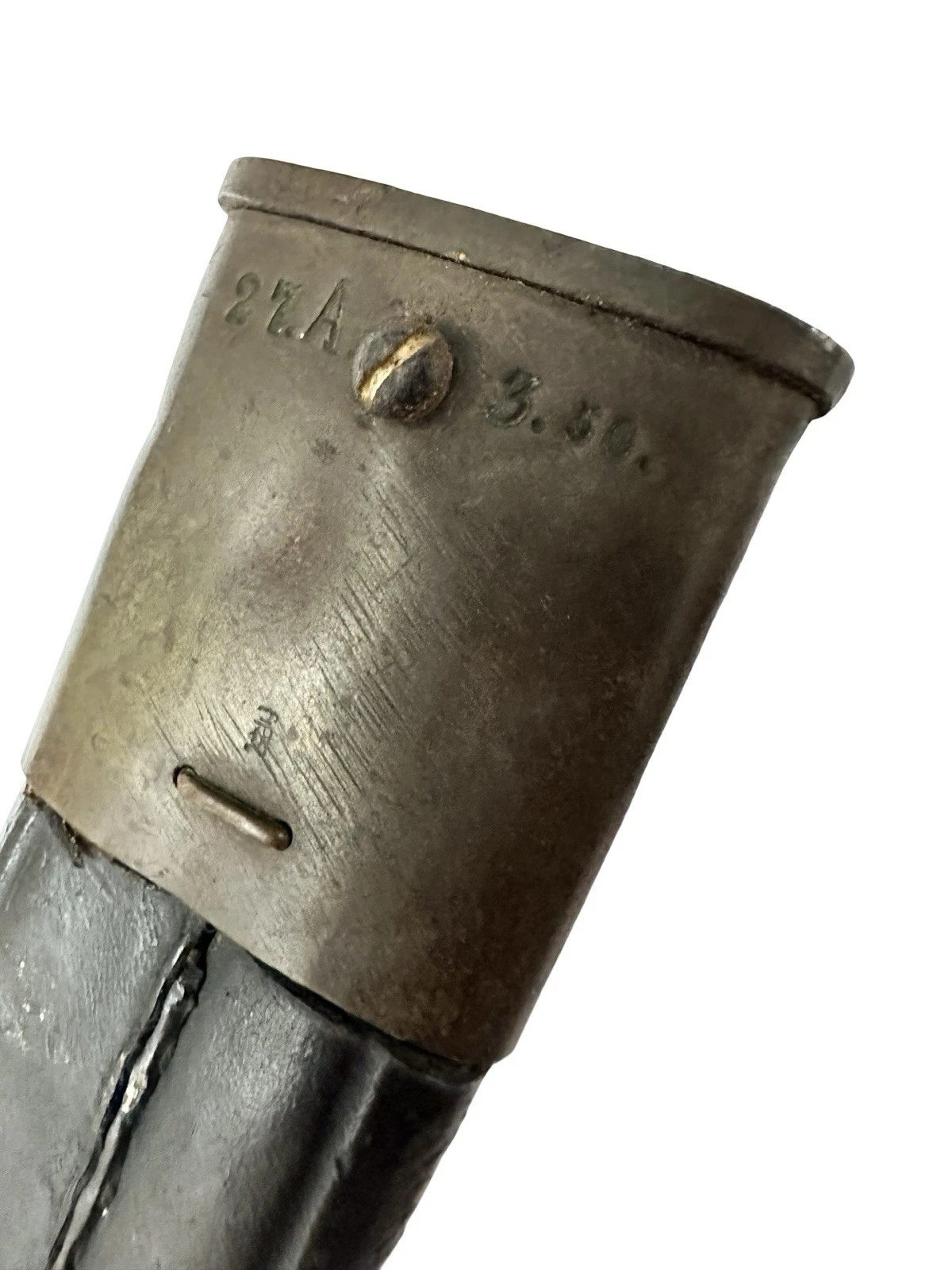
• Roman numeral “II” stamped on the scabbard throat — matching component or inspection pairing
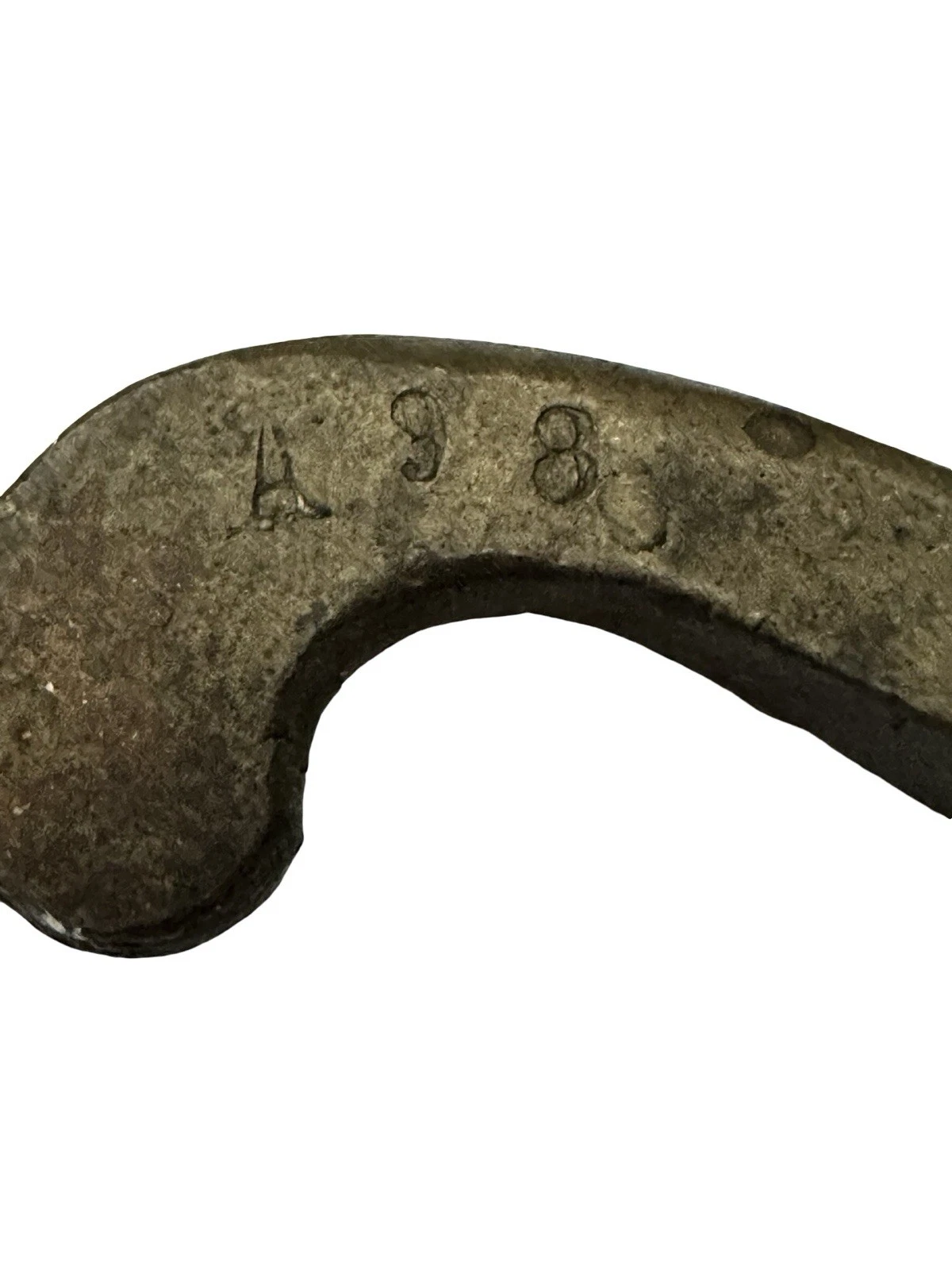
• Pommel quillon number “A 98” — another rack or depot issue number used during later service life
These layered marks reflect the typical extended military use of Faschinenmesser, often passing from active regiments to reserve formations and finally depot service.
⸻
Scabbard (Original & Complete)
The sword is housed in its original Prussian military scabbard, a highly desirable survival:
• Heavy black leather body in three reinforced vertical channels — a diagnostic Prussian feature
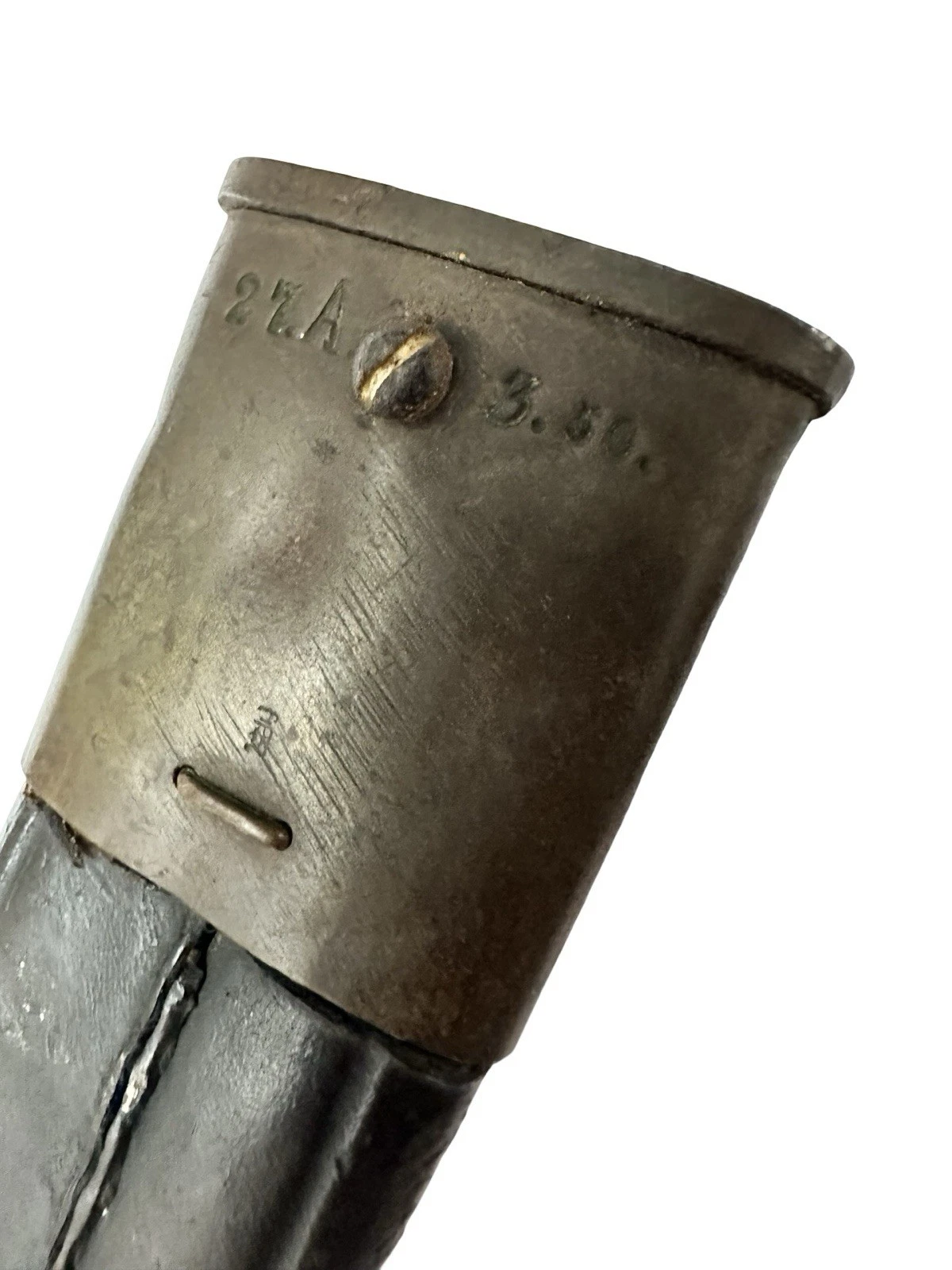
• Brass throat with clear regimental marks:
“27 A 3.30.”
Likely representing a later reassignment to a 27th Artillery or 27th Army Corps depot
• Brass drag with domed finial, correct for mid-century manufacture
• Stitching and leather remain intact with expected age wear
Original scabbards for these swords are becoming increasingly scarce, especially ones that retain legible stamps.
⸻
Condition
• Blade exhibits uniform patina and light tool wear consistent with period use
• Brass hilt and guard show attractive, untouched mustard coloring
• All markings remain legible and are not overstamped or defaced
• Scabbard fully intact with original brass fittings and no modern repairs
• No reproduction parts — entirely authentic throughout
This is a textbook example of a well-used, well-preserved Prussian military utility sword.
⸻
Historical Context
The M1845/M1865 Faschinenmesser served through:
• The Revolutions of 1848
• The Austro-Prussian War (1866)
• The Franco-Prussian War (1870–71)
• Continued service into the early Imperial German period for depot and artillery duties
Its rugged build made it a practical tool and a symbol of enlisted ranks within both infantry and artillery formations.