
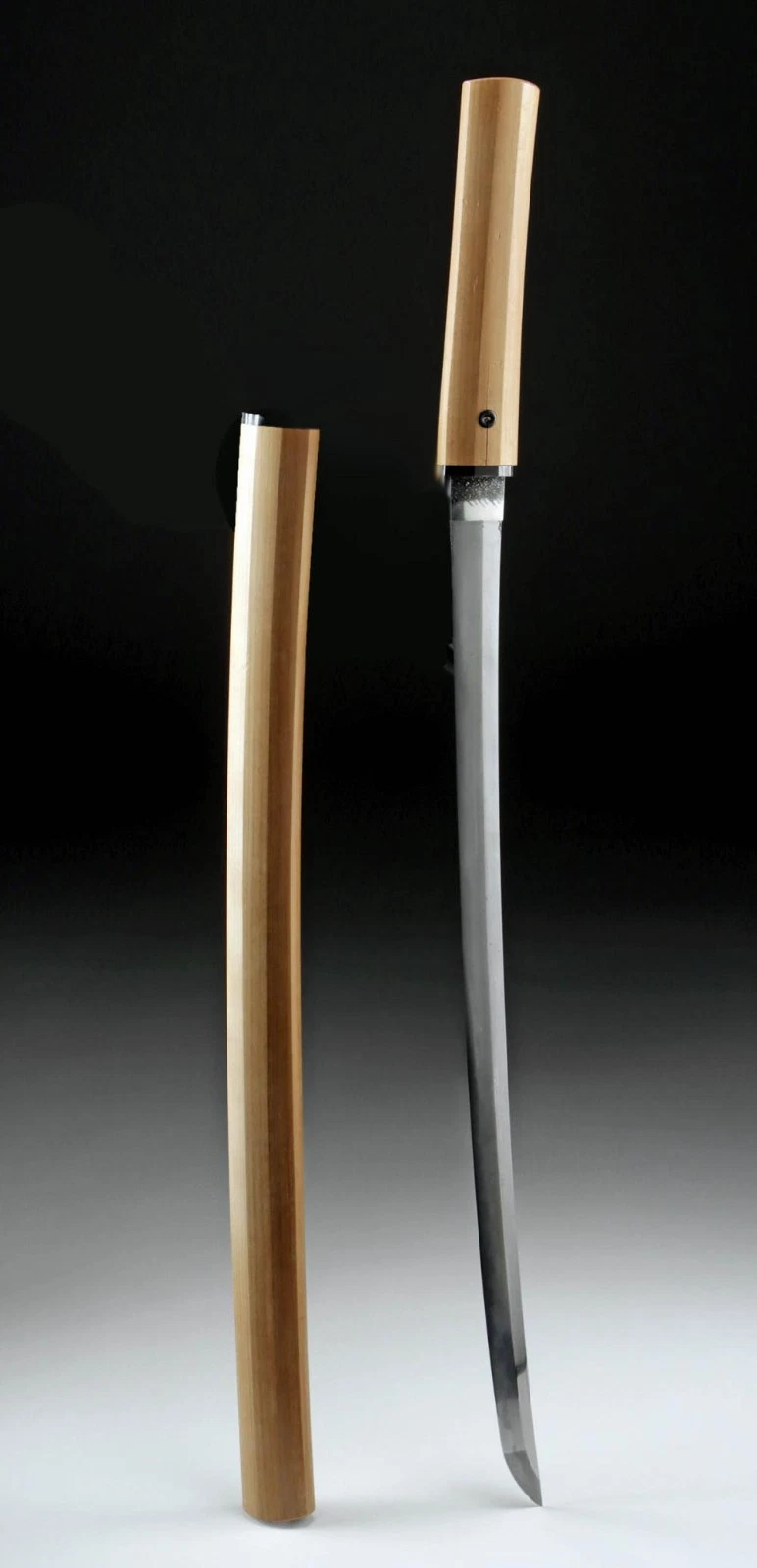
Early Edo Era Samurai Wakizashi Sword – Beautiful Hamon on Long blade
$1,700.00 CAD
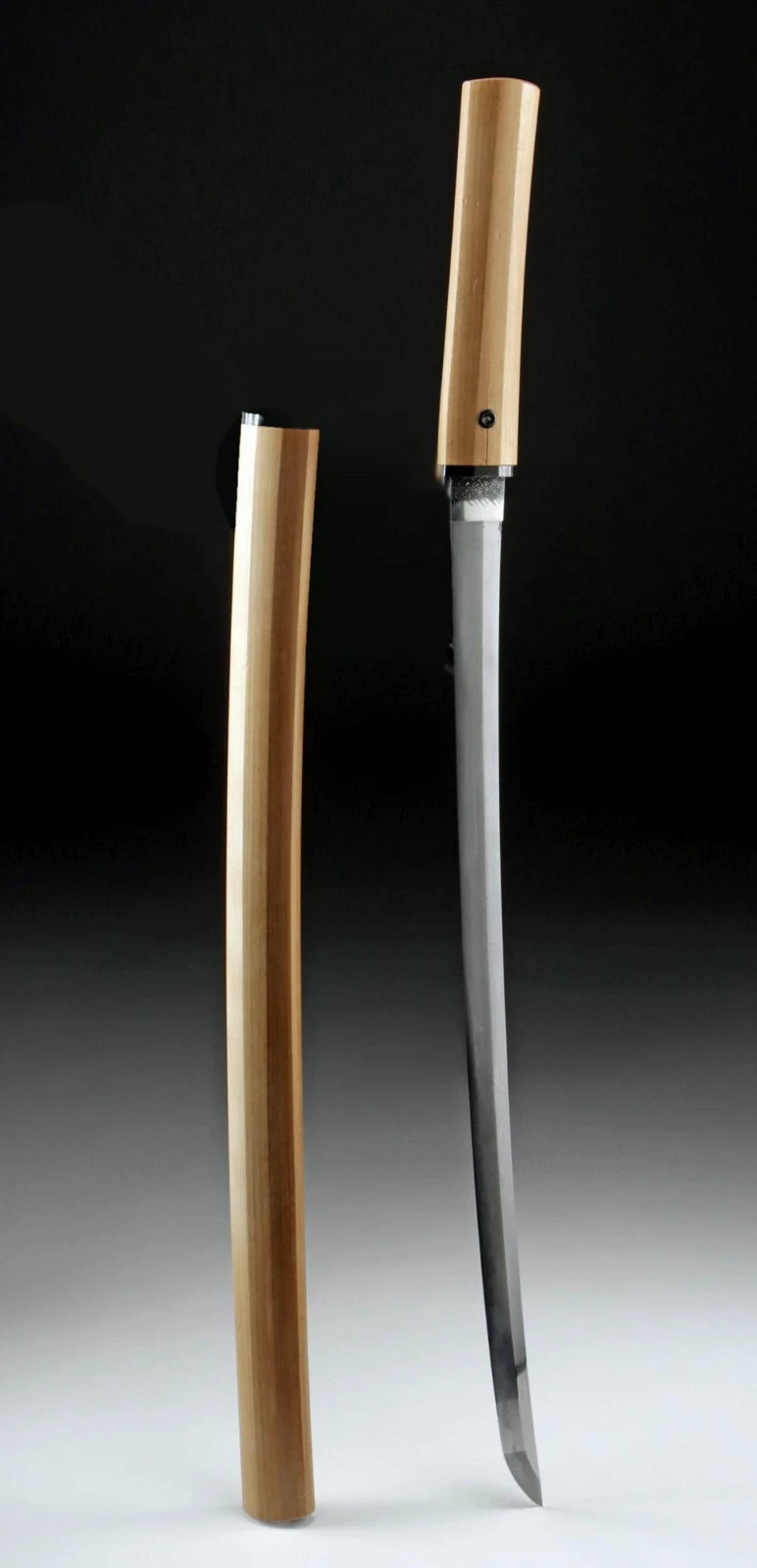
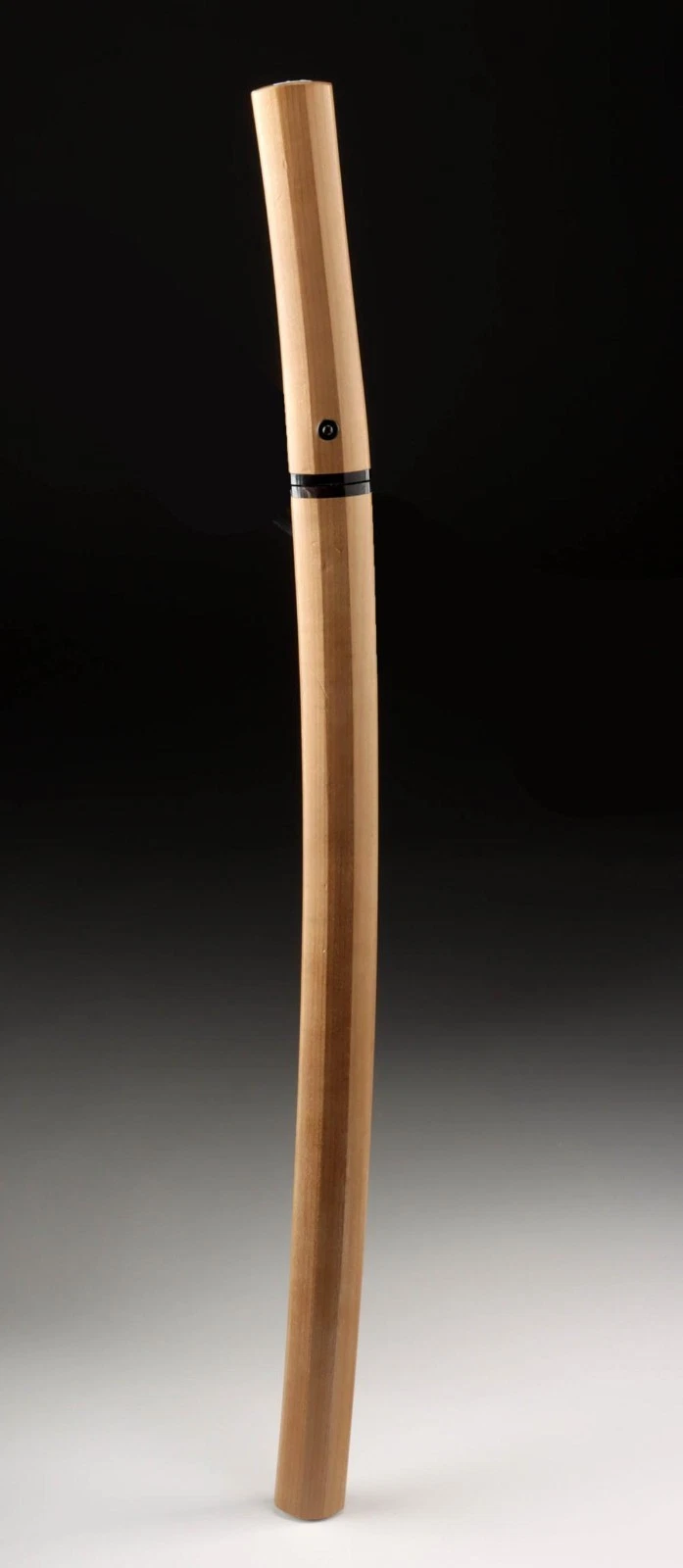
Japanese Wakizashi in Shirasaya
Japan, Edo period, ca. 17th–18th century AD
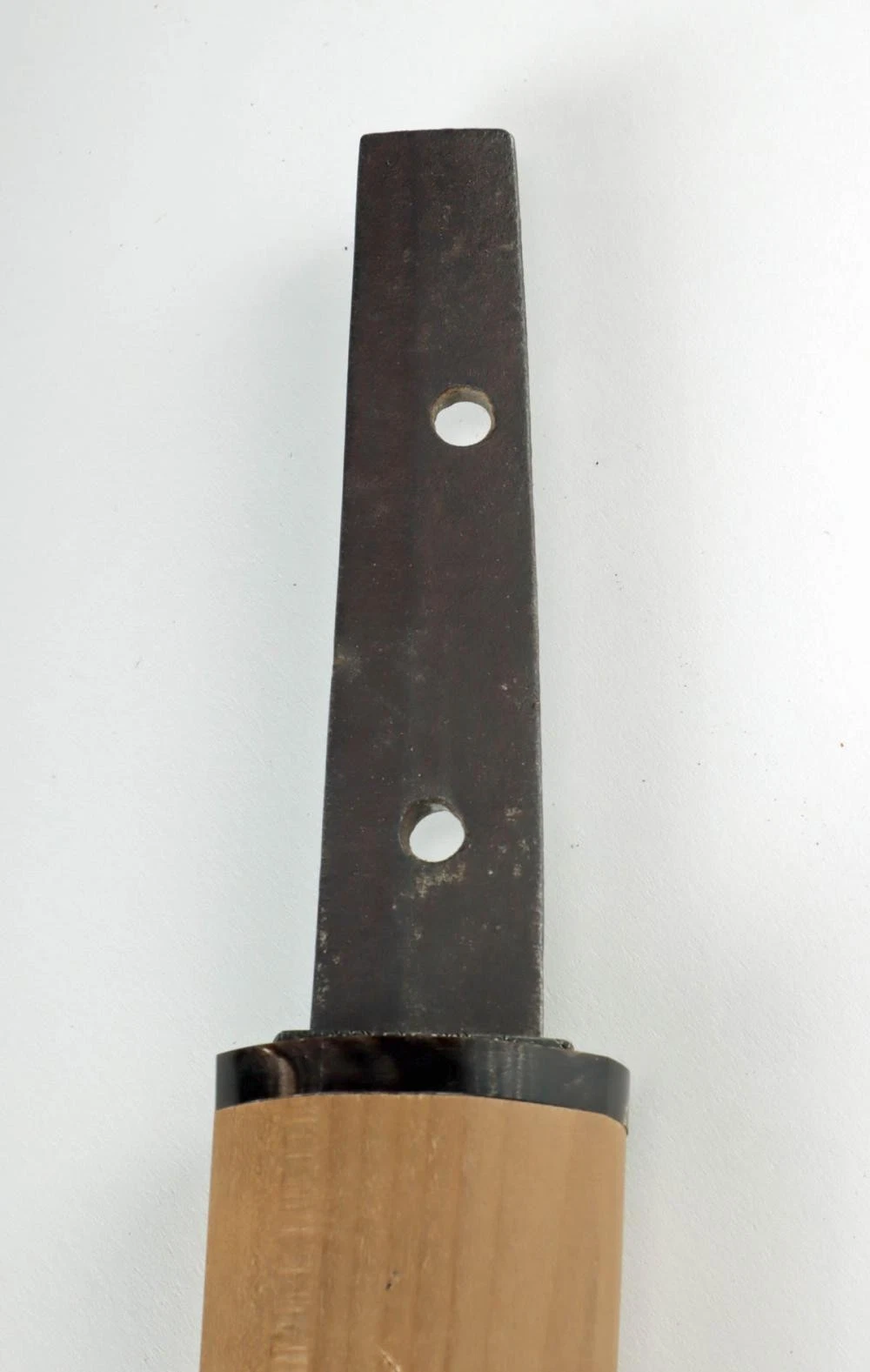
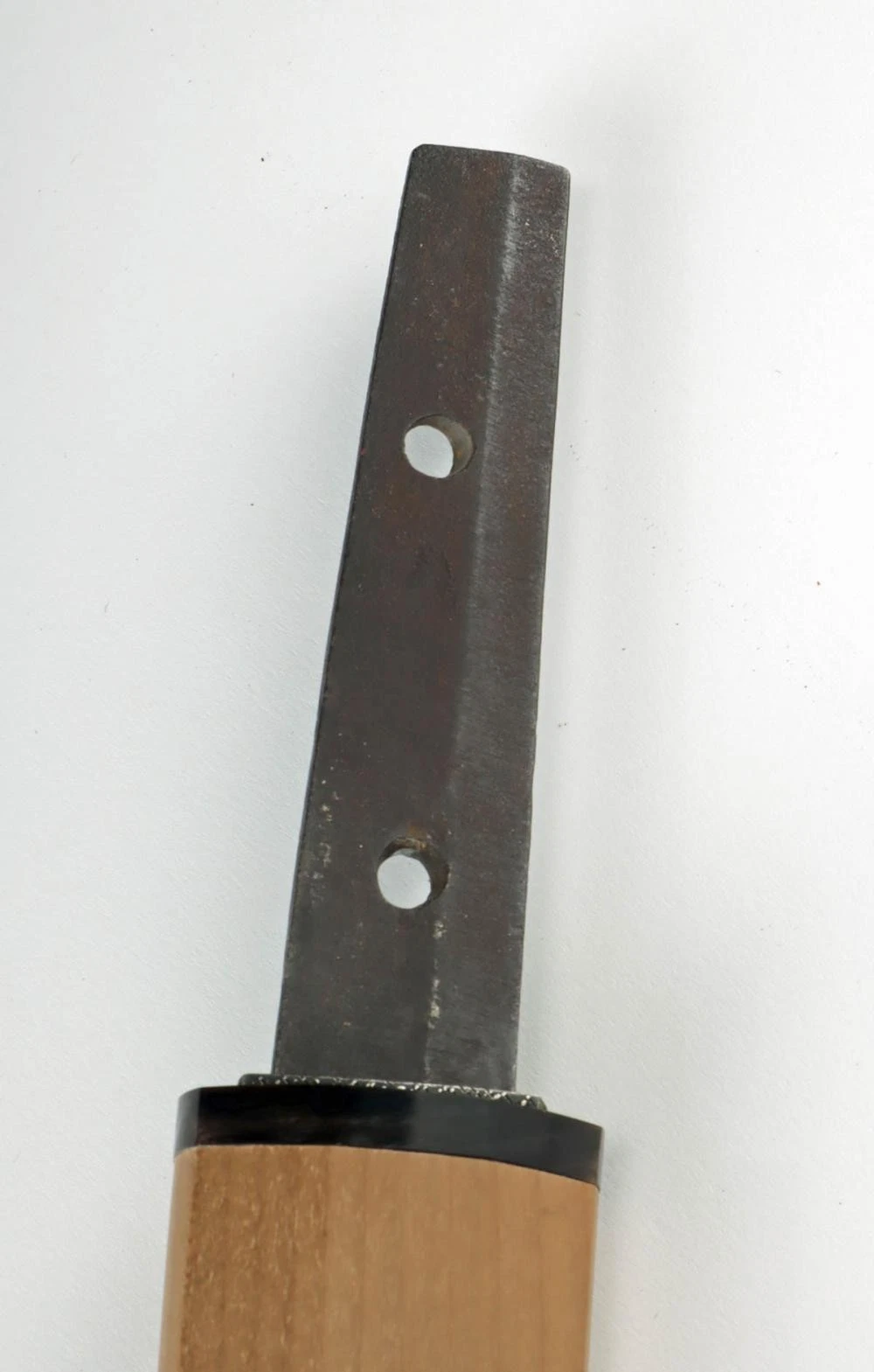
A wakizashi housed in a plain wooden shirasaya. The tang (nakago) is mumei, pierced with two mekugi-ana, and shows a deep, stable patina consistent with long age. The blade measures 20 inches (50.8 cm) in length and is mounted with a near-pure silver (99%) habaki collar.
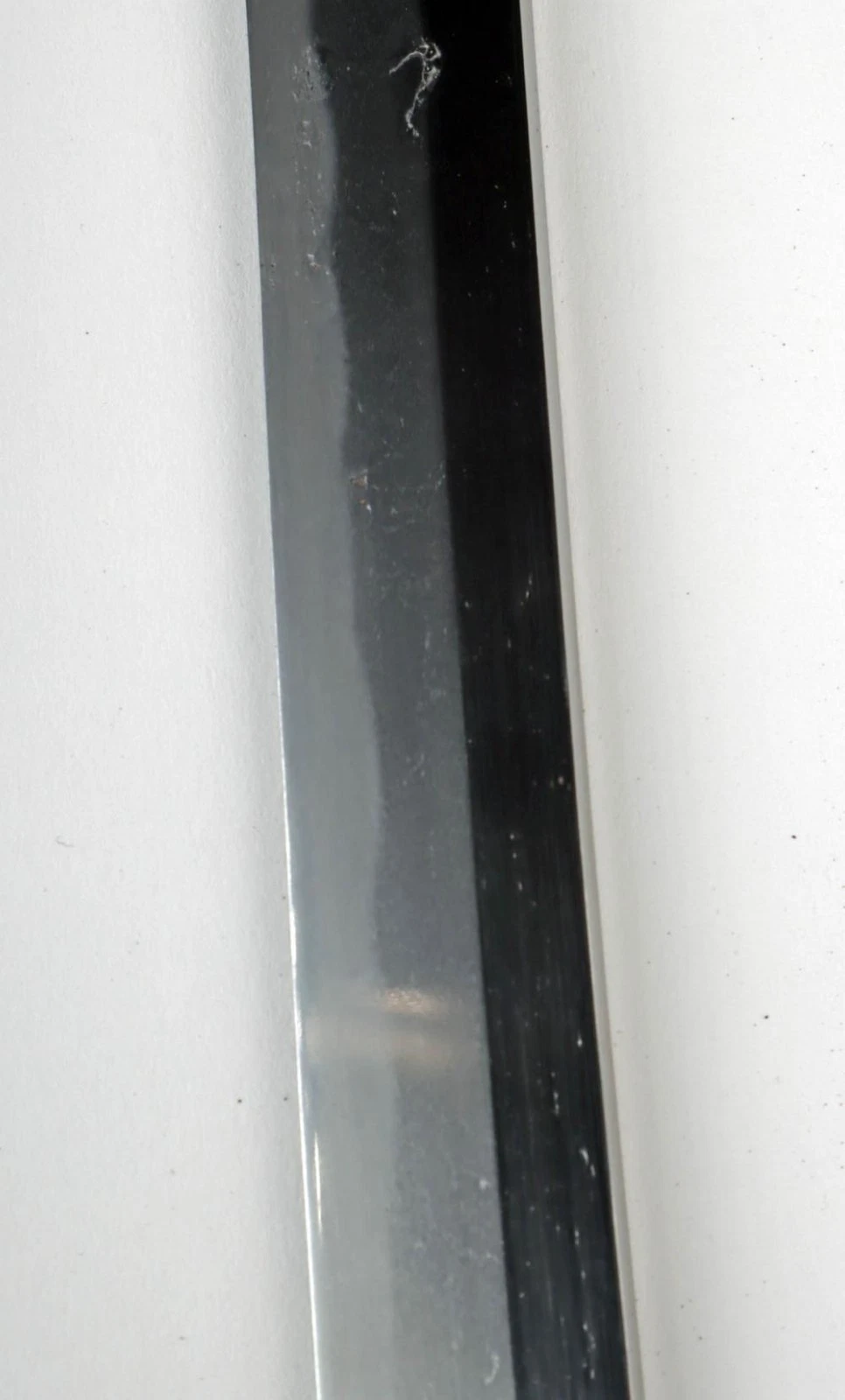
The jigane is a refined itame hada with flowing areas of masame, giving the steel surface depth and activity beneath the polish. The hamon is a gently undulating notare, with a luminous and well-controlled nioiguchi. Fine nie appear intermittently, adding brilliance and liveliness to the hardened edge. The boshi continues the hamon in a controlled sweep, forming a rounded komaru return, indicative of careful and balanced workmanship.
The workmanship corresponds with the Mino tradition of the Edo period, particularly reminiscent of the Kanemoto lineage, where notare-based hamon and mixed itame–masame hada were standard features. The combination of a bright nioiguchi, flowing hada, and restrained komaru boshi suggest the influence of this school.
Length in shirasaya: 29.5 inches (74.9 cm).
This blade would benefit from a shinsa (sword reading) and would most assuredly be granted papers.