
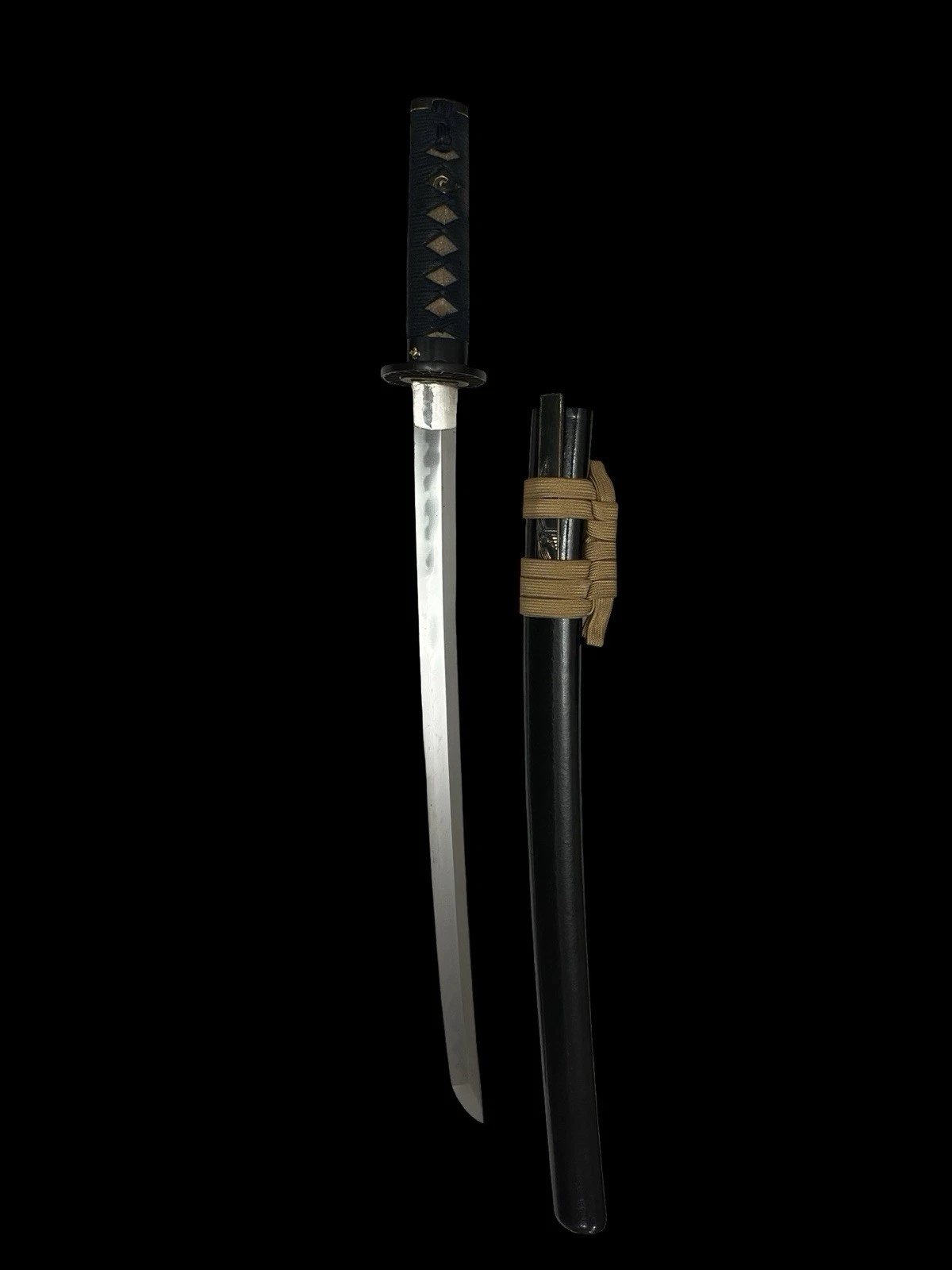
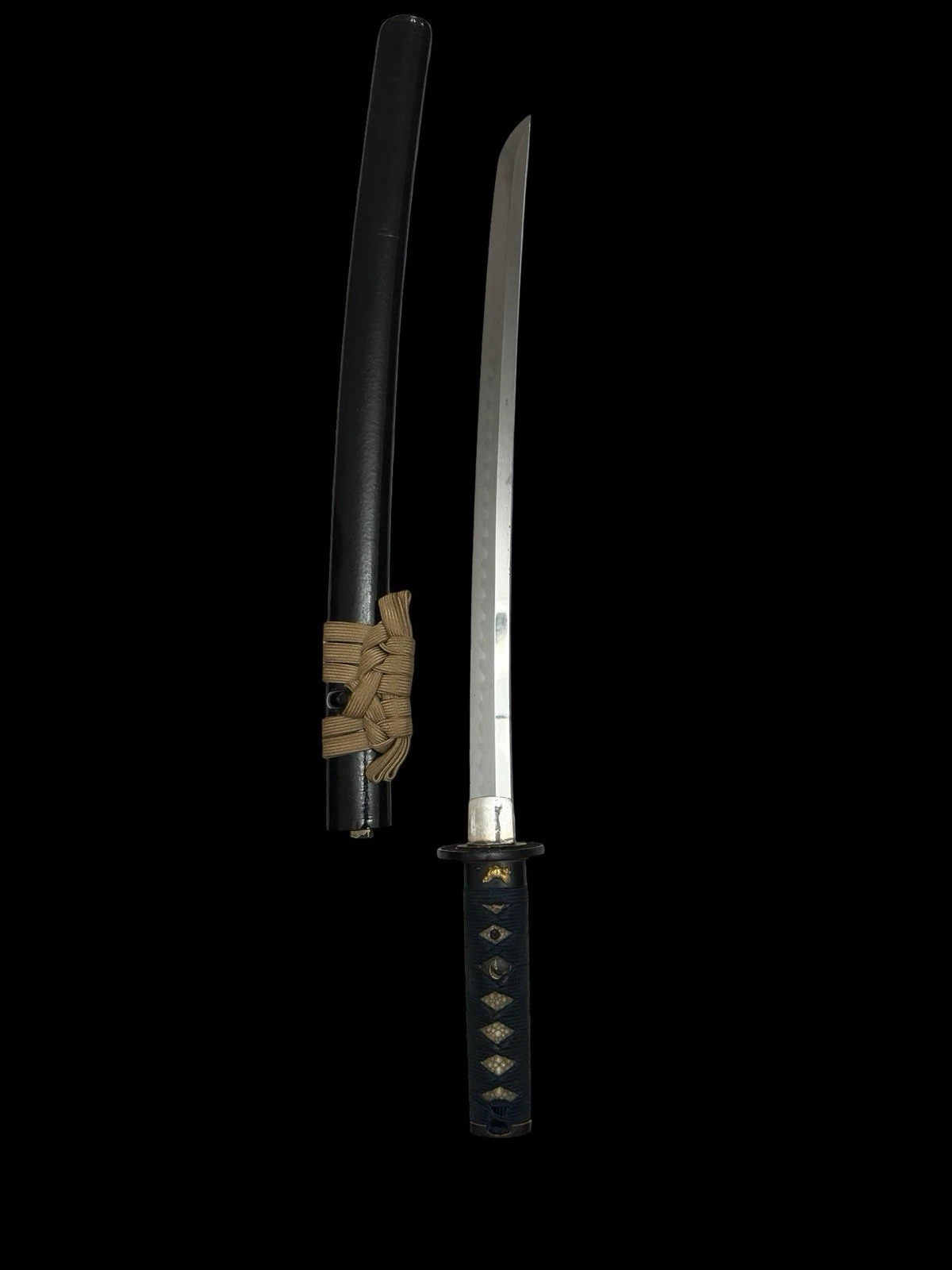
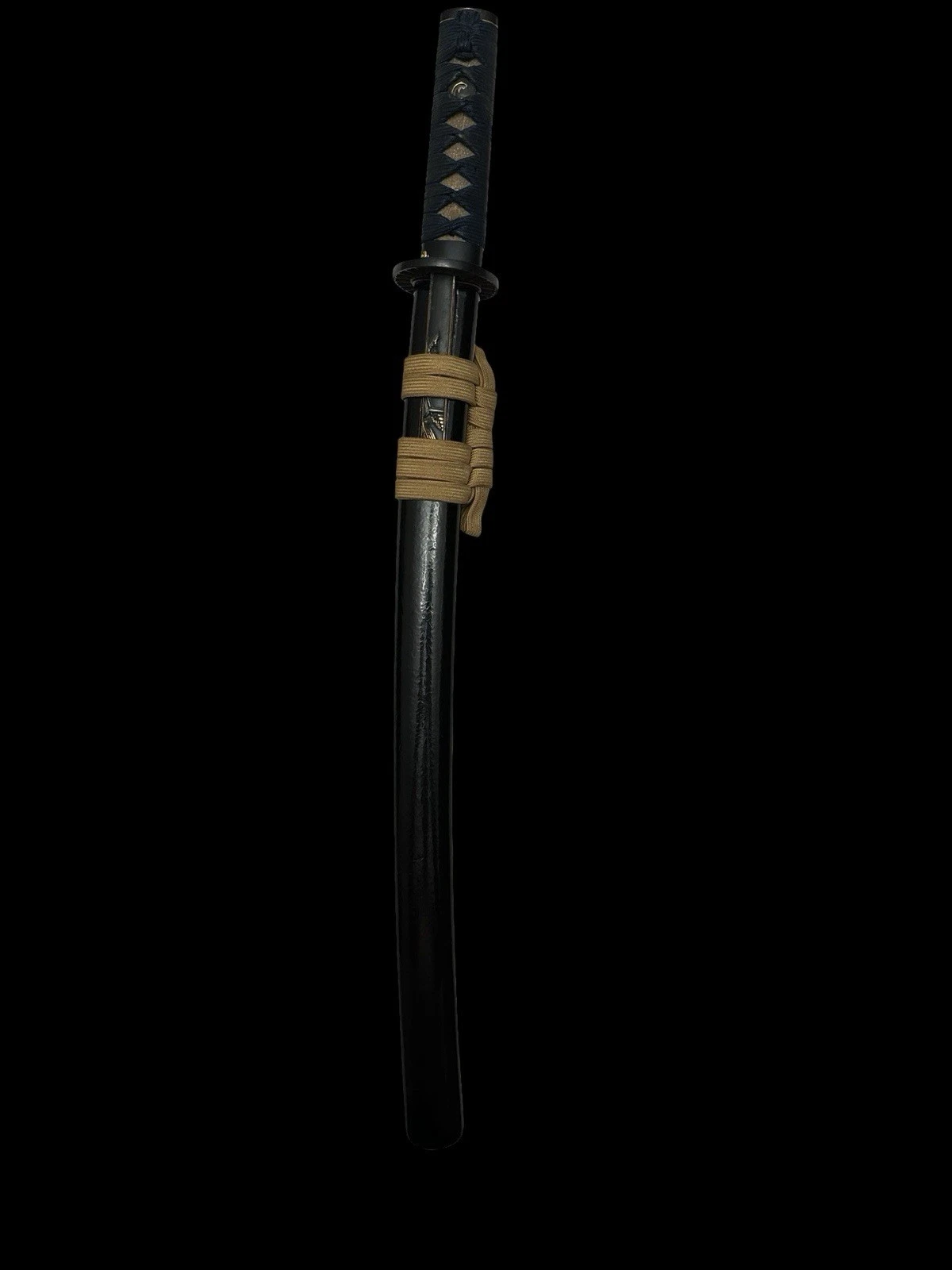
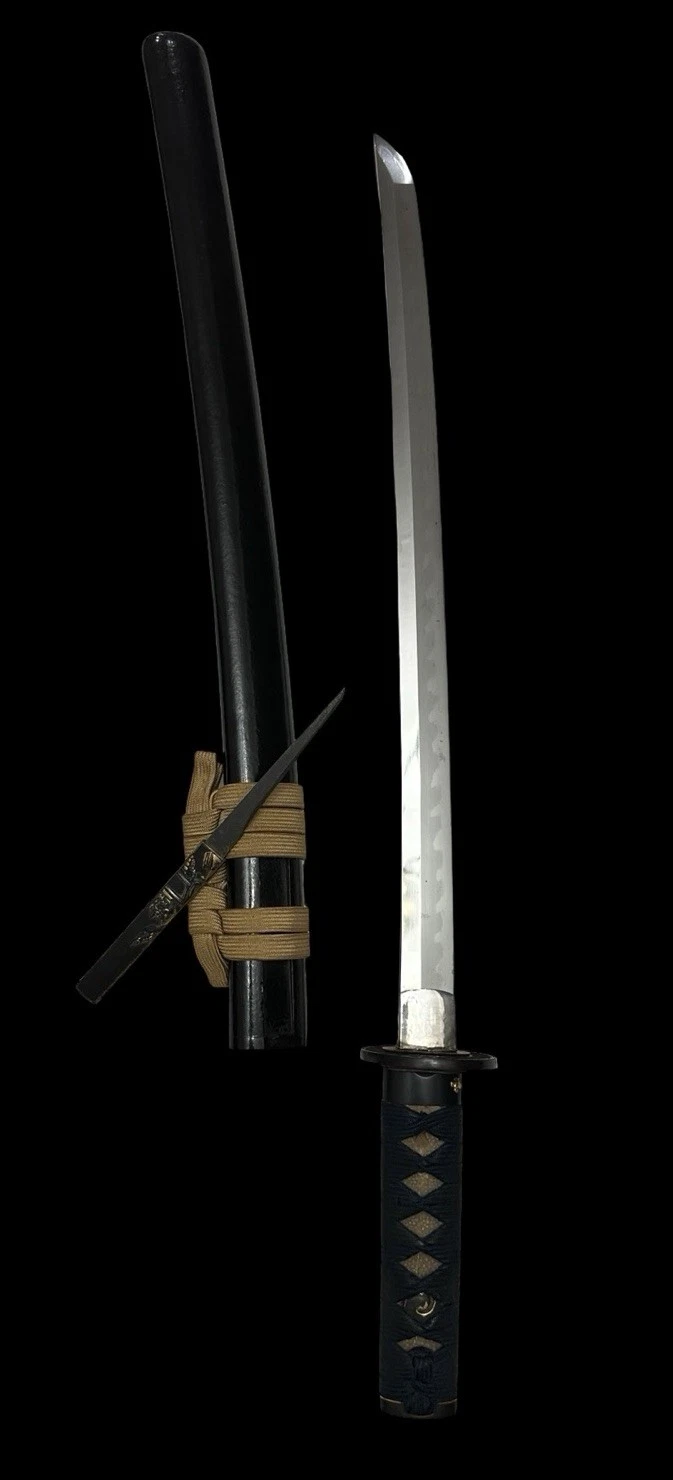
Antique 17th Century Japanese Samurai Sword – Samurai Wakizashi by Echizen Seki
$3,700.00 CAD
Echizen-Seki Wakizashi Japan, Early Edo period (17th century)
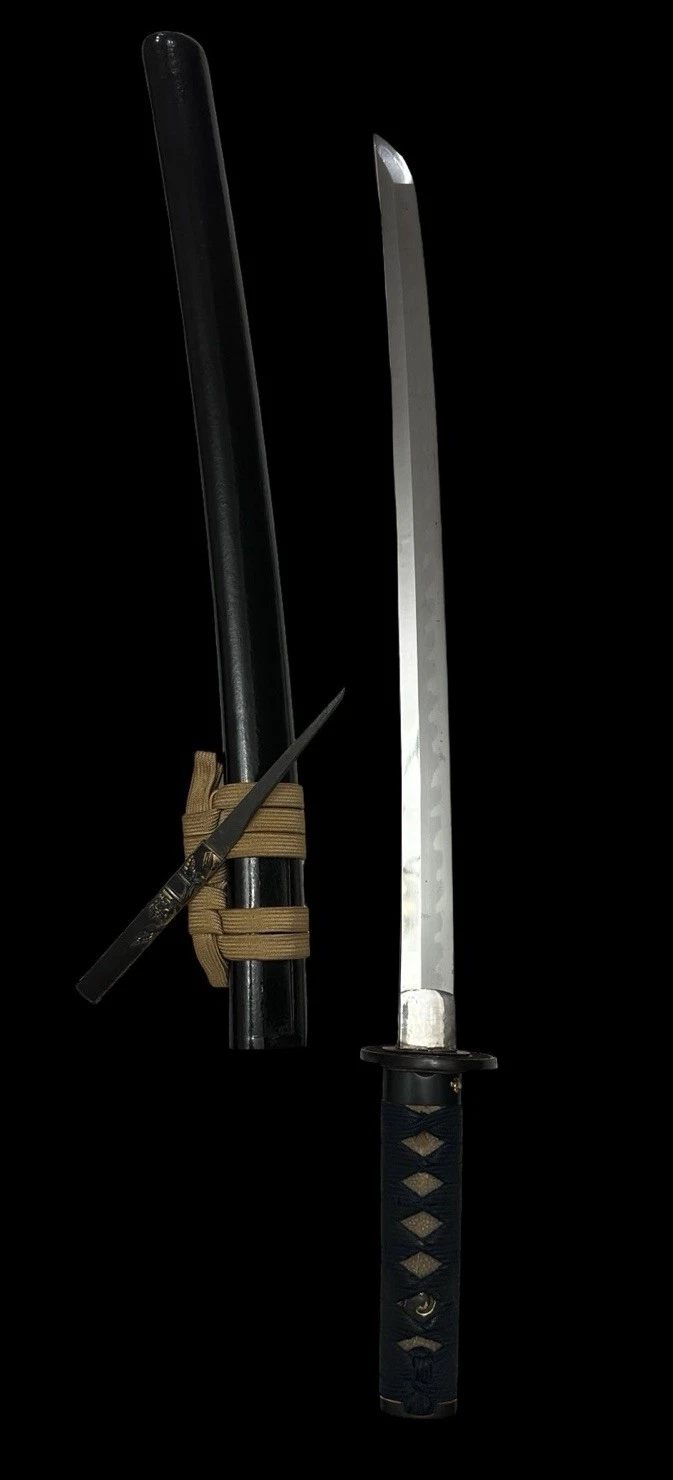
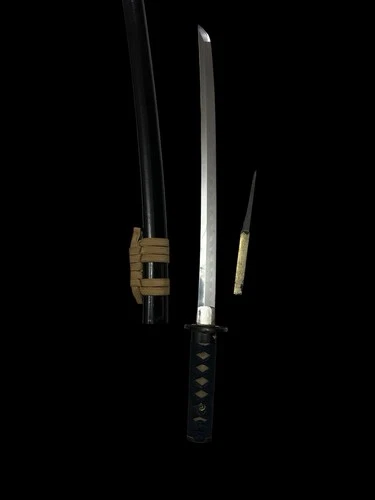
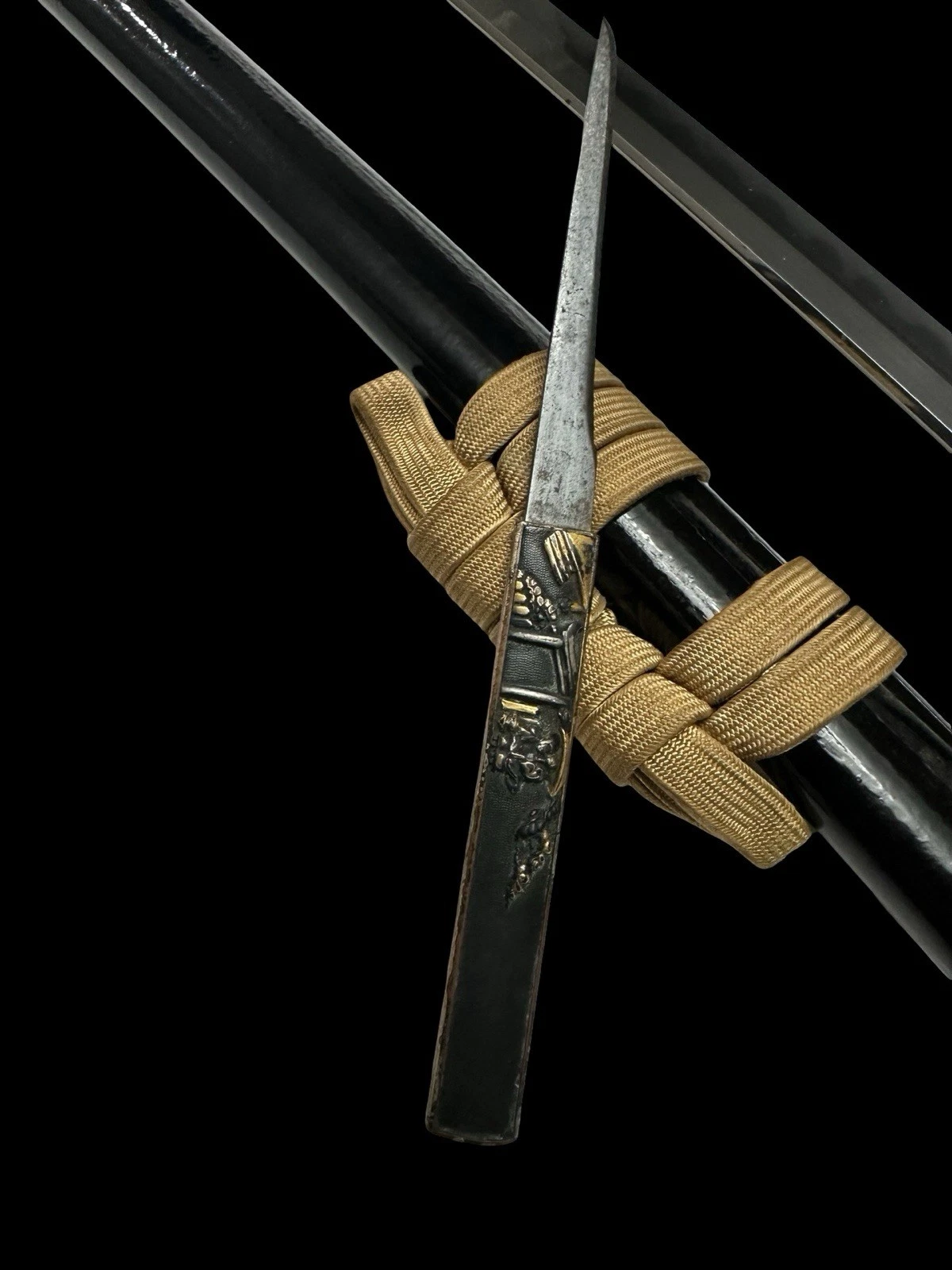
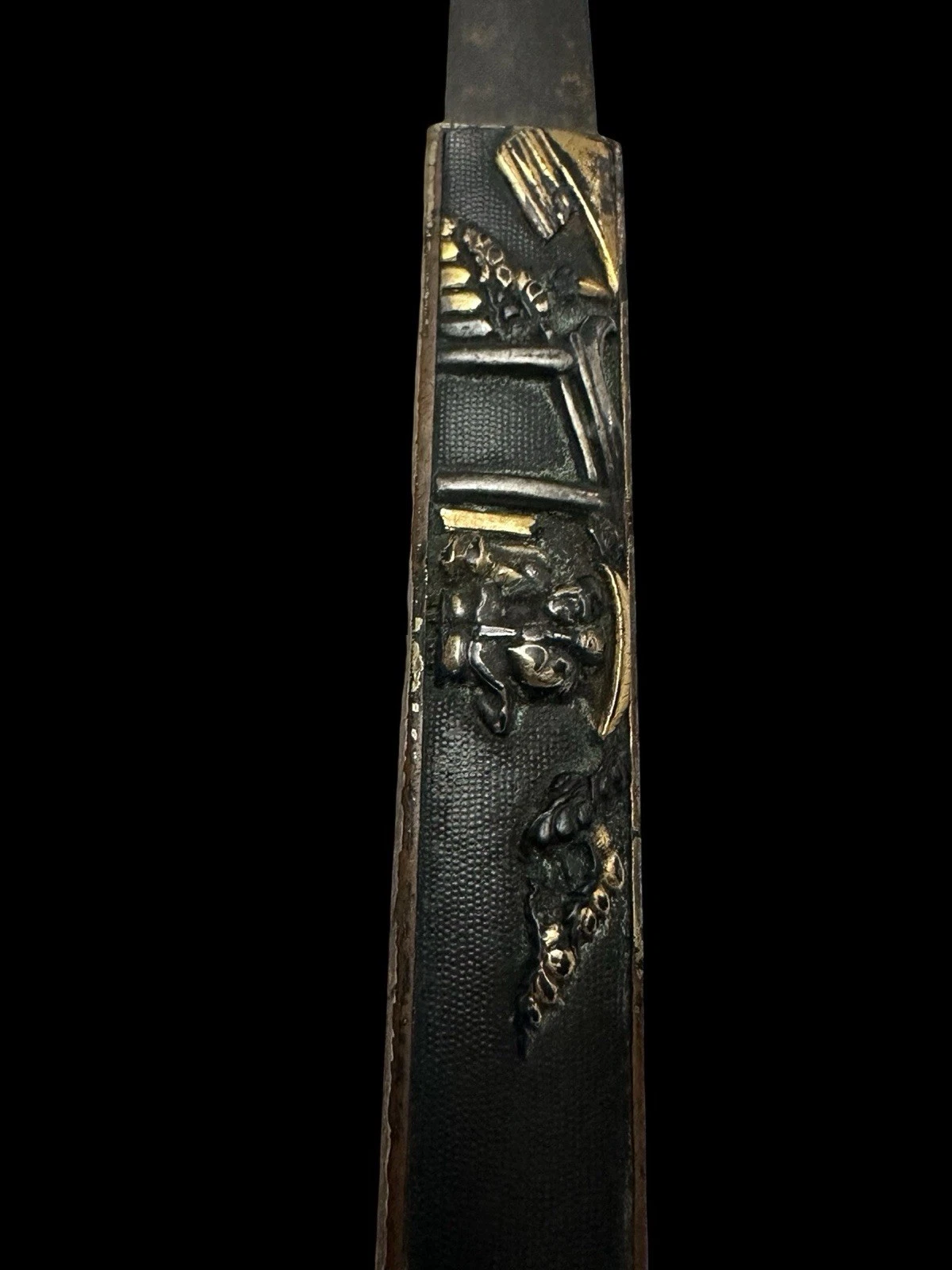
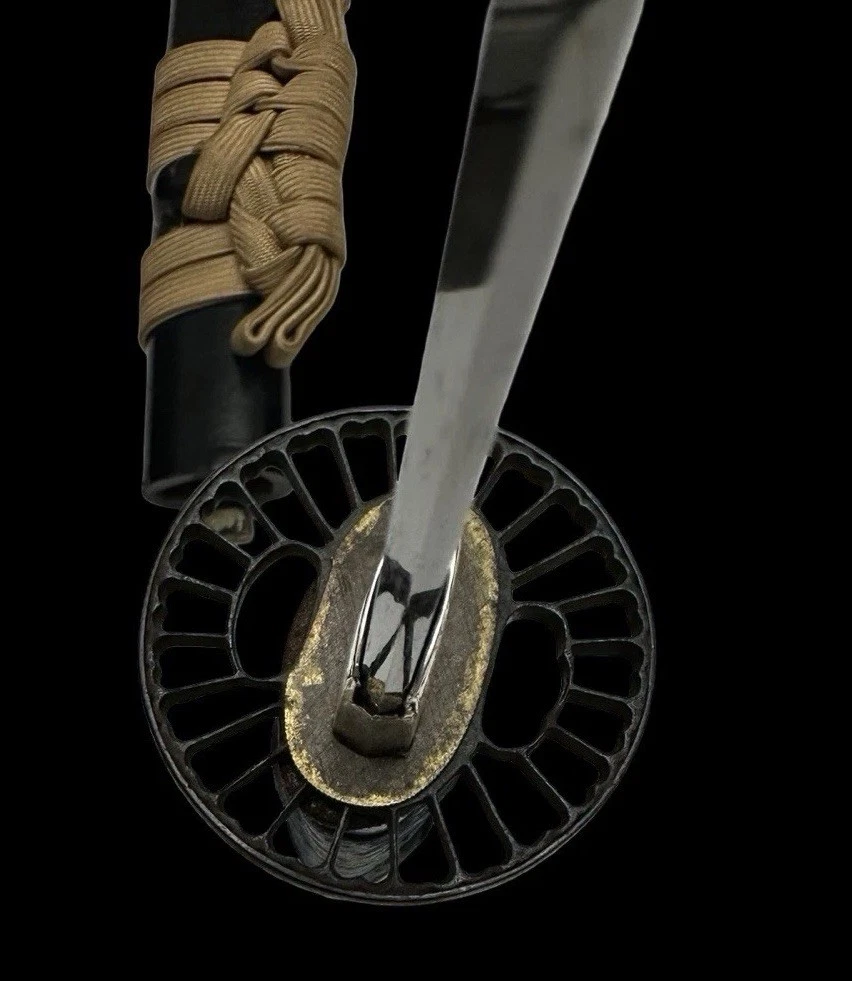
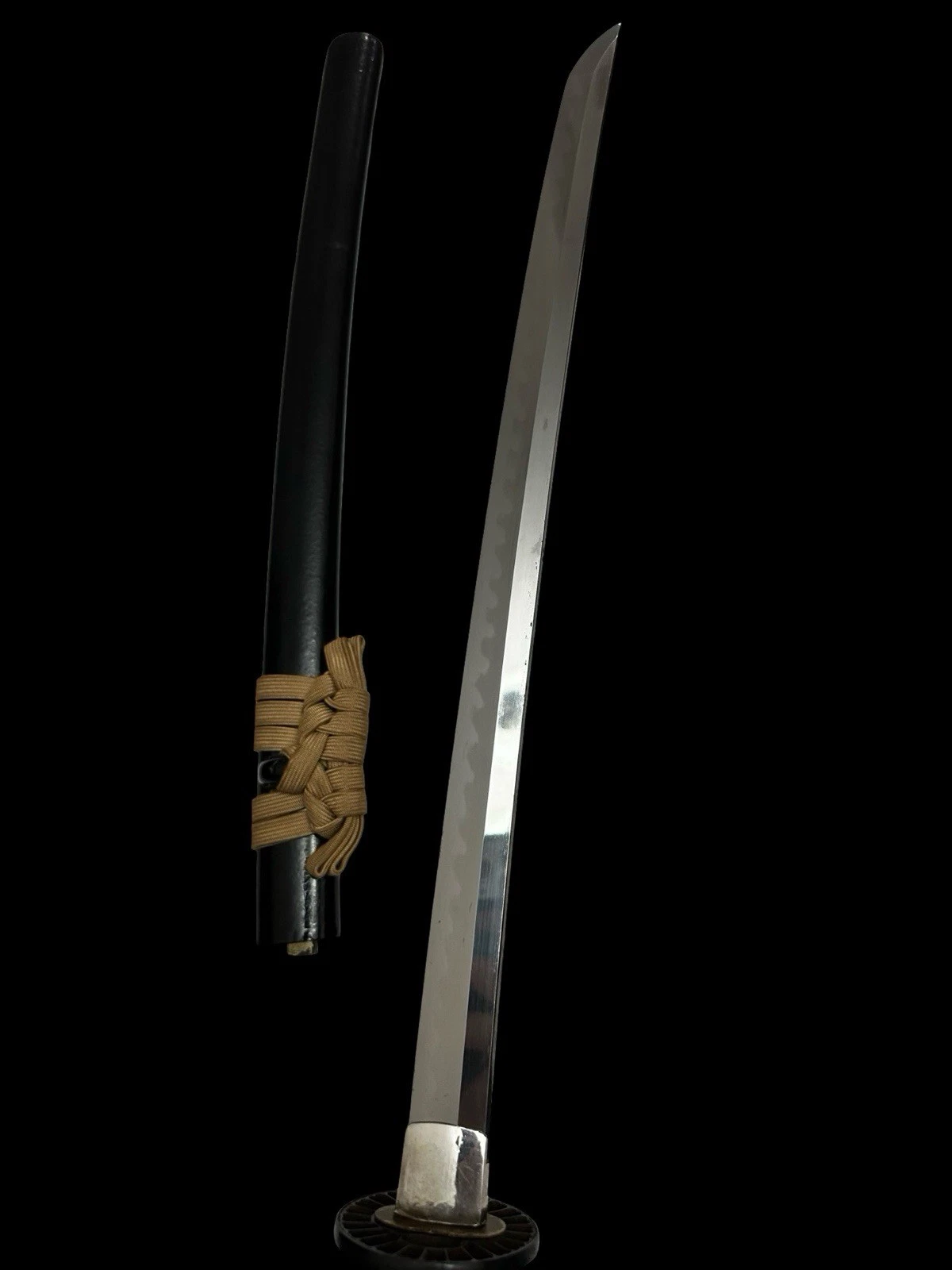
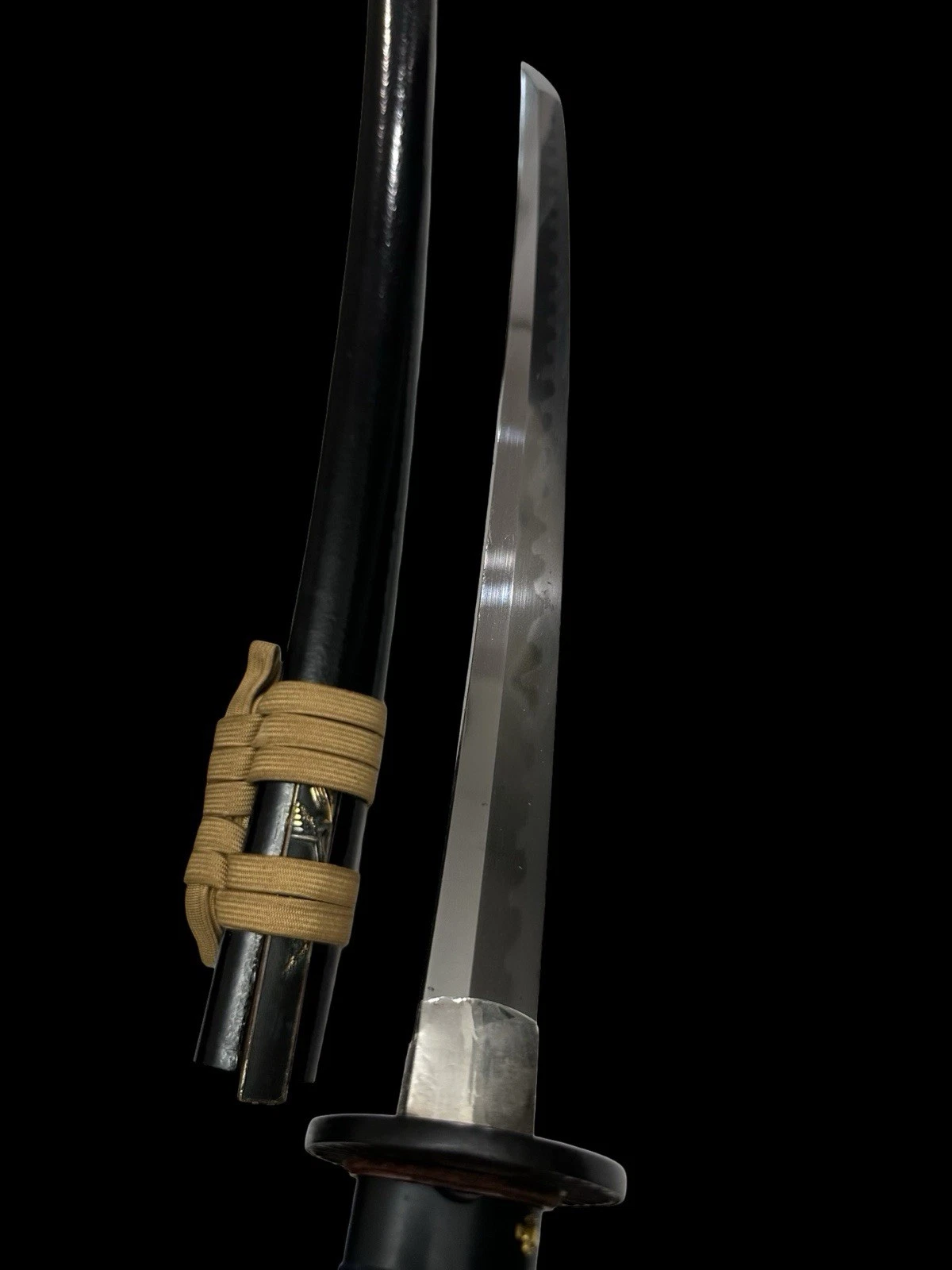
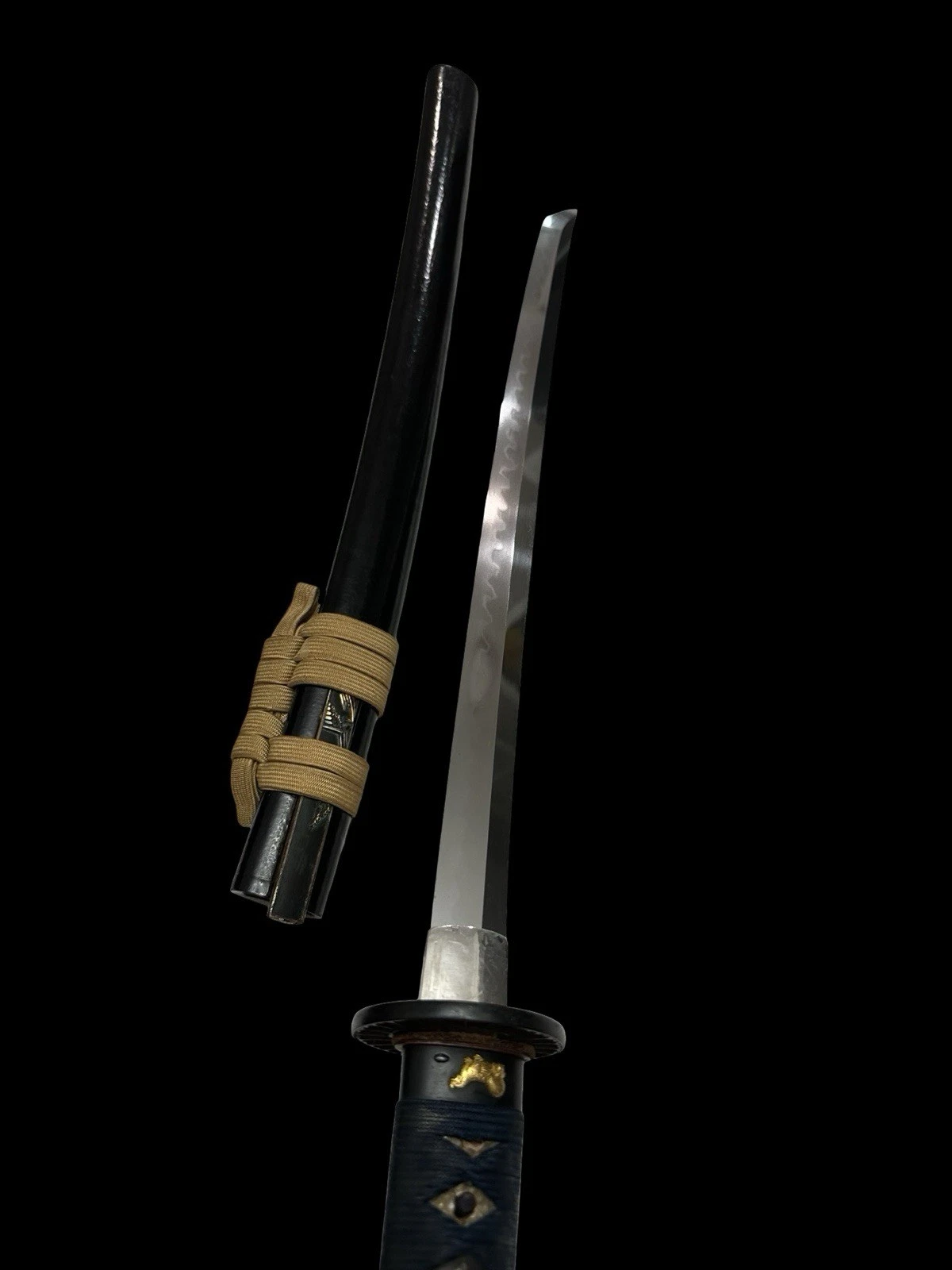
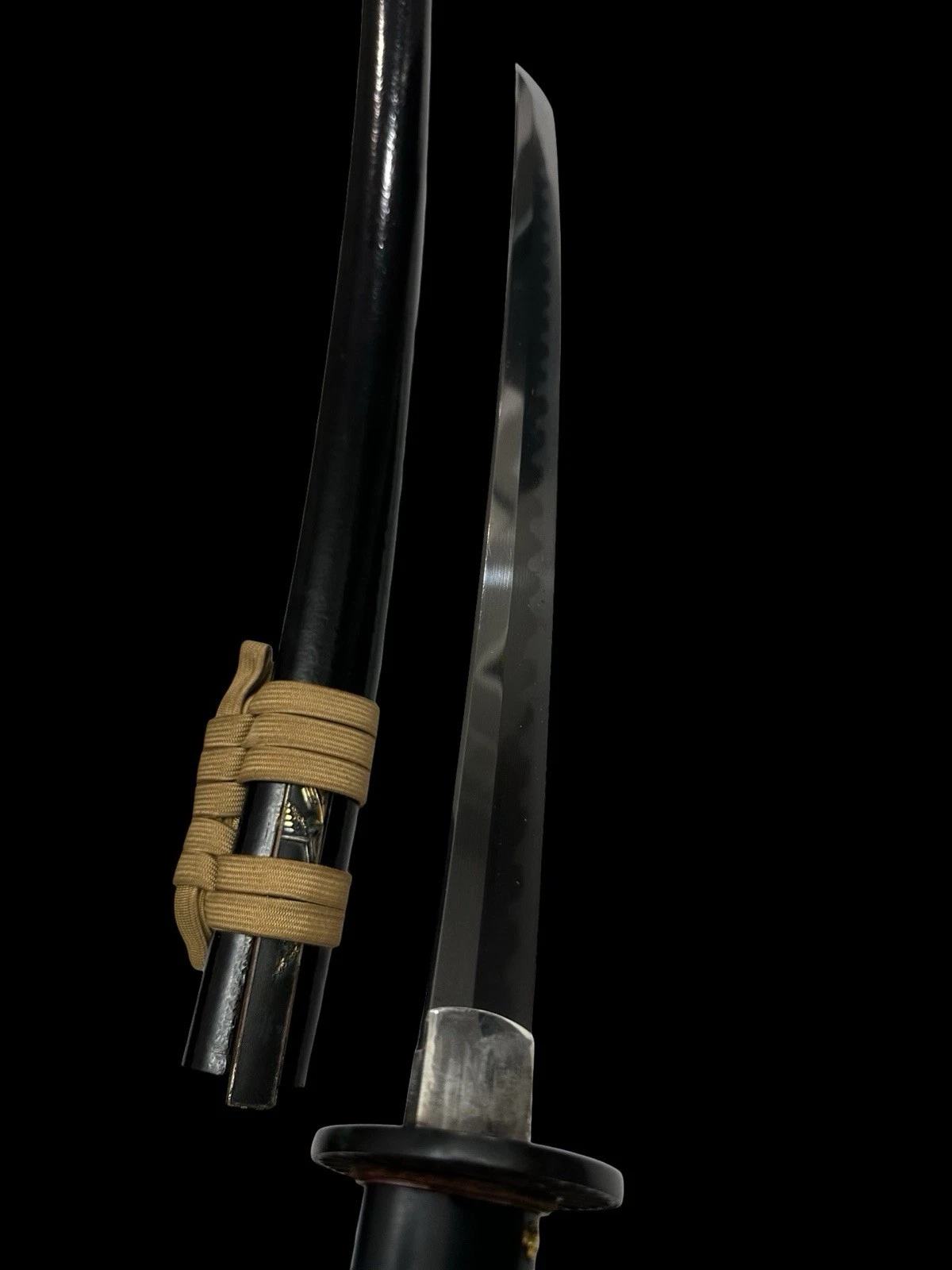
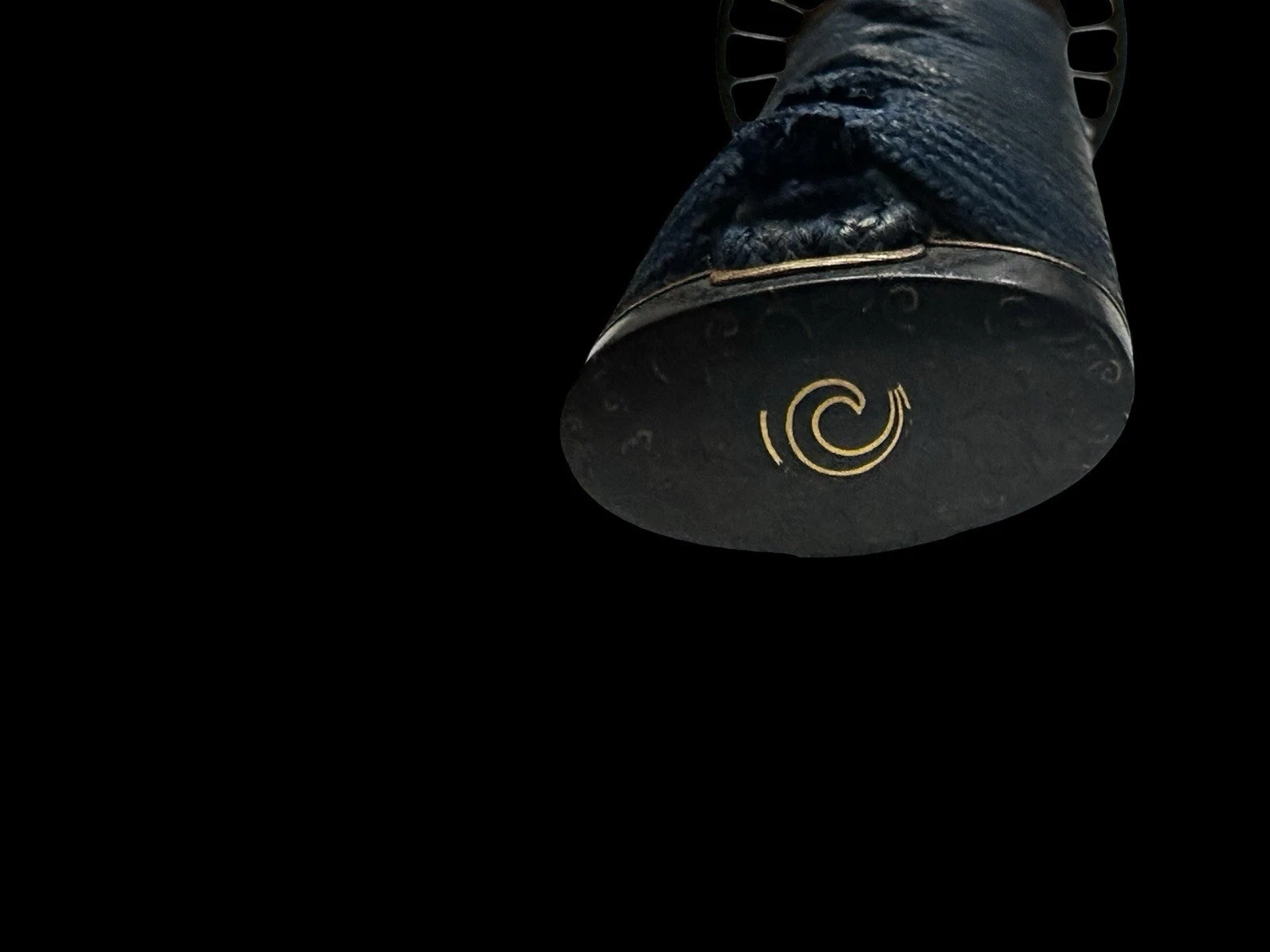
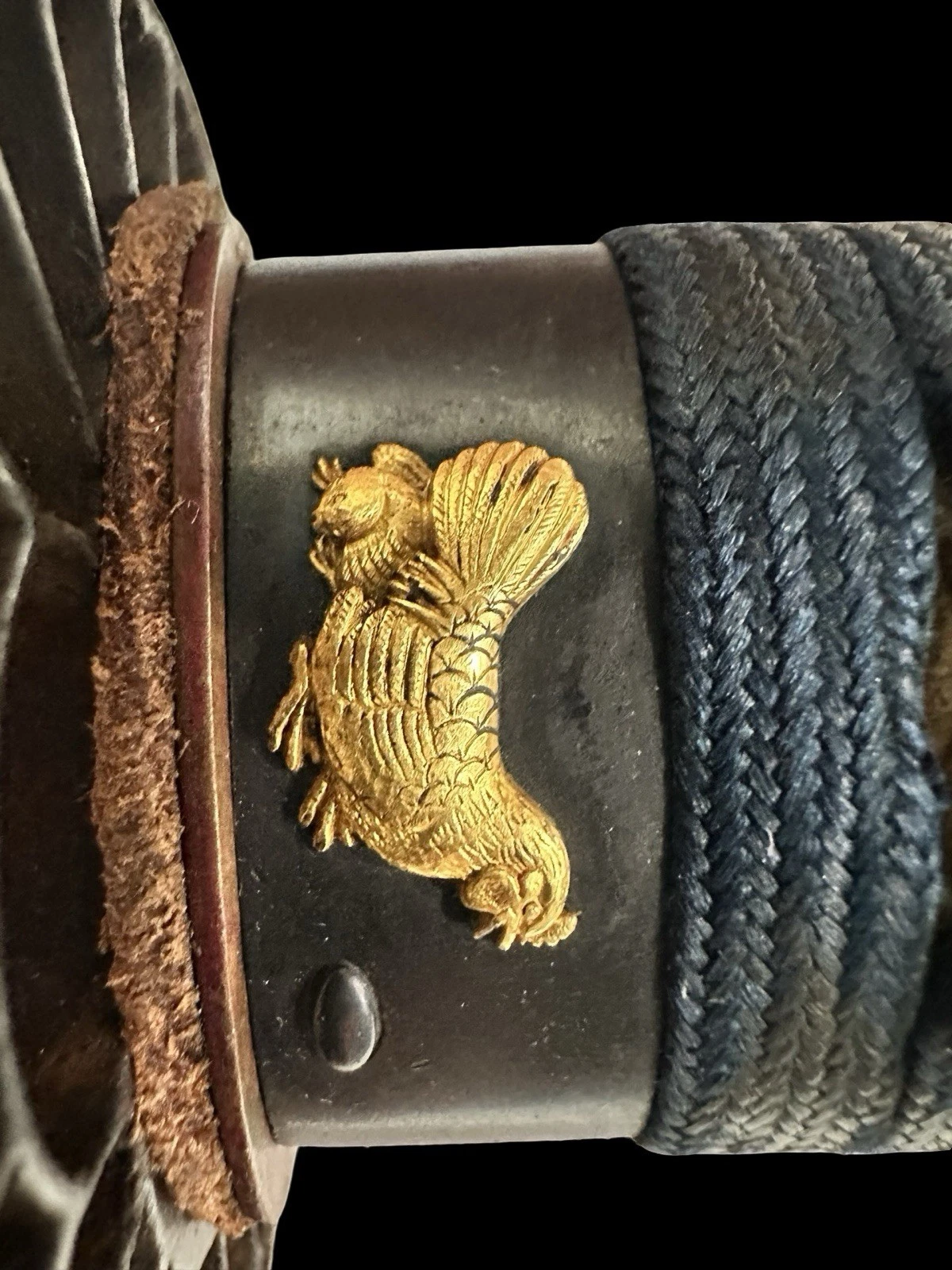
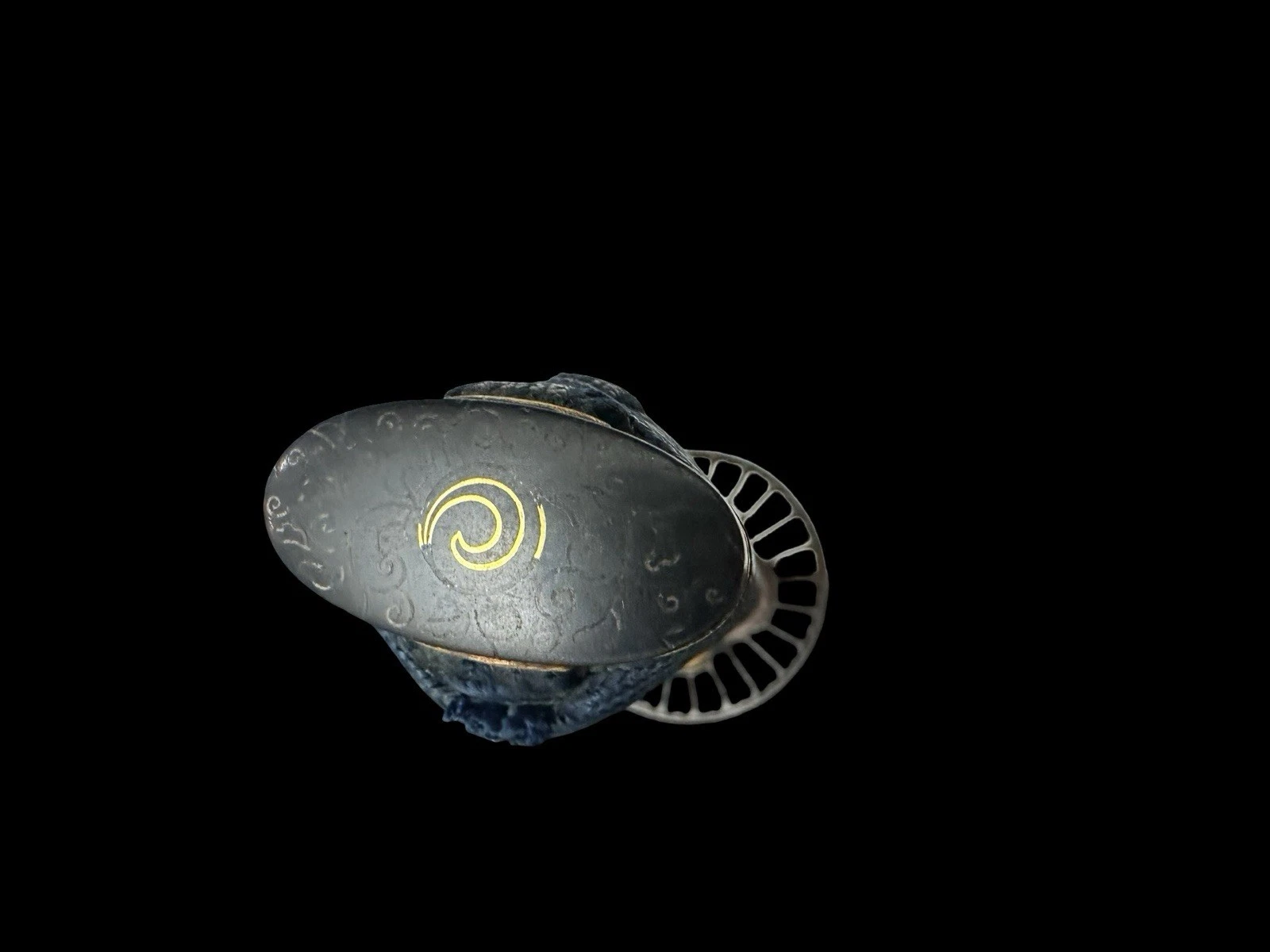
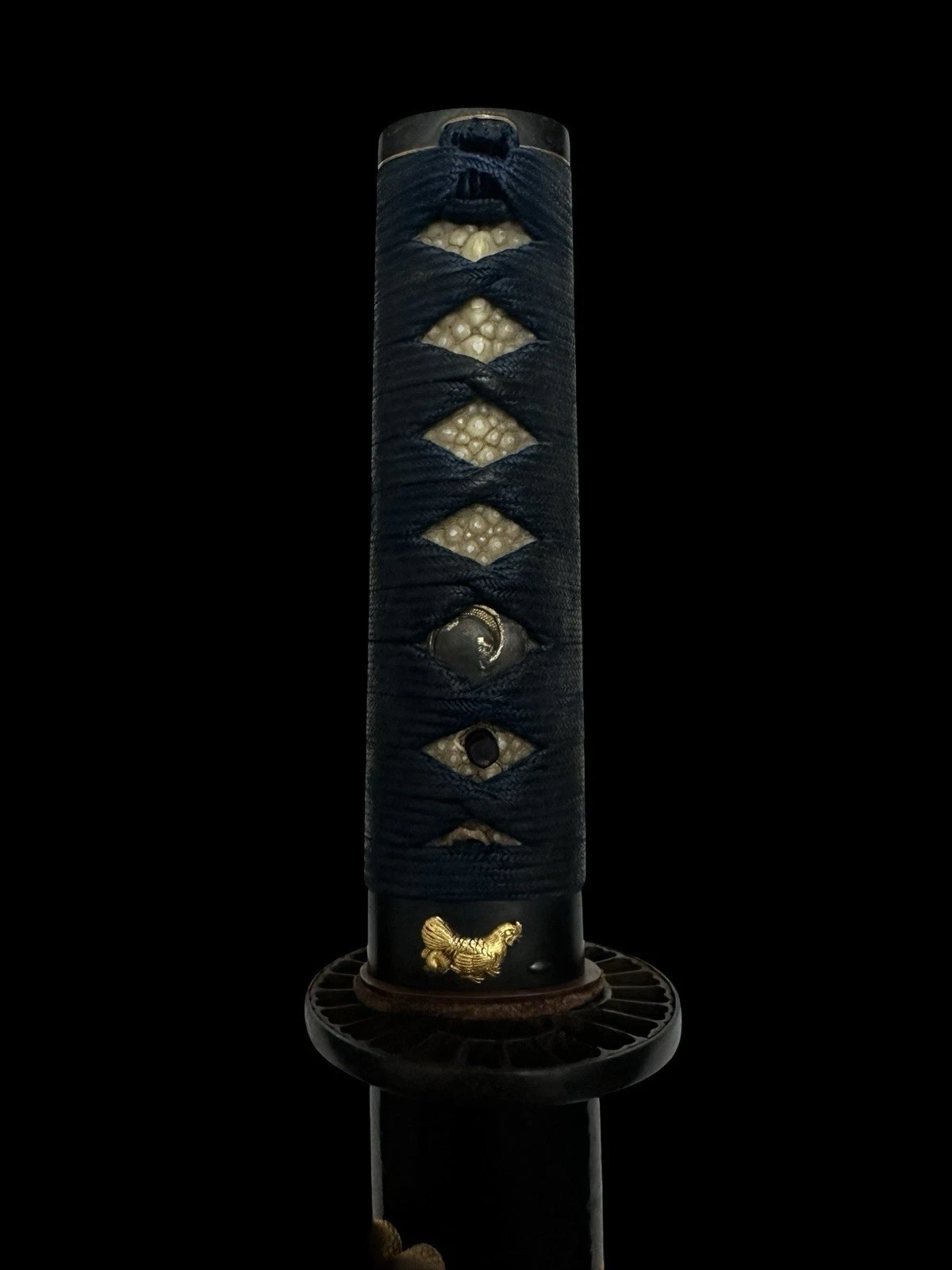
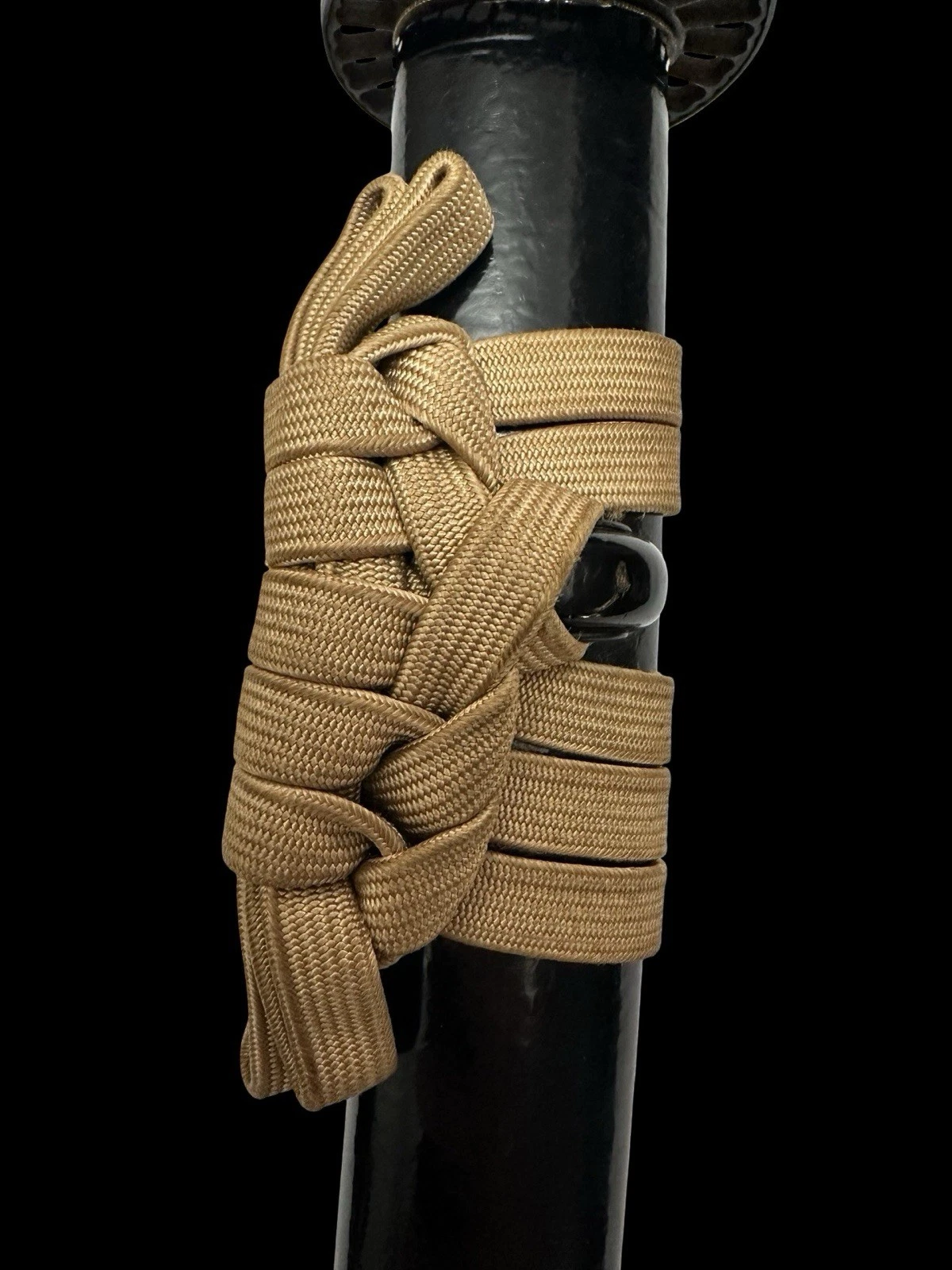
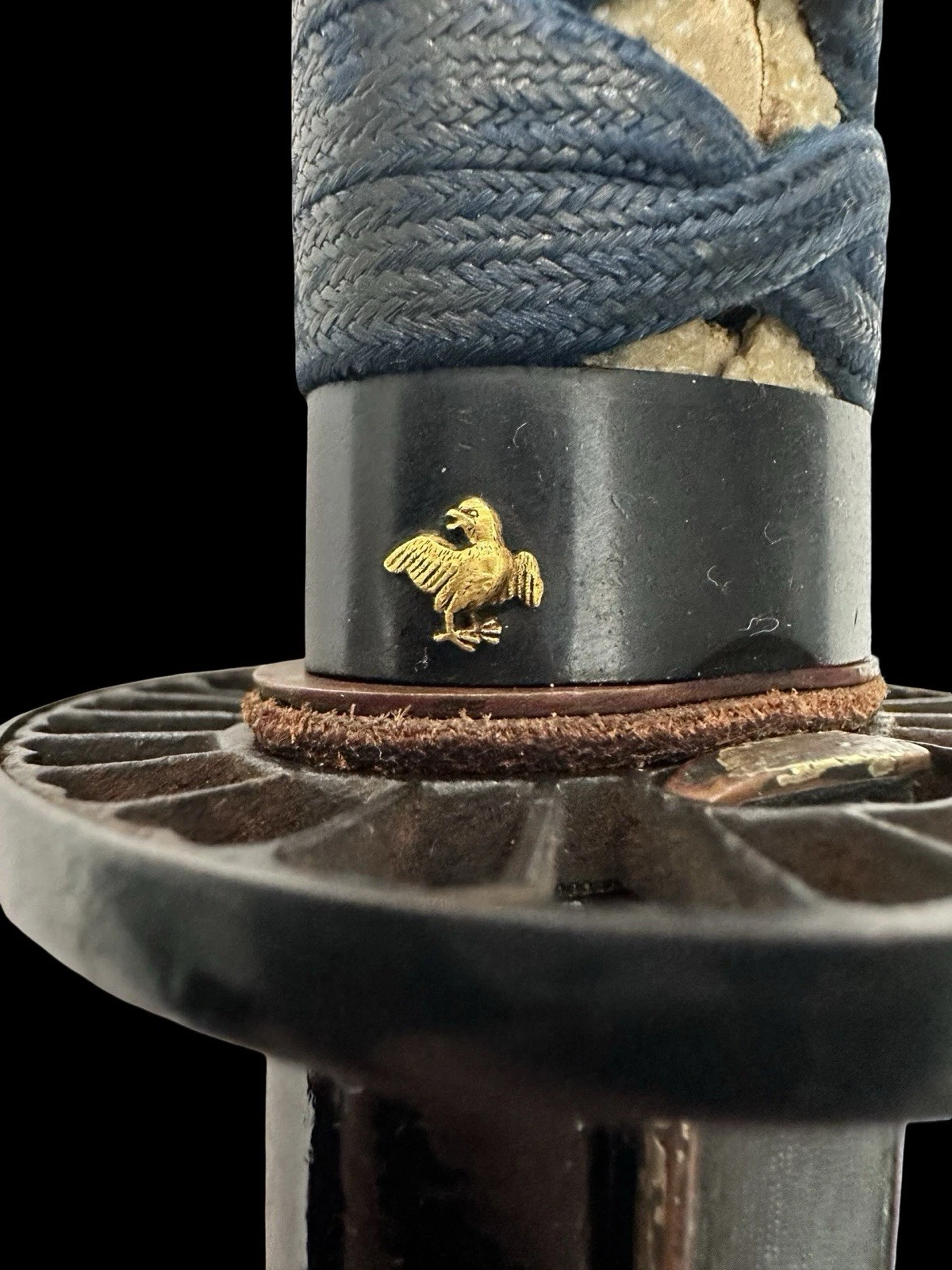
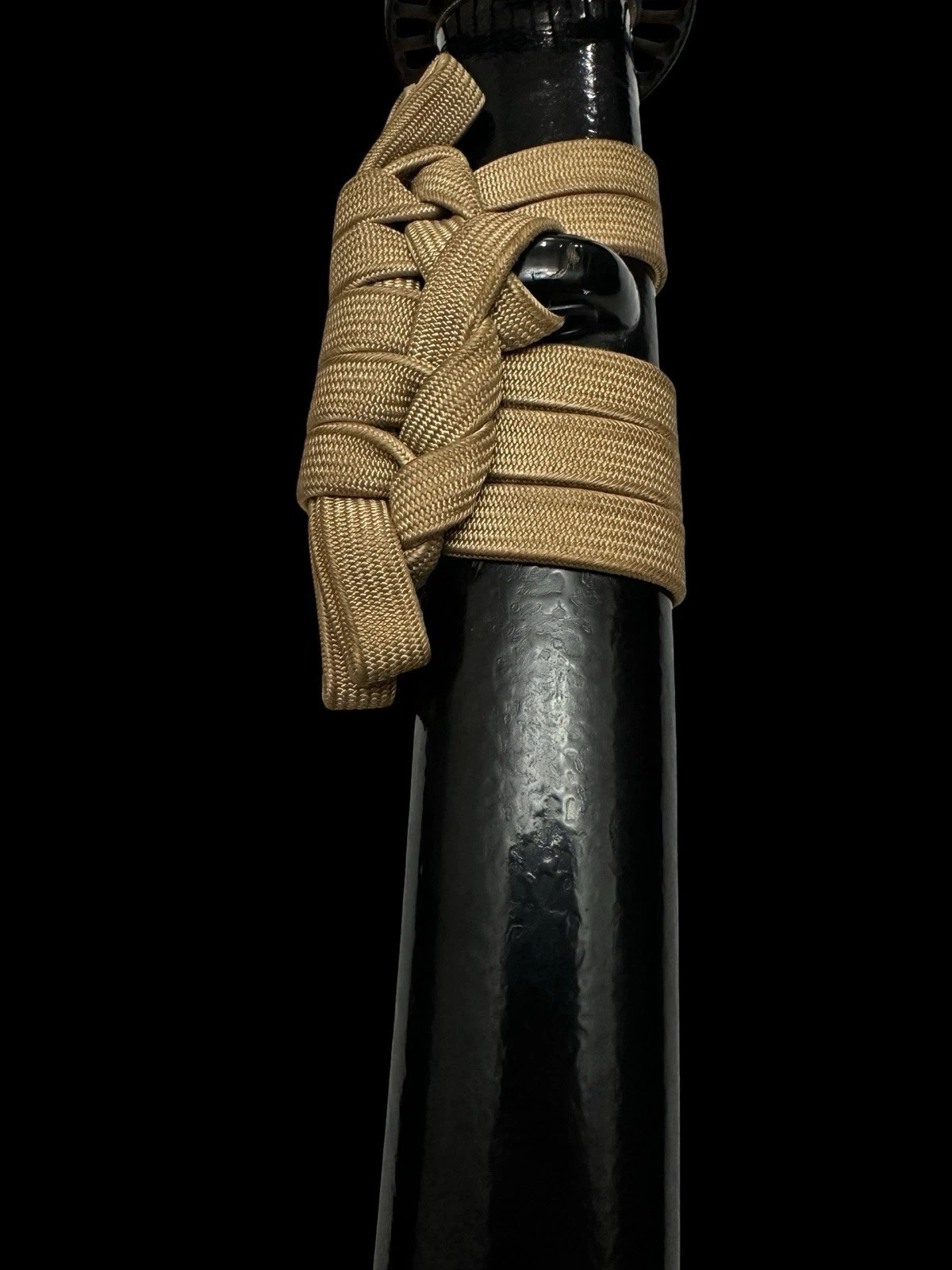
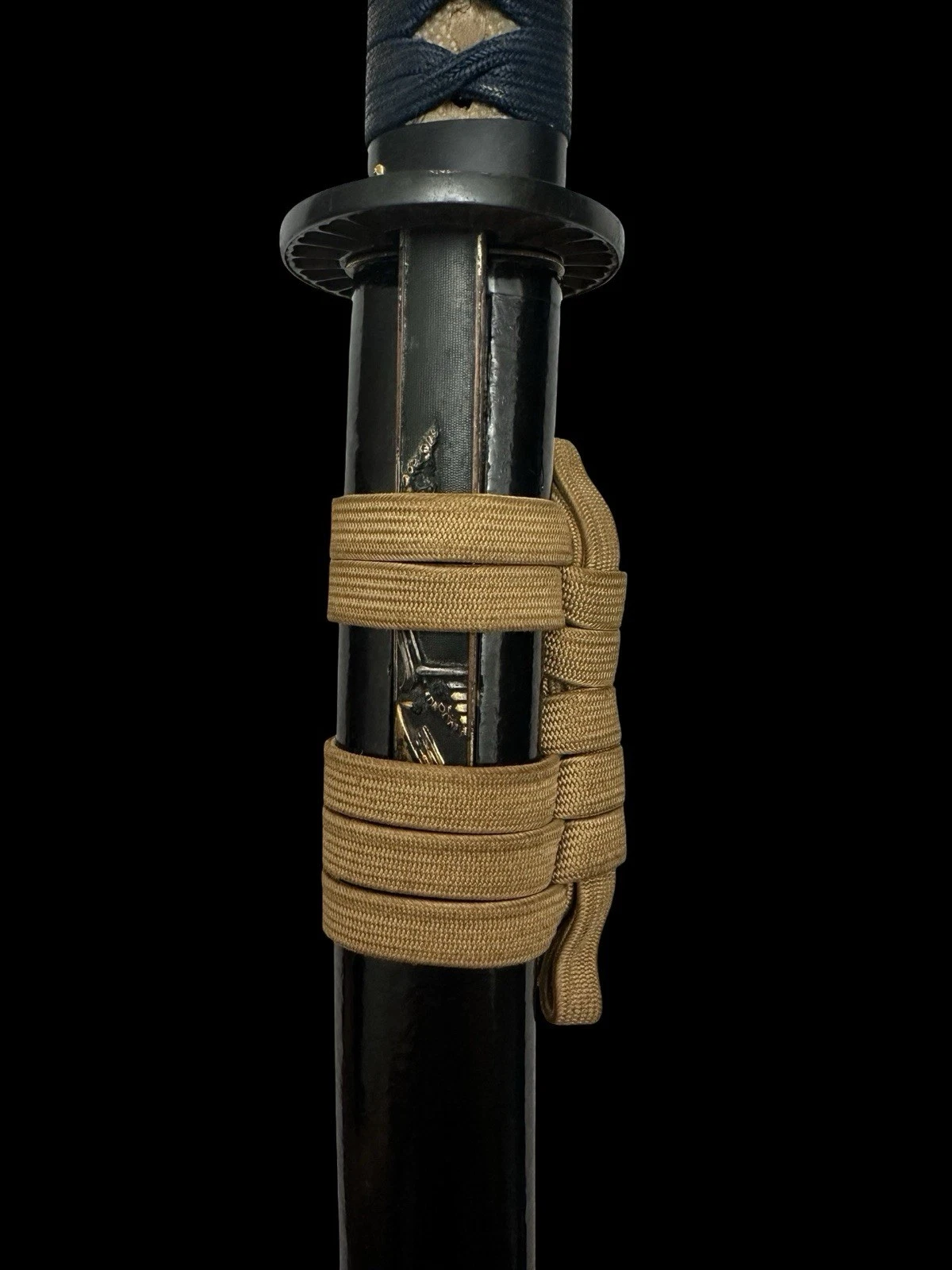
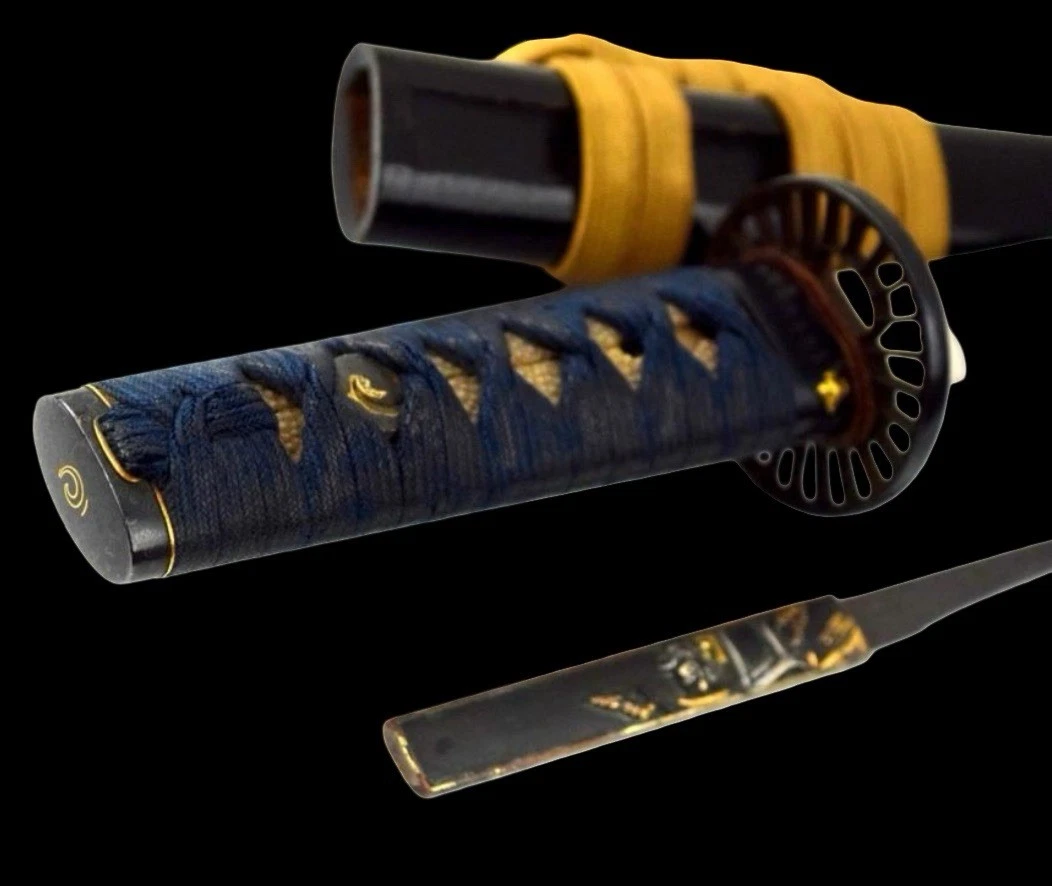
Mounted in black lacquered saya with indigo tsuka-ito over ray skin, this wakizashi exemplifies the work of the Echizen-Seki school of swordsmiths. Please note the mountings are of particular refinement, featuring gilt menuki, a gold image of Amaterasu Ōmikami (Symbol of the Sun Goddess) on the hilt, and finely worked real, solid gold roosters on the fuchi. The sword is accompanied by its kogatana utility blade, fitted in a kozuka, completing the koshirae. The utility blade is finely engraved showing the image of a man with a bow praying at Torii Gate.
**The presence of Amaterasu and rooster iconography invests this sword with particular significance. More below.****
Within this context, the gold image of Amaterasu on the hilt, paired with the gold roosters on the fuchi, creates a powerful visual invocation of solar divinity and renewal. For the sword’s owner, such decoration would have signified divine protection, the triumph of light over darkness, and direct association with Japan’s central Shintō deity.
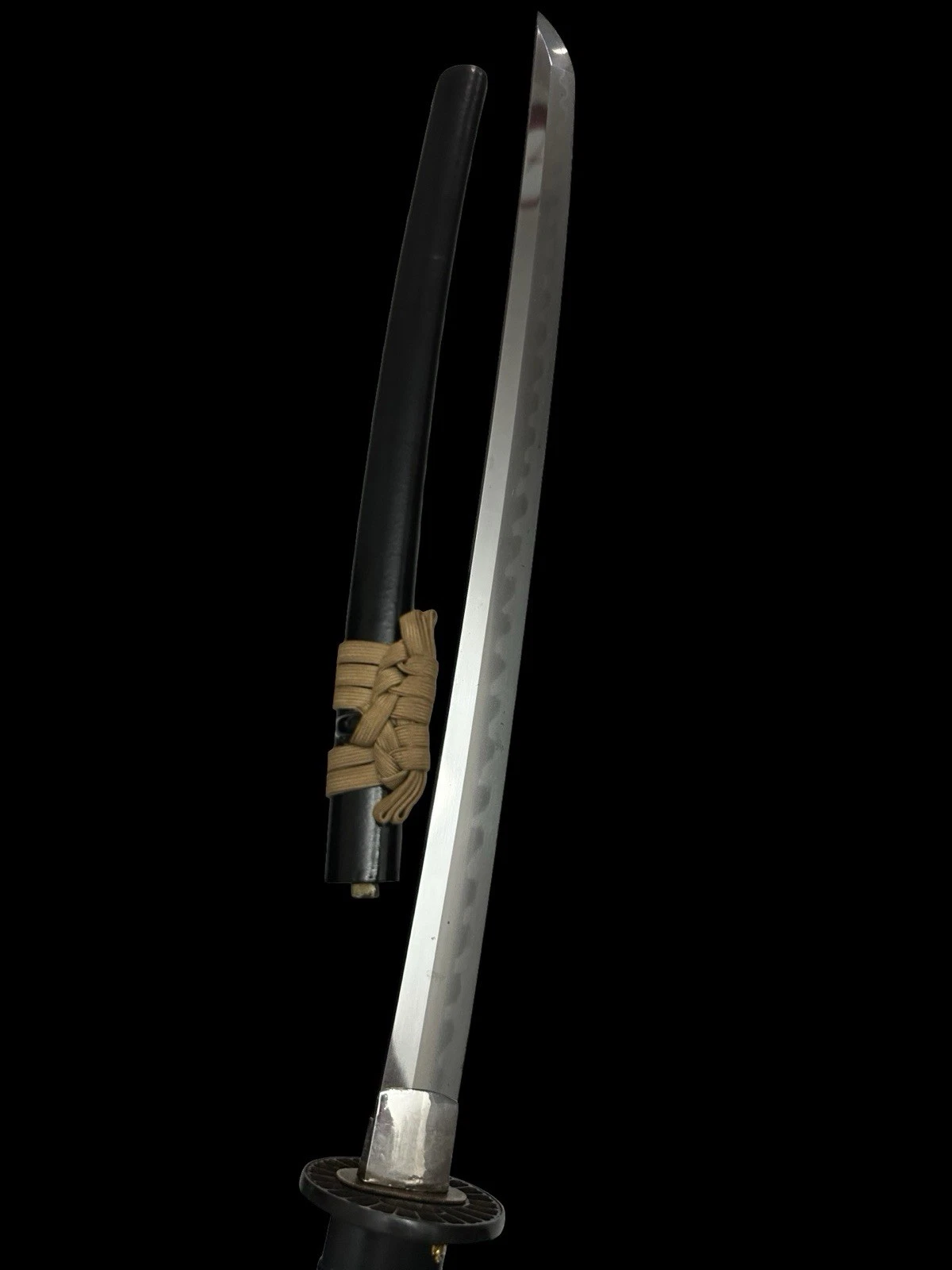
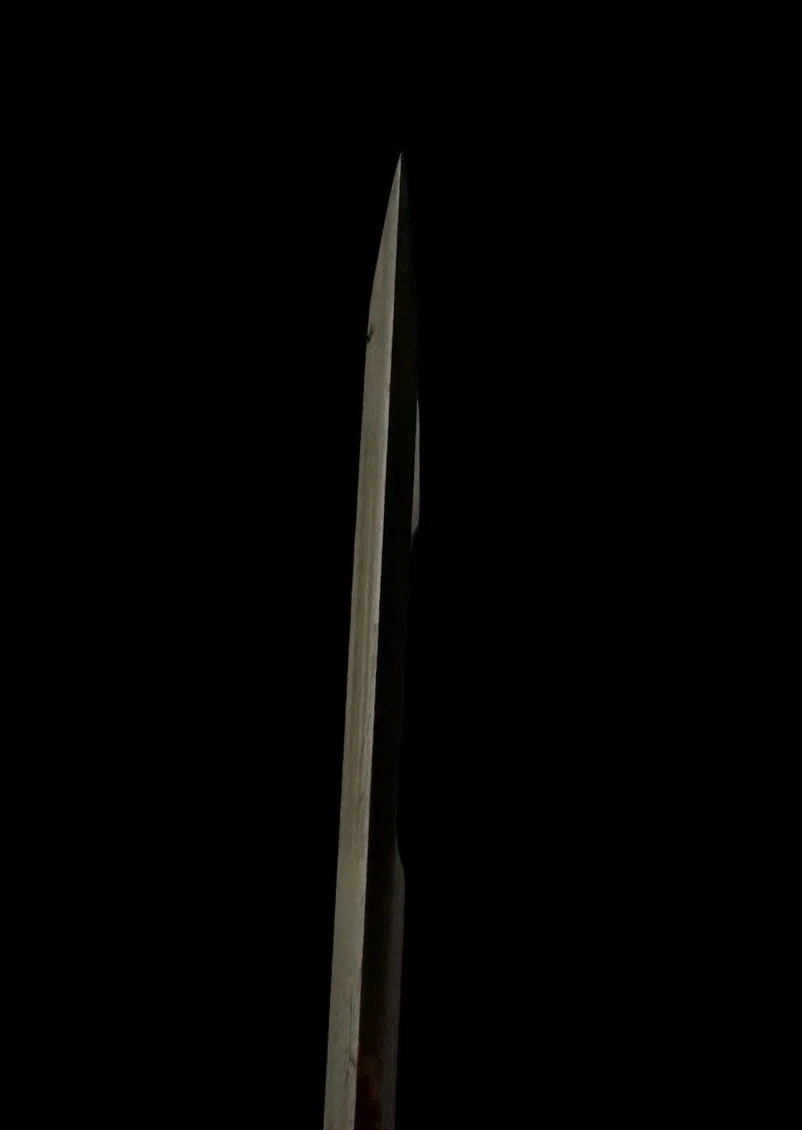
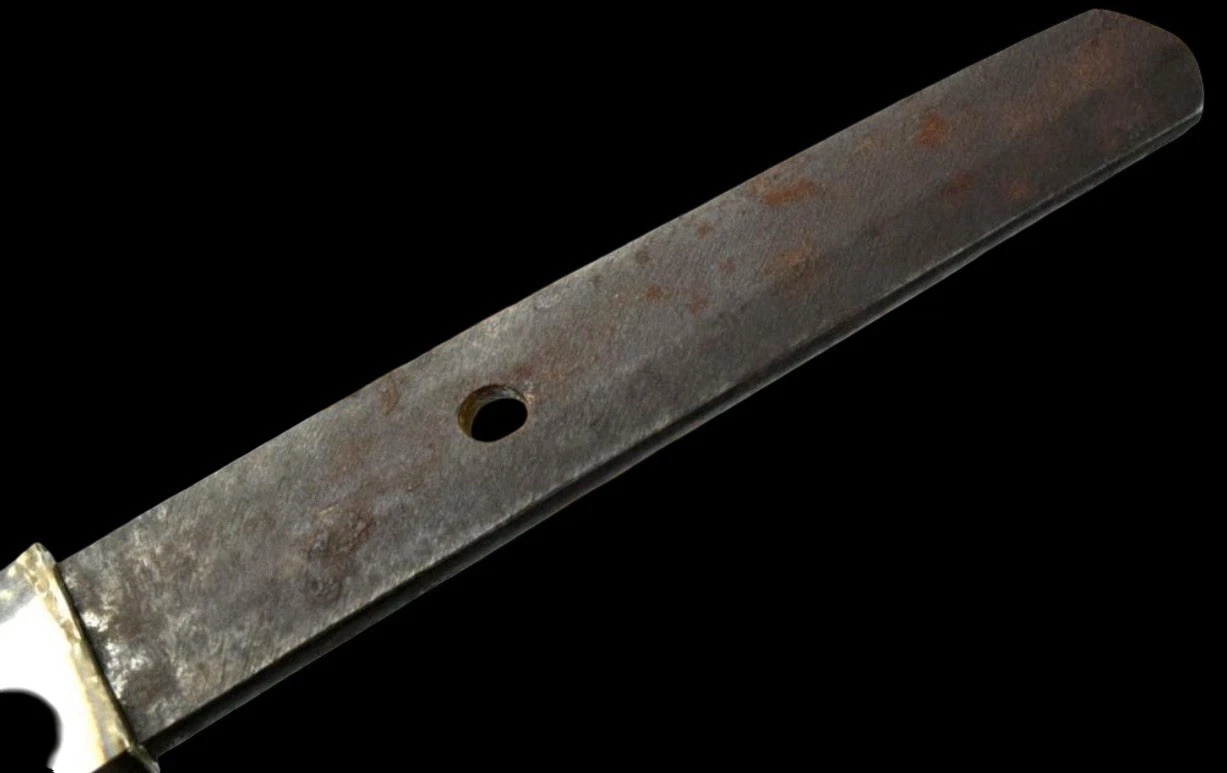
The beautiful, polished blade displays a lively gunome-midare hamon, with a bright nioiguchi and well-defined undulating peaks, characteristic of Mino-den traditions preserved in Echizen. The jigane is a well-forged itame-hada mixed with areas of masame, producing a textured steel surface with fine activity and depth. The boshi turns into a rounded komaru form with subtle hakikake. The proportions of the blade are balanced, with an elegant curvature and a strong shinogi, in keeping with Echizen-Seki convention.
This present example, uniting a blade of Echizen-Seki workmanship with an elegantly mounted hilt decorated with gold figures of Amaterasu and roosters, represents a complete and high-quality expression of early Edo-period craftsmanship.
Religious Symbolism Found on Wakizashi In the Kojiki and Nihon Shoki, Amaterasu, angered by her brother Susanoo’s destructive behavior, hides herself inside the Ama-no-Iwato (Heavenly Rock Cave). With the Sun Goddess withdrawn, the world falls into total darkness, threatening both the kami and humankind.
To lure her out, the other deities devise a ritual. They place a mirror (the Yata-no-Kagami), sacred jewels, and perform lively dances (notably by Ame-no-Uzume). Roosters are also brought forth to crow continuously outside the cave, heralding the dawn.
The crowing symbolically announced daylight even though the sun was hidden — suggesting that Amaterasu’s return was inevitable and encouraging her emergence. Eventually, intrigued by the noise, laughter, and light reflecting from the mirror, Amaterasu peeks out, and the gods pull her from the cave, restoring sunlight to the world.
Rooster on fuchi:
- Messenger of the Sun: The rooster, by crowing at dawn, was seen as a herald of Amaterasu herself.
- Ritual role: In Shintō practice, roosters came to be regarded as sacred animals associated with shrines of Amaterasu, especially the Ise Grand Shrine.
- Purity and renewal: The rooster’s daily call symbolizes cyclical renewal, the triumph of light over darkness, and the promise of order after chaos.
Even today, roosters are allowed to roam freely at Ise Jingū (the chief shrine of Amaterasu). They are not eaten in ritual contexts, reinforcing their sacred association as her divine messengers.
Echizen Seki School of Smiths
Definition & formation.
“Echizen-Seki” designates the body of Mino (Seki) smiths who relocated to Echizen Province (present-day Fukui) in the very late Momoyama to early Edo period, following the establishment of the Fukui domain under Tokugawa Ieyasu’s son Yūki/Matsudaira Hideyasu after Sekigahara (1600). Patronage in the new castle-town drew Seki craftsmen north, creating a distinct Echizen branch that nonetheless preserved Mino-den fundamentals.
Chronology.
The school’s main activity lies in the early–mid Edo “Shintō” era. Documentary and extant-work evidence places a concentration of production from the Keichō through Enpō/Genroku decades (17th century), with several lines active c. 1650s–1680s.
Patronage & neighboring lineages.
The Echizen milieu also hosted the Shimosaka/Yasutsugu line under Matsudaira protection, and Echizen-Seki smiths sometimes collaborated with or were influenced by Yasutsugu workmanship (e.g., darker jigane on some pieces). This proximity helps explain overlapping traits seen on Echizen blades of the period.
An exquisisite sword, with a possible Imperial Family connection – this sword would achieve high ranking papers and would benefit from a Shinsa (sword reading).